LuxSci

New Reporting Features Go Deeper on Email Deliverability Statistics, Trends and Analysis

LuxSci Secure Email Reporting Statistics

We recently rolled out new email reporting features, taking deliverability depth and analysis to new levels. If you’re a current LuxSci customer and haven’t checked them out, now’s the time. If you’re new to LuxSci, learn more below, and don’t hesitate to reach out for more info – or a demo.

LuxSci secure communications solutions have always featured rich reporting on email deliverability, including volumes and percentages for emails:

  • in queue
  • opened
  • clicked
  • failed
  • secured

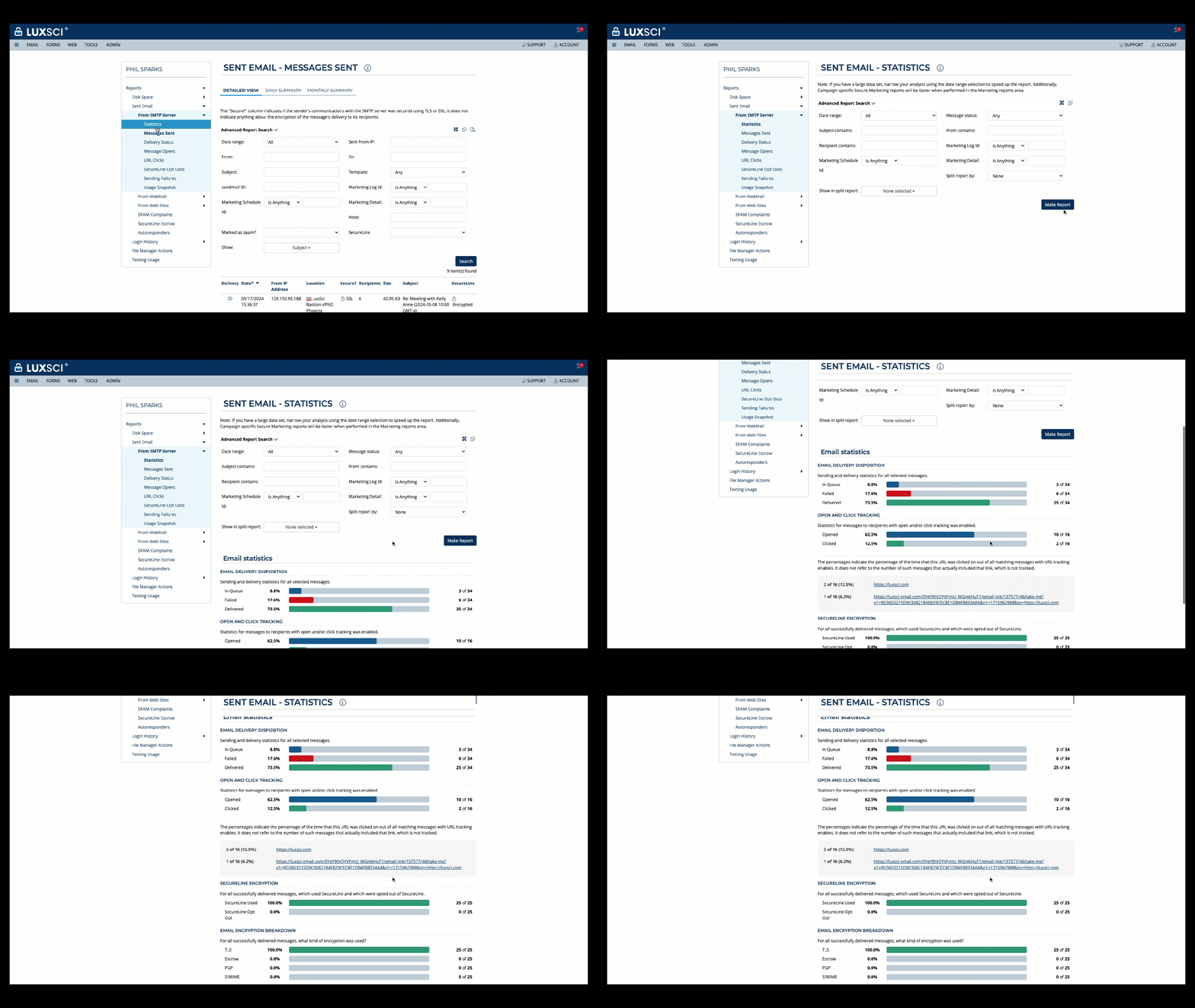
With our latest release, we made these powerful statistics easier to consume and analyze with an improved user interface for more efficiency and greater ease-of-use. Users can simply select the type of report they’d like and customize it using a range of filtering selections. This is great for diving deeper into your email performance to make adjustments on-the-fly, and to spot trends or opportunities for better engagement that you may have missed before.

New UI – Email Deliverability Statistics

LuxSci Secure Email Reporting Statistics

Get more granular, ID trends in real time with Split Reporting

As part of this release, we are pleased to introduce our Split Reporting feature, which empowers users to drill down on email deliverability statistics across a range of parameters, including:

  • subject
  • from address
  • recipient domains
  • marketing ID or campaign
  • custom field

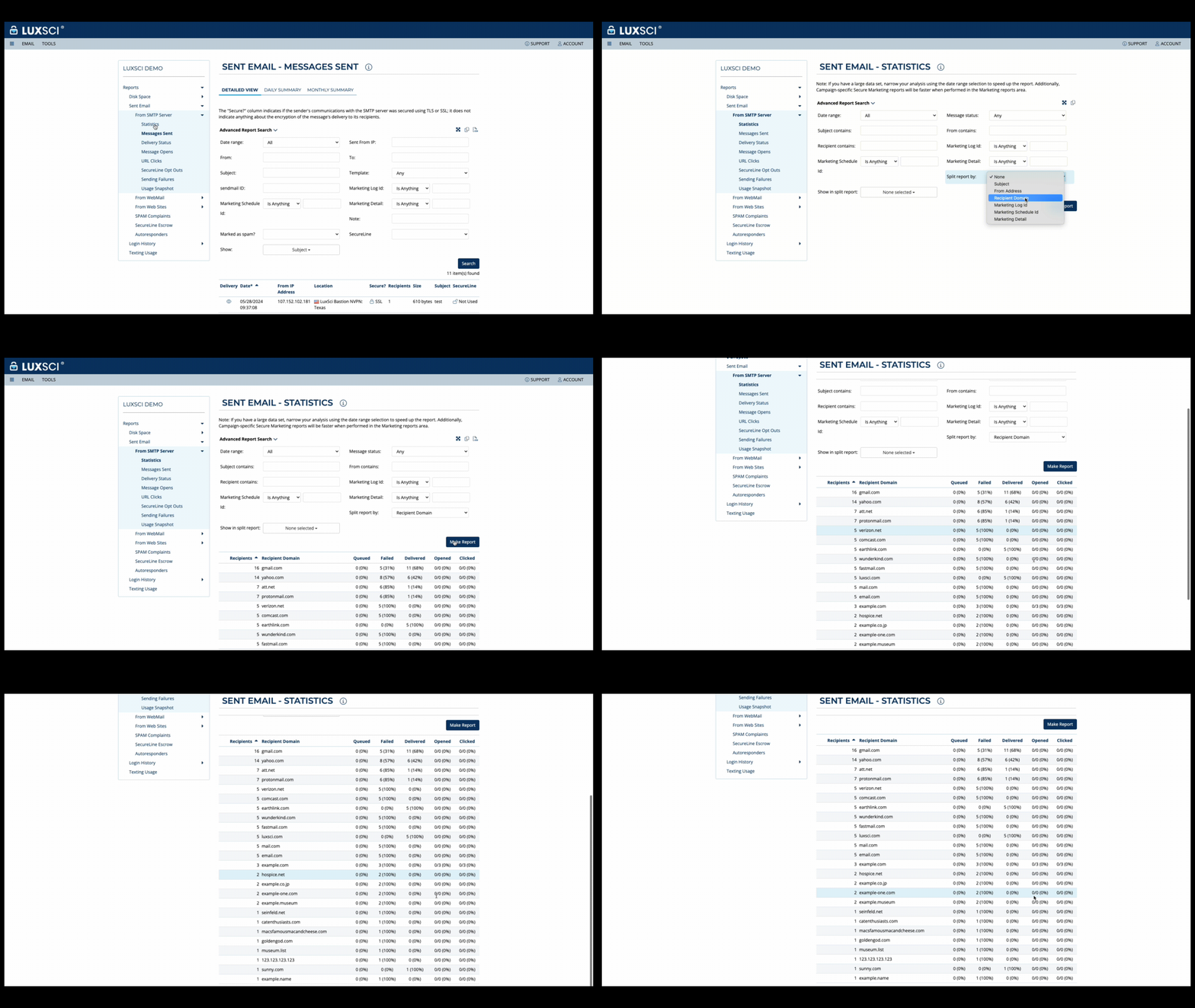
For example, users can analyze email deliverability statistics by subject to determine which ones are performing best, by use case to track results by campaign, or to track performance by recipient email domains. With split reporting, users also can analyze email volumes across queued, delivered, opened, failed and clicked parameters, and determine click-through rates (CTR) to measure effectiveness and ROI of campaigns.

New Feature Example – Split Reporting by Recipient Domain

LuxSci Secure Email Split Reporting

If you’d like to learn more, reach out and connect with us today!


Picture of LuxSci

LuxSci

Get in touch

Find The Best Solution For Your Organization

Talk To An Expert & Get A Quote


A member of our staff will reach out to you

Get Your Free E-Book!

LuxSci High Email Deliverability Best Practices Paper

What you’ll learn:

Related Posts

HIPAA Security Rule Update

The HIPAA Security Rule Missed Its May Deadline — Here’s What We Know

The proposed HIPAA Security Rule update has become one of the most closely watched healthcare compliance developments in recent years. Designed to strengthen cybersecurity protections for electronic protected health information (ePHI), the proposal could significantly reshape how healthcare organizations approach risk management, ePHI encryption, and mandatory email encryption requirements.

A final rule was expected as early as May 2026. However, that deadline has now passed without publication from the U.S. Department of Health and Human Services (HHS) Office for Civil Rights (OCR).

So, what happens next—and what should healthcare IT directors, CISOs, and compliance officers do now?

Where Things Stand Today

The HIPAA Security Rule Notice of Proposed Rulemaking (NPRM) was published on January 6, 2025, with the goal of strengthening cybersecurity protections for ePHI in response to escalating ransomware attacks, healthcare breaches, and growing concerns about cyber resilience across the healthcare sector.

The proposal generated thousands of public comments from healthcare providers, payers, business associates, technology vendors, and industry groups. OCR has spent much of the past year reviewing this feedback and evaluating the operational and financial impact of the proposed changes.

Although the Spring Unified Regulatory Agenda identified May 2026 as a target date for a final rule, that milestone came and went without publication. As of June 2026, the proposed HIPAA Security Rule update remains under review.

While some organizations may be tempted to take a wait-and-see approach, the missed deadline should not be interpreted as a signal that the initiative has stalled. If anything, the proposal offers valuable insight into the future direction of healthcare cybersecurity regulation.

The Growing Focus on Mandatory Email Encryption

One of the most discussed aspects of the proposed HIPAA Security Rule update is encryption.

Under the current HIPAA Security Rule, encryption is generally classified as an “addressable” implementation specification. Organizations can choose alternative safeguards if they document and justify their decisions through a risk analysis process.

The proposed changes would significantly reduce that flexibility. Instead, many security safeguards, including encryption controls, would become more prescriptive and difficult to avoid.

While the final language has not yet been released, healthcare organizations should pay close attention to the proposal’s clear message: protecting ePHI through encryption is increasingly viewed as a baseline cybersecurity requirement.

This is particularly important for email communications.

Email remains one of the most widely used communication channels in healthcare, supporting everything from patient engagement and care coordination to billing, scheduling, and marketing communications. As regulators continue to focus on reducing data breach risks, mandatory email encryption is emerging as a likely area of increased scrutiny.

What Healthcare Organizations Should Do Now

The current delay creates an opportunity, not a reason to postpone action.

Healthcare organizations can begin preparing for likely requirements today by evaluating the security controls highlighted throughout the proposed rule.

Key areas to review include:

  • Encryption of ePHI across systems and communications channels
  • Comprehensive asset inventories and ePHI data mapping
  • Enhanced risk analysis and risk management processes
  • Multifactor authentication (MFA)
  • Vulnerability scanning and penetration testing
  • Incident response planning and testing
  • Backup and recovery procedures
  • Email security and secure email encryption practices

Organizations that proactively strengthen these areas now will be better prepared regardless of the final rule’s implementation timeline.

Why Secure Email Encryption Should Be a Priority

For many healthcare organizations, email remains one of the largest compliance and security risks.

Human error, misdirected messages, phishing attacks, and inconsistent encryption practices continue to contribute to breaches involving protected health information. As a result, secure email encryption is increasingly becoming a foundational component of healthcare cybersecurity strategies.

Organizations that rely on manual encryption processes or employee judgment alone may find it difficult to meet evolving regulatory expectations.

Instead, healthcare organizations should look for solutions that automate encryption decisions, reduce user error, and provide flexibility based on the sensitivity of the communication.

At LuxSci, we have long believed that security and usability must work together. We are 100% focused on secure healthcare communications, helping healthcare providers, payers, and suppliers protect sensitive data while improving patient and customer engagement. Our proven secure email solutions, used by leading companies including Athenahealth, 1-800 Contacts, and Hinge Health, help organizations protect ePHI with automated encryption capabilities that support both compliance and operational efficiency. Our unique SecureLine encryption technology enables organizations to apply the appropriate level of protection while maintaining a seamless experience for patients, customers, and staff.

For organizations already using Microsoft 365 or Google Workspace, LuxSci Secure Email Gateway can add HIPAA-compliant email security and encryption without requiring users to change their existing workflows. This approach helps reduce risk, while preserving productivity and user adoption.

The Bottom Line

The HIPAA Security Rule final rule may have missed its anticipated May deadline, but the cybersecurity challenges driving the proposal remain very real.

The OCR is still expected to make the rule change, which could require mandatory encryption of ePHI by early 2027.

The time to prepare is now!

Healthcare organizations should view the proposed HIPAA Security Rule update as an advance warning of where regulatory expectations are heading. Stronger cybersecurity controls, enhanced risk management, ePHI encryption, and mandatory email encryption requirements are all likely to remain central themes in future compliance efforts.

The organizations that begin preparing now will not only be better positioned for future regulatory changes, but will also strengthen their ability to protect patient data, reduce risk, and build trust in an increasingly challenging threat landscape.

At LuxSci, we’re proud to support the healthcare industry’s ongoing digital transformation through secure healthcare communications. Our HIPAA-compliant solutions for secure email, email marketing, and forms empower organizations to safely use and protect PHI, while delivering better patient experiences and outcomes.

Ready to strengthen your healthcare cybersecurity strategy?

Learn more about LuxSci and our complete suite of HIPAA compliant email and marketing solutions, or schedule a consultation with one of our healthcare communication experts today.

Contact us today!

LuxSci G2

LuxSci Awarded 20 Badges in the G2 Summer 2026 Reports

We’re excited to announce that LuxSci has again been recognized by G2 with 20 badges in its just-released Summer 2026 Reports, highlighting our continued leadership in secure healthcare communications and HIPAA compliant email solutions.

The new LuxSci G2 recognitions span several categories, including:

  • Best Estimated ROI
  • Best Support
  • High Performer
  • Leader

These latest LuxSci G2 awards reflect what matters most to our customers: delivering secure, HIPAA compliant healthcare communications backed by responsive support and measurable business results.

As one of the most trusted providers of HIPAA compliant email, marketing, and forms solutions, we’re proud to see our commitment recognized across multiple product categories and customer satisfaction metrics.

Recognition Built on Customer Experience

LuxSci’s G2 rankings are based on verified customer feedback and real-world user experiences, making these badges especially meaningful to our team.

This year’s Summer Reports recognized LuxSci for consistently delivering value to healthcare organizations looking to securely engage patients and customers while maintaining compliance with HIPAA requirements.

Among the highlights, the LuxSci G2 recognition includes:

  • Best Estimated ROI, reflecting the measurable value customers achieve through secure healthcare communications and personalization
  • Best Support, reinforcing LuxSci’s long-standing reputation for responsive, knowledgeable customer service
  • High Performer badges across multiple categories for customer satisfaction and product performance
  • Leader recognition for delivering secure, scalable communications solutions trusted by healthcare organizations

At LuxSci, we believe secure communications should also drive better engagement, stronger outcomes and operational efficiency. These recognitions reinforce our focus on helping healthcare providers, payers and suppliers personalize communications while protecting sensitive patient data.

Supporting the Future of Personalized Healthcare Engagement

LuxSci’s secure healthcare communication and patient engagement solutions empower organizations to safely communicate with patients and customers through:

  • HIPAA-compliant high volume email
  • Secure email marketing
  • Secure forms and data collection
  • Flexible encryption with SecureLine technology

Our solutions are designed to help healthcare organizations improve engagement, streamline workflows and personalize the healthcare journey while maintaining the highest standards of security and compliance.

These latest LuxSci G2 recognitions also build on LuxSci’s broader reputation for security, performance and customer success. Security and trust remain foundational to everything we do, alongside our commitment to delivering smart, responsive support for our customers.

Thank You to Our Customers

We’re grateful to our customers for their continued trust, collaboration and feedback. Their reviews and insights help shape our products and drive ongoing innovation across the LuxSci product set.

To learn more about LuxSci’s secure healthcare communications solutions, contact our team to schedule a secure email assessment or demo.

Connect with us today!

Follow us on LinkedIn

Email Encryption

Is OCR Already Enforcing Email Encryption Under the New HIPAA Security Rule?

Healthcare organizations waiting for the final HIPAA Security Rule updates before improving email encryption and security may already be behind.

While the proposed changes to the HIPAA Security Rule are expected to be finalized in May, the direction from the U.S. Department of Health and Human Services Office for Civil Rights (OCR) is becoming increasingly clear. Across investigations, settlements, and enforcement actions, OCR continues emphasizing stronger technical safeguards, encryption, documented security programs, multi-factor authentication (MFA), risk analysis, and proactive cybersecurity operations.

For healthcare organizations, one area stands directly in the middle of all of these priorities: email.

Email remains a primary communication channel in healthcare — and one of the industry’s largest security vulnerabilities. From unauthorized PHI exposure to phishing attacks and ransomware delivery to account compromise, email continues to be at the center of healthcare cybersecurity incidents.

So, are the proposed HIPAA Security Rule changes hypothetical future guidance or a preview of OCR’s future enforcement expectations?

For healthcare email security, the implications are significant.

Email = Healthcare Cybersecurity Risk

Healthcare organizations rely on email for critical communications and healthcare workflows, including:

  • Patient communications
  • Care coordination
  • Claims and billing notifications
  • Marketing and engagement
  • Internal collaboration
  • Third-party vendor communications
  • Delivery of sensitive PHI

At the same time, attackers continue targeting email systems because they remain one of the easiest entry points into healthcare environments.

Insecure email workflows create unnecessary exposure of protected health information. Phishing campaigns are becoming more sophisticated. Credential theft attacks are bypassing traditional MFA methods. And business email compromise (BEC) attacks continue rising.

Recent OCR enforcement actions increasingly reflect these realities.

Organizations are being evaluated not simply on whether a breach occurred, but whether they implemented reasonable safeguards beforehand, including encryption, authentication controls, monitoring, access management, and documented risk mitigation processes.

For email systems specifically, that means healthcare organizations should expect increased scrutiny around:

  • Email encryption enforcement
  • MFA deployment
  • Audit logging and retention
  • Conditional access policies
  • Vendor security controls
  • Secure email delivery best practices
  • Segmentation and infrastructure isolation
  • Ongoing patch and vulnerability management

In many ways, email infrastructure is becoming a visible test of an organization’s overall cybersecurity posture.

Email Encryption Is Moving From Addressable to Required

Historically, healthcare organizations often interpreted HIPAA email encryption requirements with flexibility because encryption was technically categorized as an “addressable” safeguard under the Security Rule. But, OCR enforcement and broader cybersecurity realities are changing that interpretation rapidly.

Today, failing to encrypt sensitive healthcare communications increasingly creates both security and regulatory risk. The proposed Security Rule updates place even greater emphasis on encryption and technical safeguards. At the same time, OCR investigations continue examining whether organizations properly protected PHI in transit and at rest.

For healthcare email specifically, this creates several growing expectations:

  • Email encryption should be automated wherever possible
  • Human error should not determine whether PHI is protected
  • Organizations should maintain documented encryption policies
  • Secure delivery methods should adapt dynamically to recipient capabilities
  • Audit trails should demonstrate how messages were secured

At LuxSci, we have long believed that encryption should operate as a strategic layer of healthcare communications infrastructure, not as a manual user decision.

Our SecureLine email encryption technology automatically applies appropriate encryption methods based on organizational policies and delivery requirements, helping reduce the risks associated with human error while maintaining usability, deliverability and compliance. As enforcement expectations rise, this type of automated security enforcement is becoming increasingly important.

Traditional MFA May No Longer Be Enough

Another major shift emerging from both OCR enforcement trends and the proposed rule updates is the growing importance of stronger authentication models.

Healthcare organizations have historically viewed MFA deployment as sufficient protection. But attackers have adapted quickly.

MFA bypass attacks, token theft, session hijacking, and consent phishing campaigns are increasingly targeting healthcare users. As a result, regulators and cybersecurity experts are placing greater emphasis on phishing-resistant authentication approaches and contextual access controls.

For email environments, organizations should increasingly evaluate:

  • Whether MFA methods are resistant to phishing attacks
  • Conditional access policies based on device, location, and behavior
  • Account monitoring and anomaly detection
  • Administrative access protections
  • Session management controls
  • Logging and authentication auditing

The broader message is clear: healthcare organizations need authentication strategies designed for today’s threat landscape, not yesterday’s compliance checklist.

OCR Wants Proof, Not Just Policies

One of the clearest trends emerging from recent OCR activity is the increasing importance of documentation and operational evidence. Healthcare organizations must increasingly demonstrate not only that safeguards exist, but that they are consistently enforced, monitored, tested, and maintained over time.

For email systems, organizations should be prepared to demonstrate:

  • Email encryption policies
  • MFA enforcement records
  • Audit logs and message tracking
  • Vendor security documentation
  • Risk assessments involving email infrastructure
  • Patch management procedures
  • Employee security awareness training
  • Incident response procedures for email-based threats

This represents a broader shift in healthcare cybersecurity expectations.

The question is no longer: “Do you have email security controls?”

The question is increasingly: “Can you prove they are operationally effective?”

Healthcare Organizations Need a New Email Security Strategy

The healthcare industry is entering a new phase of cybersecurity enforcement.

OCR’s direction is becoming increasingly clear: organizations are expected to proactively secure systems handling PHI using modern, documented, and continuously maintained safeguards. For email security specifically, that means organizations should stop treating encryption, MFA, and secure communications as optional compliance requirements. Instead, they should view secure email infrastructure as a strategic component of enterprise cybersecurity and patient trust.

At LuxSci, we help healthcare organizations modernize secure communications with HIPAA compliant email infrastructure designed specifically for healthcare environments, including flexible encryption, secure delivery, auditability, high deliverability, access controls, and dedicated infrastructure options.

The proposed HIPAA Security Rule updates may not yet be final. But, OCR is already signaling where healthcare cybersecurity enforcement is headed next. For organizations relying on email to communicate with patients, members, customers, and partners, the time to examine your secure email infrastructure is now.

Connect with our experts to learn more using the form at the top of this page!

LuxSci HIPAA Compliant Email for Mid-Sized Healthcare Organizations

LuxSci Launches Enterprise-Grade HIPAA Compliant Email Security for Mid-Sized Healthcare Organizations

New right-sized offering brings advanced encryption, easy API integration, and HITRUST-certified compliance to the most underserved segment in healthcare email — with pricing starting at $99/month

CAMBRIDGE, MA — May 5, 2026 — LuxSci, a leading provider of HIPAA compliant secure healthcare communications, today announced the launch of LuxSci Secure High Volume Email for mid-sized healthcare organizations, the industry’s trusted HIPPA-compliant email solution now packaged and priced for mid-size healthcare organizations. Regional health systems, health plans, specialty group practices, urgent care networks, and multi-site regional providers can now access LuxSci’s enterprise-grade email security and encryption infrastructure at published, volume-based pricing — with no custom quote required.

LuxSci Secure High Volume Email for mid-sized healthcare organizations delivers the same HITRUST CSF r2-certified email security and flexible encryption capabilities that power communications for some of the largest healthcare organizations in the industry, including Athenahealth, 1-800 Contacts, Hinge Health and Eurofins. The new LuxSci mid-sized offer is tiered and priced for organizations with email sending volumes of between 300 and 99,000 emails per month.

LuxSci Secure High Volume Email is built on the company’s proprietary SecureLine™ encryption technology, which automatically selects the optimal email encryption method — TLS, secure portal fallback, PGP, or S/MIME — on a per-recipient basis at the time of delivery, with no action required from senders or recipients. This intelligent, adaptive encryption method goes significantly beyond TLS-only or portal fallback models offered by basic platforms, giving mid-market healthcare organizations the flexibility and cybersecurity depth they need as HIPAA regulations tighten and email threats continue to get more sophisticated.

Key capabilities include:

  • Automatic email encryption via SecureLine™ — encrypt every email and its content, including Protected Health Information (PHI), with per-recipient adaptive encryption across TLS, portal fallback, PGP, and S/MIME.
  • Advanced REST API with webhooks for dataflows into your systems — supports unlimited messages/hour with failover, queuing, plus webhooks can push email engagement data back to EHRs, CRMs, RCM and customer data platforms.
  • Comprehensive audit logging and reporting — message-level tracking, delivery status, engagement reporting, and downloadable reports for compliance officers.
  • HITRUST CSF r2 certification, BAA, GDPR-compliant, and US-EU Privacy Framework agreement all included.
  • Microsoft 365 and Google Workspace overlay — use LuxSci’s Secure Email Gateway add-on to integrate directly with existing M365 or Google Workspace environments, adding HIPAA-compliant encryption without migration or user retraining.
  • HIPAA-compliant patient engagement — secure outbound email campaigns with PHI-powered hyper-segmentation, automated workflows, and personalized emails for marketing campaigns, proactive patient communications, appointment reminders, care gap outreach, new plan enrollments, healthcare education, and more — with LuxSci Secure Marketing add-on.

New Published LuxSci Pricing

LuxSci Secure High Volume Emai for mid-sized healthcare organizations features published pricing based on monthly sending volume:

Monthly Send VolumeMonthly Price
300 to 9,999 emails/month $99/month
10,000 – 29,999 emails/month $199/month
30,000 – 49,999 emails/month $299/month
50,000 – 99,999 emails/month $399/month
100,000+ emails/month Custom

“Mid-size healthcare organizations have been underserved for too long, forced to choose between inadequate email security tools that weren’t built for healthcare and HIPAA compliance and enterprise level solutions that felt too big or too complex,” said Mark Leanord, CEO of LuxSci. “Our new secure email packaging for mid-sized organizations changes that. We’re making the same encryption depth, ease of integration into EHRs, CRMs and other systems, and compliance rigor that powers our largest customers accessible for mid-sized organizations to easily evaluate and buy.”

Timing and Market Context

The launch comes at a critical moment for mid-size healthcare organizations. The HHS HIPAA Security Rule overhaul, expected to finalize in mid-2026, is anticipated to mandate email encryption as a required safeguard, elevating email security from addressable best practice to a regulatory requirement for thousands of organizations that have not yet upgraded their email security and compliance posture. LuxSci secure email is designed to meet these requirements, backed by HITRUST CSF r2 certification and the company’s 20-year track record in secure healthcare communications.

Availability

LuxSci Secure Email for mid-sized healthcare organizations is available immediately. Pricing and product details are published here.

Users can contact LuxSci to set up a call or DEMO.

About LuxSci

LuxSci is a leading provider of secure healthcare communications solutions for the healthcare industry. The company offers secure email, marketing, forms and hosting, delivering HIPAA‑compliant communication solutions that enable organizations to safely manage and transmit sensitive data, including protected health information (PHI). Founded in 1999 and recently merged with digital care and telehealth provider Ovia Health, LuxSci serves more than 2,000 customers across healthcare verticals, including providers, payers, suppliers, and healthcare retail, home care providers, and healthcare systems, as well as organizations operating in other highly regulated industries. LuxSci is HITRUST‑certified with current customers including Athenahealth, 1800 Contacts, Lucerna Health, Eurofins, and Rotech Healthcare, among others.

###

Media Contact:
Pete Wermter, CMO

pwermter@luxsci.com

You Might Also Like

healthcare marketing

What is a SMART Objective in Healthcare Marketing?

Healthcare marketing objectives typically follow the SMART framework: Specific, Measurable, Achievable, Relevant, and Time-bound goals that guide marketing campaigns and patient outreach programs. These structured objectives help healthcare organizations track progress, measure success, and adapt strategies to meet defined targets within budget and regulatory requirements. Clear, well-defined objectives lead to effective resource allocation and higher returns on marketing investments. As a result, marketing teams use this framework to develop campaigns that deliver quantifiable results while maintaining healthcare industry standards and compliance requirements.

SMART Marketing Requirements

The SMART framework provides healthcare organizations with a structured method to develop marketing plans that deliver measurable results. Marketing teams design objectives that meet specific criteria for success, including detailed action plans and performance metrics. Each objective links to broader organizational goals while maintaining healthcare compliance standards. Teams consider market conditions, resource availability, and patient needs when setting these objectives. The framework ensures marketing plans remain focused on achievable outcomes rather than vague aspirations. To track results, organizations review their healthcare marketing objectives quarterly to validate alignment with business goals and adjust targets based on market changes. Marketing teams document their objectives in detail, including baseline metrics, target improvements, and measurement methods to track progress accurately.

  • SMART objectives help healthcare marketers directly connect marketing activities to measurable patient acquisition outcomes.
  • Cross-departmental collaboration improves when marketing and relevant teams set out clearly defined objectives.
  • Healthcare organizations using structured objectives can better demonstrate marketing value to leadership and stakeholders.
  • Well-documented SMART objectives create marketing accountability while supporting compliance with healthcare regulations.
  • The framework encourages more efficient resource allocation by requiring measurable outcomes for all marketing investments.

Target Markets and Patient Segments

Marketing teams use demographic data and healthcare utilization patterns to identify target patient populations. They analyze factors like age groups, insurance coverage, medical needs, and geographic location to create focused marketing objectives. This research shapes campaign messaging and channel selection for different patient segments. Teams track response rates across various demographics to refine their targeting strategies. Market segmentation helps organizations allocate marketing resources to the most promising patient groups and service lines. Research includes analyzing patient data from electronic health records, insurance claims, and market surveys to understand healthcare needs and preferences. Teams develop patient personas to guide marketing efforts and create relevant messaging for each segment. They study healthcare consumption patterns, referral sources, and patient journey maps to identify marketing opportunities within each segment.

Budget Planning and Resource Management

Healthcare marketing objectives should include detailed budget planning and resource allocation strategies. This means that teams develop cost projections for different marketing channels and campaign types. They track spending against expected patient acquisition costs and revenue generation. These financial objectives help organizations maintain profitable marketing operations while meeting growth targets. Budget planning includes staff time, technology costs, advertising and lead generation expenses, and marketing content production. Regular financial reviews ensure marketing activities stay within planned spending limits while delivering expected results. Marketing departments calculate return on investment for each campaign type and channel to optimize resource allocation. They maintain detailed cost tracking systems to monitor expenses across all marketing activities. Teams develop contingency plans for budget adjustments based on campaign performance and market changes.

Technology Integration and Digital Marketing

Marketing objectives dictate technology requirements for campaign execution and performance tracking. Teams set goals for website optimization, email deliverability and conversions, social media engagement, and digital ad campaign results. They also plan implementation schedules for new marketing technologies and patient communication tools. These objectives include metrics for online appointment scheduling, patient portal usage, email engagement, and digital content engagement. Organizations track technology adoption rates and return on digital marketing investments. Marketing teams continuously evaluate new healthcare marketing technologies and platforms to improve campaign effectiveness. For example, email marketing platforms that securely transmit protected health information (PHI) can enable greater personalization with more targeted and customized messages. Integration plans are developed for marketing automation tools, email marketing and campaign tools, customer relationship management systems, and analytics platforms. The technical requirements include the necessary data security measures, such as end-to-end encryption, to protect patient information and maintain HIPAA compliance across all digital marketing channels.

Marketing departments can also create automation objectives to nurture leads and improve operational efficiency. Email communication campaigns are created with targeted messages based on patient attributes, health conditions, interests and product needs. Marketing teams must establish protocols for using PHI to personalize patient outreach while maintaining compliance standards. Marketing automation tools help track patient interactions across multiple touchpoints and trigger appropriate follow-up communications. Organizations measure email engagement rates, deliverability, and conversion metrics to evaluate effectiveness. Their teams develop workflow automation systems that reduce manual tasks and improve campaign conversions and ongoing engagement. These automated processes help marketing departments manage larger email volumes while maintaining personalized patient and customer communications.

Campaign Execution and Timeline Management

Healthcare marketing teams create detailed implementation schedules for their objectives. They set specific dates for campaign launches, content creation, and performance reviews. Marketing calendars account for seasonal healthcare needs, annual testing, procedures and plan enrollments, and organizational updates. Teams coordinate marketing activities with other departments, including clinical departments, customer experience teams, operations, IT infrastructure and security, and administrative staff. Project management tools help track progress toward marketing objectives and maintain accountability. Regular timeline reviews allow teams to adjust schedules based on results and changing priorities. Campaign execution plans should also include content development schedules, media placement timelines, and coordination with external marketing vendors. The teams create workflow systems to manage multiple campaigns across different channels and patient segments, and an approval processes is established for marketing campaigns and materials to ensure compliance with healthcare regulations and brand standards.

Performance Analysis and Strategy Refinement

Successful healthcare marketing teams establish systems to measure marketing objective achievements, with their teams tracking key performance indicators through analytics platforms and robust reporting tools. They analyze patient acquisition data, lead generation and conversions, opportunities and revenue growth. This information helps marketing departments identify successful strategies and areas for improvement. Performance analysis includes comparing results against industry benchmarks and competitor performance, as well as their own historical performance. Regular strategy reviews ensure marketing objectives remain aligned with organizational goals and market conditions. Marketing teams should create monthly performance reports, tracking progress toward SMART objectives. The teams should also conduct quarterly reviews of marketing strategies to assess effectiveness and make necessary adjustments. Analysis includes patient satisfaction and engagement metrics, service and product line revenue growth rates, and marketing campaign response rates. Teams use this data to refine future marketing objectives and improve campaign performance.

HIPAA Compliant

Which Platform is HIPAA Compliant?

No platform is automatically HIPAA compliant without proper configuration and implementation. Major cloud platforms like AWS, Microsoft Azure, and Google Cloud can support HIPAA compliance when configured correctly and covered by a Business Associate Agreement (BAA). Healthcare organizations must implement appropriate security controls, access restrictions, and monitoring regardless of which platform they select. The HIPAA compliance of any platform depends on both vendor capabilities and how organizations implement and maintain their systems, as well as their willingness to sign BAA.

Cloud Service Provider Options

Major cloud providers offer environments that support healthcare applications when properly configured. Amazon Web Services (AWS) provides HIPAA compliant services with appropriate security features and BAA coverage. Microsoft Azure includes healthcare-focused compliance documentation and security implementations that align with HIPAA requirements. Google Cloud Platform offers similar capabilities with HIPAA eligible services listed in their compliance documentation. These platforms provide the foundation for building HIPAA compliant applications, but don’t deliver compliance automatically. Healthcare organizations must understand which services within each platform qualify for BAA coverage and how to configure them properly.

Electronic Healthcare Record System Platforms

EHR platforms typically include built-in features designed for HIPAA compliance. Systems like Epic, Cerner, and Athenahealth incorporate security controls, access management, and audit logging capabilities aligned with healthcare regulations. These platforms still require proper implementation and configuration to achieve actual compliance. Organizations using EHR systems must apply appropriate security settings, user permissions, and monitoring tools. Staff need training on maintaining compliance within these environments. Even with healthcare-focused platforms, organizations maintain responsibility for overall HIPAA compliance including staff procedures, proper system usage, and ongoing security management.

Customer Data Platforms

A Customer Data Platform (CDP) provide as a central repository for all data within your organization. A CDP consolidates and centralized data from various applications and sources, including customer relationship management (CRM) systems, social media channels, communications channels, and more to create a comprehensive unified customer profile. In healthcare, a HIPAA compliant CDP can help ensure that all patient interactions comply with strict data protection laws, safeguarding PHI in ways that optimize personalization without compromising privacy. Integrating HIPAA-compliant communications, such as email, with CDPs enable healthcare providers, payers and suppliers to devleop more relevant, timely, and consistent communications with their patients and customers.

Video Conferencing and Messaging Solutions

Healthcare teams use various communication platforms that must maintain patient information security. Microsoft Teams can support HIPAA compliant communication when implemented as part of a properly configured Microsoft 365 environment with a BAA. Zoom for Healthcare provides a version of their video platform with additional security features and BAA coverage. Standard consumer messaging applications like regular Zoom, WhatsApp, or Facebook Messenger lack appropriate security features for protected health information. Healthcare organizations must distinguish between regular communication tools and versions designed for healthcare use. Staff training should clearly identify which platforms may handle patient information.

Patient Engagement Web Platforms and Patient Portals

Healthcare organizations use various website platforms and patient portals for patient interaction. Content management systems like WordPress can support HIPAA compliance with proper hosting, security plugins, and configuration. Patient portal systems from vendors like Athenahealth, NextGen, and eClinicalWorks include features designed for compliance with healthcare regulations. Website platforms require careful attention to form handling, data storage, and transmission security. Organizations often separate public website content from patient portals to maintain appropriate security boundaries. The compliance status depends not just on the platform selection but on implementation details and ongoing maintenance.

Mobile Health Applications

Mobile health applications create distinct HIPAA compliance challenges. Development platforms like Apple iOS and Android don’t automatically create HIPAA compliant applications. Developers must implement security measures including encryption, authentication, and secure data storage. Mobile device management (MDM) solutions help organizations maintain security on devices accessing patient information. Healthcare organizations need policies governing mobile application usage and development standards. Testing should verify security implementations before deploying applications handling patient data. The mobile strategy must address both organization-provided and personal devices.

Platform Selection Methodology

Healthcare organizations benefit from following a structured approach when selecting platforms for handling protected health information. This process begins with documenting workflow requirements and data handling needs. Organizations should request compliance documentation from vendors including BAA availability and security capabilities. Implementation plans need to address configuration requirements for maintaining compliance. Ongoing management procedures should include regular security assessments and updates. Organizations often consult with healthcare security experts when making platform decisions. A thorough evaluation process helps balance functional requirements against security needs while identifying appropriate HIPAA compliant marketing solutions.

patient engagement solutions

What Are the Most Effective Patient Engagement Solutions?

The most effective patient engagement solutions make healthcare communication clear, convenient, and secure. Strong solutions create a link between clinical teams and patients through technology that supports real conversations, reliable scheduling, and accurate follow-up. By blending data security with ease of use, these systems turn daily interactions into continuous care, helping both sides stay informed and connected under the structure of HIPAA compliance.

The growth of patient engagement solutions in healthcare

Patient engagement solutions have become imperative as healthcare moves towards collaboration and prevention. Instead of relying on phone calls or mailed reminders, providers can now reach patients instantly through encrypted portals or mobile applications. These systems allow individuals to confirm appointments, receive reminders, and access their health records whenever they need to. Patients who understand their conditions and have consistent access to care details are far less likely to miss appointments or misunderstand instructions. Clinics benefit from fewer administrative delays and more accurate information, which improves care coordination across departments.

Every reliable system combines several elements including security, usability, education, and integration. The interface should be simple enough for patients of any age to navigate without assistance. Real-time scheduling and message delivery ensure that staff can respond quickly and keep patients informed. Built-in educational libraries allow organizations to distribute accurate, plain-language information without creating separate resources. Integration with electronic health records reduces duplicate data entry and ensures that every message, test result, or treatment note appears in the same system. These features, when implemented together, make engagement a natural part of daily care instead of an additional task.

Security and compliance

Digital communication in healthcare cannot exist without strong privacy controls. Encryption keeps information unreadable to outsiders, while verified identity checks confirm that only authorized users can access messages or files. The vendor’s Business Associate Agreement sets the legal framework for how data is stored, shared, and removed. Providers should ensure that their patient engagement solutions meet the technical safeguards listed in 45 CFR 164.312 and maintain proof through independent security audits. These measures reassure patients that their information is handled with discretion and reinforce the provider’s reputation for professionalism and reliability.

Fitting technology naturally into daily workflows

The most successful systems are the ones that blend quietly into a clinic’s existing routine. Staff should not have to juggle separate platforms or repeat entries in different databases. Integration allows appointment confirmations, billing updates, and patient messages to appear instantly in one dashboard. Simple automation such as digital intake forms or reminder messages can save hours of administrative time each week. When technology works with staff rather than against them, it lightens the load on clinical teams and creates a smoother experience for patients from arrival to discharge.

Communication and education to drive participation

Education lies at the heart of engagement. A patient who understands their diagnosis or treatment plan is far more likely to stay involved. Good communication tools make that education interactive rather than static. Secure messaging gives patients the confidence to ask questions at their own pace. Providers can respond with tailored advice or share learning materials that match the patient’s literacy level or condition. These exchanges create a continuous learning environment where information flows both ways, fostering accountability and reducing unnecessary clinic visits.

Using data to improve engagement outcomes

Data generated by digital communication reveals trends that would otherwise remain hidden. By reviewing message response rates, appointment attendance, and satisfaction surveys, healthcare organizations can see what truly improves patient involvement. Patterns in this information might show that certain types of reminders work better for older patients or that specific message timing encourages faster replies. Patient engagement solutions that present this data clearly help administrators refine strategies without speculation.

Engagement technology must serve the people delivering care, as well as patients. Simple dashboards and logical task views keep workloads organized. Automation handles repetitive actions such as distributing follow-up surveys or confirming prescription refills. The result is less time spent on manual tracking and fewer communication errors between departments. Clinicians can dedicate more attention to complex cases, confident that routine communication continues in the background. When staff find the platform easy to use, adoption spreads naturally, and compliance becomes effortless rather than forced.

Choosing patient engagement solutions

Selecting the right system involves balancing capability, reliability, and growth potential. A small clinic may prioritize affordability and essential communication tools, while larger networks might need analytics, multilingual interfaces, and remote monitoring. Testing through a limited rollout helps verify usability and security before full adoption. Strong vendor partnerships matter as much as technology itself; providers should expect consistent updates, accessible support, and transparent pricing. Systems that evolve alongside clinical needs avoid obsolescence and remain valuable for many years.

Effective engagement tools change the rhythm of care by making communication an ongoing process instead of a single event. Patients gain clarity and confidence in managing their health, and providers gain insight into how treatment is followed outside the clinic. Over time, this creates a culture of collaboration built on information and trust. Patient engagement solutions that combine usability, privacy, and empathy improve not only outcomes but also the daily experience of healthcare for everyone involved.

healthcare marketing trends

What Are Current Healthcare Marketing Trends?

Current healthcare marketing trends include personalized patient communications, digital engagement platforms, data-driven campaign optimization, telehealth promotion, wellness program marketing, and patient experience enhancement initiatives. Healthcare organizations are adopting advanced analytics, automation tools, and omnichannel strategies while maintaining HIPAA compliance and addressing changing patient expectations for convenient, accessible healthcare services. Healthcare marketing has undergone dramatic transformation as patient expectations align with consumer experiences in other industries. Organizations should aim to balance their marketing approaches with strict regulatory requirements while competing for patient attention in crowded digital spaces, using the newest healthcare marketing trends.

Digital-First Patient Engagement Strategies

Digital communication has become standard as patients increasingly access healthcare information through computers, smartphones and tablets. Healthcare organizations are optimizing email campaigns, patient portals, and appointment scheduling systems for mobile devices while maintaining security protections for PHI. Social media presence helps healthcare organizations build community relationships and share health education content while navigating privacy restrictions that limit patient-specific communications. Organizations can focus on general health information, provider expertise, and organizational culture rather than individual patient stories. Video content creation enables healthcare organizations to explain complex medical procedures, introduce providers, and demonstrate facility capabilities through engaging visual formats. These materials help patients make informed decisions while building trust and familiarity with healthcare teams.

Personalization and Targeted Communications

Behavioral targeting uses patient interaction and email engagement data to deliver relevant communications about services, appointments, and health management activities, to name a few. Healthcare organizations can analyze portal usage, appointment patterns, and communication preferences to customize their outreach while respecting privacy boundaries. Condition-specific messaging allows healthcare organizations to provide targeted education and support for patients with particular diagnoses or health concerns. These types of healthcare marketing trends require careful authorization management while offering resources that support patient care and engagement. Lifecycle marketing addresses different patient journey stages from initial awareness through ongoing care relationships. Healthcare organizations should develop communication strategies that recognize where patients are in their healthcare journey and provide appropriate information and support.

Healthcare Marketing Trends & Performance Measurement

Patient and customer journey mapping helps healthcare organizations understand how individuals interact with their services and products across multiple touchpoints including email, websites, patient portals, appointments, and in-person care delivery. This analysis informs communication strategies and identifies engagement opportunities. Predictive analytics enable healthcare organizations to identify patients who might benefit from specific services or who are at risk for care gaps. These insights support proactive outreach while requiring careful consideration of authorization requirements and appropriate use of clinical data. Campaign attribution tracking helps healthcare organizations understand which marketing activities drive patient engagement and care utilization. This analysis supports budget allocation decisions while maintaining patient privacy through aggregate reporting methods.

Telehealth and Virtual Care Promotion

Remote service marketing has expanded rapidly as healthcare organizations promote telehealth capabilities and virtual care options. Modern healthcare marketing trends capitalize on convenience, accessibility, and safety while addressing patient concerns about technology adoption and care quality. Technology education helps patients understand how to access and use virtual care services through instructional content, demonstration videos, and step-by-step guides. These materials reduce barriers to telehealth adoption while improving patient satisfaction with virtual encounters. Hybrid care communication explains how organizations integrate in-person and virtual services to provide comprehensive patient care. Marketing messages emphasize continuity, convenience, and personalized care delivery across different service modalities.

Wellness and Prevention Focus

Population health initiatives encourage people to engage in preventive care activities including screenings, vaccinations, and wellness programs. Healthcare organizations use educational content and targeted outreach to promote health maintenance while demonstrating their commitment to community well-being. Chronic disease management marketing helps patients with ongoing health conditions understand available support services, including care coordination, education programs, and monitoring tools. These communications often qualify as healthcare operations rather than healthcare marketing trends. Mental health awareness campaigns address growing recognition of behavioral health needs while reducing stigma and promoting available services. Healthcare organizations cover sensitive topics while providing valuable resources, deriving that value from the newest healthcare marketing trends.

Patient Experience Enhancement

Convenience-focused messaging emphasizes service features that improve patient experience including online scheduling, extended hours, multiple locations, and streamlined registration processes. Marketing communications highlight organizational efforts to reduce friction and improve access to care and new healthcare products. Transparency initiatives include clear pricing information, quality metrics, and provider credentials that help patients make informed healthcare decisions. These communications build trust while differentiating organizations from competitors who may not provide comparable transparency. Customer service excellence promotion showcases organizational commitment to patient satisfaction through testimonials, service guarantees, and responsiveness metrics. Healthcare organizations display their efforts to create positive patient experiences throughout the care journey.

Regulatory Compliance and Privacy Protection

Consent management sophistication has increased as healthcare organizations implement more granular authorization systems that allow patients to specify preferences for different types of communications. These systems support personalized marketing while maintaining strict compliance with privacy requirements. De-identification strategies enable healthcare organizations to conduct marketing analytics and population health research while protecting individual patient privacy. These approaches allow aggregate analysis of patient populations without exposing personal health information. Audit trail enhancement helps healthcare organizations demonstrate compliance with healthcare marketing trends through documentation of authorization processes, content approval, and campaign execution. These records support regulatory reviews and internal compliance assessments.

Healthcare Marketing Trends & Technology Integration

Marketing automation and email platforms designed for healthcare enable organizations to scale patient communications while maintaining compliance controls and personalization capabilities. These systems integrate with electronic health records and patient management systems to coordinate messaging across the care continuum. Artificial intelligence applications can help healthcare organizations optimize campaign timing, content selection, and communication channels while respecting patient preferences and authorization requirements. These tools enable more sophisticated marketing strategies while reducing manual administrative burden. Omnichannel or multichannel coordination ensures consistent messaging across email, text, portal communications, and other touchpoints while maintaining appropriate security protections for each channel.