We recently rolled out new email reporting features, taking deliverability depth and analysis to new levels. If you’re a current LuxSci customer and haven’t checked them out, now’s the time. If you’re new to LuxSci, learn more below, and don’t hesitate to reach out for more info – or a demo.
LuxSci secure communications solutions have always featured rich reporting on email deliverability, including volumes and percentages for emails:
in queue
opened
clicked
failed
secured
With our latest release, we made these powerful statistics easier to consume and analyze with an improved user interface for more efficiency and greater ease-of-use. Users can simply select the type of report they’d like and customize it using a range of filtering selections. This is great for diving deeper into your email performance to make adjustments on-the-fly, and to spot trends or opportunities for better engagement that you may have missed before.
New UI – Email Deliverability Statistics
Get more granular, ID trends in real time with Split Reporting
As part of this release, we are pleased to introduce our Split Reporting feature, which empowers users to drill down on email deliverability statistics across a range of parameters, including:
subject
from address
recipient domains
marketing ID or campaign
custom field
For example, users can analyze email deliverability statistics by subject to determine which ones are performing best, by use case to track results by campaign, or to track performance by recipient email domains. With split reporting, users also can analyze email volumes across queued, delivered, opened, failed and clicked parameters, and determine click-through rates (CTR) to measure effectiveness and ROI of campaigns.
New Feature Example – Split Reporting by Recipient Domain
If you’d like to learn more, reach out and connect with us today!
Most conversations about HIPAA compliant email eventually land on the same acronym: TLS. It’s the most common encryption method in use, and for good reason — it’s widely supported and relatively simple to enforce. But TLS isn’t the only encryption standard healthcare organizations should understand, and it isn’t always the right tool for securing your email address and message content.
S/MIME is the other name that comes up frequently, especially in healthcare, and usually in the same breath as PGP, along with some confusion about what it actually does differently. This guide breaks down what S/MIME is, how MIME works underneath it, how to configure it, and — just as importantly — when it’s genuinely worth the effort versus when it isn’t, based on both the technical standard and real feedback from the people who’ve actually had to manage it.
If you haven’t yet worked through the basics of what makes email HIPAA compliant in the first place, our HIPAA Compliant Email guide is a useful starting point before diving into a specific encryption standard like this one.
What Is S/MIME?
S/MIME stands for Secure Multipurpose Internet Mail Extensions (also written Secure/Multipurpose Internet Mail Extensions). It’s a security extension of MIME, the original standard introduced in 1992 that first allowed email to carry more than plain text — attachments, formatting, and different character sets. Understanding how MIME works helps explain what S/MIME adds on top: where MIME made richer content possible, S/MIME made that content secure by encrypting it and digitally signing it.
S/MIME’s roots as a security standard go back to the early 2000s, largely through work done by RSA Security, one of the earliest companies focused on computer and network security. Because it’s been around for so long, S/MIME is supported natively by most major email clients, including Outlook and Apple Mail, without requiring third-party software or plugins.
At its core, S/MIME provides three distinct protections for email security:
Encryption — ensures that only the intended recipient, using their private key, can read the email messages sent to them
Sender authentication — verifies the identity of the sender, so the recipient can trust the email actually came from who it claims to be from
Digital signing — confirms the message wasn’t altered in transit, effectively letting you digitally sign each message you send
This combination is what distinguishes S/MIME from encryption methods that only protect the connection a message travels over. S/MIME protects the message itself — a meaningful distinction for any organization handling sensitive data security requirements.
How Does S/MIME Work?
S/MIME is built on Public Key Infrastructure (PKI) and asymmetric encryption — a system that uses two mathematically linked digital certificates instead of one shared password.
Public key — shared openly, used by others to encrypt messages sent to you and to verify your digital signature
Private key — kept secret and secure, used by you to decrypt received messages and sign outgoing ones
When someone sends you an S/MIME-encrypted email, they encrypt it using your public key. Only your corresponding private key can decrypt it, meaning that even if the message is intercepted somewhere along its path, it remains unreadable without that specific private key. This is what people mean when they describe S/MIME as end-to-end encryption: the protection travels with the message itself, not just the connection carrying it.
To configure S/MIME, both the sender and recipient need:
A digital certificate, issued by a trusted certificate authority (CA), tied to their specific email address
That certificate properly installed and configured in their email client
Each other’s public key, exchanged in advance, so encryption and decryption can actually happen
If any one of these pieces is missing on either side, S/MIME simply doesn’t work for that exchange — a limitation that comes up constantly in practitioner discussions, and one worth understanding before you invest time configuring it.
What IT Practitioners Actually Say About This
One useful, if slightly humbling, reality check comes up repeatedly in IT forums when people ask whether they should bother configuring S/MIME: as one systems administrator put it plainly, most people you correspond with have no idea how to verify a digital signature and won’t even notice if one is missing. Emails from your bank or a government tax agency, they pointed out, typically aren’t S/MIME signed at all — a sign of just how limited real-world verification behavior actually is outside of specific technical or regulatory contexts.
Another common thread: several IT professionals candidly noted that email clients like Outlook can create friction by automatically trying to reply with an S/MIME signed message, which can be genuinely annoying for a recipient who has no certificate configured and no way to make sense of the added complexity. Their advice, consistently, boiled down to one clarifying question: it isn’t a question of whether you should configure S/MIME, but whether you actually need it — if none of the people you communicate with require signed email, the added configuration probably isn’t buying you anything meaningful.
That distinction — need versus want — is exactly the lens healthcare organizations should apply too, and it’s the framing this guide uses throughout.
S/MIME vs. TLS vs. PGP: How They’re Different
It’s easy to lump every encryption acronym together, but each one solves a slightly different problem.
Method
What It Protects
Identity Verified Via
Complexity
TLS
The connection between mail servers
Server-level certificates, not individual senders
Low — largely automatic, minimal user setup
S/MIME
The message content itself, end-to-end
Trusted certification authorities issue and vouch for individual certificates
High — requires certificates and key exchange for every sender/recipient pair
PGP
The message content itself, end-to-end
A decentralized “web of trust” — users vouch for each other directly
High — similar certificate/key management burden as S/MIME
TLS encryption – most people interact without realizing it — it’s what protects the connection when your email travels from your server to the recipient’s server. The tradeoff is that TLS only protects the message in transit; once it lands on a mail server, TLS’s job is done.
S/MIME and PGP both aim to close that gap by encrypting email messages themselves, so they remain protected even after delivery. The key difference, as one privacy-focused forum discussion put it well, comes down to how identity is managed: S/MIME farms identity verification out to a trusted certification authority, while PGP requires you to manage that trust relationship yourself. For most healthcare organizations, S/MIME’s centralized CA model is the more practical fit, since it aligns better with how enterprise IT departments already manage digital certificates and existing vendor relationships.
Key Benefits of S/MIME
Genuine end-to-end protection. Because the message itself is encrypted, S/MIME protects data security even if it passes through servers that don’t support encryption.
Built-in sender authentication and message integrity. Digital signatures verify both the identity of the sender and that the message hasn’t been tampered with — a layer TLS alone doesn’t provide.
Broad native support across email clients. Most major email clients support S/MIME out of the box, without requiring a separate plugin.
Flexibility to sign without encrypting. As one practitioner pointed out, you can digitally sign an outgoing message without encrypting it — useful for something like a mailing list, where you want recipients to trust the message came from you, but full encryption isn’t necessary or practical for a broad distribution list.
The Real Tradeoffs of S/MIME
Certificate management is ongoing, not one-time. Every sender and recipient needs a certificate tied to their email address, renewed and reissued as staff change roles or leave. Manageable for a small group; significant admin overhead for a whole organization.
Both parties must be configured correctly. If a recipient lacks a certificate or the sender’s public key, the message bounces or fails to send encrypted — some systems fall back to TLS, but only if configured to do so.
Most recipients can’t verify it anyway. IT practitioners consistently note that outside specific business or regulatory contexts, recipients have no practical way to check a digital signature — and default behaviors like auto-signed replies can just create friction.
It doesn’t scale to high-volume email. S/MIME suits direct correspondence between known parties, not appointment reminders, billing notices, or large mailing lists.
It can conflict with malware scanning. End-to-end encryption blocks gateway-level inspection, so scanning has to happen at the endpoint instead.
How to Configure S/MIME?
For Individuals
Obtain an S/MIME certificate from a trusted certificate authority. Certificates come in different validation levels — Basic (validates only the email address), Individual Validation (confirms personal identity), Organization Validation (confirms the business’s legitimacy), or Sponsor validation (combining both).
Install the certificate in your email client — most major email clients, including Outlook and Apple Mail, support this natively.
Configure the client to use the certificate for both encrypting outgoing messages and verifying signatures on incoming ones.
Exchange public keys with anyone you intend to correspond with securely — typically by sending them a signed (but not necessarily encrypted) email first, which shares your public key automatically.
For Organizations
Determine the validation level your organization actually needs. Higher validation levels provide stronger identity assurance but involve more verification steps and cost.
Use centralized tools to manage the certificate lifecycle. Protocols like LDAP or endpoint management platforms (such as Microsoft Intune) can significantly reduce the manual burden of distributing and renewing digital certificates at scale.
Distribute certificates and provide clear installation guidance to every employee who needs S/MIME — this is often where organizations underestimate the support burden, particularly for less technical staff.
Set clear policies on when S/MIME is required versus when other encryption methods, like enforced TLS, are sufficient. Treating S/MIME as a blanket requirement across an entire organization typically creates more friction than protection, echoing exactly what practitioners report when they configure it without a clear need.
When Does S/MIME Actually Make Sense?
Given its administrative overhead — and the recurring, practical feedback from people who’ve actually configured it — S/MIME is best reserved for specific, high-sensitivity use cases rather than applied indiscriminately:
Clinician-to-clinician communication involving particularly sensitive diagnoses or treatment details, where both parties are known and willing to maintain certificates
Cross-organization referrals where a small, defined group of specialists regularly exchanges detailed patient information and can reasonably manage the certificate relationship
Legal, compliance, or executive correspondence where verifying the sender’s identity and confirming message integrity outweighs the setup cost
For everything else — appointment reminders, billing communications, marketing outreach, or high-volume patient correspondence — enforced TLS or a managed encryption platform that automatically selects the right method per recipient is almost always the more practical choice. This mirrors exactly what experienced IT practitioners consistently conclude on their own: it’s not about whether S/MIME can work, it’s about whether your specific communication actually needs it.
A Simpler Path: Automated, Per-Recipient Encryption
The tradeoff most organizations run into with S/MIME isn’t whether it works — it’s whether staff can reliably manage digital certificates for every relevant contact without errors slipping through, and without creating the kind of recipient friction practitioners describe so consistently.
Rather than requiring every sender and recipient to individually configure S/MIME, some HIPAA compliant email platforms automatically select the appropriate encryption method per recipient — TLS when it’s sufficient, a secure portal when the recipient’s system doesn’t support TLS, and PGP or S/MIME when the situation calls for genuine end-to-end protection and sender verification. This removes the burden of manually deciding — and manually maintaining certificates — from individual staff members, while still making S/MIME available for the specific cases where it’s the right tool.
What Should I Do Now? (revised with target-keyword anchor text)
S/MIME is a legitimate, well-established way to secure your email and verify the sender — but understanding when to use it, and when a simpler method is more appropriate, matters just as much as knowing how to configure it. Most healthcare organizations don’t need S/MIME everywhere; they need the right encryption method applied automatically, based on the situation.
Here’s where to go next:
Learn more about HIPAA compliant email encryption to see how encryption standards like S/MIME fit into a broader compliance strategy.
Explore Secure High Volume Email to see how automatic, per-recipient encryption — including S/MIME and PGP where appropriate — removes the manual certificate management burden from your staff.
Talk to a LuxSci expert if you’re evaluating which encryption approach fits your organization’s specific mix of high-sensitivity and high-volume email.
FAQs
1. Is S/MIME better than TLS for email security?
Neither is universally better — they solve different problems. TLS protects the connection a message travels over and suits high-volume, everyday email. S/MIME protects the message content itself, end-to-end, and suits specific, high-sensitivity communications between known parties who can manage digital certificates.
2. What happens if I send an S/MIME encrypted email to someone who doesn’t support it?
The message typically won’t deliver as encrypted, and depending on how the sending system is configured, it may bounce back to the sender or automatically fall back to TLS.
3. Do I need a separate digital certificate for every email address, or just one for my organization?
Each individual email address needs its own certificate issued by a certificate authority. A single organizational certificate doesn’t cover every employee — certificates are tied to specific addresses, not the organization as a whole.
4. Can I digitally sign an email without encrypting it?
Yes. Signing confirms the identity of the sender and that the message wasn’t altered, without requiring the recipient to have a certificate of their own. This is useful for situations like mailing lists, where full encryption isn’t practical but sender verification still adds value.
5. Is S/MIME a good fit for HIPAA compliant marketing emails?
Generally, no. S/MIME’s certificate and key exchange requirements don’t scale well to high-volume or one-to-many communication like marketing campaigns. Enforced TLS or a platform that manages encryption automatically per recipient is typically the better fit for that use case.
Few terms in healthcare get thrown around as loosely as “HIPAA violation.” It gets invoked when a nurse mentions a patient’s diagnosis to a friend outside of work, when a technician talks about a well-known patient who came through the clinic, or when a physician casually brings up a person’s rare diagnosos at a backyard barbecue — situations that sound like violations but often have nothing to do with the actual law. That confusion isn’t just an oversight, but rather, it points to a gap in understanding what HIPAA covers, who it applies to, and what genuinely puts an organization at risk.
For health care providers, compliance officers and IT professionals, the stakes behind that confusion are anything but casual. The Department of Health and Human Services (HHS) Office for Civil Rights (OCR) has issued settlements ranging from a few thousand dollars to over $16 million for the same underlying failures, such as a missed risk assessment, an unencrypted laptop, a chart accessed by the wrong person. This guide breaks down what actually constitutes a HIPAA violation, the most common ways organizations end up on OCR’s radar, what genuinely falls outside HIPAA’s scope, and what to do if you’re managing risk or responding to an incident right now.
If your organization handles PHI over email — one of the highest-risk channels for exactly this kind of violation — our HIPAA Compliant Email guide is a useful next read once you’ve worked through this one.
What Is a HIPAA Violation?
A HIPAA violation occurs when a covered entity, business associate, or a member of either’s workforce fails to comply with a standard set out in the HIPAA Privacy Rule, Security Rule, or Breach Notification Rule — or fails to follow an internal policy implemented to support HIPAA compliance.
That definition matters because it draws a hard boundary around who can actually commit one. HIPAA applies to:
Covered entities — healthcare providers, health plans, healthcare suppliers, payers, and healthcare clearinghouses
Business associates — vendors and contractors that create, receive, maintain, or transmit protected health information (PHI) on a covered entity’s behalf
Workforce members — employees, volunteers, and contractors of either of the above
HIPAA does not apply to private individuals acting outside of a covered role — a distinction that trips up far more people than you’d expect, and one we’ll come back to later in this guide.
The Health Insurance Portability and Accountability Act (HIPAA) was designed to protect the confidentiality of medical records and patient data while still allowing healthcare organizations to function and share information when appropriate. A violation happens when that balance breaks down — when PHI is accessed, used, or disclosed in a way the law doesn’t permit, or when required safeguards simply aren’t in place.
The Three HIPAA Rules a Violation Can Break
Every HIPAA violation traces back to one (or more) of three core rules. Understanding which rule is in play helps clarify what actually went wrong — and what needs to be fixed.
Rule
What It Governs
Example Violation
Privacy Rule
Who can access, use, and disclose PHI, and under what circumstances
Sharing a patient’s diagnosis with someone outside their care team without authorization
Security Rule
Administrative, physical, and technical safeguards for electronic PHI (ePHI)
Failing to encrypt emails in transit or a laptop that stores patient information
Breach Notification Rule
Requirements for notifying affected individuals and HHS after a breach of unsecured PHI
Missing the 60-day deadline to notify patients after a data breach
Most real-world violations involve more than one rule at once, such as a stolen, unencrypted laptop is a Security Rule failure that can also trigger Breach Notification Rule obligations. Keeping the three rules distinct in your own documentation, though, makes it much easier to identify exactly where a gap exists.
Most Common Types of HIPAA Violations
These are the violation categories that show up most often in OCR settlements, and the ones every provider, payer, and supplier organization should actively guard against.
Unauthorized Access / Snooping
This is the violation most people have actually heard about, usually because of a celebrity or high-profile patient case that made headlines. A staff member accesses a patient’s medical record without a legitimate, job-related reason — often out of curiosity, not malice — and it still counts as a serious violation.
What’s easy to miss here: the violation is about the access itself, not just what happens to the information afterward. Looking at a chart you have no clinical reason to view is a violation the moment it happens, even if you never repeat, share, or act on what you saw. Hospitals take this seriously enough to flag high-profile patient charts automatically and audit access in real time — which is exactly why staff who snoop tend to get caught quickly, and why termination is the near-universal outcome when they do.
A useful way to think about it: the sensitivity of the underlying information isn’t what determines whether accessing it was a violation — the authorization to access it through that specific system is and if a job role requires it. Pulling PHI through a restricted system without a legitimate reason is a violation even in cases where the same information might, in theory, be available through some other, non-restricted channel. Improper access through the wrong door is still improper access.
Example: Dr. Huping Zhou was sentenced to four months in federal prison after accessing celebrity medical records 323 times with no legitimate reason. UCLA Health System was separately fined $865,000 related to similar unauthorized access incidents.
Failure to Conduct a Risk Analysis
The Security Rule requires covered entities and business associates to conduct an organization-wide risk analysis identifying vulnerabilities to the confidentiality, integrity, and availability of ePHI. Skipping this step — or doing a superficial version of it — is one of the single most commonly cited failures in OCR settlements, because it’s foundational: nearly every other safeguard depends on knowing where your actual risks are.
Example: Premera Blue Cross paid $6,850,000, and Excellus Health Plan paid $5,100,000, both tied in part to failures to conduct adequate risk analyses before major breaches occurred.
Insufficient Access Controls
Access controls determine who can view or modify ePHI, and they need to be granular enough that staff can only access the minimum information necessary for their role. When access controls are too loose, such as shared logins, no role-based restrictions, no automatic logoff, organizations lose the ability to actually enforce the “minimum necessary” standard HIPAA requires.
Example: Anthem Inc. paid $16,000,000, the largest HIPAA settlement to date, following a breach connected in part to access control failures affecting nearly 79 million individuals.
Failure to Encrypt ePHI on Portable Devices
Laptops, phones, and USB drives leave the building. When they’re lost or stolen without encryption, an isolated incident becomes a reportable breach — because unencrypted PHI on a missing device is, by definition, unsecured PHI.
Example: Children’s Medical Center of Dallas paid $3.2 million after multiple incidents involving lost, unencrypted mobile devices containing ePHI.
Missing or Incomplete Business Associate Agreements
Any vendor that creates, receives, maintains, or transmits PHI on a covered entity’s behalf — from a billing company to an email provider — is a business associate under HIPAA, and business associates are legally required to sign a Business Associate Agreement (BAA) before handling that data. Skipping this step, or using a vendor without one, is a violation regardless of whether anything actually goes wrong with the data itself.
Example: North Memorial Health Care of Minnesota paid $1.55 million after failing to enter into a BAA with a business associate that later experienced a breach.
Impermissible Disclosures of PHI
This category covers PHI shared with someone who wasn’t authorized to receive it — a press release naming a patient, a social media post, filming patients without consent, or telling family or coworkers more than they’re entitled to know.
Example: New York Presbyterian Hospital paid $2,200,000 after filming patients for a documentary without proper consent.
Improper Disposal of PHI
Paper records tossed in regular trash instead of being shredded, or old hard drives discarded without being wiped, both count as impermissible disclosures — PHI doesn’t stop being protected just because someone’s done using it.
Example: Parkview Health paid $800,000 after leaving patient medical records unattended in a driveway during a records transfer.
Exceeding Breach Notification Deadlines
Once a breach of unsecured PHI is discovered, the Breach Notification Rule sets a hard 60-day deadline to notify affected individuals (and HHS, for breaches involving 500+ records). Missing that window turns a bad situation into a compounding one.
Example: Presence Health paid $475,000 for failing to notify affected individuals within the required timeframe following a breach.
Denying Patient Access to Records
Patients have a right to access their own medical records, generally within 30 days of a request, without excessive fees or unreasonable barriers. Denying or delaying that access is one of the more consistently enforced violation categories in recent years.
Example: Cignet Health of Prince George’s County paid $4,300,000 for denying 41 patients access to their own medical records.
Every one of these categories comes back to the same underlying question: does your organization actually have documented, enforced processes for who can touch PHI, how it’s protected, and what happens when something goes wrong? If email is part of that picture — and for nearly every healthcare organization, it is — our HIPAA Compliance Checklist walks through exactly what needs to be in place.
What Is Not a HIPAA Violation (Common Misconceptions)
HIPAA gets invoked constantly in situations it has nothing to do with — and clearing up that confusion matters, because it helps healthcare professionals, IT and compliance teams focus their actual attention where it belongs.
A family member discussing your health isn’t a HIPAA violation. HIPAA governs covered entities, business associates, and their workforces — not private individuals speaking in a personal capacity. Your mother telling a relative about your diagnosis might be a breach of your trust, but it’s not a HIPAA violation, because she isn’t bound by HIPAA in the first place.
Confusing HIPAA with FERPA or the ADA is common, and usually incorrect. Educational records fall under FERPA (the Family Educational Rights and Privacy Act), not HIPAA — a teacher discussing a student’s grades or attendance isn’t a HIPAA issue. Similarly, questions about a disability accommodation, like a mask exemption or a service animal, generally fall under the Americans with Disabilities Act (ADA), not HIPAA.
Asking about someone’s health isn’t the same as disclosing it. HIPAA restricts what covered entities and their workforces can disclose, it doesn’t restrict what any individual, including a coworker, cashier, or stranger, can ask. Someone asking why you’re wearing a mask or requesting proof of a medical condition might be inappropriate or even illegal under a different law, but it isn’t itself a HIPAA violation.
Vague references aren’t the same as identifiable disclosures. HIPAA violations require that protected health information (PHI) be tied to an identifiable individual. Referring to “a patient” or “a young adult male” in casual conversation is too vague to trigger a violation. Naming a specific person — “my patient, Mike, who lives on Oak Street” — alongside health information crosses that line.
A simple way to keep the distinction clear:
A nurse telling friends a specific patient’s name, date of birth, and diagnosis → HIPAA violation.
A pharmacist telling a customer their prescription refill is delayed → not a HIPAA violation.
The line isn’t about whether something feels private. It’s about whether protected health information tied to an identifiable person was disclosed by someone bound by HIPAA in the first place.
HIPAA Violation Penalties: The 4-Tier Structure
OCR calculates civil penalties based on the violator’s level of culpability, not just the severity of the incident. Understanding which tier applies matters, because the same underlying mistake can result in wildly different consequences depending on whether it was a one-off oversight or a known, ignored risk.
Tier
Culpability Level
Fine Range (Per Violation)
Annual Cap
Example Scenario
Tier 1
No Knowledge
$100 – $50,000
$25,000
The organization could not have reasonably known about the violation
Tier 2
Reasonable Cause
$1,000 – $50,000
$100,000
The organization should have known, but the violation wasn’t due to willful neglect
Tier 3
Willful Neglect (Corrected)
$10,000 – $50,000
$250,000
Willful neglect occurred, but the issue was corrected within 30 days
Tier 4
Willful Neglect (Not Corrected)
$50,000 (fixed)
$1.5 million+
Willful neglect occurred and was not corrected in time
Penalty amounts are periodically adjusted for inflation, and current maximum penalties can exceed $2 million annually per violation category — figures worth confirming against HHS’s current published rates before citing specific numbers internally.
Criminal penalties sit outside this civil tier structure entirely. Knowing or willful violations can result in criminal fines ranging from $50,000 to $250,000, plus up to 10 years in prison for the most serious offenses — typically reserved for cases involving intent to sell, transfer, or use PHI for personal gain or malicious harm.
How Are HIPAA Violations Discovered?
Violations don’t usually surface because someone confesses. They’re found through a handful of consistent channels:
Audit logs and automated access-flagging. Most modern EHR systems automatically flag unusual access patterns — a chart accessed by someone outside the care team, or a spike in access to a high-profile patient’s record. This is precisely how most unauthorized-access violations come to light; systems are built to catch exactly this pattern.
Patient complaints. Patients can, and do, file complaints directly with HHS when they believe their information was mishandled.
Breach self-reporting. Covered entities and business associates are required to self-report breaches meeting certain thresholds.
OCR compliance audits. HHS periodically conducts proactive audits of covered entities and business associates, independent of any specific complaint or breach.
One nuance worth understanding: not every violation escalates the same way. A single, isolated mistake, such as an email sent to the wrong recipient or a chart accidentally opened, is often handled through internal correction and documentation. A repeated pattern of the same behavior is a different story entirely, and is far more likely to become something an organization is required to report to HHS. This is one of the most important distinctions for healthcare organizations and compliance teams to build into internal escalation policies: document every incident, but treat repetition as a signal that internal correction alone is no longer sufficient.
How to Report a HIPAA Violation
If you’re a patient, employee, or compliance officer who has identified a potential violation, there are two established paths ti report a violation, and they aren’t mutually exclusive.
Step 1: Report it to the employer or covered entity directly. Most healthcare organizations have an internal compliance officer or reporting process specifically for this purpose. Internal reporting is often the fastest way to get a genuine mistake corrected before it escalates.
Step 2: File a complaint with HHS’s Office for Civil Rights. If internal reporting isn’t appropriate, isn’t effective, or the violation is serious enough to warrant it, complaints can be filed directly through HHS’s official complaint portal. Complaints generally must be filed within 180 days of when the violation was discovered, though extensions are sometimes granted for good cause.
A few practical notes:
Anonymous reporting is possible, but limited. OCR accepts anonymous complaints, but the lack of contact information can restrict how thoroughly they’re able to investigate.
Retaliation against someone who reports in good faith is itself prohibited under HIPAA.
Not every complaint results in a formal investigation — OCR reviews each complaint to determine whether it falls within HIPAA’s scope before proceeding.
How to Avoid HIPAA Violations & Fines
For Organizations
Conduct — and document — a genuine risk assessment. This isn’t a one-time checkbox; risk assessments should be revisited whenever systems, vendors, or workflows change.
Sign a BAA with every vendor that touches PHI, including email, billing, and IT service providers — no exceptions.
Implement role-based access controls so staff can only access the minimum PHI necessary for their specific role.
Encrypt ePHI in transit and at rest, especially on portable devices and email, where enforced encryption remains one of the most consistently under-implemented safeguards.
Train staff regularly, not just at onboarding. A single training session at hire rarely holds up against years of evolving risk.
For Individual Staff Members
Only access patient records tied to a legitimate, job-related reason — never out of curiosity, even for patients you know personally.
Never discuss identifiable patient information outside of your care team, including with family, friends, or on social media.
Report suspected violations, including your own mistakes, immediately rather than waiting to see if anyone notices.
Treat every device and email containing PHI as if it could be lost, stolen, or misdirected tomorrow, because eventually, statistically, one will be.
Since email remains one of the highest-volume channels for exactly this kind of accidental exposure, secure, HIPPA compliant solutions, such as LuxSci’s SecureLine encryption technology, are built specifically to remove the guesswork — enforcing encryption automatically rather than relying on staff to remember to apply it correctly every time.
HIPAA vs. State Privacy Laws
HIPAA sets a federal floor, not a ceiling. States are free to enact privacy laws that are stricter than HIPAA, and when they do, the stricter standard generally governs. This matters for multi-state healthcare organizations especially, such as a provider, payer, or supplier operating across state lines may need to comply with HIPAA everywhere, plus additional, more stringent requirements in specific states.
This guide focuses on federal HIPAA requirements, but compliance officers should treat HIPAA as the baseline, not the finish line, when evaluating their organization’s full regulatory exposure.
What Should I Do Now?
Understanding what counts as a HIPAA violation is the first step. Actually closing the gaps that lead to one is the harder, ongoing work — and email is one of the most common places that work quietly falls through the cracks.
Here are three ways to keep moving forward:
Read our HIPAA Compliant Email guide to understand exactly what makes an email platform compliant — and where standard email tools like Gmail and Microsoft 365 fall short.
Work through our HIPAA Compliance Checklist to audit your organization’s current safeguards against what HIPAA actually requires.
Explore LuxSci’s SecureLine encryption technology to see how enforced encryption and a signed BAA work together to close the exact gaps that show up most often in OCR settlements.
The most common violations include unauthorized access to patient records, failure to conduct a risk analysis, insufficient access controls, failure to encrypt ePHI on portable devices, missing Business Associate Agreements, impermissible disclosures of PHI, improper disposal of records, and exceeding breach notification deadlines.
2. What’s the difference between a HIPAA violation and a FERPA or ADA issue?
HIPAA governs protected health information handled by covered entities and business associates in healthcare settings. FERPA governs education records, and the ADA governs disability discrimination and accommodation. A teacher discussing grades falls under FERPA, not HIPAA. A question about a disability accommodation typically falls under the ADA, not HIPAA.
3. How do I report a HIPAA violation?
Report it directly to the employer or covered entity first, if appropriate. If that isn’t effective or the violation is serious, file a complaint with HHS’s Office for Civil Rights within 180 days of discovering the violation, using the official HHS complaint portal.
4. Can I sue someone for violating HIPAA?
No. HIPAA does not provide a private right of action, meaning individuals cannot sue directly under HIPAA. Patients can file a complaint with HHS/OCR, and in some cases may have separate legal remedies under state privacy or negligence laws.
5. Is looking up a patient’s chart without a work reason a HIPAA violation, even if I don’t share the information?
Yes. Accessing a patient’s record without a legitimate, job-related reason is a violation the moment it happens — it doesn’t require sharing, saving, or acting on the information afterward. This is one of the most consistently enforced categories, particularly for high-profile or celebrity patients whose charts are routinely audited.
In healthcare IT, the term “secure email” gets thrown around loosely. Vendors slap the label on anything with a padlock icon, and internal teams often assume that because their provider offers TLS, they’re covered. They’re not, and the gap between what’s assumed and what’s actually required is where data breaches occur and HIPAA violations happen.
This guide breaks down exactly what secure email means from a technical and regulatory standpoint, why the email platform your staff uses every day probably isn’t compliant out of the box, and what to look for when evaluating a provider that needs to protect PHI at scale. If you want the full picture of what compliance requires beyond email specifically, our HIPAA Compliance Checklist is a useful companion read.
What Is Secure Email?
Secure email refers to an email system that protects the confidentiality, integrity, and availability of message content — specifically PHI — through a combination of technical safeguards and contractual protections. It’s not a single feature. It’s a stack of controls working together.
At minimum, secure email in a healthcare context includes:
Enforced encryption in transit, so messages can’t fall back to plaintext delivery
Encryption at rest, so stored messages remain protected on the server
Authentication protocols (SPF, DKIM, DMARC) that prevent spoofing and impersonation
Access controls and audit logs that track who accessed what, and when
A signed Business Associate Agreement (BAA) with the email provider
The distinction that trips up most organizations is this: encryption is a component of secure email, not the whole picture. A provider can offer encryption and still fail to meet HIPAA requirements if that encryption isn’t enforced, if there’s no BAA in place, or if audit logging doesn’t exist. Secure email is the combination of all these pieces functioning as a system, which is why it needs to be evaluated holistically rather than checked off feature by feature.
For healthcare provider, payer, and supplier organizations, this matters because email remains one of the highest-volume channels for PHI exposure, from clinical referrals to patient billing statements to routine staff communication. Getting the definition right is the first step toward closing the compliance gap.
Why Standard Email Is Not HIPAA-Compliant
Many healthcare organizations run on Gmail (Google Workspace) or Microsoft 365, and most assume they’re protected because encryption exists somewhere in the stack. That assumption is the single most common — and most dangerous — misconception in healthcare email security.
Here’s the problem: standard email services use opportunistic TLS by default. TLS is attempted between mail servers, but if the receiving server doesn’t support it, the message is delivered anyway — unencrypted, in plaintext. Neither the sender nor the recipient typically sees a warning. The email just goes through.
This isn’t a hypothetical edge case. IT professionals managing healthcare email infrastructure have flagged this exact issue directly: opportunistic TLS is often enabled by default and creates a false sense of security, since it offers no guarantee that a given message, including one containing PHI, won’t be transmitted in plaintext if the recipient’s mail server doesn’t support encryption. Organizations assume they’re protected simply because TLS is technically “on,” without realizing it isn’t enforced.
That gap has real consequences under HIPAA. The Security Rule currently treats transmission encryption as an “addressable” safeguard, meaning covered entities can, in theory, implement an equivalent alternative measure instead. In practice, regulators and auditors from the Office for Civil Rights (OCR) expect enforced encryption as the standard of care. “Addressable” has never meant optional — it means an organization needs a documented, defensible reason if it isn’t doing enforced encryption, and few reasons hold up under scrutiny. Finally, under OCR’s proposed changes to the HIPAA Security Rule for ePHI, scheduled for final publication in July 2027, email encryption moves from addressable to mandatory.
Beyond the encryption gap, standard consumer and even most business email plans typically lack:
A BAA that’s actually offered and signed (available on some enterprise tiers, but not automatic)
Audit logging sufficient to meet HIPAA Security Rule requirements
Built-in encryption at rest guarantees for stored messages
None of this means Gmail or Microsoft 365 are inherently insecure products. It means their default configuration is built for general business use, not for an environment where every misrouted or intercepted message carries breach notification liability. Making either platform HIPAA-appropriate requires layering on additional tools, policies, and critically, a provider relationship that includes a signed BAA covering the exact services in use.
The Technical Components of Secure Email
Secure email is built upon five technical layers. Understanding each one, and where it fails in standard email, clarifies exactly what a compliant solution needs to deliver.
Encryption in Transit (TLS)
Transport Layer Security (TLS) encrypts the connection between mail servers as a message travels from sender to recipient. There are two flavors, and the difference between them is the crux of most healthcare email compliance failures:
Opportunistic TLS attempts an encrypted connection but falls back to unencrypted delivery if the receiving server doesn’t support it. This is the default across most consumer and business email platforms.
Enforced TLS requires an encrypted connection for delivery to succeed. If encryption can’t be established, the message fails to send rather than going out in plaintext, or a link to secure portal can be sent to securely access the information.
HIPAA’s Security Rule lists encryption as addressable, but enforced TLS has become the de facto standard that auditors and OCR expect from covered entities and business associates handling PHI over email. As one healthcare IT professional put it while debating this exact tradeoff internally: the goal is to require TLS for all outbound email and then document the remaining controls around it, treating enforced TLS as the technical baseline, with policy and process built on top.
Encryption at Rest
Transit encryption only protects a message while it’s moving. Once it lands on a mail server — sender’s outbox, recipient’s inbox, backups, archives — it needs to remain encrypted in storage. This is encryption at rest, and it’s where many organizations underestimate their exposure.
Encryption in transit alone offers zero control over a message after it’s been delivered. If the destination server isn’t itself encrypting stored data, or if a backup snapshot is taken without encryption, PHI sitting in an inbox is exposed regardless of how securely it arrived. HIPAA’s Security Rule requires safeguards for ePHI both in transit and at rest, a compliant secure email provider needs to guarantee both, not just one.
End-to-End Encryption (S/MIME, PGP)
End-to-end encryption (E2EE) encrypts message content itself, not just the connection it travels over — meaning even the email provider can’t read the content. Two standards dominate here:
S/MIME uses certificate-based encryption and is common in enterprise environments, such as healthcare, particularly where organizations already manage a public key infrastructure.
PGP (Pretty Good Privacy) uses a public/private key model and is more common in technical or security-conscious communities, though it’s less frequently deployed at scale in healthcare due to key management complexity.
E2EE isn’t a baseline requirement for every PHI-containing email, enforced TLS plus encryption at rest satisfies most use cases. But it becomes necessary for especially sensitive communications, cross-organization data sharing where you don’t control the recipient’s infrastructure, or when a business associate agreement specifically requires it.
Authentication (SPF, DKIM, DMARC)
These three protocols work together to prevent domain spoofing and email impersonation, a growing attack vector against healthcare organizations specifically, given how often phishing campaigns impersonate providers, payers, or patients.
SPF (Sender Policy Framework) specifies which mail servers are authorized to send email on behalf of a domain.
DKIM (DomainKeys Identified Mail) adds a cryptographic signature verifying a message wasn’t altered in transit.
DMARC (Domain-based Message Authentication, Reporting & Conformance) tells receiving servers what to do when SPF or DKIM checks fail, and provides reporting visibility.
Without these configured correctly, an organization’s domain can be spoofed to send convincing phishing emails to patients or staff, creating a security failure that compounds the compliance risk of email interception.
Digital Signatures
Digital signatures verify sender identity and confirm a message hasn’t been tampered with between sending and receipt. Paired with encryption, they close the loop on message integrity, confirming not just that content was protected, but that it came from who it claims to have come from and arrived unaltered.
Standard Email vs. Secure Email: Feature Comparison
Feature
Standard Email
Secure Email (HIPAA-Compliant)
Encryption in Transit
Opportunistic TLS — attempted but not enforced
Enforced TLS — connection fails if encryption unavailable, can include delivery via secure portal option
Encryption at Rest
Not guaranteed; provider-dependent
Required — server-side encryption of stored messages
End-to-End Encryption
Not available
Supported via S/MIME and/or PGP
Digital Signatures
Not available
Included — verifies sender identity and message integrity
Authentication (SPF / DKIM / DMARC)
Optional, rarely enforced
Required — spoofing and impersonation protection
Business Associate Agreement (BAA)
Not provided on standard plans
Required — must be signed before sending PHI
Audit Logs
Basic or none
Full audit trail — required under HIPAA Security Rule
Access Controls
Basic password only
Role-based access, MFA, admin controls
Misdirected Email
Reportable HIPAA breach
Non-reportable if properly encrypted (safe harbor)
HIPAA Compliant by Default
No
Yes
What Makes Email HIPAA-Compliant Specifically
Technical safeguards alone don’t make email HIPAA-compliant. Compliance is a combination of technology, contracts, and documented processes — all four need to be in place simultaneously. This includes:
A signed BAA with your email provider – Any vendor that transmits, processes, or stores PHI on your behalf is a business associate under HIPAA, and business associates are legally required to sign a BAA before handling that data. Email providers have persistent access to ePHI — even end-to-end encrypted messages pass through their infrastructure at some point — which makes this requirement absolute, not situational. If a provider won’t sign a BAA, using them to send or store PHI isn’t a compliance risk you can mitigate; it’s a violation from the start.
Encryption as an addressable safeguard – Under 45 CFR §164.312(e)(2)(ii), the HIPAA Security Rule lists encryption of ePHI in transit as “addressable” rather than strictly “required.” In practice, this doesn’t mean optional, it means an organization must implement it, or document and justify an equivalent alternative safeguard. Enforced encryption has become the expected standard, and with the newly proposed HIPAA Security Rule planned for July 2027 publication, NPRM would formalize that expectation by making encryption of ePHI in transit and at rest mandatory rather than addressable. Organizations still relying on opportunistic TLS as their “equivalent alternative” should treat this as a closing window.
Access controls and audit logs – HIPAA requires the ability to track who accessed PHI, when, and what they did with it. This means role-based access permissions, multi-factor authentication, and a complete, retained audit trail — not just for compliance reporting, but for identifying and responding to incidents quickly.
The encryption safe harbor – This is one of the most consequential, and most underused, provisions in HIPAA. If PHI is sent via properly encrypted email and ends up misdirected to the wrong recipient, it is not a reportable breach under the Breach Notification Rule, because the encrypted content is considered unreadable and therefore not “unsecured PHI.” The exact same misdirection with unencrypted email is a reportable breach, triggering notification obligations to the individual and to HHS/OCR. Encryption isn’t just a security best practice here, it’s the line between a non-event and a formal breach investigation.
HITRUST certification as a trust signal – When evaluating vendors, HITRUST CSF certification is a strong external indicator that a provider’s security controls have been independently assessed against a recognized healthcare-specific framework. It’s not a HIPAA requirement in itself, but it meaningfully reduces the diligence burden on your side when vetting a provider.
Types of Healthcare Email That Must Be Secure
Not all internal debate here is about “should we secure email” — it’s about scope. Which specific email flows actually carry PHI, and therefore need to run through a compliant channel? In practice, the answer is broader than most teams initially assume.
The common thread: if a message references anything that could identify a patient in connection with health information — a name next to a diagnosis, an account number tied to a service date, an annual test reminder — it needs to move through a secure channel, regardless of whether it’s clinical, financial, or administrative in nature.
How to Evaluate a Secure Email Provider for Healthcare
Vendor evaluation in this category tends to go one of two ways: teams either take a provider’s “HIPAA-compliant” label at face value, or they get buried in RFP questions without knowing which answers actually matter. Ask these key questiosn to focus the evaluation on what’s operationally and legally significant.
“Does the provider sign a BAA? This is the first filter, not the last. If a vendor won’t sign a BAA — or offers a heavily limited one — everything else is irrelevant. Some organizations go a step further and negotiate indemnity or make-whole clauses into the BAA itself, seeking financial protection beyond the baseline liability allocation.
What encryption methods are supported? Confirm specifically whether the provider offers TLS only, or also supports S/MIME and/or PGP for end-to-end encryption where needed. TLS-only coverage is sufficient for most standard PHI communication; organizations with cross-border data sharing or especially sensitive use cases may need E2EE options available.
Is encryption enforced or opportunistic? This is the single most important technical question to ask directly, in those terms. A vendor that describes its encryption vaguely, without distinguishing enforced from opportunistic delivery, hasn’t answered the question. Push for specifics.
How are large attachments handled? Lab results, imaging files, and clinical documents often exceed standard attachment size limits. Confirm the provider has a secure, compliant method for large file transfer that doesn’t force users onto an unencrypted workaround.
What audit logging and reporting capabilities exist? You need visibility into delivery, access, and any failed encryption attempts, not just a generic sent/received log. Ask whether logs are retained for a period consistent with your organization’s HIPAA documentation requirements.
Do they support high-volume transactional email? Appointment reminders, billing notices, and patient communications at scale require infrastructure built for volume without sacrificing per-message compliance. Confirm the provider’s platform is built for this your specific pattern, not just person-to-person messaging.
Is the platform US-based with US data residency? For many healthcare organizations, where data physically resides — and under which jurisdiction — is a material factor in vendor risk assessment, particularly for payers and larger provider organizations with strict data governance policies.”
One operational factor worth weighing alongside these questions: secure email portals — the kind that require recipients to click through to a separate web page to read a message — solve the encryption problem but often create a real adoption problem. IT teams have reported a direct conflict between phishing-awareness training and portal-based workflows: staff and patients trained not to click suspicious links in emails are, understandably, reluctant to click the “secure link” a portal email contains. This is a legitimate reason many organizations increasingly prefer platforms that enforce encryption transparently in the background — like LuxSci’s SecureLine encryption technology — rather than routing every message through a separate portal experience.
Secure Email Checklist for Healthcare Organizations
Every safeguard covered in this guide comes down to a handful of concrete, verifiable actions. Use the checklist below as a working reference for what needs to be in place across your legal agreements, technical controls, and internal processes. This is not a one-time setup task, but something worth revisiting as your email volume, vendors, and regulations evolve. Share it across your compliance and IT teams as a starting point for an internal audit.
Legal and Contractual – BAA signed with email provider and all third-party vendors handling PHI.
Encryption – Forced TLS, not opportunistic only for emails in transit and all stored data encrypted with AES-256 bit encryption.
Access and Audit – Unique user IDs, role-based access, and login monitoring with advanced MFA enabled for all email accounts; audit logs active and maintained.
People and Processes – Staff trained in PHI handling, established breach response plan, annual email security policy review.
What Should I Do Now?
Secure email isn’t a single setting you switch on — it’s a combination of enforced encryption, a signed BAA, access controls, and documented process working together. Get any one piece wrong, and the rest doesn’t hold up under an OCR audit or a breach investigation.
If your organization is still relying on opportunistic TLS, an unsigned or incomplete BAA, or a patchwork of workarounds to move PHI through email, now is the time to close that gap, especially with the proposed 2025 HIPAA Security Rule update poised to make encryption a mandatory requirement rather than an addressable one in 2027.
Below are three ways you can continue your journey to securing your healthcare email:
Email can be HIPAA compliant, but only when the right safeguards are in place — enforced encryption, a signed BAA with your email provider, access controls, audit logs, and staff training on PHI handling. Standard email without these safeguards is not compliant.
2. Do I need to sign a BAA with my email provider?
Yes. Email providers have persistent access to ePHI — even encrypted messages pass through their servers — making them Business Associates under HIPAA. A signed BAA is required. If your provider won’t sign one, you cannot legally use them to send or store PHI.
3. What is the difference between opportunistic TLS and enforced TLS — and which does HIPAA require?
Opportunistic TLS attempts encryption but falls back to plaintext if the recipient’s server doesn’t support it. Enforced TLS stops delivery rather than sending unencrypted. HIPAA’s Security Rule treats transmission encryption as an addressable specification, in practice, enforced TLS is the standard auditors and OCR expect. The proposed 2025 HIPAA Security Rule NPRM would make encryption of ePHI in transit a mandatory requirement in 2027.
4. What happens if I send PHI in an unencrypted email?
It is an impermissible disclosure under HIPAA’s Privacy Rule and triggers the Breach Notification Rule, requiring you to notify the individual and HHS/OCR within 60 days. Penalties range from $100 to $50,000 per violation. Had the email been properly encrypted, the same incident would qualify for HIPAA’s encryption safe harbor, meaning no notification required.
5. Is Gmail or Microsoft 365 HIPAA compliant for sending patient emails?
Neither is compliant in their default configuration. Both use opportunistic TLS, meaning PHI can be sent in plaintext if the recipient’s server doesn’t support encryption. A signed BAA is available on enterprise plans but doesn’t close the technical gap alone. A purpose-built HIPAA-compliant email platform is the reliable solution.
If you’ve been waiting for the final word on the new HIPAA Security Rule before you touch your email encryption strategy, you now have an official reason to keep waiting.
Our advice: Don’t do it.
What is the new HIPAA Security Rule for ePHI?
The Department of Health and Human Services’ Office for Civil Rights had targeted May 2026 for a final rule implementing the most significant update to the HIPAA Security Rule in over two decades. The proposal eliminates the “addressable” standard and makes encryption of ePHI in transit and at rest mandatory for every covered entity and business associate. That deadline came and went quietly. Now we know why: an updated federal regulatory agenda shows OCR’s timeline has moved to July 2027, with the rule-making downgraded from “final rule stage” to “long-term action.” OCR is still working through more than 4,700 public comments on the January 2025 proposal.
For an industry that had been expecting a tighter deadline, a year-plus delay is the kind of news that invites a collective exhale — and a shelved project plan. At LuxSci, we think that would be a mistake, for three reasons:
The current rule already requires you to address encryption. “Addressable” was never “optional.” It has always meant you must implement the safeguard, implement an equivalent alternative, or document in writing why neither is reasonable for your organization. Most healthcare organizations have never done that documentation rigorously, and OCR’s existing enforcement authority applies today, not in 2027.
Breach costs haven’t waited for the rule.IBM’s 2025 Cost of a Data Breach Report puts the average healthcare breach at $7.42 million, still the highest of any industry. At the same time, email remains the number one attack vector into healthcare organizations. None of that risk is paused by a regulatory delay.
Delay is not withdrawal.OCR has not signaled it’s abandoning the encryption mandate, only that it’s taking longer to finalize it. Organizations that build now toward the standard already proposed will be ahead (and more secure) regardless of exactly when, or in what final form, the rule lands. Organizations that wait risk a compressed scramble once it does.
What should healthcare IT and compliance leaders actually do with this news?
Reevaluate your ePHI security posture, recalibrate its urgency, and use the extra runway to do the job right, instead of racing against a deadline. This includes:
Getting a real inventory of where ePHI moves by email today, inbound and outbound, and where encryption is inconsistent or absent.
Closing the documentation gap on “addressable” now, while you have time to do it well rather than defensively.
Pushing your email vendor for concrete answers on encryption standards, MFA enforcement, audit logging, and breach notification — the same technical controls the proposed rule would make mandatory.
Building (or updating) a written, enforcement-ready posture: policies, vendor agreements, certifications and verifications, test results, and training records that would hold up under an OCR investigation today, not just in a future compliance deadline.
Get LuxSci’s new Definitive Guide on the new HIPAA Security Rule
From Addressable to Mandatory: Email Encryption Under the New HIPAA Security Rule provides the latest update on the rule, what it means for healthcare email encryption, and what you can do now to properly prepare for what’s coming in 2027. The guide also includes an interactive scorecard that lets you evaluate your current email set up and vendor across seven security and compliance dimensions in under two minutes, no email address required.
If you want a second set of eyes on where your organization stands, our team offers a free 30-minute compliance assessment of your current email environment against the proposed rule’s requirements.
SSL and TLS play critical roles in securing data transmission over the internet, and AES-256 is integral in their most secure configurations. The original standard was known as Secure Sockets Layer (SSL). Although it was replaced by Transport Layer Security (TLS), many in the industry still refer to TLS by its predecessor’s acronym. While TLS can be relied on for securing information at a high level—such as US Government TOP SECRET data—improper or outdated implementations of the standard may not provide much security.
Variations in which cipher is used in TLS impact how secure TLS ultimately is. Some ciphers are fast but insecure, while others are slower, require a greater amount of computational resources, and can provide a higher degree of security. Weaker ciphers—such as the early export-grade ciphers—still exist, but they should no longer be used.
The Advanced Encryption Standard (AES) is an encryption specification that succeeded the Data Encryption Standard (DES). AES was standardized in 2001 after a five-year review and is currently one of the most popular algorithms used in symmetric-key cryptography. It is often seen as the gold standard symmetric-key encryption technique, with many security-conscious organizations requiring employees to use AES-256 for all communications. It is also used prominently in TLS. (more…)
MailHippo is considered HIPAA compliant when healthcare providers use a paid plan or 30-day free trial, sign a BAA, and enable the required security settings. As a result, MailHippo HIPAA compliant usage is only possible when all of these conditions are met. The cloud-based encrypted email service provides secure messaging for healthcare providers handling PHI, though considerations should be made in areas such as administrative controls, audit logging, and integration options. Healthcare providers considering MailHippo for patient communications should examine its security capabilities alongside potential workflow capabilities before making a decision on implementation.
Email Security Requirements Under HIPAA
Healthcare email systems handling PHI must satisfy federal privacy regulations through encryption, access controls, and audit capabilities. Data encryption during transmission prevents unauthorized interception of patient information traveling across public networks. Storage encryption protects archived messages containing health data while they reside on email servers. Access restrictions ensure that only authorized personnel can view patient communications relevant to their job responsibilities.
Audit controls track who accesses email systems, what messages they view, and when these activities occur. Integrity safeguards prevent unauthorized modification or deletion of patient communications that might compromise medical records or compliance evidence. Business associate agreements create legal frameworks defining how email service providers protect patient information and respond when security incidents occur.
Consumer email platforms lack typically these protections in their standard configurations, creating compliance vulnerabilities when healthcare providers use them for patient communications. For example, Gmail, Outlook, and Yahoo Mail were designed for general business use rather than regulated healthcare environments. To summarize, healthcare organizations benefit from email services that implement HIPAA security requirements by design rather than requiring complex manual configurations that might be implemented incorrectly.
The MailHippo Service Model
MailHippo positions itself as a straightforward encrypted email solution for professionals in regulated industries including healthcare, legal, and financial services. The cloud-based platform eliminates time-consuming software installation requirements, allowing users to send secure messages through web browsers without downloading applications. This simplicity appeals to solo practitioners and small medical practices that lack dedicated IT support staff.
Independent healthcare providers, small medical offices, mental health professionals, and insurance consultants represent the service’s primary user base. These smaller operations value ease of use over advanced features, preferring solutions that deliver basic security without complicated setup and user procedures. It’s important to note that MailHippo delivers encrypted messages to recipients through secure web portals rather than standard email clients, creating protected communication channels that don’t require recipients to install special software.
The MailHippo service model focuses on one-to-one secure messaging rather than bulk communications or automated workflows. Healthcare providers send individual messages to patients or colleagues through encrypted channels that protect information during transmission and storage. Recipients receive notifications that secure messages await them in web portals where they can view content after authentication. This approach works for routine patient communications but may not support more complex healthcare communication needs. For larger organizations that prefer users staying within a dedicated email application or need high volume sending, several HIPAA compliant alternatives exist, including LuxSci.
MailHippo’s HIPAA Compliant Encryption and Security Features
MailHippo features transport encryption using TLS protocols, protecting messages during transmission between email servers, and preventing interception while communications travel across networks. AES-256 encryption secures stored messages, ensuring that archived communications remain protected if servers are compromised. The combination of transmission and storage encryption addresses HIPAA requirements for protecting ePHI throughout its lifecycle.
Recipient access through secure web portals eliminates the vulnerabilities associated with delivering encrypted content through standard email clients. Patients and healthcare providers authenticate themselves before viewing message content, creating additional security layers beyond basic encryption. Using a portal-based approach reduces exposure through compromised email accounts or insecure devices that might not maintain proper security configurations.
Authentication requirements mandate that users log in before sending or receiving messages, preventing unauthorized access to patient communications. MailHippo supports two-factor authentication (2FA), but the company’s documentation doesn’t clearly spell out which MFA methods are available or whether organizations can enforce MFA for all users. Healthcare entities that require strong authentication factors, such as hardware tokens or biometrics should confirm these details directly with the vendor.
Delivery and read receipts provide tracking information about message transmission and recipient access. These receipts confirm that messages reached intended recipients and document when recipients viewed content. The tracking capabilities, while useful for confirming communication delivery, lack the detailed audit logging that larger healthcare organizations likely need for compliance and security investigations.
Third-Party Email Provider Contract Requirements
Federal regulations classify email service providers handling PHI as business associates subject to HIPAA compliance obligations. Healthcare entities must execute written agreements with these providers defining responsibilities for protecting patient data and responding to security incidents. Without signed BAAs, email communications containing patient information violate HIPAA regardless of encryption or other security measures implemented.
MailHippo HIPAA compliant email requires executed business associate agreements between the service provider and healthcare organizations. MailHippo indicates that it provides a HIPAA Business Associate Agreement (BAA) as part of its service offerings; organizations should confirm BAA availability and execution terms before transmitting protected health information.
Business associate agreements specify encryption standards, incident notification timelines, and procedures for handling patient data when service relationships terminate. These contracts allocate liability between healthcare organizations and email providers, protecting organizations from financial exposure when security breaches that result from provider negligence. Agreement terms should address data retention requirements, geographic restrictions on information storage, and secure deletion methods when retention periods expire.
Healthcare organizations implementing MailHippo HIPAA compliant solutions must verify that executed agreements cover all anticipated uses of the platform. Agreements should explicitly permit transmission and storage of PHI while defining what security measures the provider maintains. Without proper agreements in place, healthcare organizations assume full liability for any security incidents involving patient communications transmitted through the platform.
Administrative Control & Potential Limitations
User management capabilities determine how healthcare organizations control access to email systems and enforce security policies across multiple staff members. Role-based permissions enable organizations to grant different access levels to physicians, nurses, administrative staff, and billing personnel based on their job functions. Centralized administration consoles allow IT staff or practice managers to oversee all user accounts, modify permissions, and review security concerns from a single interface.
MailHippo HIPAA compliant implementations may lack the administrative tools that larger healthcare organizations require, including managing large numbers of users. The platform does not provide role-based permission structures that restrict access based on job functions or patient care relationships. Centralized dashboards for overseeing user activities across organizations are absent, making it more difficult for administrators to monitor security compliance or identify potential policy violations.
Integration & Workflow Considerations
Healthcare communication workflows rely heavily on integration between email systems, electronic health records, practice management software, and patient engagement platforms. Automated workflows reduce administrative burden while ensuring consistent security practices across all patient communications. API connectivity enables different healthcare applications to exchange information seamlessly without requiring manual data transfer, which increases the risk of human error.
While MailHippo publishes an email API, it does not offer ‘out-of-the-box’ integration capabilities with electronic health record systems or practice management platforms. As a result, healthcare organizations cannot automatically populate patient communications with appointment information, test results, or treatment updates from their clinical systems without technical integration work.
Marketing automation and bulk communication capabilities do not exist within the MailHippo service model, which is designed for individual message transmission. Healthcare organizations conducting patient outreach, appointment reminders, or health education campaigns need alternative solutions for these activities. The focus on one-to-one messaging limits the platform’s utility for organizations with diverse communication requirements high-volume sending needs beyond routine secure messaging.
Appropriate Use Cases and Organizational Fit
Solo practitioners and small medical practices with straightforward communication needs represent ideal candidates for MailHippo HIPAA compliant email. These organizations likely value simplicity over advanced features, preferring solutions that deliver basic security without requiring technical expertise to configure and maintain. Single physicians or therapists communicating with individual patients benefit from the portal-based secure messaging that protects patient information without complicated setup procedures.
Healthcare providers requiring only basic one-to-one secure messaging without forms, complex integrations, or user management can operate effectively within the platform’s capabilities. For example. mental health professionals conducting therapy practices, independent consultants providing healthcare advice, and small specialty clinics with limited communication volumes fit the service model well.
Larger healthcare organizations, multi-location practices, and operations with complex communication requirements and workflows will find the platform’s limitations constraining. Organizations needing multiple user tiers, departmental segregation, or centralized administration lack the tools necessary for managing these structures. Healthcare systems requiring electronic health record integration, automated workflows, or bulk communication capabilities often need more comprehensive email security platforms than MailHippo HIPAA compliantsetups can provide.
Implementation and Compliance Verification
Now, it’s important to note that healthcare organizations implementing secure email must verify that all HIPAA requirements are satisfied before transmitting PHI. Proper configuration helps ensure that encryption activates properly, access controls function as intended, and audit logging captures necessary security events. In addition, business associate agreement execution creates legal frameworks before any patient data flows through email systems.
As with any ESP for healthcare, organizations adopting MailHippo HIPAA compliant email should document their compliance measures, including executed agreements, security configurations, and staff training records. Documentation demonstrates due diligence during regulatory audits while providing evidence that organizations took appropriate steps to protect patient information. Policy development establishes guidelines about what information can be transmitted via email and what alternative communication methods should be used for particularly sensitive content.
Staff training prepares healthcare workers to use secure email systems properly while maintaining patient privacy throughout communications. Training should cover portal access procedures, recipient verification methods, and appropriate content guidelines that prevent inadvertent disclosures. Documented training records prove that organizations educated staff about security requirements before granting email system access.
Finally, periodic security assessments verify that email systems continue meeting compliance requirements as technology and threats evolve. Assessment schedules should include configuration reviews, access control testing, and verification that business associate agreements remain current. Healthcare organizations relying on MailHippo HIPAA compliant workflows must treat email security as an active process rather than a one-time setup, maintaining vigilance about vulnerabilities and regulatory changes.
If you’d like to learn more, reach out to us today!
HIPAA compliant email marketing software enables healthcare organizations to conduct promotional campaigns and patient communications while protecting protected health information (PHI) according to HIPAA Privacy and Security Rules. These platforms combine traditional email marketing capabilities with specialized security features, patient authorization management, and audit controls required for healthcare marketing compliance. Healthcare marketing has adjusted toward digital channels that offer better targeting and measurement capabilities. The use of patient data for marketing purposes requires careful compliance management that standard marketing platforms cannot provide.
Authorization Management and Consent Tracking
Patient authorization systems is the foundation of compliant healthcare marketing by tracking consent for different types of promotional communications. These systems must document when patients provide authorization, what types of marketing they consent to receive, and how they can revoke consent at any time.Consent granularity allows patients to choose specific types of marketing communications they wish to receive. Patients might authorize wellness newsletters while declining promotional messages about cosmetic procedures, requiring sophisticated preference management capabilities. Revocation processing ensures that patients can withdraw marketing consent easily and that their preferences are immediately reflected across all campaign activities. The best HIPAA compliant email marketing software provides simple opt-out mechanisms and update patient status automatically to prevent unauthorized communications.
Segmentation While Protecting Patient Privacy
Demographic and clinical segmentation enables targeted marketing campaigns while maintaining appropriate PHI protection. Healthcare organizations can create patient groups based on age, diagnosis, or treatment history without exposing individual patient information to marketing personnel.De-identification techniques allow broader marketing analytics while removing direct patient identifiers from campaign data. These approaches enable aggregate reporting and trend analysis without compromising individual patient privacy or HIPAA compliance requirements. Role-based access controls limit marketing team exposure to PHI while enabling effective campaign development. Marketing personnel might access campaign statistics and aggregate data without viewing individual patient names or detailed medical information.
Campaign Development and Content Controls
Template libraries help healthcare organizations create consistent marketing messages that comply with HIPAA requirements and organizational policies. Pre-approved content reduces the risk of inappropriate PHI disclosure while enabling efficient campaign production. Content approval workflows ensure that marketing materials receive appropriate review before distribution to patients. These processes typically involve compliance officers, clinical staff, and legal personnel who verify that campaigns meet regulatory requirements and organizational standards. Dynamic content capabilities enable personalized marketing messages while maintaining strict controls over PHI usage. Healthcare organizations can customize communications based on patient characteristics without exposing sensitive information to unauthorized personnel.
Delivery Infrastructure and Security Measures
Encrypted transmission protects marketing emails containing PHI during delivery to patient email addresses. The top HIPAA compliant email software must ensure that all communications receive appropriate encryption regardless of recipient email provider capabilities. Secure unsubscribe mechanisms allow patients to opt out of marketing communications without compromising their PHI. These systems must process unsubscribe requests immediately while maintaining audit trails that document patient preference changes. Bounce handling procedures ensure that failed email deliveries are managed appropriately and that PHI is not exposed through error messages or delivery reports.
Analytics and Performance Measurement
Aggregate reporting provides campaign performance insights while protecting individual patient privacy. Healthcare marketers can analyze open rates, click-through rates, and conversion metrics without accessing personally identifiable information about specific recipients. Compliance analytics help healthcare organizations track their adherence to authorization requirements and identify potential policy violations. These reports might highlight campaigns sent to unauthorized recipients or communications that exceeded consent scope. ROI measurement capabilities enable healthcare organizations to evaluate marketing program effectiveness while maintaining appropriate PHI protections. Financial analysis can demonstrate program value without exposing patient-level data to unauthorized personnel.
Integration with Healthcare Management Systems
Electronic health record connectivity enables targeted marketing based on clinical data while maintaining strict access controls. These integrations must comply with minimum necessary standards and ensure that marketing activities do not interfere with patient care priorities. Practice management system integration helps coordinate marketing activities with patient scheduling and billing processes. Healthcare organizations can time marketing campaigns appropriately while avoiding conflicts with clinical operations or administrative activities. Customer relationship management systems designed for healthcare help track patient interactions across marketing touchpoints while maintaining HIPAA compliance. These platforms enable thorough patient engagement strategies without compromising privacy requirements.
Vendor Evaluation and Implementation Strategies
BAA requirements mean that healthcare organizations must carefully evaluate email marketing software providers before implementation. Vendors must demonstrate their ability to protect PHI and comply with HIPAA requirements through contractual commitments and technical capabilities. Staff training programs must address both marketing platform functionality and HIPAA compliance requirements. Healthcare marketing teams need to understand how to use software features while maintaining appropriate PHI handling procedures. Pilot program approaches allow healthcare organizations to test HIPAA compliant email marketing software capabilities with limited scope before full deployment. These controlled implementations help identify potential issues and refine processes before organization-wide rollout.
Risk Management
Audit trail capabilities provide detailed records of all marketing activities involving PHI. These logs must capture authorization status, content delivery, and user access patterns that support compliance monitoring and breach investigation activities. Automated compliance checks help prevent policy violations by validating campaign recipients against current authorization status. These systems can block communications to patients who have revoked consent or flag campaigns that exceed authorized scope. Incident response procedures ensure that healthcare organizations can respond appropriately to potential HIPAA violations or security incidents involving marketing activities. These processes must include notification requirements, investigation procedures, and corrective action planning that addresses regulatory obligations.
Personalization in Healthcare Marketing
Modern HIPAA compliant email marketing software leverages patient data to create highly personalized campaigns that drive engagement while maintaining strict privacy controls. These platforms use sophisticated algorithms to analyze patient demographics, treatment histories, and engagement patterns to deliver relevant health information and service offerings. Personalization engines can automatically adjust message timing, content selection, and communication frequency based on individual patient preferences and clinical factors.
Dynamic content insertion allows healthcare marketers to customize messages with patient-specific information such as appointment dates, medication reminders, or relevant health tips based on diagnosed conditions. These personalization features require careful implementation to ensure that patient data usage complies with HIPAA authorization requirements and minimum necessary standards. Healthcare organizations can create more effective campaigns by tailoring messages to patient interests while maintaining appropriate data protection throughout the personalization process.
Behavioral trigger capabilities enable automated marketing responses based on patient actions or healthcare milestones. Patients who miss appointments might receive gentle reminder campaigns, while those completing treatment programs could receive follow-up care information or wellness program invitations. These automated workflows help healthcare organizations maintain consistent patient engagement without requiring manual intervention for every communication touchpoint.
Patient Journey Mapping and Lifecycle Communications
Healthcare marketing platforms designed for HIPAA compliance support patient journey mapping that tracks individuals through various stages of care while protecting sensitive health information. These journey maps help healthcare organizations understand how patients interact with different services and identify opportunities for relevant educational or promotional communications throughout the care continuum.
Lifecycle-based communication strategies recognize that patients have different information needs during initial consultations, active treatment periods, recovery phases, and ongoing maintenance care. HIPAA compliant email marketing software can automatically trigger appropriate communications for each stage while ensuring that messaging remains relevant to current patient status and care plans.
Predictive analytics within compliant platforms help healthcare organizations anticipate patient needs and deliver proactive communications that improve health outcomes. These systems might identify patients at risk for medication non-adherence or those who would benefit from preventive care services, enabling targeted outreach that supports better patient care while generating appropriate marketing opportunities.
Multi-Channel Integration and Omnichannel Strategies
Healthcare organizations increasingly need marketing platforms that integrate email communications with other channels like secure patient portals, mobile applications, and telehealth platforms. HIPAA compliant email marketing software should coordinate messaging across these various touchpoints while maintaining consistent data protection and patient authorization tracking throughout all channels.
Cross-channel preference management allows patients to control how they receive different types of healthcare communications across email, text messaging, phone calls, and portal notifications. Unified preference systems ensure that patient choices are respected regardless of which communication channel initiates contact, reducing the risk of unwanted communications and improving patient satisfaction with marketing efforts.
Campaign orchestration capabilities enable healthcare marketers to create coordinated experiences that span multiple touchpoints and timeframes. A patient education campaign might begin with an email newsletter, continue with targeted portal content, and conclude with personalized follow-up messages based on patient engagement with previous communications. These orchestrated campaigns require sophisticated tracking and coordination that HIPAA compliant platforms can provide while maintaining patient privacy protections.
Regulatory Updates
Healthcare marketing regulations continue evolving as digital communication technologies advance and patient privacy expectations change. HIPAA compliant email marketing software should include automatic updates that help healthcare organizations stay current with regulatory changes that affect their marketing activities. These updates might include new consent requirements, data handling restrictions, or reporting obligations that impact marketing campaign implementation. Compliance monitoring dashboards provide real-time visibility into marketing campaign adherence to regulatory requirements, highlighting potential issues before they become violations. These monitoring systems track authorization status, data usage patterns, and communication frequency to ensure that all marketing activities remain within approved parameters and patient consent boundaries.
Automated compliance reporting generates documentation that healthcare organizations need for regulatory audits and internal compliance reviews. These reports should demonstrate adherence to HIPAA requirements while providing actionable insights for improving marketing compliance procedures and patient data protection practices.
Security Features for Marketing Data Protection
Email marketing platforms handling healthcare data require enhanced security features that go beyond standard business email protection. Advanced threat detection systems monitor for unusual access patterns, suspicious data usage, or potential insider threats that could compromise patient marketing data. These security systems should integrate with broader healthcare security infrastructure to provide comprehensive protection for marketing activities. Zero-trust architecture implementation ensures that every access request to marketing data receives verification regardless of user location or previous authentication. This security model becomes particularly important when marketing teams include remote workers or third-party contractors who need access to patient data for campaign development and execution.
Data residency controls allow healthcare organizations to specify geographic locations for marketing data storage and processing, helping meet state-specific privacy requirements or organizational policies about data handling. These controls become increasingly important as healthcare organizations expand across multiple states with varying privacy regulations and patient protection requirements.
ROI Measurement for Healthcare Marketing
Healthcare marketing ROI calculations require metrics that account for patient lifetime value, care quality improvements, and long-term patient retention rather than simple conversion rates used in other industries. HIPAA compliant email marketing software should provide healthcare-specific analytics that help organizations measure the true value of their patient engagement efforts while protecting individual patient privacy. Patient acquisition cost analysis helps healthcare organizations understand how marketing investments contribute to practice growth and revenue generation. These calculations must consider the extended timeframes common in healthcare relationships and the complex factors that influence patient decisions about healthcare providers and services.
Health outcome correlation capabilities enable healthcare organizations to measure whether marketing communications contribute to better patient compliance, preventive care utilization, or chronic disease management. These measurements help justify marketing investments by demonstrating their contribution to improved patient health rather than simply increased revenue generation.
Email HIPAA compliance is the privacy and security standards that healthcare organizations must implement when using electronic mail to transmit, store, or discuss protected health information. These requirements include encryption protocols, access controls, audit logging, and administrative safeguards that protect patient data during email communications. Healthcare providers, payers, and suppliers must understand email HIPAA compliance obligations to avoid costly violations while maintaining effective communication with patients, business partners, and other healthcare organizations. Understanding email HIPAA compliance helps organizations select appropriate email platforms, train staff on proper procedures, and implement policies that protect patient information while supporting clinical and administrative workflows.
Privacy Rule Requirements For Email HIPAA Compliance
The Privacy Rule establishes how healthcare organizations can use and disclose protected health information in email communications without violating patient privacy rights. Email HIPAA compliance permits healthcare organizations to use patient information for treatment, payment, and healthcare operations without obtaining individual patient authorization. Clinical communications between providers, billing discussions with payers, and care coordination activities fall under these permitted uses when proper safeguards are implemented.
Healthcare organizations must provide privacy notices to patients explaining how their information may be used in email communications and their rights regarding this information. Patients have the right to request restrictions on how their information is shared via email, though organizations are not always required to agree to these limitations. Email HIPAA compliance requires organizations to honor reasonable requests and provide mechanisms for patients to file complaints about email privacy practices.
Minimum necessary standards require healthcare organizations to limit email communications to the smallest amount of protected health information needed for the specific purpose. This means that diagnosis details, treatment notes, and other sensitive information should only be included when necessary for patient care or business operations. Organizations must evaluate their email practices to ensure compliance with minimum necessary requirements across different communication types.
Security Rule Standards For Email HIPAA Compliance
The Security Rule requires healthcare organizations to implement administrative, physical, and technical safeguards to protect electronic protected health information transmitted via email. Administrative safeguards include appointing security officers responsible for email systems, conducting workforce training on email privacy requirements, and establishing procedures for granting and revoking email access. These safeguards ensure that only authorized personnel can access patient information during email communications.
Technical safeguards focus on access controls, encryption, audit logging, and transmission security for email systems. Email HIPAA compliance requires user authentication systems that verify the identity of individuals accessing email containing patient information. Encryption protects email content during transmission and storage, while audit logs track who accesses patient information and when these access events occur.
Physical safeguards protect computer systems, mobile devices, and facilities where email containing patient information is accessed or stored. Organizations must implement workstation security controls, device controls for mobile email access, and media disposal procedures for devices containing patient communications. These protections prevent unauthorized individuals from accessing patient information through physical security breaches.
Regular security assessments evaluate email systems for vulnerabilities that could lead to data breaches or unauthorized disclosures. Email HIPAA compliance requires organizations to address identified weaknesses and maintain documentation of security measures. Penetration testing and vulnerability scanning help identify potential problems before they result in privacy violations.
Business Associate Requirements For Email HIPAA Compliance
Third-party email service providers that handle protected health information on behalf of healthcare organizations must operate as business associates under HIPAA regulations. Business associate agreements must specify how email providers will protect patient information, limit data use to authorized purposes, and report security incidents or unauthorized disclosures. Email HIPAA compliance requires healthcare organizations to verify that their email providers have appropriate security measures in place.
Common email business associates include cloud email providers, managed email services, and email security vendors. Each relationship requires careful evaluation of privacy and security risks along with appropriate contractual protections. Organizations must verify that business associates maintain their own HIPAA compliance programs and provide documentation of security measures.
Business associates must implement administrative, physical, and technical safeguards for email systems and ensure that subcontractors also comply with HIPAA requirements. This includes providing security training to their workforce, maintaining audit logs, and reporting security incidents to healthcare organizations. When business associate relationships end, email providers must return or destroy patient information as specified in their agreements.
Staff Training And Policy Development
Healthcare organizations must train staff on email HIPAA compliance requirements and organizational policies for handling patient information in electronic communications. Training programs should cover identification of protected health information, appropriate use of email systems, and procedures for reporting potential privacy violations. Staff members need to understand when email communications require additional security measures and how to use secure email platforms correctly.
Policy development includes establishing procedures for email encryption, recipient verification, and incident reporting when security concerns arise. Organizations should develop different policies for various types of email communications, including patient care coordination, billing discussions, and business partner communications. Regular policy updates address changing regulations and technology developments that affect email security.
Competency assessments verify that staff understand their responsibilities when handling patient information in email communications. Organizations should document training activities and maintain records of staff compliance with email privacy policies. Regular refresher training keeps staff updated on changing requirements and reinforces proper email security practices.
Monitoring And Incident Response For Email HIPAA Compliance
Healthcare organizations need ongoing monitoring programs to ensure that email practices remain compliant with HIPAA requirements and identify potential issues before they result in violations. Regular audits should examine email content for appropriate privacy protections, verify that security safeguards function correctly, and assess whether staff follow established policies. These audits help demonstrate ongoing commitment to protecting patient information.
Incident response procedures specifically address email-related security breaches or privacy violations, including notification requirements and remediation steps. Organizations must have clear procedures for investigating potential breaches involving email communications, determining whether notification is required, and implementing corrective actions to prevent future incidents. Training on incident response helps staff recognize and respond appropriately to email security issues.
Documentation requirements include maintaining records of email policies, training activities, security assessments, and compliance monitoring efforts. This documentation helps demonstrate compliance efforts during regulatory investigations and supports continuous improvement of email practices. Organizations should retain documentation for required periods and ensure records are complete and accessible when regulatory authorities request information about email HIPAA compliance practices.
To learn more, set up a meeting with LuxSci today.


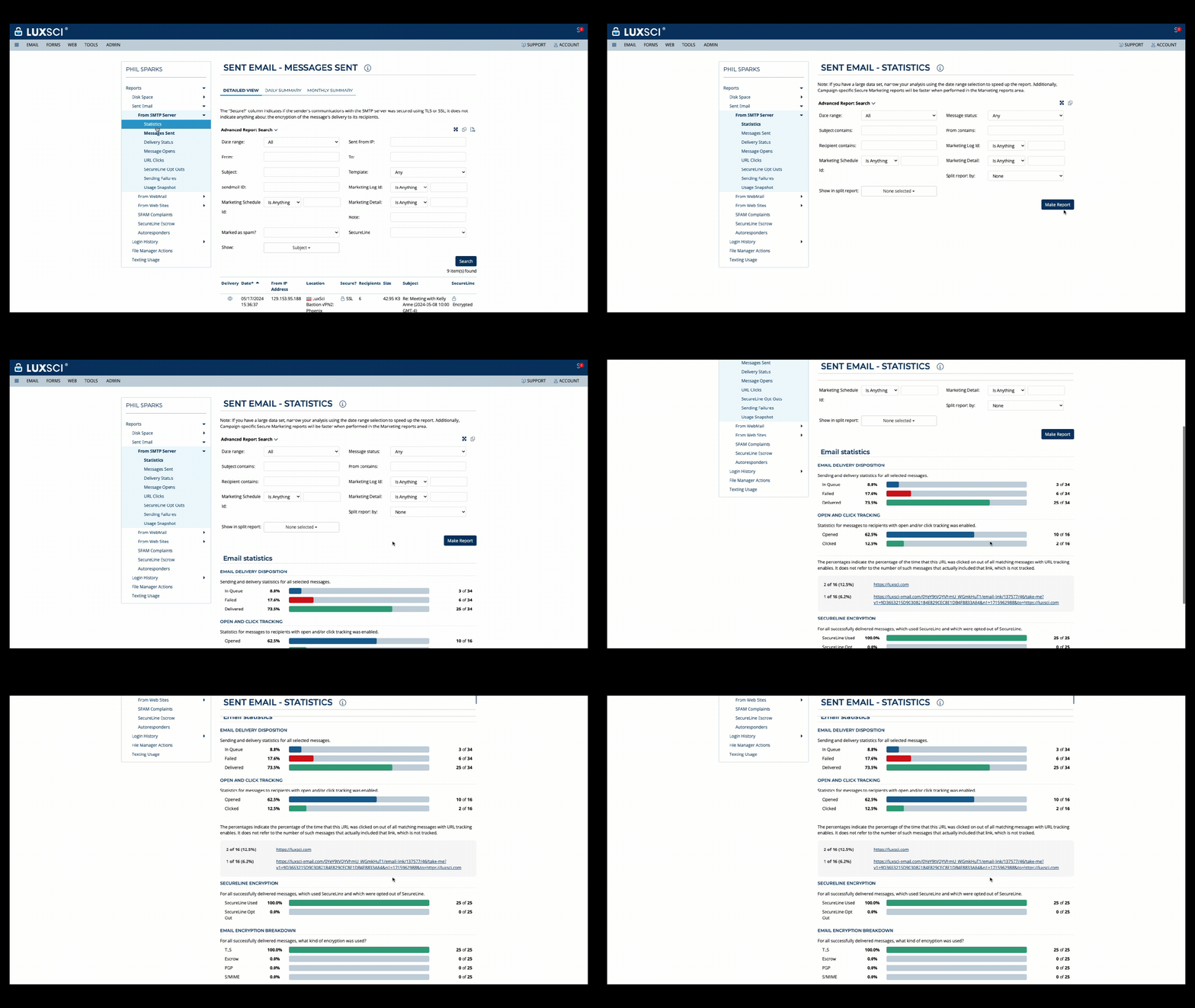
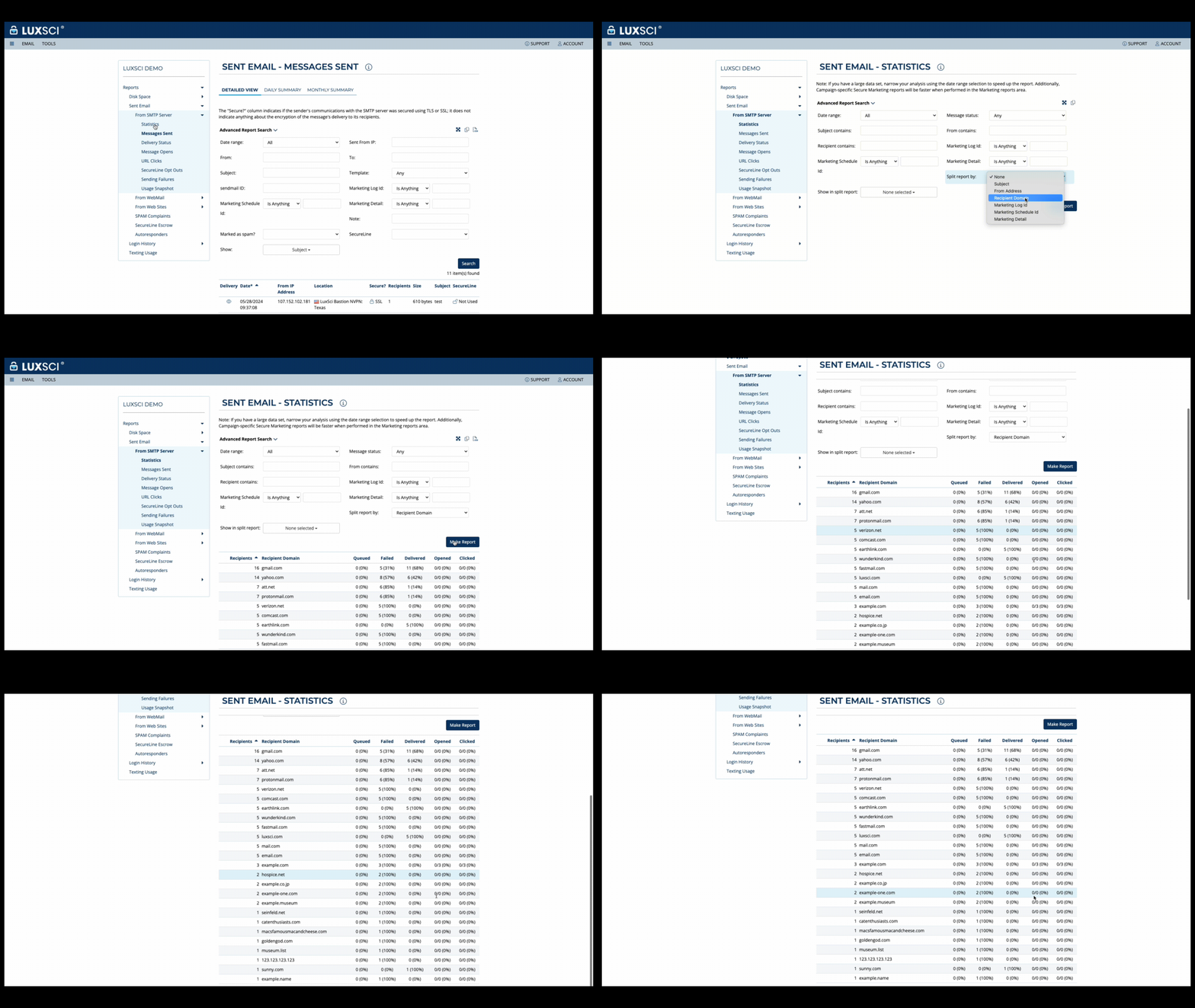


 SSL and TLS play critical roles in securing data transmission over the internet, and AES-256 is integral in their most secure configurations. The original standard was known as Secure Sockets Layer (SSL). Although it was replaced by Transport Layer Security (TLS), many in the industry still refer to TLS by its predecessor’s acronym. While TLS can be relied on for securing information at a high level—such as US Government TOP SECRET data—improper or outdated implementations of the standard may not provide much security.

