LuxSci

New Reporting Features Go Deeper on Email Deliverability Statistics, Trends and Analysis

LuxSci Secure Email Reporting Statistics

We recently rolled out new email reporting features, taking deliverability depth and analysis to new levels. If you’re a current LuxSci customer and haven’t checked them out, now’s the time. If you’re new to LuxSci, learn more below, and don’t hesitate to reach out for more info – or a demo.

LuxSci secure communications solutions have always featured rich reporting on email deliverability, including volumes and percentages for emails:

  • in queue
  • opened
  • clicked
  • failed
  • secured

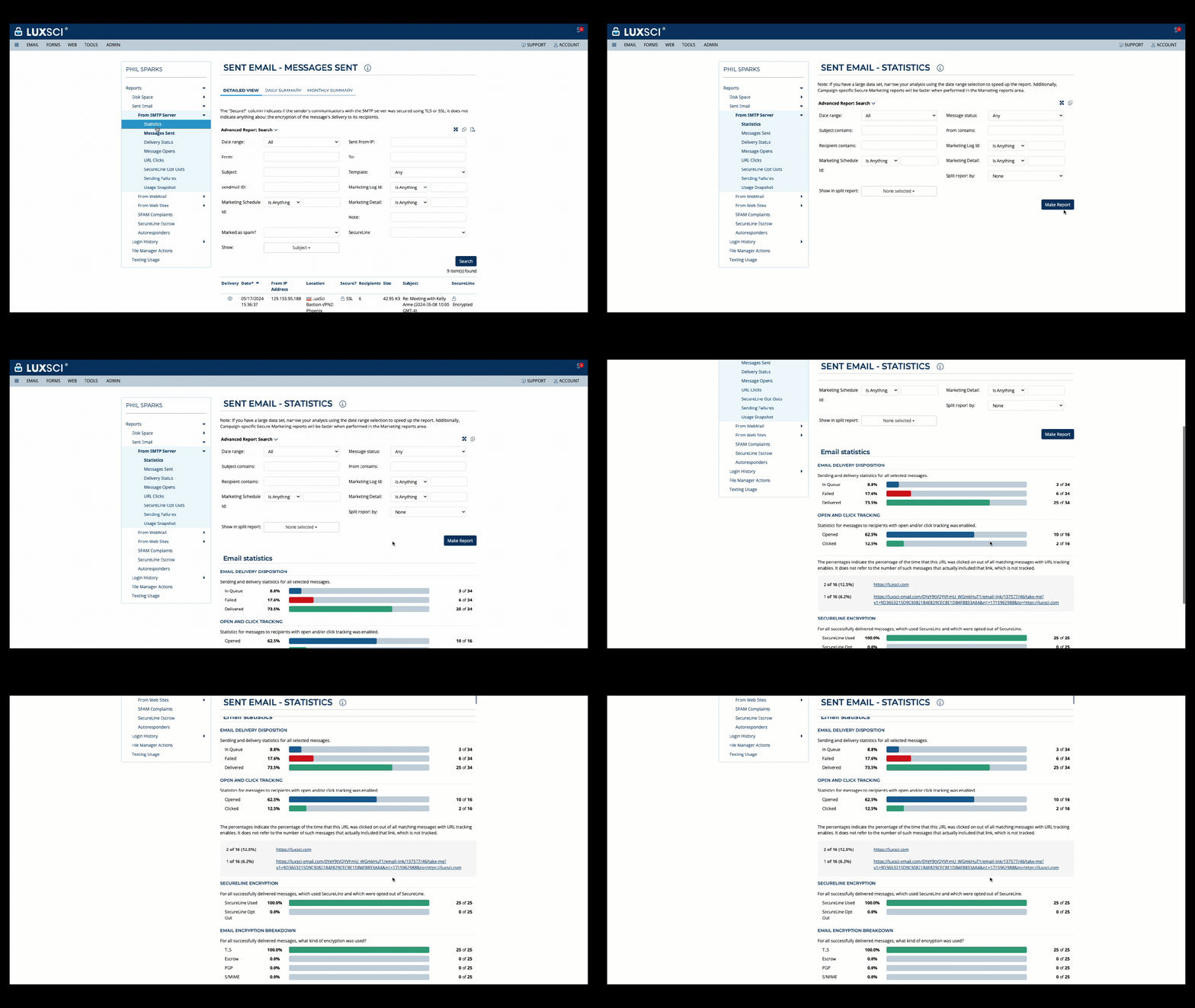
With our latest release, we made these powerful statistics easier to consume and analyze with an improved user interface for more efficiency and greater ease-of-use. Users can simply select the type of report they’d like and customize it using a range of filtering selections. This is great for diving deeper into your email performance to make adjustments on-the-fly, and to spot trends or opportunities for better engagement that you may have missed before.

New UI – Email Deliverability Statistics

LuxSci Secure Email Reporting Statistics

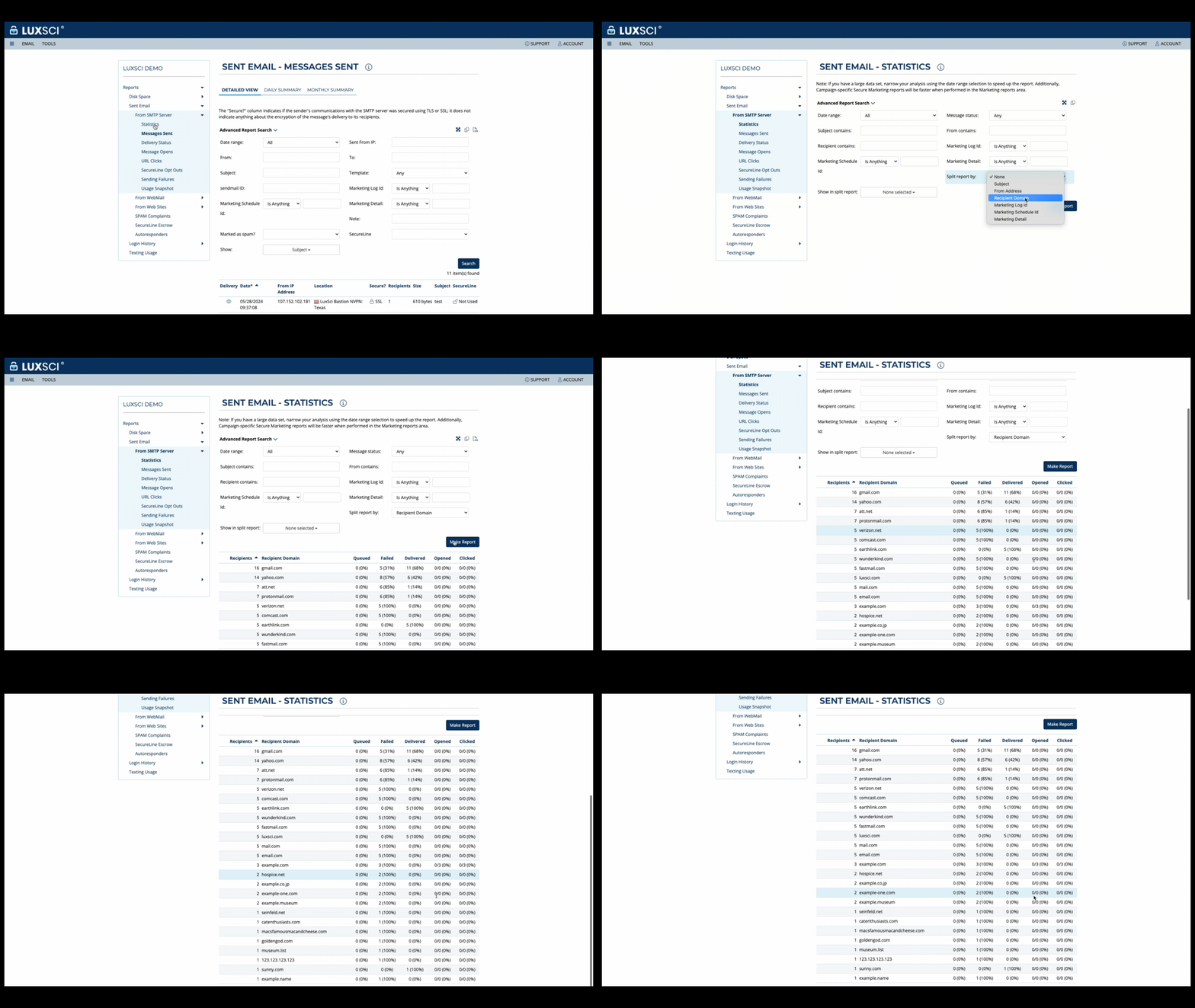
Get more granular, ID trends in real time with Split Reporting

As part of this release, we are pleased to introduce our Split Reporting feature, which empowers users to drill down on email deliverability statistics across a range of parameters, including:

  • subject
  • from address
  • recipient domains
  • marketing ID or campaign
  • custom field

For example, users can analyze email deliverability statistics by subject to determine which ones are performing best, by use case to track results by campaign, or to track performance by recipient email domains. With split reporting, users also can analyze email volumes across queued, delivered, opened, failed and clicked parameters, and determine click-through rates (CTR) to measure effectiveness and ROI of campaigns.

New Feature Example – Split Reporting by Recipient Domain

LuxSci Secure Email Split Reporting

If you’d like to learn more, reach out and connect with us today!


Picture of LuxSci

LuxSci

Get in touch

Find The Best Solution For Your Organization

Talk To An Expert & Get A Quote


A member of our staff will reach out to you

Get Your Free E-Book!

LuxSci High Email Deliverability Best Practices Paper

What you’ll learn:

Related Posts

Email Encryption

Is OCR Already Enforcing Email Encryption Under the New HIPAA Security Rule?

Healthcare organizations waiting for the final HIPAA Security Rule updates before improving email encryption and security may already be behind.

While the proposed changes to the HIPAA Security Rule are expected to be finalized in May, the direction from the U.S. Department of Health and Human Services Office for Civil Rights (OCR) is becoming increasingly clear. Across investigations, settlements, and enforcement actions, OCR continues emphasizing stronger technical safeguards, encryption, documented security programs, multi-factor authentication (MFA), risk analysis, and proactive cybersecurity operations.

For healthcare organizations, one area stands directly in the middle of all of these priorities: email.

Email remains a primary communication channel in healthcare — and one of the industry’s largest security vulnerabilities. From unauthorized PHI exposure to phishing attacks and ransomware delivery to account compromise, email continues to be at the center of healthcare cybersecurity incidents.

So, are the proposed HIPAA Security Rule changes hypothetical future guidance or a preview of OCR’s future enforcement expectations?

For healthcare email security, the implications are significant.

Email = Healthcare Cybersecurity Risk

Healthcare organizations rely on email for critical communications and healthcare workflows, including:

  • Patient communications
  • Care coordination
  • Claims and billing notifications
  • Marketing and engagement
  • Internal collaboration
  • Third-party vendor communications
  • Delivery of sensitive PHI

At the same time, attackers continue targeting email systems because they remain one of the easiest entry points into healthcare environments.

Insecure email workflows create unnecessary exposure of protected health information. Phishing campaigns are becoming more sophisticated. Credential theft attacks are bypassing traditional MFA methods. And business email compromise (BEC) attacks continue rising.

Recent OCR enforcement actions increasingly reflect these realities.

Organizations are being evaluated not simply on whether a breach occurred, but whether they implemented reasonable safeguards beforehand, including encryption, authentication controls, monitoring, access management, and documented risk mitigation processes.

For email systems specifically, that means healthcare organizations should expect increased scrutiny around:

  • Email encryption enforcement
  • MFA deployment
  • Audit logging and retention
  • Conditional access policies
  • Vendor security controls
  • Secure email delivery best practices
  • Segmentation and infrastructure isolation
  • Ongoing patch and vulnerability management

In many ways, email infrastructure is becoming a visible test of an organization’s overall cybersecurity posture.

Email Encryption Is Moving From Addressable to Required

Historically, healthcare organizations often interpreted HIPAA email encryption requirements with flexibility because encryption was technically categorized as an “addressable” safeguard under the Security Rule. But, OCR enforcement and broader cybersecurity realities are changing that interpretation rapidly.

Today, failing to encrypt sensitive healthcare communications increasingly creates both security and regulatory risk. The proposed Security Rule updates place even greater emphasis on encryption and technical safeguards. At the same time, OCR investigations continue examining whether organizations properly protected PHI in transit and at rest.

For healthcare email specifically, this creates several growing expectations:

  • Email encryption should be automated wherever possible
  • Human error should not determine whether PHI is protected
  • Organizations should maintain documented encryption policies
  • Secure delivery methods should adapt dynamically to recipient capabilities
  • Audit trails should demonstrate how messages were secured

At LuxSci, we have long believed that encryption should operate as a strategic layer of healthcare communications infrastructure, not as a manual user decision.

Our SecureLine email encryption technology automatically applies appropriate encryption methods based on organizational policies and delivery requirements, helping reduce the risks associated with human error while maintaining usability, deliverability and compliance. As enforcement expectations rise, this type of automated security enforcement is becoming increasingly important.

Traditional MFA May No Longer Be Enough

Another major shift emerging from both OCR enforcement trends and the proposed rule updates is the growing importance of stronger authentication models.

Healthcare organizations have historically viewed MFA deployment as sufficient protection. But attackers have adapted quickly.

MFA bypass attacks, token theft, session hijacking, and consent phishing campaigns are increasingly targeting healthcare users. As a result, regulators and cybersecurity experts are placing greater emphasis on phishing-resistant authentication approaches and contextual access controls.

For email environments, organizations should increasingly evaluate:

  • Whether MFA methods are resistant to phishing attacks
  • Conditional access policies based on device, location, and behavior
  • Account monitoring and anomaly detection
  • Administrative access protections
  • Session management controls
  • Logging and authentication auditing

The broader message is clear: healthcare organizations need authentication strategies designed for today’s threat landscape, not yesterday’s compliance checklist.

OCR Wants Proof, Not Just Policies

One of the clearest trends emerging from recent OCR activity is the increasing importance of documentation and operational evidence. Healthcare organizations must increasingly demonstrate not only that safeguards exist, but that they are consistently enforced, monitored, tested, and maintained over time.

For email systems, organizations should be prepared to demonstrate:

  • Email encryption policies
  • MFA enforcement records
  • Audit logs and message tracking
  • Vendor security documentation
  • Risk assessments involving email infrastructure
  • Patch management procedures
  • Employee security awareness training
  • Incident response procedures for email-based threats

This represents a broader shift in healthcare cybersecurity expectations.

The question is no longer: “Do you have email security controls?”

The question is increasingly: “Can you prove they are operationally effective?”

Healthcare Organizations Need a New Email Security Strategy

The healthcare industry is entering a new phase of cybersecurity enforcement.

OCR’s direction is becoming increasingly clear: organizations are expected to proactively secure systems handling PHI using modern, documented, and continuously maintained safeguards. For email security specifically, that means organizations should stop treating encryption, MFA, and secure communications as optional compliance requirements. Instead, they should view secure email infrastructure as a strategic component of enterprise cybersecurity and patient trust.

At LuxSci, we help healthcare organizations modernize secure communications with HIPAA compliant email infrastructure designed specifically for healthcare environments, including flexible encryption, secure delivery, auditability, high deliverability, access controls, and dedicated infrastructure options.

The proposed HIPAA Security Rule updates may not yet be final. But, OCR is already signaling where healthcare cybersecurity enforcement is headed next. For organizations relying on email to communicate with patients, members, customers, and partners, the time to examine your secure email infrastructure is now.

Connect with our experts to learn more using the form at the top of this page!

LuxSci HIPAA Compliant Email for Mid-Sized Healthcare Organizations

LuxSci Launches Enterprise-Grade HIPAA Compliant Email Security for Mid-Sized Healthcare Organizations

New right-sized offering brings advanced encryption, easy API integration, and HITRUST-certified compliance to the most underserved segment in healthcare email — with pricing starting at $99/month

CAMBRIDGE, MA — May 5, 2026 — LuxSci, a leading provider of HIPAA compliant secure healthcare communications, today announced the launch of LuxSci Secure High Volume Email for mid-sized healthcare organizations, the industry’s trusted HIPPA-compliant email solution now packaged and priced for mid-size healthcare organizations. Regional health systems, health plans, specialty group practices, urgent care networks, and multi-site regional providers can now access LuxSci’s enterprise-grade email security and encryption infrastructure at published, volume-based pricing — with no custom quote required.

LuxSci Secure High Volume Email for mid-sized healthcare organizations delivers the same HITRUST CSF r2-certified email security and flexible encryption capabilities that power communications for some of the largest healthcare organizations in the industry, including Athenahealth, 1-800 Contacts, Hinge Health and Eurofins. The new LuxSci mid-sized offer is tiered and priced for organizations with email sending volumes of between 300 and 99,000 emails per month.

LuxSci Secure High Volume Email is built on the company’s proprietary SecureLine™ encryption technology, which automatically selects the optimal email encryption method — TLS, secure portal fallback, PGP, or S/MIME — on a per-recipient basis at the time of delivery, with no action required from senders or recipients. This intelligent, adaptive encryption method goes significantly beyond TLS-only or portal fallback models offered by basic platforms, giving mid-market healthcare organizations the flexibility and cybersecurity depth they need as HIPAA regulations tighten and email threats continue to get more sophisticated.

Key capabilities include:

  • Automatic email encryption via SecureLine™ — encrypt every email and its content, including Protected Health Information (PHI), with per-recipient adaptive encryption across TLS, portal fallback, PGP, and S/MIME.
  • Advanced REST API with webhooks for dataflows into your systems — supports unlimited messages/hour with failover, queuing, plus webhooks can push email engagement data back to EHRs, CRMs, RCM and customer data platforms.
  • Comprehensive audit logging and reporting — message-level tracking, delivery status, engagement reporting, and downloadable reports for compliance officers.
  • HITRUST CSF r2 certification, BAA, GDPR-compliant, and US-EU Privacy Framework agreement all included.
  • Microsoft 365 and Google Workspace overlay — use LuxSci’s Secure Email Gateway add-on to integrate directly with existing M365 or Google Workspace environments, adding HIPAA-compliant encryption without migration or user retraining.
  • HIPAA-compliant patient engagement — secure outbound email campaigns with PHI-powered hyper-segmentation, automated workflows, and personalized emails for marketing campaigns, proactive patient communications, appointment reminders, care gap outreach, new plan enrollments, healthcare education, and more — with LuxSci Secure Marketing add-on.

New Published LuxSci Pricing

LuxSci Secure High Volume Emai for mid-sized healthcare organizations features published pricing based on monthly sending volume:

Monthly Send VolumeMonthly Price
300 to 9,999 emails/month $99/month
10,000 – 29,999 emails/month $199/month
30,000 – 49,999 emails/month $299/month
50,000 – 99,999 emails/month $399/month
100,000+ emails/month Custom

“Mid-size healthcare organizations have been underserved for too long, forced to choose between inadequate email security tools that weren’t built for healthcare and HIPAA compliance and enterprise level solutions that felt too big or too complex,” said Mark Leanord, CEO of LuxSci. “Our new secure email packaging for mid-sized organizations changes that. We’re making the same encryption depth, ease of integration into EHRs, CRMs and other systems, and compliance rigor that powers our largest customers accessible for mid-sized organizations to easily evaluate and buy.”

Timing and Market Context

The launch comes at a critical moment for mid-size healthcare organizations. The HHS HIPAA Security Rule overhaul, expected to finalize in mid-2026, is anticipated to mandate email encryption as a required safeguard, elevating email security from addressable best practice to a regulatory requirement for thousands of organizations that have not yet upgraded their email security and compliance posture. LuxSci secure email is designed to meet these requirements, backed by HITRUST CSF r2 certification and the company’s 20-year track record in secure healthcare communications.

Availability

LuxSci Secure Email for mid-sized healthcare organizations is available immediately. Pricing and product details are published here.

Users can contact LuxSci to set up a call or DEMO.

About LuxSci

LuxSci is a leading provider of secure healthcare communications solutions for the healthcare industry. The company offers secure email, marketing, forms and hosting, delivering HIPAA‑compliant communication solutions that enable organizations to safely manage and transmit sensitive data, including protected health information (PHI). Founded in 1999 and recently merged with digital care and telehealth provider Ovia Health, LuxSci serves more than 2,000 customers across healthcare verticals, including providers, payers, suppliers, and healthcare retail, home care providers, and healthcare systems, as well as organizations operating in other highly regulated industries. LuxSci is HITRUST‑certified with current customers including Athenahealth, 1800 Contacts, Lucerna Health, Eurofins, and Rotech Healthcare, among others.

###

Media Contact:
Pete Wermter, CMO

pwermter@luxsci.com

Patient Engagement ROI

Patient Engagement ROI: The Business Case for Secure Email in Healthcare

Every IT investment in healthcare today is being evaluated through a sharper lens.

Budgets are tighter. Expectations are higher. AI is the shiny object. Across healthcare organizations, leadership is asking the same question: how does this investment drive measurable results?

That’s where Patient Engagement ROI comes in, and where many traditional approaches fall short.

The Hidden Cost of Ineffective Communication

Patient engagement isn’t just a healthcare priority. It’s a financial one.

Missed appointments, gaps in care, and low response rates all translate directly into increased costs, operational inefficiencies, and a poor patient experience. Yet many organizations still rely on fragmented, manual, or non-personalized communication strategies.

Why?

For many, it’s because of uncertainty around HIPAA compliance, and what’s allowed and not allowed. Too often, healthcare IT and marketing teams avoid using valuable patient data to avoid security and compliance risks, especially over the email channel. The result is often generic outreach that fails to connect, and fails to deliver meaningful results, such as better health outcomes, fewer missed appointments, and increased sales.

How Secure Email Delivers ROI in Healthcare

Among all healthcare IT investments, secure email stands out for one reason: it directly impacts both patient engagement and staff and process efficiency.

With the right HIPAA-compliant marketing automation platform, secure email enables organizations to:

  • Deliver personalized, relevant messages using PHI data in their emails
  • Automate outreach at scale with triggered, engagement-driven campaigns
  • Improve patient response rates and adherence for better outcomes
  • Reduce manual workload across teams for greater productivity

This is where patient engagement ROI becomes tangible.

Instead of one-size-fits-all messaging, organizations can connect with patients based on unique needs and health conditions, such as appointments, care plans, preventative care reminders, new product needs, and more. And because it’s automated, these improvements scale without adding to workloads.

Turning Compliance into Better Outcomes and Growth

HIPAA is often viewed as a constraint. In reality, it’s an opportunity. If you have the right tools.

At LuxSci, we focus exclusively on secure healthcare communications, helping organizations safely unlock the value of their data and communications. Our solutions are designed to remove the friction between compliance and communication, so you don’t have to choose between security and growth.

With capabilities like flexible encryption, advanced segmentation, and high-volume delivery, secure email marketing becomes more than a safeguard, it becomes a growth driver.

And with industry-leading security performance and recognition, organizations can trust that their communications are protected at every level with LuxSci.

Scaling Patient Engagement ROI with Automation

The real power of secure email comes when it’s combined with automated healthcare workflows.

HIPAA compliant marketing automation allows you to build multi-step, data-driven patient journeys that run continuously in the background, taking adaptive steps based on each individual’s email engagement activity. This can include:

  • Appointment reminders that reduce no-shows
  • Follow-up communications that improve outcomes
  • Preventative care outreach for check-ups, annual test and care reminders
  • New product offers, upgrades and promotions
  • Educational email campaigns that drive long-term engagement and better health

Each interaction is an opportunity to improve both patient experience and your financial performance. Over time, these incremental gains compound, resulting in significantly higher patient engagement that delivers real value to your business.

Why Act Now?

Healthcare organizations can no longer afford IT investments that don’t deliver clear, measurable value. Secure email, powered by HIPAA compliant marketing automation, offers one of the most direct paths to improving engagement, efficiency, and outcomes, all while maintaining the highest standards of security.

Ready to see how LuxSci secure email can transform your patient engagement into real ROI?

Connect with us today or book a demo to explore how HITRUST-certified, HIPAA-compliant marketing automation can work for your organization.

What Is B2B Marketing in Healthcare?

B2B marketing in healthcare describes the promotion of products and services to healthcare businesses rather than to patients or the public. The audience can include provider groups, payers, laboratories, medical suppliers, health technology firms, and service companies working across the sector. The work calls for a more measured approach than many other business categories because buying decisions tend to involve several stakeholders, internal review, and close attention to data handling, workflow impact, and commercial fit. Good execution depends on clear communication, useful content, and a strong sense of how healthcare organizations evaluate change.

Why healthcare buying requires a different approach

Healthcare companies rarely move through a buying process in a straight line. One person may open the conversation, though several others can influence whether it goes any further. Finance may want a clearer commercial case. Operations may focus on staffing, efficiency, and implementation pressure. IT may look at access, system fit, and data management. Compliance teams may review privacy implications or contractual language. B2B marketing in healthcare works better when the writing reflects those realities early. Buyers are looking for material that helps them assess risk, discuss options internally, and move forward with fewer unanswered questions.

A Difference in stakeholder priorities

A single account can contain several audiences at once. That is part of what makes this area demanding. A hospital operations leader may care about throughput and day to day workflow. A payer executive may be more interested in administrative efficiency or review times. A supplier may focus on coordination, ordering processes, or communication across partner relationships. Content becomes stronger when it takes those different perspectives seriously. The message does not need to become overly technical. It needs enough accuracy and relevance for each reader to feel that the company understands the conditions attached to their role.

Why credibility matters in every channel

Healthcare buyers tend to read promotional material carefully. They notice vague claims, inflated language, and unsupported promises very quickly. That is why credibility has to be built into the writing itself. A clean explanation of a business problem can carry real weight. A grounded case example can help a reader picture how a solution would work in practice. Clear language around implementation, support, privacy, or service structure can also help keep the conversation moving. When protected health information enters the picture, HIPAA may become part of the review as well, especially for companies handling regulated data or supporting covered entities and business associates.

Content to support real decisions

The most useful assets in this space are the ones that help buyers think more clearly. An article can frame a problem in a way that supports internal discussion. An email sequence can keep a company visible while review is taking place. A service page can answer practical questions before a meeting is booked. B2B marketing in healthcare gains traction when content has a clear job and a clear reader. That focus usually produces stronger engagement than broad copy built around generic thought leadership language. Buyers respond well to material that respects their time and gives them something worth passing along.

What strong performance looks like

Success in healthcare is rarely captured by surface numbers alone. Traffic and opens may show that content has reached people, though those signals do not say much on their own about buying intent. Better indicators include repeat visits from the same organization, replies from relevant contacts, deeper engagement with security or implementation pages, and growing activity across several stakeholders in one account. Those patterns can tell commercial teams where interest is becoming more serious. B2B marketing in healthcare proves its value when it helps those teams follow up with better timing, better context, and material that fits the next stage of evaluation.

You Might Also Like

How to Set Up HIPAA Compliant Email

Why Is Email Deliverability Important?

Email deliverability is important as it directly determines whether healthcare organizations can successfully communicate with patients, providers, and business partners when it matters most. Poor email deliverability can result in missed appointments, delayed care coordination, lost revenue, and compliance violations that put both patient safety and organizational reputation at risk. For healthcare providers, payers, and suppliers, maintaining high email deliverability rates means ensuring that appointment reminders reach patients, lab results arrive on time, and billing communications are received without delay. When deliverability fails, the entire healthcare communication chain breaks down, creating gaps in the patient journey and administrative efficiency.

Email Deliverability Affects Patient Care Coordination

Patient care coordination depends heavily on timely, reliable email communication between healthcare providers, specialists, and patients themselves. When email deliverability rates drop, appointment reminders fail to reach patients, leading to increased no-show rates and delayed care. Lab results that end up in spam folders can delay treatment decisions, while referral communications that never arrive can disrupt the continuity of care between primary physicians and specialists. Healthcare organizations with poor email deliverability face cascading effects throughout their patient care processes. A single missed communication can lead to delayed diagnoses, postponed treatments, and frustrated patients who feel disconnected from their care team. Emergency departments may not receive timely notifications about incoming patients, while discharge instructions delivered via email may never reach patients who need them most. The ripple effects of poor email deliverability extend far beyond simple communication failures, directly impacting patient outcomes and satisfaction scores.

Poor Email Deliverability Creates Revenue Loss

Revenue loss from poor email deliverability affects missed appointments, delayed payments, failed billing communications, and reduced patient engagement with healthcare services. When billing statements and payment reminders fail to reach patients due to deliverability issues, healthcare organizations experience increased accounts receivable aging and higher collection costs. Insurance claim notifications and EOBs that end up in spam folders can delay reimbursement processes, affecting cash flow and financial stability. Healthcare organizations also lose revenue through reduced patient engagement with preventive care services and elective procedures. Email campaigns promoting wellness programs, health screenings, and specialized services generate lower response rates when deliverability problems prevent messages from reaching patient inboxes. The financial impact compounds over time, as organizations invest in email marketing and patient communication tools that fail to deliver expected returns due to underlying email deliverability challenges.

Compliance Risks When Deliverability Fails

Healthcare organizations face large compliance risks when email deliverability problems prevent timely delivery of required communications. HIPAA regulations require covered entities to implement reasonable safeguards for protecting patient information, and failed email delivery can create documentation gaps that expose organizations to regulatory scrutiny. When patient communications fail to reach their intended recipients, or worse, reach an unintended recipient, healthcare organizations compliance lapses and data breaches can occurr. Failed email deliverability can also create audit trail problems, as organizations may not realize that required communications never reached patients or business partners. This lack of visibility into delivery failures can lead to compliance violations that result in fines, penalties, and increased regulatory oversight. Healthcare organizations operating under value-based care contracts face additional risks when poor email deliverability prevents timely communication of quality metrics and performance data to payers and regulatory bodies.

Email Deliverability Impacts Operational Efficiency

Operational efficiency in healthcare depends on smooth communication flows between departments, providers, external partners, and patients and customers. When email deliverability issues disrupt these communication channels, healthcare organizations experience increased administrative burden, duplicated efforts, and workflow interruptions. Staff members spend additional time following up on communications that may have been filtered into spam folders or blocked entirely, reducing productivity and increasing operational costs. Poor email deliverability also affects supply chain management, as communications with vendors, suppliers, and business partners may fail to reach their intended recipients. Order confirmations, shipping notifications, and inventory updates that end up in spam folders can lead to supply shortages, delivery delays, and increased procurement costs. Healthcare organizations may need to implement alternative communication methods, such as phone calls or postal mail, which are more expensive and time-consuming than email.

Technology Integration Challenges

Healthcare organizations rely on integrated technology systems that depend on reliable email deliverability for automated notifications, alerts, and data exchanges. Electronic health record systems, customer data platforms, and patient portal platforms all generate email communications that can be affected by deliverability issues. When these automated systems cannot reliably deliver messages, healthcare organizations may experience system-wide communication breakdowns that affect multiple departments and workflows. Poor email deliverability can also disrupt integration with third-party healthcare applications, telemedicine platforms, and health information exchanges. These systems rely on email notifications to alert providers about new patient data, test results, or system updates. When deliverability problems prevent these notifications from reaching their intended recipients, healthcare organizations may miss important information that affects patient care decisions and operational planning.

Building Sustainable Practices

Healthcare organizations can build sustainable email deliverability practices by implementing authentication protocols, monitoring sender reputation, and maintaining clean recipient lists. Regular audits of email deliverability performance help identify problems before they affect patient care, customer communications, or operational efficiency. Organizations benefit from establishing dedicated resources for managing email deliverability, including staff training on best practices and ongoing monitoring of delivery metrics across different communication channels.

Sustainable email deliverability practices also include developing contingency plans for communication failures, such as alternative contact methods and backup notification systems. Healthcare organizations can reduce their vulnerability to email deliverability issues by diversifying their communication channels while maintaining primary reliance on email for routine communications. This balanced approach helps ensure that patient care and operational efficiency remain intact even when challenges arise.


Want to learn more? Reach out and contact us today.

HIPAA Compliant Email Step by Step Guide

Effective HIPAA Compliant Email Campaigns: A Step-By-Step Guide

In the healthcare industry, ensuring HIPAA compliance is essential when carrying out email campaigns that contain protected health information (PHI), including for both transactional and marketing emails.

Whether sending appointment reminders, treatment plans, payment information, or marketing campaigns, HIPAA compliant email services are essential for securely engaging with patients and effectively leveraging PHI in your messages. For this you will need HIPAA compliant marketing solutions.

However, a constant challenge faced by healthcare companies is carrying out email campaigns that are both effective and HIPAA compliant. On one hand, some organizations fail to recognize when they’re including PHI in their messaging and fall out of compliance. On the other hand, while companies are compliant in their handling of PHI, their email campaigns fail to use this information to personalize communications and deliver better outcomes as a result.

With all this in mind, this step-by-step guide will walk you through how to run effective HIPAA-compliant email campaigns that combine security and personalization for enhanced patient engagement.

Step 1: Choose a HIPAA Compliant Email Service Provider

The first, and undoubtedly, most important step to running successful HIPAA compliant email campaigns is using a secure and reliable delivery service. To ensure compliance with HIPAA’s privacy and security rules, your chosen platform must offer end-to-end encryption, secure data storage, and other key cybersecurity measures. Additionally, a comprehensive email delivery service will provide the tools and features you need, such as design and segmentation functionality, to optimize the effectiveness of your healthcare engagement campaigns.

Perhaps the most significant benefit of running campaigns through a HIPAA compliant email provider is that it removes all the guesswork from what counts as PHI in the first place; you can feel fully assured that all your emails are both secure and in line with HIPAA regulations.

Step 2: Ensure You Have a Business Associate Agreement (BAA)

A key determiner of a truly HIPAA compliant email platform, like LuxSci, is being willing to provide you with a Business Associate Agreement (BAA). A BAA is a crucial aspect of HIPAA compliance, as it lays out, in writing, that each party acknowledges their responsibility to protect PHI and, subsequently, their respective liability in the event of a data breach.

With this in mind, a key part of your due diligence when choosing an email delivery platform is ensuring it is willing to supply you with a BAA. Many organizations are surprised to find that many popular delivery solutions, such as Mailchimp and SendGrid do not sign BAAs and, as a result, aren’t HIPAA-compliant email services.

Step 3: Secure Patient Consent & Opt-In Best Practices

Before sending emails that potentially contain PHI, it’s essential to secure patient consent: they must explicitly agree to receive information via email. Obtaining patient consent shows that your organization respects the patient’s right to privacy and grants them greater control over how their data is used – something that people are growing increasingly conscious of. This is particularly important for marketing campaigns, benefits communications, and proactive notifications like medical equipment upgrades or prescription verifications.

By following opt-in best practices, you’ll not only ensure HIPAA- compliance but also build trust with your patients, making them more receptive to your healthcare engagement efforts.

Step 4: Segment Your Campaigns for Better Engagement

Now you’ve signed up for a HIPAA-compliant email services provider and have secured patient consent, it’s time to segment your audience. Segmentation and personalization ensure that patients only receive the communications most relevant to them, improving the effectiveness of your campaigns.

For instance, you could create email campaigns for:

  • Appointment reminders: for upcoming check-ups or follow-ups.
  • Billing and payment: notifications that include secure links for payment.
  • Proactive notifications: about prescription renewals or in-home care.
  • Marketing: proactive offers, equipment upgrades, new services and more.

In pursuit of this, LuxSci Secure Marketing enables you to safely create and manage different patient segments, ensuring that emails containing PHI reach the appropriate audience, in addition to being sent securely.

Automated Workflow Effective HIPAA Compliant Email Campaigns: A Step-By-Step Guide

Step 5: Automate for Efficiency and Accuracy

Automation is a vital tool for scaling your HIPAA-compliant email campaigns. As the number of messages you send out starts to grow, automating as much of the process as possible will save you considerable time and effort.

Whether you’re sending appointment reminders, treatment plan updates, or marketing emails, automation reduces human error and ensures timely delivery. This not only saves time but ensures consistent, efficient communication with your patients.

Step 6: Use Advanced Encryption for PHI

With PHI being a core component of many healthcare communications, you must ensure that every email you deliver is encrypted. HIPAA regulations require emails to be encrypted at rest, including when stored, and in transit, and when being sent to patients, so the sensitive data isn’t readable by a hacker if it is stolen.

While not a standard feature in all email delivery services, LuxSci’s SecureLine technology provides flexible encryption options such as TLS and Escrow, applying the right level of encryption based on the email’s content and the recipient’s security posture.

Step 7: Monitor and Report for Continuous Improvement

Lastly, it’s important to note that maintaining HIPAA compliance isn’t a one-time obligation. Continuous monitoring and reporting are crucial for identifying potential security flaws, compliance issues, and improving the effectiveness of your email campaigns.

This is particularly important for large-scale campaigns, such as lead generation for retail healthcare products or services, and order confirmations. Comprehensive reporting tools allow you to track email deliverability, open rates and response rates, recipient domain performance, and other key performance metrics, all while ensuring that your PHI is handled compliantly.

HIPAA Compliant Email is Critical for Healthcare Marketing Campaigns

Running a successful HIPAA compliant email marketing campaign is all about balancing security with data-driven marketing strategies. By following the steps detailed in this article, you’ll get increasingly more from your healthcare engagement efforts: building stronger connections with patients and, ultimately, maximizing the ROI of your marketing spend.

As the most experienced HIPAA-compliant email provider, LuxSci specializes in providing high performance, secure solutions that ensure your messages comply with all HIPAA regulations – no matter the scale of your campaign, or the use case.

If you’d like to learn more about how LuxSci can help your organization achieve its healthcare marketing goals, contact us today!

Email HIPAA Compliance

What Is HIPAA Compliant Email Hosting?

HIPAA compliant email hosting provides secure email infrastructure that meets HIPAA Security Rule requirements for protecting electronic protected health information (ePHI). These hosting services implement administrative, physical, and technical protections while offering business associate agreements to healthcare organizations that need to transmit patient data via email communications. Healthcare providers rely heavily on email for patient communications, care coordination, and administrative tasks. Standard email hosting services lack the security controls and compliance features needed to protect PHI, making specialized HIPAA hosting solutions necessary for organizations handling sensitive health information.

Security Infrastructure Requirements

HIPAA compliant email hosting requires a security architecture that protects data at rest and in transit. Hosting providers must implement encryption protocols, access controls, and network security measures that meet or exceed HIPAA technical safeguards specifications. Data center facilities housing HIPAA compliant email servers need physical security controls including biometric access systems, surveillance cameras, and environmental protections. These facilities maintain certifications like SOC 2 Type II to show their commitment to security and operational excellence.

Network infrastructure must include firewalls, intrusion detection systems, and secure communication channels that prevent unauthorized access to email data. Hosting providers regularly implement network segmentation to isolate healthcare client data from other customers and security threats.

Business Associate Agreement Obligations

Healthcare organizations using third-party email hosting services must establish business associate agreements (BAAs) with their hosting providers. These contracts outline how the hosting company will protect PHI and comply with HIPAA regulations on behalf of the healthcare organization. Hosting providers accepting BAA responsibilities agree to implement appropriate security measures, report potential breaches, and allow healthcare organizations to audit their compliance practices. The BAA also limits how hosting companies can use or disclose PHI beyond the services specified in the agreement.

Liability provisions within BAAs help protect healthcare organizations from compliance violations caused by hosting provider security failures. Healthcare organizations remain responsible for ensuring their hosting providers maintain adequate security controls and comply with HIPAA requirements.

Data Backup and Recovery Capabilities

HIPAA compliant email hosting services must provide reliable backup and disaster recovery systems that protect against data loss while maintaining security controls. These systems ensure healthcare organizations can restore email communications and maintain business continuity after technical failures or security incidents. Backup procedures need encryption and access controls that match the security standards applied to primary email data. Hosting providers typically maintain multiple backup copies across geographically distributed facilities to protect against localized disasters or system failures.

Recovery time objectives and recovery point objectives help healthcare organizations evaluate hosting provider capabilities and ensure service levels meet their operational needs. Many providers offer guaranteed recovery times and service level agreements that include financial penalties for failing to meet performance commitments.

Email Server Administration and Maintenance

Managed email hosting services handle server administration tasks including software updates, security patches, and performance optimization. This approach helps healthcare organizations maintain HIPAA compliance without requiring internal technical expertise for email infrastructure management. Server maintenance activities must follow change control procedures that document modifications and assess potential security impacts. Hosting providers schedule maintenance during off-peak hours to minimize disruptions to healthcare operations and patient communications.

Performance tracking helps ensure email systems can handle healthcare organization communication volumes without delays that might impact patient care. Hosting providers monitor server resources, email delivery rates, and system availability to identify potential issues before they affect service quality.

Integration with Healthcare Applications

HIPAA compliant email hosting platforms often provide APIs and integration capabilities that connect with electronic health record systems, practice management software, and other healthcare applications. These integrations enable automated email communications while maintaining security and compliance controls. Directory services allow healthcare organizations to manage user accounts and access permissions centrally. Integration with existing authentication systems like Active Directory helps maintain consistent security policies across all organizational technology resources.

Email archiving features help healthcare organizations meet record retention requirements while providing search capabilities for compliance audits and legal discovery requests. These archives maintain the same security controls as active email data and provide long-term storage for regulatory compliance.

Cost Structure and Service Models

HIPAA compliant email hosting services typically use subscription-based pricing models that scale with the number of users or email volumes. Pricing often includes security features, compliance support, and administrative services that would require significant internal resources to implement independently. Hosted solutions eliminate the capital expenses associated with purchasing and maintaining email server hardware. Healthcare organizations can redirect IT budget from infrastructure costs toward other patient care priorities while ensuring email communications remain secure and compliant.

Service level agreements define hosting provider responsibilities and performance guarantees. These agreements generally include uptime commitments, support response times, and security incident response procedures that help healthcare organizations plan their operations and ensure reliable email communications.

Patient Engagement ROI

Patient Engagement ROI: The Business Case for Secure Email in Healthcare