LuxSci

New Reporting Features Go Deeper on Email Deliverability Statistics, Trends and Analysis

LuxSci Secure Email Reporting Statistics

We recently rolled out new email reporting features, taking deliverability depth and analysis to new levels. If you’re a current LuxSci customer and haven’t checked them out, now’s the time. If you’re new to LuxSci, learn more below, and don’t hesitate to reach out for more info – or a demo.

LuxSci secure communications solutions have always featured rich reporting on email deliverability, including volumes and percentages for emails:

  • in queue
  • opened
  • clicked
  • failed
  • secured

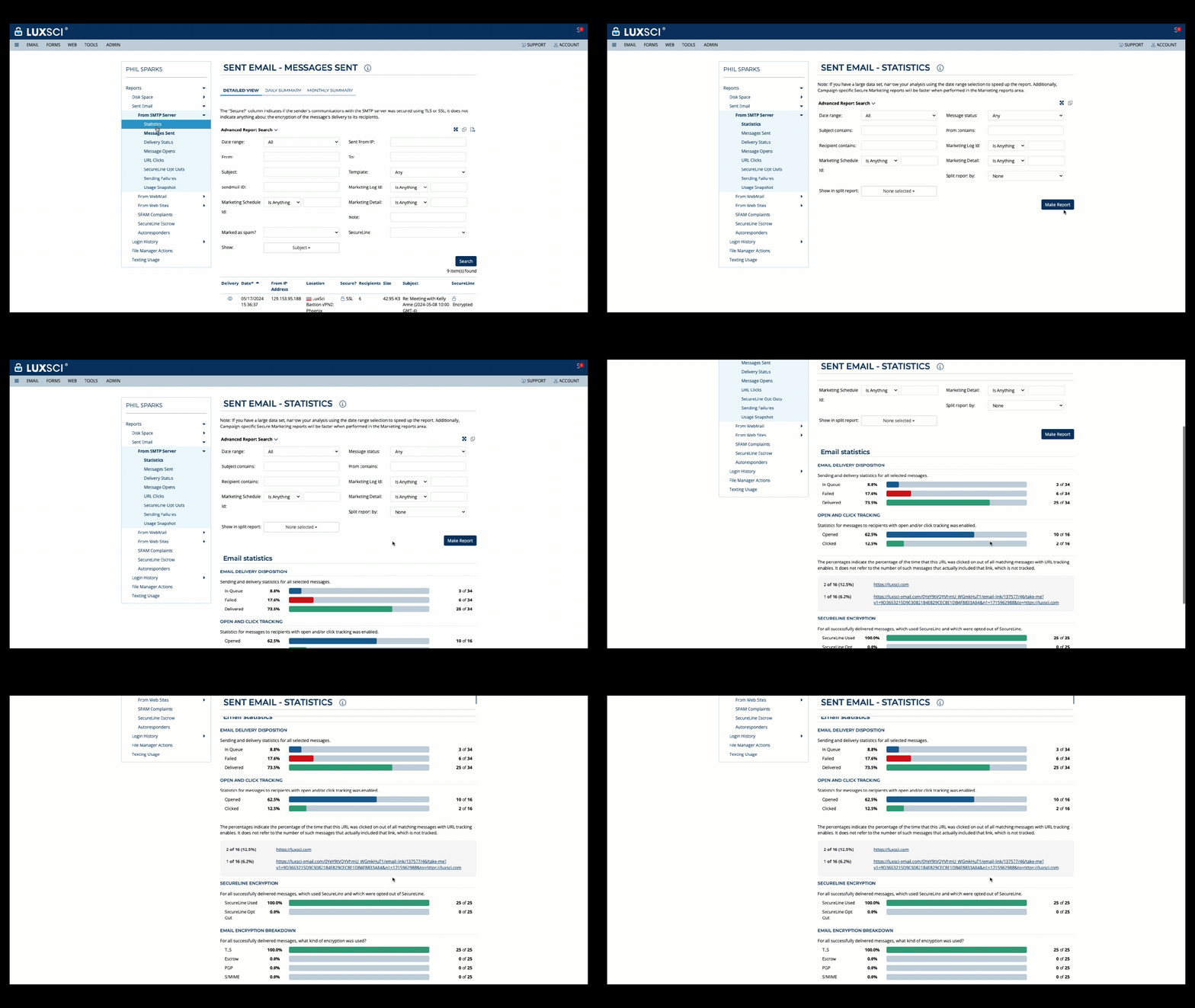
With our latest release, we made these powerful statistics easier to consume and analyze with an improved user interface for more efficiency and greater ease-of-use. Users can simply select the type of report they’d like and customize it using a range of filtering selections. This is great for diving deeper into your email performance to make adjustments on-the-fly, and to spot trends or opportunities for better engagement that you may have missed before.

New UI – Email Deliverability Statistics

LuxSci Secure Email Reporting Statistics

Get more granular, ID trends in real time with Split Reporting

As part of this release, we are pleased to introduce our Split Reporting feature, which empowers users to drill down on email deliverability statistics across a range of parameters, including:

  • subject
  • from address
  • recipient domains
  • marketing ID or campaign
  • custom field

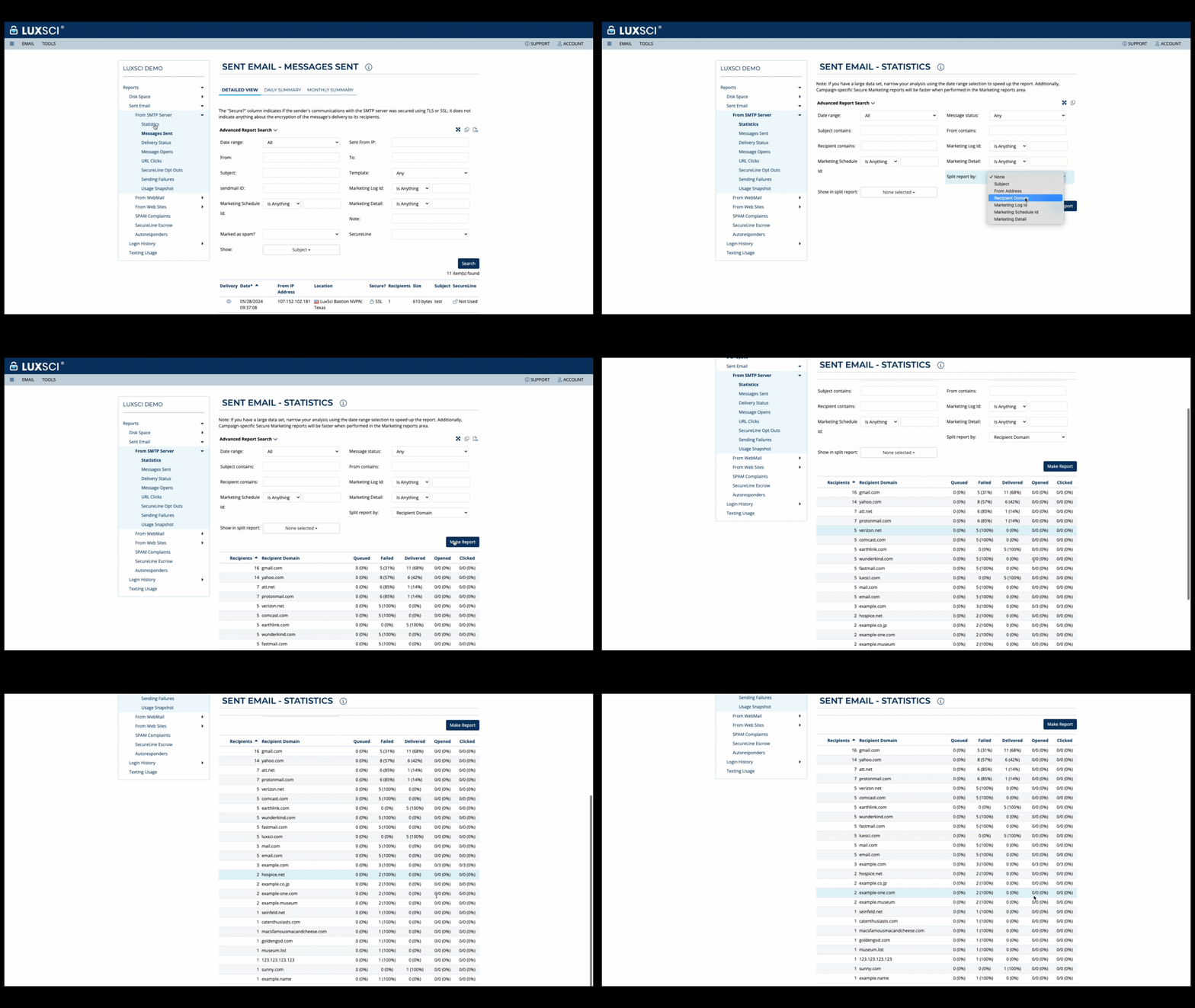
For example, users can analyze email deliverability statistics by subject to determine which ones are performing best, by use case to track results by campaign, or to track performance by recipient email domains. With split reporting, users also can analyze email volumes across queued, delivered, opened, failed and clicked parameters, and determine click-through rates (CTR) to measure effectiveness and ROI of campaigns.

New Feature Example – Split Reporting by Recipient Domain

LuxSci Secure Email Split Reporting

If you’d like to learn more, reach out and connect with us today!


Picture of LuxSci

LuxSci

Get in touch

Find The Best Solution For Your Organization

Talk To An Expert & Get A Quote


A member of our staff will reach out to you

Get Your Free E-Book!

LuxSci High Email Deliverability Best Practices Paper

What you’ll learn:

Related Posts

LuxSci G2

LuxSci Awarded 20 Badges in the G2 Summer 2026 Reports

We’re excited to announce that LuxSci has again been recognized by G2 with 20 badges in its just-released Summer 2026 Reports, highlighting our continued leadership in secure healthcare communications and HIPAA compliant email solutions.

The new LuxSci G2 recognitions span several categories, including:

  • Best Estimated ROI
  • Best Support
  • High Performer
  • Leader

These latest LuxSci G2 awards reflect what matters most to our customers: delivering secure, HIPAA compliant healthcare communications backed by responsive support and measurable business results.

As one of the most trusted providers of HIPAA compliant email, marketing, and forms solutions, we’re proud to see our commitment recognized across multiple product categories and customer satisfaction metrics.

Recognition Built on Customer Experience

LuxSci’s G2 rankings are based on verified customer feedback and real-world user experiences, making these badges especially meaningful to our team.

This year’s Summer Reports recognized LuxSci for consistently delivering value to healthcare organizations looking to securely engage patients and customers while maintaining compliance with HIPAA requirements.

Among the highlights, the LuxSci G2 recognition includes:

  • Best Estimated ROI, reflecting the measurable value customers achieve through secure healthcare communications and personalization
  • Best Support, reinforcing LuxSci’s long-standing reputation for responsive, knowledgeable customer service
  • High Performer badges across multiple categories for customer satisfaction and product performance
  • Leader recognition for delivering secure, scalable communications solutions trusted by healthcare organizations

At LuxSci, we believe secure communications should also drive better engagement, stronger outcomes and operational efficiency. These recognitions reinforce our focus on helping healthcare providers, payers and suppliers personalize communications while protecting sensitive patient data.

Supporting the Future of Personalized Healthcare Engagement

LuxSci’s secure healthcare communication and patient engagement solutions empower organizations to safely communicate with patients and customers through:

  • HIPAA-compliant high volume email
  • Secure email marketing
  • Secure forms and data collection
  • Flexible encryption with SecureLine technology

Our solutions are designed to help healthcare organizations improve engagement, streamline workflows and personalize the healthcare journey while maintaining the highest standards of security and compliance.

These latest LuxSci G2 recognitions also build on LuxSci’s broader reputation for security, performance and customer success. Security and trust remain foundational to everything we do, alongside our commitment to delivering smart, responsive support for our customers.

Thank You to Our Customers

We’re grateful to our customers for their continued trust, collaboration and feedback. Their reviews and insights help shape our products and drive ongoing innovation across the LuxSci product set.

To learn more about LuxSci’s secure healthcare communications solutions, contact our team to schedule a secure email assessment or demo.

Connect with us today!

Follow us on LinkedIn

Email Encryption

Is OCR Already Enforcing Email Encryption Under the New HIPAA Security Rule?

Healthcare organizations waiting for the final HIPAA Security Rule updates before improving email encryption and security may already be behind.

While the proposed changes to the HIPAA Security Rule are expected to be finalized in May, the direction from the U.S. Department of Health and Human Services Office for Civil Rights (OCR) is becoming increasingly clear. Across investigations, settlements, and enforcement actions, OCR continues emphasizing stronger technical safeguards, encryption, documented security programs, multi-factor authentication (MFA), risk analysis, and proactive cybersecurity operations.

For healthcare organizations, one area stands directly in the middle of all of these priorities: email.

Email remains a primary communication channel in healthcare — and one of the industry’s largest security vulnerabilities. From unauthorized PHI exposure to phishing attacks and ransomware delivery to account compromise, email continues to be at the center of healthcare cybersecurity incidents.

So, are the proposed HIPAA Security Rule changes hypothetical future guidance or a preview of OCR’s future enforcement expectations?

For healthcare email security, the implications are significant.

Email = Healthcare Cybersecurity Risk

Healthcare organizations rely on email for critical communications and healthcare workflows, including:

  • Patient communications
  • Care coordination
  • Claims and billing notifications
  • Marketing and engagement
  • Internal collaboration
  • Third-party vendor communications
  • Delivery of sensitive PHI

At the same time, attackers continue targeting email systems because they remain one of the easiest entry points into healthcare environments.

Insecure email workflows create unnecessary exposure of protected health information. Phishing campaigns are becoming more sophisticated. Credential theft attacks are bypassing traditional MFA methods. And business email compromise (BEC) attacks continue rising.

Recent OCR enforcement actions increasingly reflect these realities.

Organizations are being evaluated not simply on whether a breach occurred, but whether they implemented reasonable safeguards beforehand, including encryption, authentication controls, monitoring, access management, and documented risk mitigation processes.

For email systems specifically, that means healthcare organizations should expect increased scrutiny around:

  • Email encryption enforcement
  • MFA deployment
  • Audit logging and retention
  • Conditional access policies
  • Vendor security controls
  • Secure email delivery best practices
  • Segmentation and infrastructure isolation
  • Ongoing patch and vulnerability management

In many ways, email infrastructure is becoming a visible test of an organization’s overall cybersecurity posture.

Email Encryption Is Moving From Addressable to Required

Historically, healthcare organizations often interpreted HIPAA email encryption requirements with flexibility because encryption was technically categorized as an “addressable” safeguard under the Security Rule. But, OCR enforcement and broader cybersecurity realities are changing that interpretation rapidly.

Today, failing to encrypt sensitive healthcare communications increasingly creates both security and regulatory risk. The proposed Security Rule updates place even greater emphasis on encryption and technical safeguards. At the same time, OCR investigations continue examining whether organizations properly protected PHI in transit and at rest.

For healthcare email specifically, this creates several growing expectations:

  • Email encryption should be automated wherever possible
  • Human error should not determine whether PHI is protected
  • Organizations should maintain documented encryption policies
  • Secure delivery methods should adapt dynamically to recipient capabilities
  • Audit trails should demonstrate how messages were secured

At LuxSci, we have long believed that encryption should operate as a strategic layer of healthcare communications infrastructure, not as a manual user decision.

Our SecureLine email encryption technology automatically applies appropriate encryption methods based on organizational policies and delivery requirements, helping reduce the risks associated with human error while maintaining usability, deliverability and compliance. As enforcement expectations rise, this type of automated security enforcement is becoming increasingly important.

Traditional MFA May No Longer Be Enough

Another major shift emerging from both OCR enforcement trends and the proposed rule updates is the growing importance of stronger authentication models.

Healthcare organizations have historically viewed MFA deployment as sufficient protection. But attackers have adapted quickly.

MFA bypass attacks, token theft, session hijacking, and consent phishing campaigns are increasingly targeting healthcare users. As a result, regulators and cybersecurity experts are placing greater emphasis on phishing-resistant authentication approaches and contextual access controls.

For email environments, organizations should increasingly evaluate:

  • Whether MFA methods are resistant to phishing attacks
  • Conditional access policies based on device, location, and behavior
  • Account monitoring and anomaly detection
  • Administrative access protections
  • Session management controls
  • Logging and authentication auditing

The broader message is clear: healthcare organizations need authentication strategies designed for today’s threat landscape, not yesterday’s compliance checklist.

OCR Wants Proof, Not Just Policies

One of the clearest trends emerging from recent OCR activity is the increasing importance of documentation and operational evidence. Healthcare organizations must increasingly demonstrate not only that safeguards exist, but that they are consistently enforced, monitored, tested, and maintained over time.

For email systems, organizations should be prepared to demonstrate:

  • Email encryption policies
  • MFA enforcement records
  • Audit logs and message tracking
  • Vendor security documentation
  • Risk assessments involving email infrastructure
  • Patch management procedures
  • Employee security awareness training
  • Incident response procedures for email-based threats

This represents a broader shift in healthcare cybersecurity expectations.

The question is no longer: “Do you have email security controls?”

The question is increasingly: “Can you prove they are operationally effective?”

Healthcare Organizations Need a New Email Security Strategy

The healthcare industry is entering a new phase of cybersecurity enforcement.

OCR’s direction is becoming increasingly clear: organizations are expected to proactively secure systems handling PHI using modern, documented, and continuously maintained safeguards. For email security specifically, that means organizations should stop treating encryption, MFA, and secure communications as optional compliance requirements. Instead, they should view secure email infrastructure as a strategic component of enterprise cybersecurity and patient trust.

At LuxSci, we help healthcare organizations modernize secure communications with HIPAA compliant email infrastructure designed specifically for healthcare environments, including flexible encryption, secure delivery, auditability, high deliverability, access controls, and dedicated infrastructure options.

The proposed HIPAA Security Rule updates may not yet be final. But, OCR is already signaling where healthcare cybersecurity enforcement is headed next. For organizations relying on email to communicate with patients, members, customers, and partners, the time to examine your secure email infrastructure is now.

Connect with our experts to learn more using the form at the top of this page!

LuxSci HIPAA Compliant Email for Mid-Sized Healthcare Organizations

LuxSci Launches Enterprise-Grade HIPAA Compliant Email Security for Mid-Sized Healthcare Organizations

New right-sized offering brings advanced encryption, easy API integration, and HITRUST-certified compliance to the most underserved segment in healthcare email — with pricing starting at $99/month

CAMBRIDGE, MA — May 5, 2026 — LuxSci, a leading provider of HIPAA compliant secure healthcare communications, today announced the launch of LuxSci Secure High Volume Email for mid-sized healthcare organizations, the industry’s trusted HIPPA-compliant email solution now packaged and priced for mid-size healthcare organizations. Regional health systems, health plans, specialty group practices, urgent care networks, and multi-site regional providers can now access LuxSci’s enterprise-grade email security and encryption infrastructure at published, volume-based pricing — with no custom quote required.

LuxSci Secure High Volume Email for mid-sized healthcare organizations delivers the same HITRUST CSF r2-certified email security and flexible encryption capabilities that power communications for some of the largest healthcare organizations in the industry, including Athenahealth, 1-800 Contacts, Hinge Health and Eurofins. The new LuxSci mid-sized offer is tiered and priced for organizations with email sending volumes of between 300 and 99,000 emails per month.

LuxSci Secure High Volume Email is built on the company’s proprietary SecureLine™ encryption technology, which automatically selects the optimal email encryption method — TLS, secure portal fallback, PGP, or S/MIME — on a per-recipient basis at the time of delivery, with no action required from senders or recipients. This intelligent, adaptive encryption method goes significantly beyond TLS-only or portal fallback models offered by basic platforms, giving mid-market healthcare organizations the flexibility and cybersecurity depth they need as HIPAA regulations tighten and email threats continue to get more sophisticated.

Key capabilities include:

  • Automatic email encryption via SecureLine™ — encrypt every email and its content, including Protected Health Information (PHI), with per-recipient adaptive encryption across TLS, portal fallback, PGP, and S/MIME.
  • Advanced REST API with webhooks for dataflows into your systems — supports unlimited messages/hour with failover, queuing, plus webhooks can push email engagement data back to EHRs, CRMs, RCM and customer data platforms.
  • Comprehensive audit logging and reporting — message-level tracking, delivery status, engagement reporting, and downloadable reports for compliance officers.
  • HITRUST CSF r2 certification, BAA, GDPR-compliant, and US-EU Privacy Framework agreement all included.
  • Microsoft 365 and Google Workspace overlay — use LuxSci’s Secure Email Gateway add-on to integrate directly with existing M365 or Google Workspace environments, adding HIPAA-compliant encryption without migration or user retraining.
  • HIPAA-compliant patient engagement — secure outbound email campaigns with PHI-powered hyper-segmentation, automated workflows, and personalized emails for marketing campaigns, proactive patient communications, appointment reminders, care gap outreach, new plan enrollments, healthcare education, and more — with LuxSci Secure Marketing add-on.

New Published LuxSci Pricing

LuxSci Secure High Volume Emai for mid-sized healthcare organizations features published pricing based on monthly sending volume:

Monthly Send VolumeMonthly Price
300 to 9,999 emails/month $99/month
10,000 – 29,999 emails/month $199/month
30,000 – 49,999 emails/month $299/month
50,000 – 99,999 emails/month $399/month
100,000+ emails/month Custom

“Mid-size healthcare organizations have been underserved for too long, forced to choose between inadequate email security tools that weren’t built for healthcare and HIPAA compliance and enterprise level solutions that felt too big or too complex,” said Mark Leanord, CEO of LuxSci. “Our new secure email packaging for mid-sized organizations changes that. We’re making the same encryption depth, ease of integration into EHRs, CRMs and other systems, and compliance rigor that powers our largest customers accessible for mid-sized organizations to easily evaluate and buy.”

Timing and Market Context

The launch comes at a critical moment for mid-size healthcare organizations. The HHS HIPAA Security Rule overhaul, expected to finalize in mid-2026, is anticipated to mandate email encryption as a required safeguard, elevating email security from addressable best practice to a regulatory requirement for thousands of organizations that have not yet upgraded their email security and compliance posture. LuxSci secure email is designed to meet these requirements, backed by HITRUST CSF r2 certification and the company’s 20-year track record in secure healthcare communications.

Availability

LuxSci Secure Email for mid-sized healthcare organizations is available immediately. Pricing and product details are published here.

Users can contact LuxSci to set up a call or DEMO.

About LuxSci

LuxSci is a leading provider of secure healthcare communications solutions for the healthcare industry. The company offers secure email, marketing, forms and hosting, delivering HIPAA‑compliant communication solutions that enable organizations to safely manage and transmit sensitive data, including protected health information (PHI). Founded in 1999 and recently merged with digital care and telehealth provider Ovia Health, LuxSci serves more than 2,000 customers across healthcare verticals, including providers, payers, suppliers, and healthcare retail, home care providers, and healthcare systems, as well as organizations operating in other highly regulated industries. LuxSci is HITRUST‑certified with current customers including Athenahealth, 1800 Contacts, Lucerna Health, Eurofins, and Rotech Healthcare, among others.

###

Media Contact:
Pete Wermter, CMO

pwermter@luxsci.com

Patient Engagement ROI

Patient Engagement ROI: The Business Case for Secure Email in Healthcare

Every IT investment in healthcare today is being evaluated through a sharper lens.

Budgets are tighter. Expectations are higher. AI is the shiny object. Across healthcare organizations, leadership is asking the same question: how does this investment drive measurable results?

That’s where Patient Engagement ROI comes in, and where many traditional approaches fall short.

The Hidden Cost of Ineffective Communication

Patient engagement isn’t just a healthcare priority. It’s a financial one.

Missed appointments, gaps in care, and low response rates all translate directly into increased costs, operational inefficiencies, and a poor patient experience. Yet many organizations still rely on fragmented, manual, or non-personalized communication strategies.

Why?

For many, it’s because of uncertainty around HIPAA compliance, and what’s allowed and not allowed. Too often, healthcare IT and marketing teams avoid using valuable patient data to avoid security and compliance risks, especially over the email channel. The result is often generic outreach that fails to connect, and fails to deliver meaningful results, such as better health outcomes, fewer missed appointments, and increased sales.

How Secure Email Delivers ROI in Healthcare

Among all healthcare IT investments, secure email stands out for one reason: it directly impacts both patient engagement and staff and process efficiency.

With the right HIPAA-compliant marketing automation platform, secure email enables organizations to:

  • Deliver personalized, relevant messages using PHI data in their emails
  • Automate outreach at scale with triggered, engagement-driven campaigns
  • Improve patient response rates and adherence for better outcomes
  • Reduce manual workload across teams for greater productivity

This is where patient engagement ROI becomes tangible.

Instead of one-size-fits-all messaging, organizations can connect with patients based on unique needs and health conditions, such as appointments, care plans, preventative care reminders, new product needs, and more. And because it’s automated, these improvements scale without adding to workloads.

Turning Compliance into Better Outcomes and Growth

HIPAA is often viewed as a constraint. In reality, it’s an opportunity. If you have the right tools.

At LuxSci, we focus exclusively on secure healthcare communications, helping organizations safely unlock the value of their data and communications. Our solutions are designed to remove the friction between compliance and communication, so you don’t have to choose between security and growth.

With capabilities like flexible encryption, advanced segmentation, and high-volume delivery, secure email marketing becomes more than a safeguard, it becomes a growth driver.

And with industry-leading security performance and recognition, organizations can trust that their communications are protected at every level with LuxSci.

Scaling Patient Engagement ROI with Automation

The real power of secure email comes when it’s combined with automated healthcare workflows.

HIPAA compliant marketing automation allows you to build multi-step, data-driven patient journeys that run continuously in the background, taking adaptive steps based on each individual’s email engagement activity. This can include:

  • Appointment reminders that reduce no-shows
  • Follow-up communications that improve outcomes
  • Preventative care outreach for check-ups, annual test and care reminders
  • New product offers, upgrades and promotions
  • Educational email campaigns that drive long-term engagement and better health

Each interaction is an opportunity to improve both patient experience and your financial performance. Over time, these incremental gains compound, resulting in significantly higher patient engagement that delivers real value to your business.

Why Act Now?

Healthcare organizations can no longer afford IT investments that don’t deliver clear, measurable value. Secure email, powered by HIPAA compliant marketing automation, offers one of the most direct paths to improving engagement, efficiency, and outcomes, all while maintaining the highest standards of security.

Ready to see how LuxSci secure email can transform your patient engagement into real ROI?

Connect with us today or book a demo to explore how HITRUST-certified, HIPAA-compliant marketing automation can work for your organization.

You Might Also Like

Email Marketing Best Practices for Healthcare

Email marketing can be a powerful tool for healthcare organizations, but it requires careful planning and execution because of HIPAA compliance requirements. In this blog post, we will discuss email marketing best practices to help healthcare marketers achieve their goals. 

woman viewing email program

1. Define Your Campaign Goals

The success of any email marketing campaign depends on the goals you want to achieve. However, because healthcare organizations are often not selling products to their patients, marketers can be confused about how to set measurable goals for their campaigns that aren’t tied to revenue generation.

Healthcare marketers want to use email marketing campaigns for various purposes, including patient engagement, education, and retention. Some possible objectives of your campaigns could be:

  • New patient acquisition
  • Re-engaging lapsed patients
  • Spreading awareness about vaccines, treatments, or medical conditions
  • Increasing treatment or medication adherence
  • Collecting survey responses or patient-reported outcomes

All of these campaign objectives will correlate with different metrics. Identifying the campaign goal and the corresponding metrics you need to track is critical before selecting the audience and crafting the content.

2. Select Your Audience

Gone are the days of sending giant email blasts to your entire contact list. The best email marketers are creating highly targeted campaigns for specific audiences. Healthcare marketers using patient data in their audience targeting efforts are at an advantage. They can use patient information to create distinct audience segments. Targeting a patient population with common attributes makes it easier to craft a relevant message to drive clear results. For example, marketers can create more relevant campaigns when they can divide their patient population into subgroups based on shared characteristics like diagnoses, risk factors, and demographic data.

3. Personalize Your Content

Once you have clearly defined your goal and your audience, it’s essential to use personalization techniques to craft relevant messaging. Healthcare consumers expect more personalization from their providers and want to receive messages that tie into their past experiences. Generic, irrelevant messaging is more likely to annoy patients than get them to act. Healthcare marketers are lucky to have a wealth of data points to use in their messaging, but they must be aware of patient privacy and take steps to secure their messaging. When you have taken the appropriate steps to secure patient data, including protected health information in email messages is possible. This improves the patient experience and makes it easier for healthcare marketers to achieve their objectives.

4. Use A Clear Call-to-Action

Your emails should include a clear call-to-action (CTA) that encourages your audience to take the desired action. These actions may include scheduling an appointment, downloading a resource, logging into a patient portal, filling out a survey, or contacting your organization. Ensure that your CTA is prominent, stands out from the rest of your content, and ties back to the goal of your campaign. Most importantly, implement appropriate tracking technologies so you can see how many email recipients followed through on the CTA.

Don’t include too many calls to action in one message! Including multiple prompts may confuse the recipient and make it more difficult for your team to understand how the campaign performed.

5. Review Your Data

Finally, it’s essential to monitor your email metrics to evaluate the success of your campaigns. Some key metrics may include open rates, click-through rates, surveys completed, successful logins, appointments scheduled, and other relevant metrics that tie back to your goals. Use this data to refine your email marketing strategy, trigger follow-up campaigns and marketing activity, and optimize future campaigns. Use APIs or webhooks to ensure your email campaign statistics are tied into marketing dashboards to get a holistic view of how your campaigns are performing.

6. Choose an Email Marketing Platform Designed for Healthcare

Finally, to use the tactics recommended above, it’s necessary to use a HIPAA-compliant email marketing platform. Segmenting audiences and personalizing content requires the use of protected health information. Therefore, it must be secured in compliance with HIPAA. You must select a platform that can protect data both at rest and in transit to utilize the power of your data fully.

LuxSci’s HIPAA-compliant Secure Marketing was designed to meet the needs of healthcare marketers and enables the use of PHI at scale. Contact our sales team to learn more about our capabilities and email marketing best practices.

HIPAA Email Regulations

What Are HIPAA Email Regulations?

HIPAA email regulations consist of Privacy Rule requirements for PHI disclosure authorization, Security Rule mandates for electronic information protection, and Breach Notification Rule obligations for incident reporting. These regulations require healthcare organizations to implement administrative policies, security protections, and documentation procedures when using email systems that transmit, store, or access protected health information.Healthcare organizations must navigate multiple layers of federal regulations that govern email usage while maintaining operational efficiency. Understanding how these regulations interact helps organizations develop compliant email practices that support patient care without creating unnecessary administrative burden.

Privacy Rule & HIPAA Email Regulations

Individual rights provisions grant patients control over how their health information is used and disclosed through email communications. Patients can request restrictions on email usage, access copies of their information, and receive notifications about how their PHI is shared electronically. Authorization requirements define when healthcare organizations must obtain written patient consent before using PHI in email communications. Marketing emails, research activities, and certain care coordination communications require explicit patient authorization before transmission. Minimum necessary limitations require healthcare organizations to limit email disclosures to only the PHI needed for the intended purpose. Complete medical records should not be emailed unless the entire record is necessary for the specific communication purpose.

Security Rule Obligations for Electronic Systems

Administrative requirements mandate that healthcare organizations establish email policies, designate security officers, and train workforce members on proper PHI handling procedures. These requirements apply to all email systems that access, transmit, or store electronic PHI. Physical protections must secure email infrastructure including servers, workstations, and mobile devices used to access patient information. Healthcare organizations must control facility access, protect equipment from unauthorized use, and properly dispose of devices containing PHI. Information protections govern how healthcare organizations control access to email systems, verify user identity, and monitor PHI usage. These protections include authentication systems, access controls, and audit capabilities that track email activities involving patient information.

Breach Notification Requirements for HIPAA Email Incidents

Breach definition criteria help healthcare organizations determine when email incidents involving PHI must be reported to patients, regulators, and potentially the media. Not all unauthorized PHI disclosures constitute breaches under HIPAA email regulations. Assessment procedures require healthcare organizations to evaluate email incidents within 60 days to determine whether they meet breach criteria. These assessments must consider factors like the nature of the PHI involved, who received it, and whether it was actually accessed or acquired. Notification timelines specify when healthcare organizations must inform affected patients about email breaches involving their PHI. Patient notifications must be provided within 60 days of breach discovery, while regulatory notifications have different timeframes.

Enforcement Mechanisms and Penalty Structure

Office for Civil Rights oversight includes authority to investigate complaints about healthcare organization email practices and conduct compliance audits. OCR can review email policies, system configurations, and incident response procedures during investigations. Penalty calculations consider factors like the nature of the violation, organization size, and previous compliance history when determining monetary sanctions for email-related HIPAA violations. Penalties can range from thousands to millions of dollars depending on violation severity. Corrective action requirements may mandate specific changes to email policies, staff training programs, or system configurations to address identified compliance deficiencies. These requirements often include monitoring and reporting obligations.

State Law Interactions with Federal Requirements

Preemption analysis helps healthcare organizations understand when state privacy laws provide stronger protections than HIPAA regulations for email communications. Organizations must comply with whichever law provides greater patient privacy protections. Conflicting requirements between state and federal regulations require careful legal analysis to ensure compliance with both sets of obligations. Healthcare organizations may need to implement the most restrictive requirements when laws conflict.

Professional licensing implications may arise when healthcare providers violate email regulations that also constitute professional misconduct under state licensing board rules. These violations can result in both regulatory penalties and professional discipline.

Business Associate Regulatory Obligations

Contractual requirements mandate specific provisions in business associate agreements with email service providers including security protections, breach notification procedures, and audit rights. These contracts must address how vendors will comply with HIPAA email regulations.Liability allocation between healthcare organizations and business associates depends on the specific nature of email services provided and which party controls different aspects of PHI protection. Contracts should clearly define responsibility for various compliance obligations.Vendor oversight obligations require healthcare organizations to monitor business associate compliance with HIPAA email regulations through audits, security assessments, and incident reporting. Organizations cannot rely on contracts without ongoing verification of vendor performance.

Recent HIPAA Email Regulations Guidance

Enforcement trends show increased scrutiny of email security practices and patient authorization procedures. Recent cases demonstrate that OCR is focusing more attention on organizations that fail to implement adequate email protections for PHI. Guidance updates from HHS provide clarification about how HIPAA email regulations apply to new email technologies and usage patterns. Healthcare organizations should monitor these updates to ensure their practices remain compliant with current regulatory expectations. Best practice recommendations from industry organizations and regulatory agencies help healthcare organizations implement email regulations effectively while maintaining operational efficiency. These recommendations provide practical implementation guidance beyond basic regulatory requirements.

What is a cyber risk assessment?

What Is a Cyber Risk Assessment?

As cyber threats become both more frequent and sophisticated, it’s essential for healthcare companies to strengthen their cybersecurity posture and safeguard the electronic protected health information (ePHI) within their IT ecosystems and communications. This begins with a comprehensive cyber risk assessment that spans infrastructure, applications and communications. 

A cyber risk assessment enables healthcare companies to focus their attention on the IT areas that need the most improvement, allowing them to be more effective in their threat mitigation efforts. This not only reduces the chances of cyber attacks but helps them align with HIPAA’s guidelines and maintain the operational integrity required to best serve their patients and customers.

Let’s discuss why it’s vital that healthcare companies conduct thorough cyber threat risk assessments and the steps your organization can take to carry one out effectively.

Why Are Cyber Risk Assessments Crucial for Healthcare Organizations?

In an increasingly digitized healthcare landscape, conducting regular risk assessments is essential for companies of all sizes, in every industry. For healthcare companies, charged with protecting patient data, it’s especially critical and often a compliance requirement. Electronic PHI, which contains details of an individual’s health history, including current conditions, past illnesses and procedures, prescribed medicine, etc., is very sensitive in nature, so healthcare companies must go the extra mile to ensure its protection in transit and at rest. 

Performing a cyber threat risk assessment is the first step to achieving this critical requirement. A risk assessment allows you to identify all of the ePHI within your business, understand the threats it faces, determine gaps in your cybersecurity posture, and, most importantly, mitigate them.  

Additionally, from a compliance perspective, conducting regular risk assessments is a key requirement of HIPAA’s Security Rule. Consequently, healthcare companies must carry out periodic risk assessments if they want to comply with HIPAA regulations, and avoid the consequences of non-compliance. A risk assessment provides documented evidence, to auditors, supply-chain partners, and others, that you are conscious of security concerns and have taken the proper steps to mitigate them. 

How Do You Conduct A Cyber Risk Assessment? 

Now that we’ve discussed their importance, let’s turn our attention to how healthcare organizations can conduct effective cyber risk assessments. 

Identify Assets

The first, and, arguably, most important step of a risk assessment is identifying your organization’s digital assets, which include: 

  • Hardware: endpoint devices (desktops, laptops, smartphones, etc.), servers, network equipment, medical equipment, etc. 
  • Systems, infrastructure and applications: operating systems, cloud services, etc. 
  • Data, i.e., ePHI

Now, the reason asset identification could be considered the most crucial part of a risk assessment is that a healthcare organization‘s security teams can’t protect what they aren’t aware of! 

Consequently, weeding out instances of “shadow IT”, i.e., the use of applications and/or systems without the approval of a company’s IT department is essential. Otherwise, you could have cases in which ePHI is used in applications, resides on databases, and so on – without it being adequately safeguarded. 

Once you’ve identified your assets, you need to classify them: based on their sensitivity and potential impact if a security incident were to occur.

Identify Vulnerabilities and Threats

Having successfully catalogued your assets, you must now establish the factors most likely to compromise their security. This first means pinpointing the vulnerabilities in your IT ecosystem, which could include:

  • A lack of encryption, or weak standards
  • Lax access controls
  • Weak password policies 
  • Lack of monitoring and logging 
  • Outdated software (with some no longer being supported by its vendor) 
  • End-of-life hardware
  • Infrequent back-ups
  • Unverified or insecure third-party vendors

When you have a better understanding of these vulnerabilities, which are called attack vectors, you can then determine the most likely threats to ePHI based on the gaps in your security posture. These include:

  • Data breaches or exposure
  • Malware, e.g., ransomware, viruses, spyware, etc. 
  • Social engineering phishing
  • Insider threats (whether through malice or human error)
  • Distributed Denial of Service (DDoS) attacks

Fortunately, there is an array of scanning tools that will help you find your cybersecurity vulnerabilities. As far as understanding the main threats to your sensitive patient and customer data, you need to keep up with the latest in threat intelligence. Cybercriminals are always devising new ways to infiltrate healthcare organizations’ networks, so your security teams must remain aware of emerging cyber threats. 

Risk Prioritization

So, now you have catalogued your assets, determined their vulnerabilities, and identified the threats. However, implementing cyber threat mitigation measures requires resources – namely time and money – so you must prioritize which risks to mitigate first, based on their likelihood and impact.

First, how likely is a threat to exploit a vulnerability? Healthcare organizations typically determine this through existing threat databases, such as MITRE, as well as keeping up-to-date on the latest threat intelligence and determining how it pertains to your company. 

Secondly, evaluate the potential impact, or consequences, of a threat actually manifesting, i.e., a an email breach or a malicious actor successfully pulling off a cyber attack and infiltrating your network. When analyzing the potential impact, consider the financial, operational, reputational, and compliance implications. 

Report Findings

At this point, you should report the findings of the risk assessments to your company’s key stakeholders, e.g., upper management, compliance officers, IT management and security, etc. This ensures that decision-makers understand the nature of the top threats facing your organization, their potential business impact, and the urgency of implementing mitigation controls. 

This also helps security teams secure the resources they need to bolster their cybersecurity posture accordingly. An additional benefit of this reporting is that it provides an audit trail for compliance efforts, as it demonstrates your efforts to better protect patient and customer data. 

Implement Mitigation Measures

Now, we’ve come to the point in the risk assessment process where you act on your due diligence and implement the policies and controls that will better protect patient data and comply with HIPAA guidelines.  

Mitigation measures broadly fall into three categories: 

  • Preventive: e.g., encryption, access control, user authentication (e.g., multi-factor authentication (MFA))
  • Detective: e.g., vulnerability scanning, continuous monitoring
  • Corrective: e.g., incident response, backups and disaster recovery

A robust cybersecurity posture requires a combination of all three. Your risk assessment may reveal that your organization is strong in one aspect but less so in others, or you may need to bolster your efforts across the board. 

Document Your Risk Mitigation Measures

Create a risk mitigation implementation report that details how your organization executed its cyber threat mitigation strategies. This should include: 

  • Affected assets: the parts of your IT infrastructure (servers, databases, etc.) and applications you identified as vulnerable and the severity of their corresponding threats. 
  • Mitigation actions: the specific action(s) undertaken to mitigate cyber threats against the asset, e.g., enhancing encryption standards, strengthening password policies, conducting cyber threat awareness training, etc. 
  • Technical details: where applicable, such as a particular update applied to an application, how a system has been configured, which new software solution has been deployed, and so on.
  • Post-mitigation risk assessment: re-evaluate the risk level of each asset after the implementation of new security measures. 
  • Monitoring and compliance: detail how the organization will monitor the efficacy of the implemented measures, as well as how your enhanced controls and policies align with compliance standards (e.g., HIPAA, NIST, HITRUST, etc).

As with the report for stakeholders after the initial stages of the assessment, the risk mitigation implementation report also leaves a compliance audit trail, which will become all the more important when the proposed changes to the HIPAA Security Rule come into effect.

Continuous Monitoring and Review

As detailed in your risk mitigation implementation report, you must continuously monitor your IT infrastructure to assess the effectiveness of your newly implemented policies and controls. This process also mitigates cyber risk, in and of itself, as it provides fewer opportunities for malicious actors to breach your network: you’ll have systems in place to alert you of suspicious activity. 

Additionally, you must regularly reassess your organization’s cyber risks as new threats emerge, your IT ecosystem evolves, or if you succumb to a cyber attack. 

How Often Should You Conduct Cyber Risk Assessments? 

Healthcare organizations should carry out a cyber risk assessment at least once a year, with respect to time, or when they make changes to their IT infrastructure. With the proposed changes to the HIPAA Security Rule on the horizon, now is an opportune time to conduct a risk assessment and measure your cyber threat readiness against the new stipulations of the soon-to-be-updated Security Rule.

Also, as alluded to above, if you suffer a security incident, you must conduct a post-breach assessment, once the threat is contained, to establish how a malicious actor breached your network – and how to prevent it from happening again. 

How LuxSci Helps Mitigate Cyber Risk in the Healthcare Industry

With more than 20 years of experience, LuxSci has developed the required expertise to make secure communication solutions tailored to meet the stringent cyber risk mitigation needs of the healthcare industry.

LuxSci’s suite of HIPAA-compliant communication solutions includes:

  • Secure Email: HIPAA compliant email solutions for executing highly scalable, high volume email campaigns that include PHI – millions of emails per month.
  • Secure Forms: Securely and efficiently collect and store ePHI without compromising security or compliance – for onboarding new patients and customers and gathering intelligence for personalization.
  • Secure Marketing: proactively reach your patients and customers with HIPAA marketing campaigns for increased engagement, lead generation and sales.
  • Secure Text Messaging: enable access to ePHI and other sensitive information directly to mobile devices via regular SMS text messages.

Interested in discovering more about how LuxSci can help you protect your patient’s ePHI, mitigate cyber risk, and ensure HIPAA compliance for your email and communications? Contact us today!

Healthcare Marketing Compliance

What Is Email Marketing For Healthcare?

Email marketing for healthcare is targeted communication strategy that medical organizations use to engage patients, promote wellness services, share health education content, and encourage preventive care while maintaining regulatory compliance and patient privacy protections. This specialized approach helps healthcare providers, payers, and suppliers build stronger relationships with their communities through informative, valuable email communications. Email marketing for healthcare differs from traditional marketing because it must balance promotional objectives with medical ethics, patient trust, and strict privacy regulations. Understanding email marketing for healthcare helps medical facilities develop communication programs that support patient engagement, improve health outcomes, and grow their practices while respecting regulatory requirements and maintaining professional standards.

The Use of Email Marketing For Healthcare

Email marketing for healthcare encompasses several communication types including patient education newsletters, appointment reminders, wellness program promotions, and health screening campaigns. Patient education emails provide valuable health information, seasonal wellness tips, and disease management guidance that helps recipients make informed healthcare decisions. These educational communications build trust and establish healthcare organizations as reliable health information sources.

Appointment and follow-up communications use email to streamline patient care coordination, reduce no-show rates, and improve treatment adherence. Wellness program promotions encourage patients to participate in health screenings, fitness classes, vaccination clinics, and other preventive care activities. Event marketing emails promote health fairs, educational seminars, and community health initiatives that benefit both patients and the broader community. Service line marketing allows healthcare organizations to promote specific departments or specialties to patients who have expressed interest in related services. Women’s health programs, cardiac care services, and orthopedic treatments can be marketed to relevant audience segments based on demographic factors and self-reported health interests rather than protected medical information.

Patient retention campaigns use email to maintain ongoing relationships with existing patients, encouraging regular check-ups, annual screenings, and continued engagement with healthcare services. These campaigns focus on long-term health maintenance rather than immediate sales objectives.

Regulatory Framework and Privacy Considerations

Email marketing for healthcare must comply with HIPAA privacy regulations that govern how protected health information can be used for communication purposes. Healthcare organizations cannot use patient medical records, diagnosis codes, or treatment histories for marketing without explicit written authorization from patients. General health education content can be sent without authorization, but targeted campaigns based on specific health conditions require proper consent procedures.

The CAN-SPAM Act applies to all commercial healthcare emails, requiring truthful subject lines, clear sender identification, valid physical addresses, and functional unsubscribe mechanisms. Healthcare organizations must honor opt-out requests promptly and maintain suppression lists to prevent future unwanted communications. State privacy laws may impose additional requirements that healthcare organizations must research and implement. Business associate agreements become necessary when healthcare organizations use third-party email platforms or service providers to handle patient information during marketing activities. These agreements ensure that vendors maintain appropriate privacy protections and comply with healthcare industry regulations. Healthcare organizations remain responsible for ensuring their email marketing practices meet all applicable regulatory requirements.

Patient consent management requires systems to track when and how patients provided authorization for different types of marketing communications. Organizations need documentation showing patient consent for targeted campaigns and procedures for updating preferences when patients change their communication choices.

Technology Platforms and Integration Requirements

Email marketing for healthcare requires specialized platforms that provide HIPAA compliance features, data encryption, audit logging, and business associate agreements. These platforms must protect patient information during campaign creation, delivery, and performance tracking while maintaining security standards appropriate for healthcare data. Standard consumer email marketing platforms may not provide adequate privacy protections for healthcare communications.

Integration capabilities allow email marketing for healthcare systems to connect with electronic health records, patient management platforms, and appointment scheduling systems. These integrations enable automated campaign triggers based on appointment dates, discharge events, or routine care intervals without exposing sensitive medical information to unauthorized personnel. Single sign-on features allow staff to access email marketing tools using existing healthcare system credentials. List management functionality should support consent tracking, preference management, and compliance reporting requirements specific to healthcare organizations. Segmentation tools need to work with demographic and behavioral data rather than protected health information to maintain privacy compliance. Automated workflows can personalize communications based on publicly available information and patient preferences.

Security monitoring and audit trails provide detailed logging of who accesses patient information, what campaigns are created and sent, and how patient data is used for marketing purposes. These features support compliance demonstrations during regulatory reviews and help organizations investigate potential privacy incidents.

Patient Engagement and Content Strategies

Email marketing for healthcare should prioritize patient value and health outcomes over purely promotional messaging to build trust and encourage long-term engagement. Educational content performs better than sales-focused communications because patients appreciate receiving useful health information that helps them make better healthcare decisions. Content should be evidence-based, medically accurate, and reviewed by qualified healthcare professionals before distribution.

Personalization strategies must balance engagement benefits with privacy requirements and regulatory constraints. Basic personalization using names, preferred languages, and geographic information can improve response rates without requiring protected health information. More detailed personalization based on health interests or conditions requires explicit patient authorization and careful data management procedures. Timing and frequency considerations help healthcare organizations maintain patient engagement without overwhelming recipients with excessive communications. Different types of healthcare emails may require different sending schedules based on urgency, content type, and patient preferences. Appointment reminders need timely delivery, while educational newsletters can follow regular monthly or quarterly schedules.

Interactive content such as health assessment questionnaires, symptom checkers, and wellness challenges can increase patient engagement while providing valuable health information. These interactive elements should collect only necessary information and maintain appropriate privacy protections throughout the user experience.

Performance Measurement and Optimization

Email marketing for healthcare should be evaluated using metrics that reflect patient engagement, health outcomes, and organizational objectives rather than purely commercial success indicators. Appointment booking rates, health screening participation, and patient satisfaction scores provide more meaningful performance measurements than traditional marketing metrics alone. These healthcare-specific metrics demonstrate how email communications support patient care and organizational mission.

Patient feedback collection through surveys, focus groups, and direct communication helps healthcare organizations understand recipient preferences and identify areas for improvement. Regular feedback collection demonstrates commitment to patient-centered communication approaches and provides insights for optimizing future campaigns. Feedback should guide content development, timing decisions, and overall communication strategy adjustments. A/B testing can improve campaign performance by comparing different subject lines, content formats, sending times, and call-to-action approaches while maintaining compliance requirements. Testing should focus on elements that affect patient engagement and health outcomes rather than manipulative tactics that might undermine patient trust.

Long-term performance analysis helps healthcare organizations understand the cumulative impact of their email marketing efforts on patient relationships, care utilization patterns, and health outcomes. This analysis supports continuous improvement initiatives and demonstrates the value of patient communication investments to organizational leadership and stakeholders.