LuxSci

New Reporting Features Go Deeper on Email Deliverability Statistics, Trends and Analysis

LuxSci Secure Email Reporting Statistics

We recently rolled out new email reporting features, taking deliverability depth and analysis to new levels. If you’re a current LuxSci customer and haven’t checked them out, now’s the time. If you’re new to LuxSci, learn more below, and don’t hesitate to reach out for more info – or a demo.

LuxSci secure communications solutions have always featured rich reporting on email deliverability, including volumes and percentages for emails:

  • in queue
  • opened
  • clicked
  • failed
  • secured

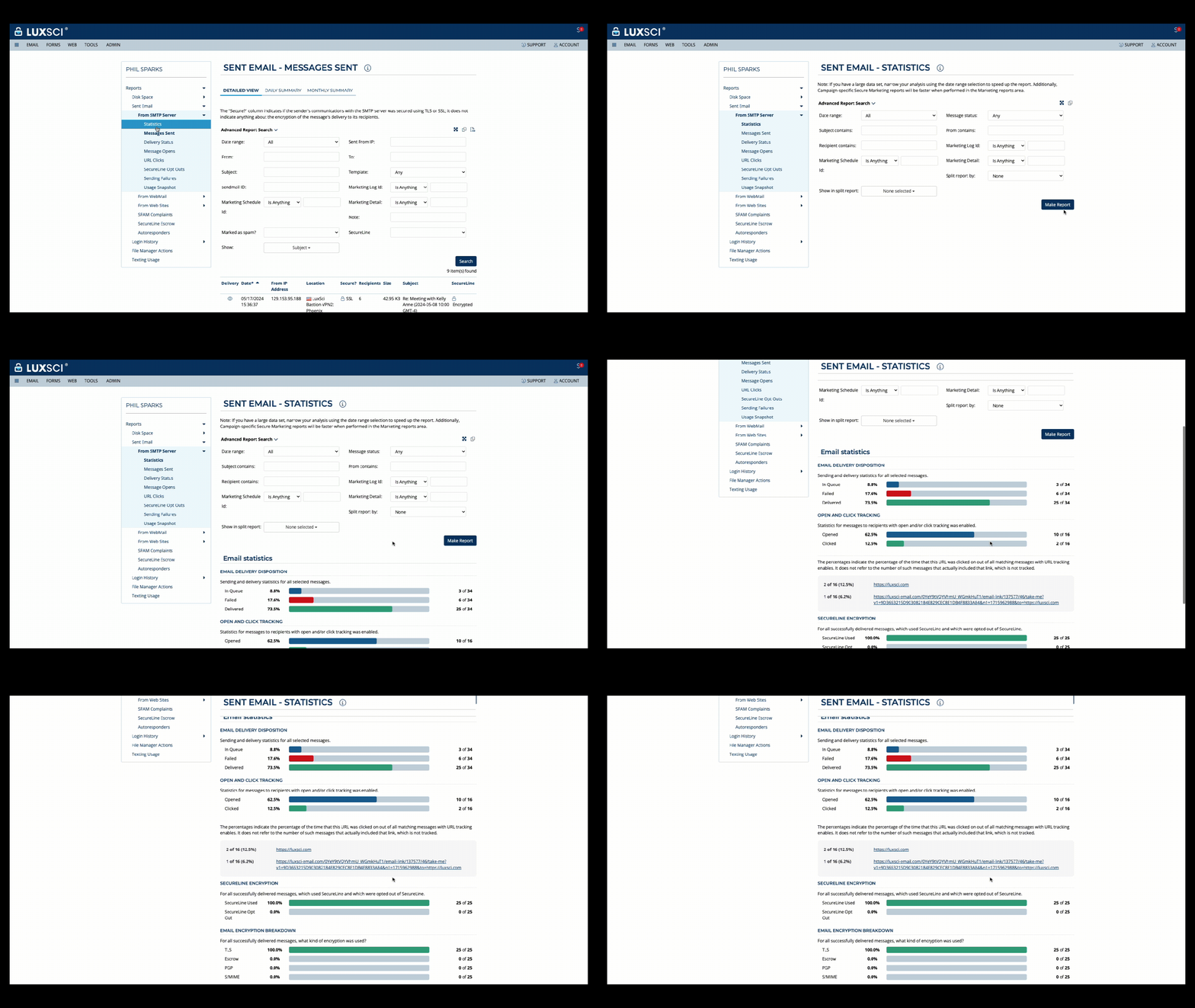
With our latest release, we made these powerful statistics easier to consume and analyze with an improved user interface for more efficiency and greater ease-of-use. Users can simply select the type of report they’d like and customize it using a range of filtering selections. This is great for diving deeper into your email performance to make adjustments on-the-fly, and to spot trends or opportunities for better engagement that you may have missed before.

New UI – Email Deliverability Statistics

LuxSci Secure Email Reporting Statistics

Get more granular, ID trends in real time with Split Reporting

As part of this release, we are pleased to introduce our Split Reporting feature, which empowers users to drill down on email deliverability statistics across a range of parameters, including:

  • subject
  • from address
  • recipient domains
  • marketing ID or campaign
  • custom field

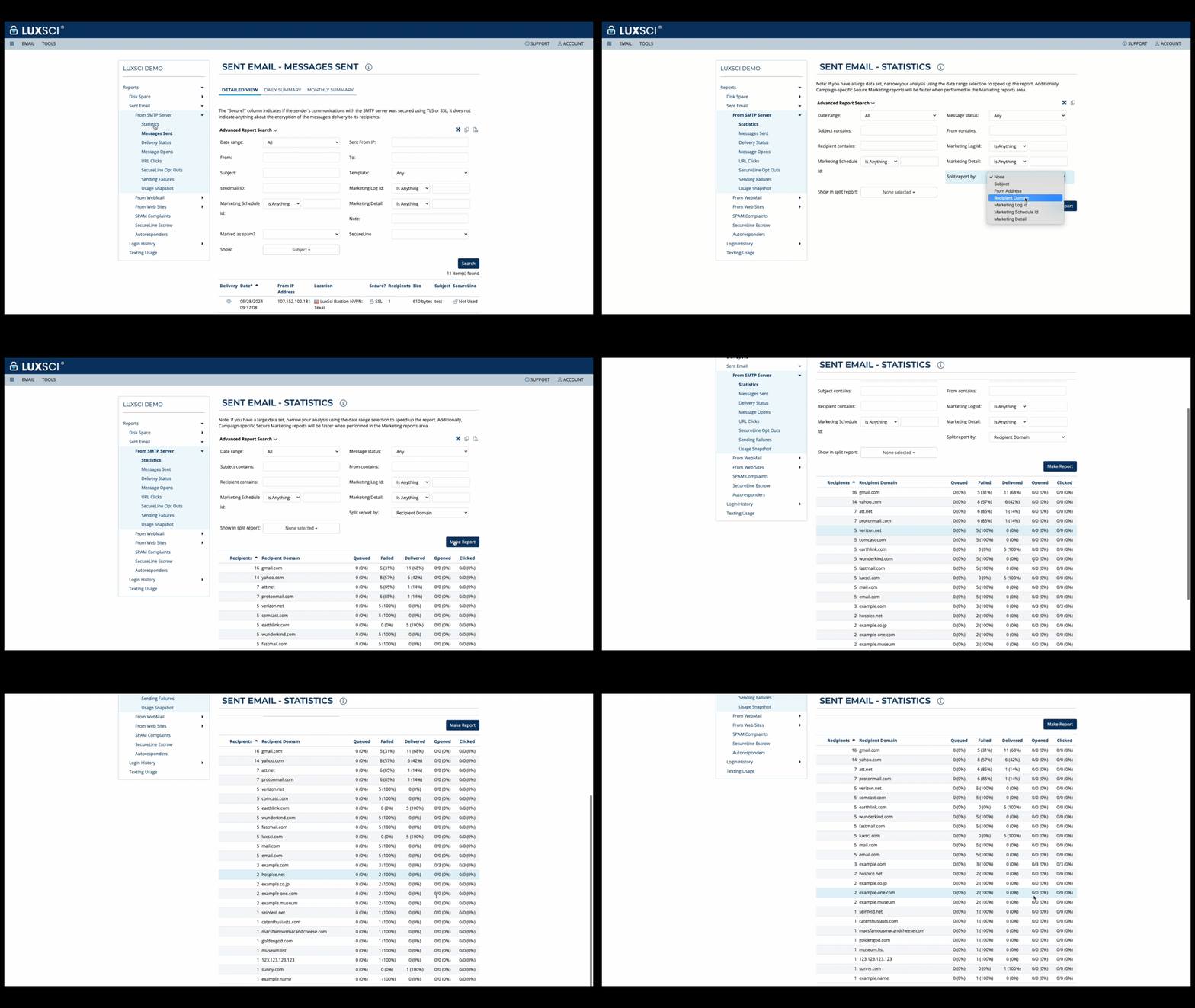
For example, users can analyze email deliverability statistics by subject to determine which ones are performing best, by use case to track results by campaign, or to track performance by recipient email domains. With split reporting, users also can analyze email volumes across queued, delivered, opened, failed and clicked parameters, and determine click-through rates (CTR) to measure effectiveness and ROI of campaigns.

New Feature Example – Split Reporting by Recipient Domain

LuxSci Secure Email Split Reporting

If you’d like to learn more, reach out and connect with us today!


Picture of LuxSci

LuxSci

Get in touch

Find The Best Solution For Your Organization

Talk To An Expert & Get A Quote


A member of our staff will reach out to you

Get Your Free E-Book!

LuxSci High Email Deliverability Best Practices Paper

What you’ll learn:

Related Posts

Zero Trust Email Security in Healthcare

Zero Trust Email Security in Healthcare: A Requirement for Sending PHI?

As healthcare organizations embrace digital patient engagement and AI-assisted care delivery, one reality is becoming impossible to ignore: traditional perimeter-based security is no longer enough. Email, still the backbone of patient and operational communications, has become one of the most exploited attack surfaces.

As a result, Zero Trust email security in healthcare is moving from buzzword to necessity.

At LuxSci, we see this shift firsthand. Healthcare providers, payers, and suppliers are no longer asking if they should modernize their security posture, but how to do it without disrupting care delivery or patient engagement.

Our advice: Start with a Zero Trust-aligned dedicated infrastructure that puts you in total control of email security.

Let’s go deeper!

What Is Zero Trust Email Security in Healthcare?

At its core, Zero Trust email security in healthcare applies the principle of “never trust, always verify” to every email interaction involving protected health information (PHI).

This means:

  • Continuous authentication of users and systems
  • Device and environment validation before granting access
  • Dynamic, policy-based encryption for every message
  • No implicit trust, even within internal networks

Unlike legacy approaches that assume safety inside the network perimeter, Zero Trust treats every email, user, and endpoint as a potential risk.

Why Email Is a Critical Gap in Zero Trust Strategies

While many healthcare organizations have begun adopting Zero Trust frameworks for network access and identity, email often remains overlooked.

This is a major problem.

Email is where:

  • PHI is most frequently shared
  • Human error is most likely to occur
  • Phishing and impersonation attacks are most effective

Without a Zero Trust email security approach, organizations leave a critical gap in their defense strategy, one that attackers can actively exploit.

Healthcare Challenge: Personalized Communication and PHI Risk

Modern healthcare ecosystems are highly distributed:

  • Care teams span multiple locations
  • Third-party vendors access sensitive systems
  • Patients expect digital, personalized communication

This creates a complex web of PHI exchange—much of it through email.

At the same time, compliance requirements like HIPAA demand that PHI email security is addressed at all times.

The result is a growing tension between:

  • Security and compliance
  • Usability, engagement, and better outcomes

From Static Encryption to Intelligent, Adaptive Protection

Traditional email encryption methods often rely on:

  • Manual triggers
  • Static rules
  • User judgment

This introduces risk. A modern zero trust email security in healthcare model replaces this with:

  • Automated encryption policies based on content and context
  • Flexible encryption methods tailored to recipient capabilities – TLS, Portal Fallback, PGP, S/MIME
  • Seamless user experiences that human error – automated email encryption, including content

At LuxSci, our approach to secure healthcare communications is built around this philosophy. By automating encryption and providing each customer with a zero trust-aligned dedicated infrastructure, organizations can protect PHI without relying on end-user decisions or the actions of other vendors on the same cloud, significantly reducing risk while improving performance, including email deliverability.

Aligning Zero Trust with HIPAA and Emerging Frameworks

Zero Trust is not a replacement for compliance, it’s an enabler. A well-implemented Zero Trust approach helps organizations:

  • Meet HIPAA requirements for PHI protection
  • Reduce the likelihood of breaches
  • Strengthen audit readiness and risk management

More importantly, it positions healthcare organizations to align with emerging cybersecurity frameworks that increasingly emphasize identity, data-centric security, and continuous verification.

PHI Protection Starts with Email

Zero Trust is no longer a conceptual framework, it’s becoming the operational standard for healthcare IT, infrastructure, and data security teams.

But success depends on execution. Email remains the most widely used, and vulnerable, communication channels in healthcare. Without addressing it directly, Zero Trust strategies will fall short.

Here are 3 tips to stay on track:

  • Treat every email as a potential risk
  • Automate encryption at scale – secure every email
  • Enable personalized patient engagement with secure PHI in email

At LuxSci, we believe that HIPAA compliant email is the foundation for the future of secure healthcare communications, protecting PHI while enabling better patient engagement and better outcomes.

Reach out today if you want to learn more from our LuxSci experts.

What Sets B2B Marketing In The Healthcare Industry Apart?

B2B marketing in the healthcare industry runs through a buying environment shaped by review, caution, and internal scrutiny. A vendor may catch interest quickly, yet a deal still has to survive procurement, legal input, operational questions, and, in some cases, clinical oversight. That changes the tone and structure of effective outreach. Buyers want clear information, credible framing, and content that holds up when shared across teams. Strong campaigns account for those conditions from the first touch, giving decision makers useful material at the right point in the conversation.

How B2B marketing in the healthcare industry differs from other sectors

Healthcare buying carries a heavier internal burden than many commercial categories. A decision can affect patient related workflows, staff time, data handling, vendor risk, and budget planning all at once. That wider impact shapes how people read. A finance lead may scan for commercial logic and resource use. An operations leader may think immediately about rollout pressure and process disruption. An IT contact may focus on access, integration, and control. Messaging has to stand up to each of those viewpoints. That is why strong healthcare outreach tends to move with more restraint, more clarity, and more attention to proof than campaigns built for faster sales environments.

Trust within B2B marketing in the healthcare industry

Trust grows through judgment on the page. Buyers notice inflated language very quickly, especially when it appears in sectors where risk and accountability are part of everyday work. A polished headline can attract attention, though the body copy still has to carry weight. Clear examples help. Plain explanations help. So does a tone that sounds measured enough for someone to forward internally without hesitation. A payer team may want to see how a service affects review speed or administrative flow. A provider group may care about intake, coordination, or staff workload. A supplier may look for signs that communication across partners will become smoother and easier to manage. Credibility builds when the writing shows a close read of the reader’s world.

Buying committees do not think alike

Most healthcare deals are shaped by several people with different pressures attached to their roles. Procurement may be looking for vendor reliability and a smoother approval process. Compliance may read for privacy exposure and documentation. Operations may focus on practical fit with current workflows. Finance may want a clearer commercial case before the conversation goes any further. Those concerns do not compete with one another so much as stack on top of one another, which is why broad messaging tends to flatten out. Better campaigns anticipate that mix. One sequence can speak to efficiency and team workload. Another can support legal and compliance review. A third can frame the economic rationale in language senior stakeholders will recognise immediately.

Content that helps a deal move

Healthcare content earns its place when it gives buyers something they can use, discuss, and circulate. A short article on referral bottlenecks can help an operations lead frame the problem more clearly. A concise guide to secure communication can help internal teams ask better questions during review. A comparison page on implementation models can help a buyer weigh practical tradeoffs before a call is even booked. Useful content creates momentum because it fits the way decisions are made. It enters the conversation early, gives people sharper language for internal discussion, and keeps the subject alive between meetings. That is where strong work starts to separate itself from content written simply to fill a calendar.

Measuring progress with better signals

Healthcare teams get a clearer picture when they look past surface numbers and pay attention to the signs attached to real interest. Repeat visits from the same account can matter more than a large burst of low value traffic. A reply from an operations contact may tell you more than a high open rate. Visits to implementation, privacy, or procurement pages can indicate that the discussion is moving into a more serious stage.

Patterns like these help commercial teams judge where attention is gathering and where timing is starting to matter. Good B2B marketing in the healthcare industry supports that process by creating sharper entry points for sales, stronger context for follow up, and a more informed path from early curiosity to active evaluation.

Why Does B2B Healthcare Email Marketing Matter To Healthcare Buyers?

B2B healthcare email marketing is the practice of using email to reach healthcare business audiences with timely, relevant communication that supports trust, evaluation, and purchase decisions. In healthcare, that means more than sending promotional copy. Buyers want proof that a vendor understands procurement realities, privacy expectations, clinical workflows, and the pace of internal review. When the message is well judged, email helps move a conversation forward without forcing it. It can introduce a problem, frame the business case, and give decision makers something useful to circulate inside the company while they weigh next steps.

What makes B2B healthcare email marketing work in real buying cycles?

The difference between ignored email and useful email is context. Healthcare deals rarely move on impulse, and very few readers want a sales pitch in their inbox after one click or one download. Good B2B healthcare email marketing takes its cues from where the buyer is in the process. A first touch might define a problem in plain terms. A later message may explain implementation questions, privacy considerations, or internal adoption issues. That sequencing matters because healthcare buyers read with caution. They are not just asking whether a product looks good. They are asking whether it can survive legal review, procurement review, and scrutiny from the teams who will live with it day after day.

How does compliance shape B2B healthcare email marketing?

Healthcare email lives under closer scrutiny than email in many other industries. If a campaign touches protected health information, HIPAA enters the conversation immediately, especially the Privacy Rule and Security Rule. Even when outreach is aimed at business contacts, teams still need a disciplined view of what data is stored, who can access it, and how consent, opt out, and message content are handled.

The CAN SPAM Act also matters because sender identity, subject line accuracy, and unsubscribe function are not small details. Strong B2B healthcare email marketing treats compliance as part of message design from the start. That leads to cleaner copy, better internal approval, and fewer edits after legal teams step in.

Which audiences respond best to B2B healthcare email marketing?

Healthcare buying groups are rarely made up of one decision maker. A payer executive may care about administrative efficiency and audit readiness. A provider operations leader may be focused on referral flow, patient intake, or staff time. A supplier may look at partner communication, order handling, or data movement between systems. B2B healthcare email marketing works better when each audience receives language that matches its concerns instead of one generic message sent to everyone. That does not require jargon. It requires precision in the everyday sense of the word. Readers need to feel that the sender understands the pressures attached to their role, not just the industry label attached to their company.

What kind of content earns trust instead of quick deletion?

Healthcare buyers respond well to emails that help them think clearly. A short note that explains why referral leakage happens will land better than a vague message about transformation. A concise example showing how a health plan cut review delays can do more than a page of inflated claims. This is where B2B healthcare email marketing becomes persuasive without sounding pushy. The best messages teach, but they also move. They give the reader one useful idea, one practical example, and one reason to keep the conversation alive. That balance matters because healthcare readers are trained to be skeptical, and skepticism is not a barrier when the content respects it.

How can teams judge whether the program is doing its job?

Open rate alone does not say much in a long healthcare sales cycle. A better read comes from the quality of replies, the number of relevant page visits after a send, the movement of target accounts through the pipeline, and the way contacts share content internally.

B2B healthcare email marketing earns its place when it helps sales teams enter conversations with better timing and better context. If email is drawing the right people back to security pages, implementation pages, or procurement material, that is a useful signal. The real win is steady progress with buyers who need time, evidence, and confidence before they move.

HIPAA Compliant Email

New HIPAA Security Rule Makes Email Encryption Mandatory—Act Now!

The 2026 Deadline Is Closer Than You Think

The upcoming HIPAA Security Rule overhaul is expected to finalize by mid-2026, and it’s shaping up to be one of the most significant updates in years. Healthcare organizations that fail to prepare, especially when it comes to email security, will face immediate compliance gaps the moment enforcement begins.

Mid-2026 may sound distant, but for healthcare IT and compliance leaders, it’s right around the corner. Regulatory change at this scale doesn’t happen overnight, it requires planning, vendor evaluation, implementation, and internal alignment.

This isn’t a gradual shift. It’s a hard requirement.

Encryption Is About to Become Mandatory

For years, HIPAA has treated encryption as “addressable,” giving organizations flexibility in how they protect sensitive data. That flexibility is disappearing.

Under the updated rule, encryption, particularly for email containing protected health information (PHI), is expected to become a required safeguard.

That means:

  • Encryption must be automatic and standard for email, not optional
  • Policies must be enforced consistently
  • Email security can’t depend on human behavior

If your current system relies on users to manually trigger encryption, it’s already out of step with where compliance is heading. If you’re not encrypting your emails at all, then now is the time to re-evaluate and rest your technology and policies.

Email Is the Weakest Link in Healthcare Security

Email remains the most widely used communication tool in healthcare—and the most common source of data exposure. Every day, sensitive information flows through inboxes, including patient records, lab results, billing details, plan renewals and appointment reminders. Yet many organizations still depend on:

  • Basic TLS encryption that only works under certain conditions
  • Manual processes that leave room for human error
  • Limited visibility into email activity and risk

It only takes one mistake, such as a missed encryption trigger or a misaddressed email, to create a reportable breach. Regulators are well aware of this. That’s why email is a primary focus of the upcoming HIPAA Security Rule changes.

The Cost of Waiting Is Higher Than You Think

Delaying action may feel easier in the short term, but it significantly increases risk. Once the new rule is finalized, organizations without compliant systems may face:

  • Immediate audit failures
  • Regulatory penalties
  • Expensive, rushed remediation efforts
  • Or worst of all, an email security breach

Beyond financial consequences, there’s also reputational harm. Patients expect their data to be protected. A single incident can immediately erode trust and damage your brand beyond repair.

Waiting until the end of 2026 also means that you’ll be competing with every other organization trying to fix the same problem at the same time, driving up costs and limiting vendor availability.

Most Email Solutions Won’t Meet the New Standard

Here’s the uncomfortable reality: many existing email platforms won’t be enough, especially those that are not HIPAA compliant. Common gaps include:

  • Encryption that isn’t automatic or policy-driven
  • Lack of Data Loss Prevention (DLP)
  • Insufficient audit logging for compliance reporting
  • Lack of Zero Trust security principles

On top of that, vendors without alignment to HITRUST certification and Zero-Trust architectures may struggle to demonstrate the level of assurance regulators will expect moving forward.

If your current solution wasn’t designed specifically for healthcare and HIPAA compliance, it’s likely not ready for what’s coming.

LuxSci Secure Email: Built for What’s Next

This is where a purpose-built solution makes all the difference. LuxSci HIPAA compliant email is designed specifically for healthcare organizations navigating the latest compliance requirements, not just today, but in the future regulatory landscape.

LuxSci delivers:

  • Automatic, policy-based encryption that removes user guesswork
  • Advanced DLP controls to prevent PHI exposure before it happens
  • Comprehensive audit logs to support audits and investigations
  • Zero Trust architecture that verifies every user and action

Additionally, LuxSci is HITRUST-certified, helping organizations demonstrate a mature and defensible security posture as regulations tighten. Email data protection isn’t about patching gaps, it’s about eliminating them.

Act Now or Pay Later

If there’s one takeaway, it’s this: the time to act is now. Start by asking a few direct questions:

  • Is our email encryption automatic and enforced?
  • Do we have full visibility into email activity and risk?
  • Is our vendor equipped for evolving HIPAA requirements?

If the answer to any of these is unclear, now’s the time to take action. Organizations that move early will have time to implement the right solution, train their teams, and validate compliance. Those that wait will be forced into reactive decisions under pressure.

Conclusion: The Time to Act is Now!

The HIPAA Security Rule overhaul is coming fast, and it’s raising expectations across the board. Encryption will no longer be addressable, but rather mandatory. As a result, email security can no longer be overlooked, and compliance will no longer tolerate gaps.

LuxSci HIPAA compliant email provides a clear, future-ready path for your organization, combining automated encryption, DLP, auditability, and Zero Trust security in one solution.

The real question isn’t whether change is coming. It’s whether your organization will be ready when it does.

Reach out today. We can look at your existing set up, help you identify the gaps, and show you how LuxSci can help!

FAQs

1. When will the updated HIPAA Security Rule take effect?
The changes to the HIPAA Security Rule are expected to be finalized and announced around mid-2026, with enforcement likely soon after, by the end of the year.

2. Will email encryption truly be mandatory?
Yes, current direction strongly indicates encryption will become a required safeguard, which could start later this year or in early 2027.

3. Is TLS encryption enough for compliance?
No. TLS alone does not provide sufficient, guaranteed protection for PHI.

4. Why is HITRUST important in this context?
HITRUST certification demonstrates a vendor’s strong alignment with healthcare security standards and will likely carry more weight with regulators.

5. How does LuxSci help organizations prepare?
HITRUST-certified LuxSci offers secure email with automated encryption, DLP, audit logs, and Zero Trust architecture, helping organizations meet evolving compliance demands.

You Might Also Like

LuxSci Digital Patient Engagement

Overcoming Barriers To Successful Digital Health Engagement

Effective patient engagement is increasingly becoming a top priority for many healthcare organizations  – and for good reason.

First and foremost, the more a patient or customer is engaged in their healthcare journey, the better their health outcomes and quality of life. With increased communication and engagement, patients are more likely to have potential conditions diagnosed sooner, take preventative measures to prevent illnesses, and educate themselves on ways to manage and improve their health. 

However, the benefits don’t end there and aren’t restricted to the patient. Engaged patients pay bills faster, are more open to new products and services, and report higher levels of satisfaction with the companies that contribute to their health and well being. For healthcare providers, payers, and suppliers, this results in higher revenue, more opportunities for growth, and the attainment of long-term organizational goals. 

Digital Patient Engagement Is Easier than Ever 

Fortunately, advances in technology and their rapid adoption by patients and customers (expedited by the COVID-19 pandemic) have made it easier for healthcare organizations to achieve successful digital interactions and engagement. Healthcare companies have more tools and channels than ever before to help conduct personalized engagement campaigns that meet patients on their terms, making it easier to capture their attention. Secure email takes it even further with the ability to include protected health information in messages to personalize

Despite these advancements, however, there are still several barriers that prevent healthcare companies from engaging with patients and reaping the associated benefits. Fortunately, each barrier can be overcome to help patients and customers feel more included and instrumental in their healthcare journeys.

With this in mind, this post discusses the main barriers to digital patient engagement and how to overcome them to drive better healthcare outcomes for your patients and growth for your organization. 

The Main Barriers To Digital Health Engagement

The four key barriers to digital health engagement that we’ll explore in this post are as follows:

    1. Low Health Literacy

    1. Privacy And Security Concerns

    1. Age And Cultural Differences

    1. Lack Of Personalization

Let’s review each barrier in turn, while offering potential solutions that will contribute to greater digital health patient engagement for your healthcare organization. 

Low Health Literacy

The first barrier to successful digital health patient engagement is your patients having insufficient health or medical knowledge. Healthcare is laden with terminology, including medical conditions, pharmaceuticals, the human anatomy, and many patients simply don’t understand enough to get more involved with their healthcare journey.  Worse still, few patients will admit they don’t understand, as people are often embarrassed at their lack of knowledge.


Consequently, if your digital health patient engagement campaigns are heavy with medical jargon and lack personalization, patients won’t act on the information to drive better outcomes.

Solution: Create Educational Health Content

Develop simple educational resources for your patients that apply to their unique needs and condition. This will help them understand their state of health and make better sense of subsequent communications they’ll receive from you and their other healthcare providers.

This educational content could be in the form of periodic email newsletters, giving you a great reason to keep in touch with your patients. Alternatively, they could take the form of blog posts or articles on a patient portal, which could be supported by an email marketing campaign to let patients know about the article. In helping to increase your patients’ health literacy, you offer additional value as a healthcare provider, payer or supplier.


Additionally, keep the medical jargon in your email communications and other patient engagement channels to a minimum. Empathize with the fact that some patients won’t understand as much as others when it comes to healthcare provision and explain things as plainly as possible. 

Data Privacy And Security Concerns

Unfortunately, due to its sensitivity and critical nature patient data, i.e., protected health information (PHI) is highly prized by cybercriminals. Subsequently, there have been many high-profile healthcare breaches, such as the Change Healthcare breach, in early 2024, which affected 100 million individuals, that make patients increasingly wary about sharing health-related information via email, text, or other digital communication channels.


That said, their wary attitude is the right one to adopt, but not at the expense of enhancing engagement and improving their health outcomes. 

Solution: Invest In HIPAA Compliant Communication Tools

Ensure that the digital tools you use to engage with patients possess the security features required for HIPAA compliance. The  Health Insurance Portability and Accountability Act  (HIPAA) provides a series of guidelines that healthcare organizations must comply with to best safeguard PHI. Consequently, solutions that promote their commitment to HIPAA compliance, such as LuxSci, will understand the privacy, security, and regulatory needs of healthcare companies and have developed their tools accordingly.


Most importantly, a HIPAA compliant vendor will sign a Business Associates Agreement (BAA), the legal documentation that outlines your respective responsibilities regarding the protection of PHI. Safe in the knowledge that the patient data under your care is secure, you can concentrate your efforts on personalizing your digital communication campaigns for maximum effect. 

Age And Cultural Differences

Ineffective patient engagement efforts (or a complete lack of engagement, altogether) can reinforce cliches about the use of digital tools within particular patient groups. The reality, however, is that many healthcare organizations don’t account for age differences and channel preferences in their patient engagement strategies.


Subsequently, if you only engage with patients on a single communication channel, you risk alienating others because it’s not their medium of choice.  

Solution: Adopt a Multi-Channel Engagement Strategy

Instead of focusing on one communication medium, diversify your approach and adopt a multi-channel engagement strategy. This could encompass email, SMS, and phone outreach, for instance. This covers the more proverbial bases and gives you a chance to engage with patients on their preferred terms.

Lack Of Personalization

One of the main reasons that healthcare organizations fail to engage with their patients is that they adopt a “one-size-fits-all” approach, attempting to craft communications that appeal to as many people as possible. Unfortunately, this has the opposite of the desired approach, not connecting anyone in particular and engaging few patients as a result.  

Solution: Personalize Your Patient Engagement Campaigns with PHI

With a HIPAA compliant solution, you can use PHI to personalize patient engagement, leveraging their health data to craft messaging that reflects their specific condition, needs, and where they are along their healthcare journey. PHI also can be used to segment patients into subgroups, grouping them by specific commonalities such as age, gender, health condition, and lifestyle factors.

Successful Digital Health Patient Engagement with LuxSci

With more than 20 years of experience in delivering secure digital healthcare communication solutions to some of the world’s leading healthcare providers, payers and suppliers, LuxSci is a trusted partner for organizations looking to boost their patient engagement efforts, while protecting patient data and remaining compliant at all times.

LuxSci’s suite of HIPAA compliant solutions include:

    • Secure Email: HIPAA compliant email solutions for executing highly scalable, high volume email campaigns that include PHI – millions of emails per month.

    • Secure Forms: Securely and efficiently collect and store ePHI without compromising security or compliance – for onboarding new patients and customers and gathering intelligence for personalization.

    • Secure Marketing: proactively reach your patients and customers with HIPAA compliant email marketing campaigns for increased engagement, lead generation and sales.

    • Secure Text Messaging: enable access to ePHI and other sensitive information directly to mobile devices via regular SMS text messages.

Interested in discovering more about LuxSci can help you upgrade your cybersecurity posture for PHI and ensure HIPAA compliance? Contact us today!

Email HIPAA Compliance

What Is HIPAA Email Encryption?

HIPAA email encryption is a security measure that protects electronic Protected Health Information (ePHI) transmitted via email by converting readable data into coded format that only authorized recipients can decrypt. Healthcare organizations implement encryption or other appropriate protections when sending patient information electronically, particularly over open networks or to external parties. The HIPAA Security Rule classifies encryption as an addressable implementation specification under transmission security standards, requiring covered entities to conduct risk assessments and implement reasonable protections based on their operational environment. Email communication is the backbone of healthcare operations, from appointment scheduling to lab result sharing and provider consultations.

Why Do Healthcare Organizations Require HIPAA Email Encryption?

Healthcare organizations require email encryption to comply with federal regulations governing patient data protection and avoid substantial financial penalties. The HIPAA Security Rule establishes transmission security standards that apply whenever ePHI moves across electronic networks. Organizations that fail to implement adequate email security face enforcement actions from the Department of Health and Human Services Office for Civil Rights, with violation penalties ranging from $137 to $2,067,813 per incident depending on the level of negligence and harm caused. HIPAA email encryption protects organizations from data breaches that damage reputation and patient trust beyond compliance obligations. Healthcare data breaches affected over 51 million individuals in 2023, with email-related incidents accounting for a substantial portion of reported cases. Unencrypted email transmissions create vulnerabilities that cybercriminals exploit to access patient records, financial information, and other valuable data. Organizations that proactively implement email encryption show commitment to patient privacy while reducing liability exposure. Patient expectations also drive the need for secure email communications. Modern healthcare consumers expect their providers to protect personal information with the same diligence applied to financial institutions and other privacy-conscious industries. Email encryption enables healthcare organizations to meet expectations while maintaining the communication flexibility that patients and providers require for effective care coordination.

Standards of HIPAA Email Encryption

The HIPAA Security Rule establishes several standards that influence HIPAA email encryption implementation. The Access Control standard requires organizations to assign unique user identification and implement automatic logoff procedures for email systems handling ePHI. Controls ensure that only authorized personnel can access encrypted email communications and that unattended devices do not compromise patient data. Audit Controls is another applicable standard, requiring organizations to monitor email system activity and maintain logs of ePHI access attempts. Modern encrypted email solutions integrate logging capabilities that track message delivery, recipient authentication, and decryption events. Audit trails help organizations prove compliance during regulatory reviews and investigate potential security incidents.

The Integrity standard addresses how organizations protect ePHI from unauthorized alteration or destruction during transmission. Email encryption solutions include digital signatures and hash verification mechanisms that detect tampering attempts. Features ensure that patient information stays unchanged from sender to recipient, maintaining the reliability of medical communications.

Person or Entity Authentication standards require organizations to verify the identity of users accessing ePHI through email systems. Multi-factor authentication, digital certificates, and secure login procedures help healthcare organizations confirm that email recipients are authorized to receive patient information. Authentication mechanisms work alongside encryption to create layered security protection.

How Do Different HIPAA Email Encryption Methods Compare?

Transport Layer Security (TLS) encryption provides baseline protection for email communications by securing the connection between email servers. This method encrypts data during transmission but does not protect messages once they reach the recipient’s email server. TLS works well for communications between healthcare organizations with compatible email systems but may not provide adequate protection for emails sent to external recipients using consumer email services.

End-to-end encryption offers stronger protection by encoding messages so that only the intended recipient can decrypt them. This approach protects email content even if intermediate servers are compromised. Healthcare organizations often use portal-based systems that encrypt messages and require recipients to log into secure websites to view content. Solutions work with any email address while maintaining strict access controls.

S/MIME (Secure/Multipurpose Internet Mail Extensions) uses digital certificates to encrypt and digitally sign email messages. This method provides strong security but requires both sender and recipient to have compatible certificates and email clients. S/MIME works well for communications between healthcare organizations that have established certificate infrastructures but can be challenging to implement for patient communications.

PGP (Pretty Good Privacy) encryption uses public and private key pairs to secure email communications. While PGP provides excellent security, the complexity of key management makes it less practical for routine healthcare communications. Organizations reserve PGP for highly sensitive communications that require maximum security protection.

How BA Considerations Affect Encryption Decisions

Business Associate Agreements (BAAs) create contractual obligations that influence HIPAA email encryption choices for healthcare organizations. When covered entities work with email service providers, cloud storage companies, or other technology vendors that handle ePHI, they must establish BAAs that define security responsibilities. Agreements specify encryption requirements and outline how both parties will protect patient information.

Email service providers that sign BAAs become business associates subject to HIPAA Security Rule requirements. Organizations verify that their email vendors implement appropriate encryption, access controls, and audit mechanisms. The shared responsibility model means that while vendors provide platform security, healthcare organizations remain responsible for proper configuration and user training.

Third-party email encryption services operate as business associates, providing specialized security features that standard email platforms lack. Services offer portal-based encryption, policy-based automation, and integration with existing email systems. When evaluating encryption vendors, healthcare organizations review their compliance certifications, security audits, and breach response procedures.

Cloud-based email platforms like Microsoft 365 and Google Workspace offer encryption features but require careful configuration to meet HIPAA requirements. Organizations enable appropriate security settings, configure data loss prevention policies, and ensure that encryption applies to both email storage and transmission. Ongoing monitoring helps verify that platforms maintain HIPAA-compliant configurations.

The Implementation of HIPAA Email Encryption Policies

Effective HIPAA email encryption policies begin with risk assessments that identify how organizations handle ePHI in email communications. Assessments examine current email practices, evaluate security vulnerabilities, and determine appropriate encryption requirements for different types of communications. Organizations document their findings and use them to develop encryption policies that address their operational needs.

Policy development requires clear guidelines about when encryption is required, which methods are acceptable, and how users handle different types of patient information. Organizations create tiered approaches that require automatic encryption for all ePHI while allowing conditional encryption for communications that may contain patient information. User training programs help staff understand requirements and implement them consistently.

Implementation procedures address email client configuration, user authentication, and recipient verification processes. Organizations need to establish workflows for handling encrypted emails, managing encryption keys or passwords, and troubleshooting delivery issues. Regular testing ensures that encryption systems work properly and that staff can operate them effectively under normal and emergency conditions.

Monitoring and maintenance procedures help organizations verify ongoing compliance with their email encryption policies. Regular audits of email system logs, encryption usage statistics, and user compliance help identify potential issues before they become violations. Organizations establish incident response procedures for handling encryption failures, lost passwords, or suspected security breaches.

Challenges of HIPAA Email Encryption

User adoption is one of the most persistent challenges in HIPAA email encryption implementation. Healthcare staff often perceive encryption as complicated or time-consuming, leading to inconsistent usage or workaround attempts. Organizations address this challenge through training programs, user-friendly encryption solutions, and automated policies that apply encryption without requiring user intervention.

Interoperability issues arise when healthcare organizations try to communicate with external parties who use different email systems or encryption methods. Patients, referring physicians, and other partners may not have compatible encryption tools, creating barriers to secure communication. Portal-based encryption solutions help overcome barriers by providing web-based access that works with any internet connection.

Performance and usability concerns affect how readily staff embrace email encryption tools. Slow encryption processes, complicated key management, or frequent authentication requirements can disrupt clinical workflows. Modern encryption solutions address issues through intuitive interfaces, single sign-on integration, and background encryption processes that minimize impact on user productivity.

Cost considerations influence encryption decisions, particularly for smaller healthcare organizations with limited IT budgets. Organizations balance security requirements with financial constraints while considering both initial implementation costs and ongoing maintenance expenses. Cloud-based encryption services provide cost-effective alternatives to on-premises solutions while offering enterprise-grade security features.

Patient communication preferences create additional complexity for HIPAA email encryption implementation. Some patients prefer traditional phone or mail communications, while others expect immediate email responses. Organizations need flexible encryption policies that accommodate different communication channels while maintaining consistent security standards across all patient interactions.

HIPAA Compliant Hosting

What is HIPAA Compliant Hosting?

HIPAA compliant hosting provides infrastructure for storing protected health information while meeting HIPAA Security Rule requirements. These hosting environments include physical, technical, and administrative safeguards such as encryption, access controls, audit logging, and disaster recovery. Healthcare organizations use HIPAA compliant hosting to maintain patient data security and regulatory compliance when storing electronic protected health information.

Core Requirements for HIPAA Compliant Hosting

HIPAA compliant hosting environments incorporate security measures to protect electronic health information. Data encryption safeguards information both during storage and transmission between systems. Access control systems limit data viewing to authorized personnel through user authentication and permission settings. Hosting providers maintain comprehensive audit logs that track all system access and modifications to protected information. Physical security measures protect server equipment through restricted facility access, surveillance systems, and environmental controls. These protections work to create a secure foundation for healthcare data storage and processing.

Infrastructure and Data Center Standards

HIPAA compliant hosting facilities maintain physical security standards more so than typical data centers. Providers implement layered facility access restrictions including biometric verification, security personnel, and monitored entry points. Environmental controls regulate temperature, humidity, and fire suppression to prevent data loss from environmental factors. Redundant power systems with backup generators ensure continuous operation during outages. Network infrastructure includes firewall protection, intrusion detection systems, and secure connectivity options. These facilities undergo regular security assessments and maintain documentation of all physical security measures to demonstrate compliance with HIPAA requirements.

Business Associate Agreements for Hosting

Healthcare organizations must establish Business Associate Agreements (BAAs) with their hosting providers before storing protected health information. These legally binding contracts define provider responsibilities for maintaining HIPAA compliance and protecting patient data. BAAs outline security incident response procedures, breach notification requirements, and liability terms. The agreement establishes permitted uses of health information and prohibits unauthorized disclosure. Reputable HIPAA compliant hosting providers offer standard BAAs that meet regulatory requirements without extensive negotiation. Organizations maintain copies of these agreements as part of their compliance documentation for potential regulatory audits.

Encryption and Data Protection Methods

HIPAA compliant hosting employs multiple encryption methods to protect health information throughout its lifecycle. Providers implement full-disk encryption for data storage to prevent unauthorized access even if physical drives are compromised. Transport Layer Security (TLS) protocols encrypt data during transmission between systems. Virtual Private Network (VPN) technology creates secure connections for remote access to hosted systems. Database-level encryption provides additional protection for sensitive information fields. Hosting providers maintain encryption key management systems with strict access controls. These encryption approaches protect data against various threat vectors while maintaining system performance.

Disaster Recovery and Business Continuity

HIPAA compliant hosting includes disaster recovery capabilities to prevent data loss during system failures or natural disasters. Providers maintain geographically dispersed backup systems that replicate data according to defined recovery point objectives. Regular backup verification processes ensure data integrity and restorability. Documented business continuity plans outline recovery procedures and responsible personnel. Hosting environments include redundant system components to eliminate single points of failure. Annual disaster recovery testing validates these systems under simulated emergency conditions. These measures fulfill the HIPAA contingency planning requirements while providing healthcare organizations with continuous access to patient information.

Compliance Monitoring and Documentation

HIPAA compliant hosting providers maintain documentation of their security measures and compliance activities. Regular risk assessments identify potential vulnerabilities in hosted systems and infrastructure. Security teams conduct penetration testing to validate protection effectiveness. Compliance certification reports from independent auditors demonstrate adherence to HIPAA standards and other frameworks like HITRUST or SOC 2. Providers maintain records of staff training on security procedures and HIPAA requirements. These documentation practices help healthcare organizations demonstrate due diligence in selecting appropriate hosting environments for protected health information.

AES-256 Maximal Security

Enhanced Security: AES-256 Encryption for SSL and TLS

AES-256 EncryptionSSL and TLS play critical roles in securing data transmission over the internet, and AES-256 is integral in their most secure configurations. The original standard was known as Secure Sockets Layer (SSL). Although it was replaced by Transport Layer Security (TLS), many in the industry still refer to TLS by its predecessor’s acronym. While TLS can be relied on for securing information at a high level—such as US Government TOP SECRET data—improper or outdated implementations of the standard may not provide much security.

Variations in which cipher is used in TLS impact how secure TLS ultimately is. Some ciphers are fast but insecure, while others are slower, require a greater amount of computational resources, and can provide a higher degree of security. Weaker ciphers—such as the early export-grade ciphers—still exist, but they should no longer be used.

The Advanced Encryption Standard (AES) is an encryption specification that succeeded the Data Encryption Standard (DES). AES was standardized in 2001 after a five-year review and is currently one of the most popular algorithms used in symmetric-key cryptography. It is often seen as the gold standard symmetric-key encryption technique, with many security-conscious organizations requiring employees to use AES-256 for all communications. It is also used prominently in TLS. (more…)