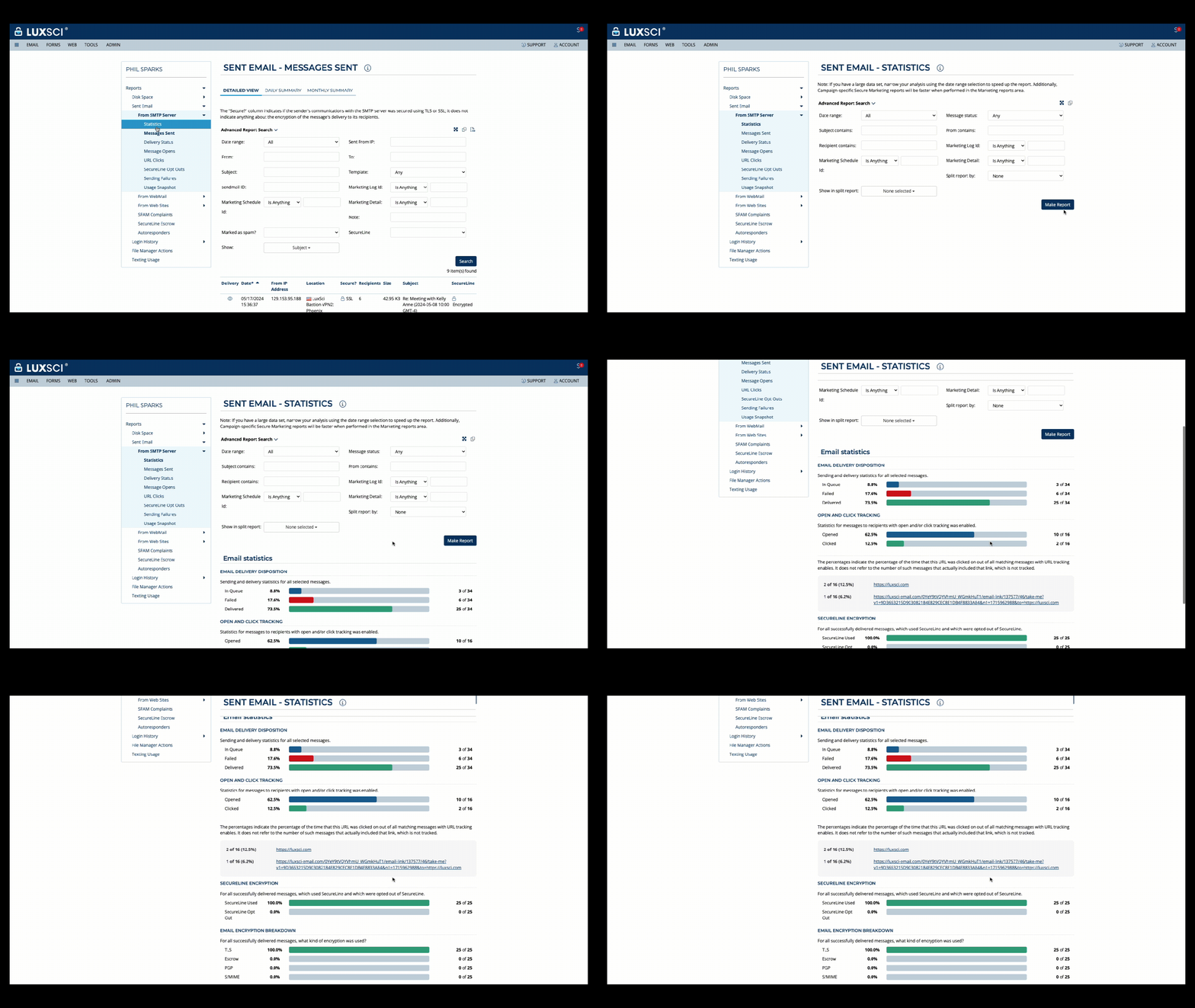
We recently rolled out new email reporting features, taking deliverability depth and analysis to new levels. If you’re a current LuxSci customer and haven’t checked them out, now’s the time. If you’re new to LuxSci, learn more below, and don’t hesitate to reach out for more info – or a demo.
LuxSci secure communications solutions have always featured rich reporting on email deliverability, including volumes and percentages for emails:
in queue
opened
clicked
failed
secured
With our latest release, we made these powerful statistics easier to consume and analyze with an improved user interface for more efficiency and greater ease-of-use. Users can simply select the type of report they’d like and customize it using a range of filtering selections. This is great for diving deeper into your email performance to make adjustments on-the-fly, and to spot trends or opportunities for better engagement that you may have missed before.
New UI – Email Deliverability Statistics
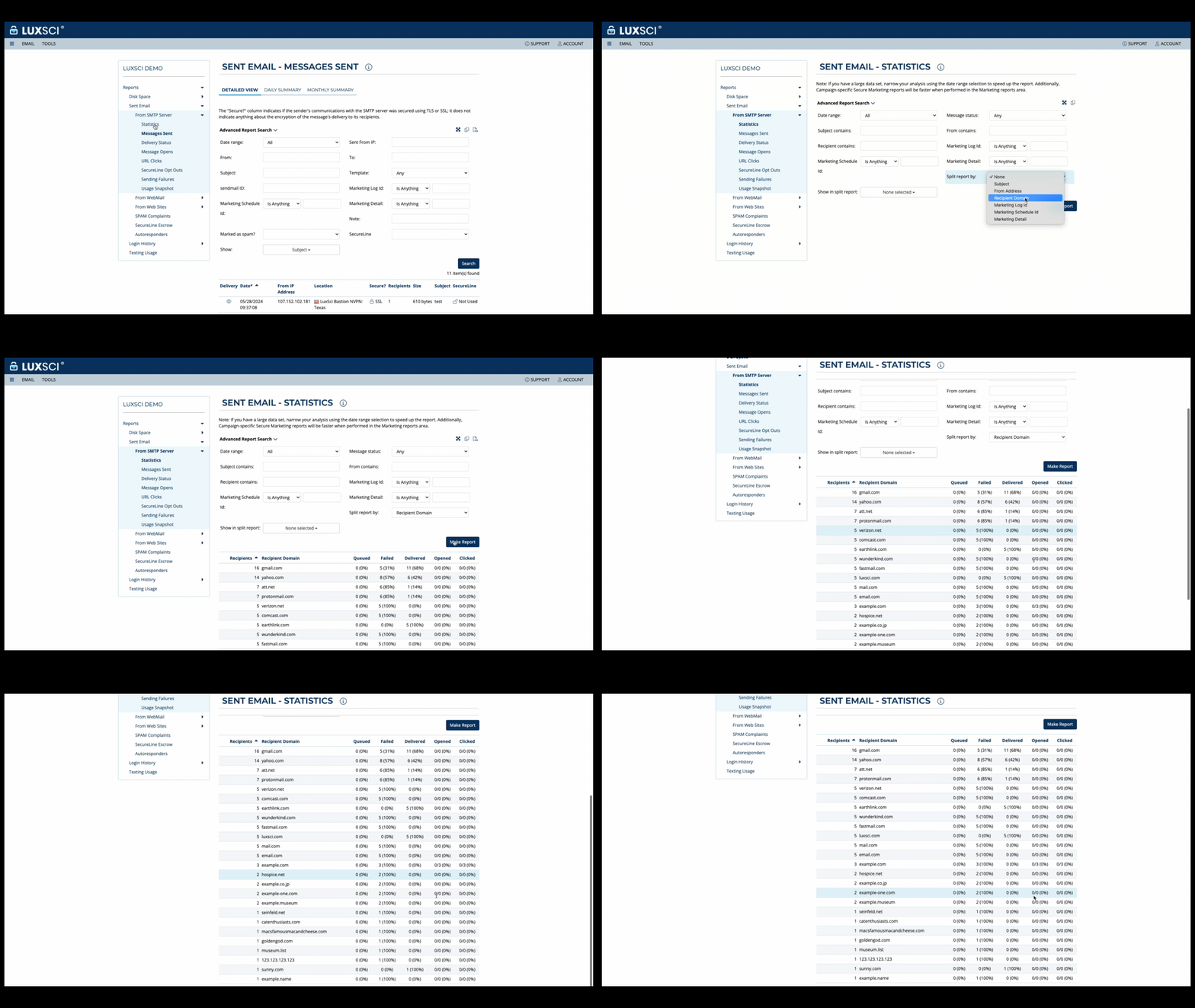
Get more granular, ID trends in real time with Split Reporting
As part of this release, we are pleased to introduce our Split Reporting feature, which empowers users to drill down on email deliverability statistics across a range of parameters, including:
subject
from address
recipient domains
marketing ID or campaign
custom field
For example, users can analyze email deliverability statistics by subject to determine which ones are performing best, by use case to track results by campaign, or to track performance by recipient email domains. With split reporting, users also can analyze email volumes across queued, delivered, opened, failed and clicked parameters, and determine click-through rates (CTR) to measure effectiveness and ROI of campaigns.
New Feature Example – Split Reporting by Recipient Domain
If you’d like to learn more, reach out and connect with us today!
As healthcare organizations embrace digital patient engagement and AI-assisted care delivery, one reality is becoming impossible to ignore: traditional perimeter-based security is no longer enough. Email, still the backbone of patient and operational communications, has become one of the most exploited attack surfaces.
As a result, Zero Trust email security in healthcare is moving from buzzword to necessity.
At LuxSci, we see this shift firsthand. Healthcare providers, payers, and suppliers are no longer asking if they should modernize their security posture, but how to do it without disrupting care delivery or patient engagement.
Our advice: Start with a Zero Trust-aligned dedicated infrastructure that puts you in total control of email security.
Let’s go deeper!
What Is Zero Trust Email Security in Healthcare?
At its core, Zero Trust email security in healthcare applies the principle of “never trust, always verify” to every email interaction involving protected health information (PHI).
This means:
Continuous authentication of users and systems
Device and environment validation before granting access
Dynamic, policy-based encryption for every message
No implicit trust, even within internal networks
Unlike legacy approaches that assume safety inside the network perimeter, Zero Trust treats every email, user, and endpoint as a potential risk.
Why Email Is a Critical Gap in Zero Trust Strategies
While many healthcare organizations have begun adopting Zero Trust frameworks for network access and identity, email often remains overlooked.
This is a major problem.
Email is where:
PHI is most frequently shared
Human error is most likely to occur
Phishing and impersonation attacks are most effective
Without a Zero Trust email security approach, organizations leave a critical gap in their defense strategy, one that attackers can actively exploit.
Healthcare Challenge: Personalized Communication and PHI Risk
Modern healthcare ecosystems are highly distributed:
Care teams span multiple locations
Third-party vendors access sensitive systems
Patients expect digital, personalized communication
This creates a complex web of PHI exchange—much of it through email.
At the same time, compliance requirements like HIPAA demand that PHI email security is addressed at all times.
The result is a growing tension between:
Security and compliance
Usability, engagement, and better outcomes
From Static Encryption to Intelligent, Adaptive Protection
Traditional email encryption methods often rely on:
Manual triggers
Static rules
User judgment
This introduces risk. A modern zero trust email security in healthcare model replaces this with:
Automated encryption policies based on content and context
Seamless user experiences that human error – automated email encryption, including content
At LuxSci, our approach to secure healthcare communications is built around this philosophy. By automating encryption and providing each customer with a zero trust-aligned dedicated infrastructure, organizations can protect PHI without relying on end-user decisions or the actions of other vendors on the same cloud, significantly reducing risk while improving performance, including email deliverability.
Aligning Zero Trust with HIPAA and Emerging Frameworks
Zero Trust is not a replacement for compliance, it’s an enabler. A well-implemented Zero Trust approach helps organizations:
Meet HIPAA requirements for PHI protection
Reduce the likelihood of breaches
Strengthen audit readiness and risk management
More importantly, it positions healthcare organizations to align with emerging cybersecurity frameworks that increasingly emphasize identity, data-centric security, and continuous verification.
PHI Protection Starts with Email
Zero Trust is no longer a conceptual framework, it’s becoming the operational standard for healthcare IT, infrastructure, and data security teams.
But success depends on execution. Email remains the most widely used, and vulnerable, communication channels in healthcare. Without addressing it directly, Zero Trust strategies will fall short.
Here are 3 tips to stay on track:
Treat every email as a potential risk
Automate encryption at scale – secure every email
Enable personalized patient engagement with secure PHI in email
At LuxSci, we believe that HIPAA compliant email is the foundation for the future of secure healthcare communications, protecting PHI while enabling better patient engagement and better outcomes.
Reach out today if you want to learn more from our LuxSci experts.
B2B marketing in the healthcare industry runs through a buying environment shaped by review, caution, and internal scrutiny. A vendor may catch interest quickly, yet a deal still has to survive procurement, legal input, operational questions, and, in some cases, clinical oversight. That changes the tone and structure of effective outreach. Buyers want clear information, credible framing, and content that holds up when shared across teams. Strong campaigns account for those conditions from the first touch, giving decision makers useful material at the right point in the conversation.
How B2B marketing in the healthcare industry differs from other sectors
Healthcare buying carries a heavier internal burden than many commercial categories. A decision can affect patient related workflows, staff time, data handling, vendor risk, and budget planning all at once. That wider impact shapes how people read. A finance lead may scan for commercial logic and resource use. An operations leader may think immediately about rollout pressure and process disruption. An IT contact may focus on access, integration, and control. Messaging has to stand up to each of those viewpoints. That is why strong healthcare outreach tends to move with more restraint, more clarity, and more attention to proof than campaigns built for faster sales environments.
Trust within B2B marketing in the healthcare industry
Trust grows through judgment on the page. Buyers notice inflated language very quickly, especially when it appears in sectors where risk and accountability are part of everyday work. A polished headline can attract attention, though the body copy still has to carry weight. Clear examples help. Plain explanations help. So does a tone that sounds measured enough for someone to forward internally without hesitation. A payer team may want to see how a service affects review speed or administrative flow. A provider group may care about intake, coordination, or staff workload. A supplier may look for signs that communication across partners will become smoother and easier to manage. Credibility builds when the writing shows a close read of the reader’s world.
Buying committees do not think alike
Most healthcare deals are shaped by several people with different pressures attached to their roles. Procurement may be looking for vendor reliability and a smoother approval process. Compliance may read for privacy exposure and documentation. Operations may focus on practical fit with current workflows. Finance may want a clearer commercial case before the conversation goes any further. Those concerns do not compete with one another so much as stack on top of one another, which is why broad messaging tends to flatten out. Better campaigns anticipate that mix. One sequence can speak to efficiency and team workload. Another can support legal and compliance review. A third can frame the economic rationale in language senior stakeholders will recognise immediately.
Content that helps a deal move
Healthcare content earns its place when it gives buyers something they can use, discuss, and circulate. A short article on referral bottlenecks can help an operations lead frame the problem more clearly. A concise guide to secure communication can help internal teams ask better questions during review. A comparison page on implementation models can help a buyer weigh practical tradeoffs before a call is even booked. Useful content creates momentum because it fits the way decisions are made. It enters the conversation early, gives people sharper language for internal discussion, and keeps the subject alive between meetings. That is where strong work starts to separate itself from content written simply to fill a calendar.
Measuring progress with better signals
Healthcare teams get a clearer picture when they look past surface numbers and pay attention to the signs attached to real interest. Repeat visits from the same account can matter more than a large burst of low value traffic. A reply from an operations contact may tell you more than a high open rate. Visits to implementation, privacy, or procurement pages can indicate that the discussion is moving into a more serious stage.
Patterns like these help commercial teams judge where attention is gathering and where timing is starting to matter. Good B2B marketing in the healthcare industry supports that process by creating sharper entry points for sales, stronger context for follow up, and a more informed path from early curiosity to active evaluation.
B2B healthcare email marketing is the practice of using email to reach healthcare business audiences with timely, relevant communication that supports trust, evaluation, and purchase decisions. In healthcare, that means more than sending promotional copy. Buyers want proof that a vendor understands procurement realities, privacy expectations, clinical workflows, and the pace of internal review. When the message is well judged, email helps move a conversation forward without forcing it. It can introduce a problem, frame the business case, and give decision makers something useful to circulate inside the company while they weigh next steps.
What makes B2B healthcare email marketing work in real buying cycles?
The difference between ignored email and useful email is context. Healthcare deals rarely move on impulse, and very few readers want a sales pitch in their inbox after one click or one download. Good B2B healthcare email marketing takes its cues from where the buyer is in the process. A first touch might define a problem in plain terms. A later message may explain implementation questions, privacy considerations, or internal adoption issues. That sequencing matters because healthcare buyers read with caution. They are not just asking whether a product looks good. They are asking whether it can survive legal review, procurement review, and scrutiny from the teams who will live with it day after day.
How does compliance shape B2B healthcare email marketing?
Healthcare email lives under closer scrutiny than email in many other industries. If a campaign touches protected health information, HIPAA enters the conversation immediately, especially the Privacy Rule and Security Rule. Even when outreach is aimed at business contacts, teams still need a disciplined view of what data is stored, who can access it, and how consent, opt out, and message content are handled.
The CAN SPAM Act also matters because sender identity, subject line accuracy, and unsubscribe function are not small details. Strong B2B healthcare email marketing treats compliance as part of message design from the start. That leads to cleaner copy, better internal approval, and fewer edits after legal teams step in.
Which audiences respond best to B2B healthcare email marketing?
Healthcare buying groups are rarely made up of one decision maker. A payer executive may care about administrative efficiency and audit readiness. A provider operations leader may be focused on referral flow, patient intake, or staff time. A supplier may look at partner communication, order handling, or data movement between systems. B2B healthcare email marketing works better when each audience receives language that matches its concerns instead of one generic message sent to everyone. That does not require jargon. It requires precision in the everyday sense of the word. Readers need to feel that the sender understands the pressures attached to their role, not just the industry label attached to their company.
What kind of content earns trust instead of quick deletion?
Healthcare buyers respond well to emails that help them think clearly. A short note that explains why referral leakage happens will land better than a vague message about transformation. A concise example showing how a health plan cut review delays can do more than a page of inflated claims. This is where B2B healthcare email marketing becomes persuasive without sounding pushy. The best messages teach, but they also move. They give the reader one useful idea, one practical example, and one reason to keep the conversation alive. That balance matters because healthcare readers are trained to be skeptical, and skepticism is not a barrier when the content respects it.
How can teams judge whether the program is doing its job?
Open rate alone does not say much in a long healthcare sales cycle. A better read comes from the quality of replies, the number of relevant page visits after a send, the movement of target accounts through the pipeline, and the way contacts share content internally.
B2B healthcare email marketing earns its place when it helps sales teams enter conversations with better timing and better context. If email is drawing the right people back to security pages, implementation pages, or procurement material, that is a useful signal. The real win is steady progress with buyers who need time, evidence, and confidence before they move.
The upcoming HIPAA Security Rule overhaul is expected to finalize by mid-2026, and it’s shaping up to be one of the most significant updates in years. Healthcare organizations that fail to prepare, especially when it comes to email security, will face immediate compliance gaps the moment enforcement begins.
Mid-2026 may sound distant, but for healthcare IT and compliance leaders, it’s right around the corner. Regulatory change at this scale doesn’t happen overnight, it requires planning, vendor evaluation, implementation, and internal alignment.
This isn’t a gradual shift. It’s a hard requirement.
Encryption Is About to Become Mandatory
For years, HIPAA has treated encryption as “addressable,” giving organizations flexibility in how they protect sensitive data. That flexibility is disappearing.
Under the updated rule, encryption, particularly for email containing protected health information (PHI), is expected to become a required safeguard.
That means:
Encryption must be automatic and standard for email, not optional
Policies must be enforced consistently
Email security can’t depend on human behavior
If your current system relies on users to manually trigger encryption, it’s already out of step with where compliance is heading. If you’re not encrypting your emails at all, then now is the time to re-evaluate and rest your technology and policies.
Email Is the Weakest Link in Healthcare Security
Email remains the most widely used communication tool in healthcare—and the most common source of data exposure. Every day, sensitive information flows through inboxes, including patient records, lab results, billing details, plan renewals and appointment reminders. Yet many organizations still depend on:
Basic TLS encryption that only works under certain conditions
Manual processes that leave room for human error
Limited visibility into email activity and risk
It only takes one mistake, such as a missed encryption trigger or a misaddressed email, to create a reportable breach. Regulators are well aware of this. That’s why email is a primary focus of the upcoming HIPAA Security Rule changes.
The Cost of Waiting Is Higher Than You Think
Delaying action may feel easier in the short term, but it significantly increases risk. Once the new rule is finalized, organizations without compliant systems may face:
Immediate audit failures
Regulatory penalties
Expensive, rushed remediation efforts
Or worst of all, an email security breach
Beyond financial consequences, there’s also reputational harm. Patients expect their data to be protected. A single incident can immediately erode trust and damage your brand beyond repair.
Waiting until the end of 2026 also means that you’ll be competing with every other organization trying to fix the same problem at the same time, driving up costs and limiting vendor availability.
Most Email Solutions Won’t Meet the New Standard
Here’s the uncomfortable reality: many existing email platforms won’t be enough, especially those that are not HIPAA compliant. Common gaps include:
Encryption that isn’t automatic or policy-driven
Lack of Data Loss Prevention (DLP)
Insufficient audit logging for compliance reporting
Lack of Zero Trust security principles
On top of that, vendors without alignment to HITRUST certification and Zero-Trust architectures may struggle to demonstrate the level of assurance regulators will expect moving forward.
If your current solution wasn’t designed specifically for healthcare and HIPAA compliance, it’s likely not ready for what’s coming.
LuxSci Secure Email: Built for What’s Next
This is where a purpose-built solution makes all the difference. LuxSci HIPAA compliant email is designed specifically for healthcare organizations navigating the latest compliance requirements, not just today, but in the future regulatory landscape.
LuxSci delivers:
Automatic, policy-based encryption that removes user guesswork
Advanced DLP controls to prevent PHI exposure before it happens
Comprehensive audit logs to support audits and investigations
Zero Trust architecture that verifies every user and action
Additionally, LuxSci is HITRUST-certified, helping organizations demonstrate a mature and defensible security posture as regulations tighten. Email data protection isn’t about patching gaps, it’s about eliminating them.
Act Now or Pay Later
If there’s one takeaway, it’s this: the time to act is now. Start by asking a few direct questions:
Is our email encryption automatic and enforced?
Do we have full visibility into email activity and risk?
Is our vendor equipped for evolving HIPAA requirements?
If the answer to any of these is unclear, now’s the time to take action. Organizations that move early will have time to implement the right solution, train their teams, and validate compliance. Those that wait will be forced into reactive decisions under pressure.
Conclusion: The Time to Act is Now!
The HIPAA Security Rule overhaul is coming fast, and it’s raising expectations across the board. Encryption will no longer be addressable, but rather mandatory. As a result, email security can no longer be overlooked, and compliance will no longer tolerate gaps.
LuxSci HIPAA compliant email provides a clear, future-ready path for your organization, combining automated encryption, DLP, auditability, and Zero Trust security in one solution.
The real question isn’t whether change is coming. It’s whether your organization will be ready when it does.
Reach out today. We can look at your existing set up, help you identify the gaps, and show you how LuxSci can help!
FAQs
1. When will the updated HIPAA Security Rule take effect? The changes to the HIPAA Security Rule are expected to be finalized and announced around mid-2026, with enforcement likely soon after, by the end of the year.
2. Will email encryption truly be mandatory? Yes, current direction strongly indicates encryption will become a required safeguard, which could start later this year or in early 2027.
3. Is TLS encryption enough for compliance? No. TLS alone does not provide sufficient, guaranteed protection for PHI.
4. Why is HITRUST important in this context? HITRUST certification demonstrates a vendor’s strong alignment with healthcare security standards and will likely carry more weight with regulators.
5. How does LuxSci help organizations prepare? HITRUST-certified LuxSci offers secure email with automated encryption, DLP, audit logs, and Zero Trust architecture, helping organizations meet evolving compliance demands.
In today’s connected world with millions of messages bombarding people every second of the day, personalized engagement over digital channels is a requirement for any business – especially in healthcare. However, ensuring that your marketing efforts comply with the Health Insurance Portability and Accountability Act (HIPAA) can be a daunting task that never quite gives you the peace of mind you need. The good news is that you don’t have to lose sleep at night worrying about whether your marketing campaigns are secure and protected from data breaches and outside threats. With the right strategies and solutions, you can create HIPAA-compliant marketing campaigns that not only keep data protected, but also boost lead conversions, improve outcomes, and reduce costs.
Here are some simple but necessary steps to get you off and running with HIPAA-compliant marketing campaigns today:
Understand HIPAA Requirements
Before embarking on any marketing campaign, it’s crucial to have a thorough understanding of HIPAA regulations. HIPAA sets strict guidelines for keeping protected health information (PHI) safe. Ensure your marketing team is well-versed in these regulations to avoid any compliance failures. If you’re not sure, check out this recent LuxSci blog post on understanding encryption requirements for HIPAA-compliant email.
Leverage Automated Data Encryption
Safeguarding protected health information (PHI) is a requirement with HIPAA. Use advanced encryption methods – including dedicated cloud infrastructures and automation that encrypts every email sent with no user intervention required – to secure patient and customer data both in transit and at rest. This ensures that any data shared during marketing campaigns remains confidential and secure from breaches.
Implement Consent Management
Obtaining explicit consent from patients and customers before using their information in marketing campaigns is a also requirement and non-negotiable. Make sure you have a consent management system that records, stores, and manages patient and customer consent effectively and efficiently.
Personalize and Hypersegment Campaigns Using PHI Data
HIPAA does not need to hold you back. In fact, using PHI data can take your email targeting and messages to the next level. Personalized marketing can significantly improve patient and customer engagement and increase your lead conversions. Use PHI data to tailor your marketing messages to the specific needs and preferences of precise segments to ensure content is relevant and valuable – and actionable.
Utilize Encryption for All Healthcare Communications
Communicating with patients and healthcare customers through secure channels is essential for ALL communications, not just those that require HIPAA compliance. Use flexible encrypted email services, secure messaging apps, and patient portals to share sensitive information, and protect yourself from the latest cybersecurity threats at all times.
Monitor, Analyze and Improve Marketing Campaigns
Regularly test, monitor and analyze your marketing campaigns to ensure ongoing HIPAA compliance and the best results, using data on emails delivered, opened, clicked and secured. Take action in real-time to improve segmentation and results based on your latest business needs and deliverability requirements.
Improved healthcare experiences – Personalized and secure communications build trust and strengthen relationships with patients and customers.
More lead conversions – Hypersegmentation and automation drive higher conversion rates and improve patient and customer engagement.
Increased sales opportunities and revenue – Targeted, timely communications and campaigns drive the best results for growing your business.
Call to Action: ‘How-To’ Webinar on HIPAA-Compliant Marketing
Embracing HIPAA-compliant marketing is not just about avoiding penalties; it’s about delivering superior patient and customer experiences – and achieving business success. With HIPAA-compliant marketing, you can create powerful campaigns that protect PHI data, drive lead conversions, and improve patient and customer outcomes.
Are you ready to transform your healthcare marketing strategy – in a HIPAA-compliant way?
Join us for a webinar on How to Harness HIPAA-Compliant Marketing and Workflows, taking place on Tuesday, August 6 at 12:00PM Eastern Time. We’re joining forces with the experts over at Compliancy Group for an informative ‘how-to’ session on the latest best practices, success stories and easy-to-use tools for ensuring compliance across your organization – with a focus on marketing, workflows and automation. This includes:
Effectively and efficiently managing compliance across multiple standards
How to increase engagement and drive sales with HIPAA-compliant marketing
Optimizing workflows with secure forms and automation
HIPAA compliant secure email is a specialized communication platform that combines encryption technology, access controls, and regulatory compliance features to protect patient health information during electronic transmission. Healthcare organizations require these secure email solutions to meet federal privacy requirements while maintaining efficient communication workflows with patients, colleagues, and business partners. Standard email platforms lack the security infrastructure necessary to protect protected health information, making dedicated secure email services essential for any healthcare entity handling patient data electronically.
Encryption protocols are imperative in any effective secure email system designed for healthcare use. Advanced Encryption Standard (AES) 256-bit encryption transforms patient information into unreadable code before transmission, ensuring that intercepted messages cannot reveal sensitive health data to unauthorized parties. Transport Layer Security protocols create secure tunnels between email servers, preventing message interception during transmission across public internet infrastructure.
Digital signatures verify message authenticity and detect any unauthorized modifications during transmission, providing healthcare organizations with confidence that received communications have not been tampered with by malicious actors. Certificate-based authentication ensures that only verified recipients can access encrypted patient communications, preventing misdirected emails from exposing protected health information to unintended parties. These security layers work together to create comprehensive protection for healthcare communications that extends beyond simple password protection.
Message integrity controls detect attempts to modify email content during transmission, alerting recipients when communications may have been compromised. Secure key management systems protect the encryption keys that safeguard patient information while ensuring that legitimate users can access necessary healthcare communications without unnecessary delays. Automatic security updates maintain current protection against emerging cyber threats without requiring manual intervention from busy healthcare staff.
Redundant security measures provide multiple layers of protection, ensuring that if one security control fails, additional safeguards continue protecting patient information. These overlapping protections create robust defense systems that can withstand various types of cyber attacks while maintaining email availability for patient care activities. Healthcare organizations benefit from HIPAA compliant secure email systems that continue operating effectively even when individual security components require maintenance or updates.
Regulatory Compliance Framework
Business associate agreements establish the legal foundation for healthcare organizations using third-party email services to transmit protected health information. These comprehensive contracts specify exactly how email providers will protect patient data, what security measures they will maintain, and how they will report potential security incidents to healthcare organizations. Compliance documentation requirements include maintaining detailed records of security configurations, staff training activities, and audit results that demonstrate adherence to HIPAA regulations.
Risk assessment procedures identify potential vulnerabilities in email security systems and guide healthcare organizations in implementing appropriate safeguards. These assessments evaluate encryption strength, access control effectiveness, and audit logging capabilities to ensure comprehensive protection of patient communications. Documentation of risk assessments provides evidence of due diligence during regulatory audits and helps healthcare organizations prioritize security improvements.
Audit trail requirements mandate detailed logging of all email activities, including message transmission times, user access events, and administrative actions within the email system. Healthcare organizations using HIPAA compliant secure email must maintain these audit records for specified retention periods while ensuring that log storage systems have the same security protections as the primary email platform. Audit review procedures help identify unusual activity patterns that might indicate security incidents or unauthorized access attempts.
Breach notification protocols specify how healthcare organizations must respond when security incidents occur involving patient information transmitted through email systems. Response procedures include immediate containment measures, assessment of potential patient impact, and notification requirements for affected individuals and regulatory authorities. Compliance monitoring ensures that email security measures continue meeting regulatory requirements as technology evolves and new threats emerge.
Implementation Strategies for Healthcare Organizations
Staff training programs prepare healthcare workers to use secure email systems effectively while maintaining patient privacy throughout all electronic communications. Training modules should cover platform navigation, recipient verification procedures, and decision-making guidelines for determining when email communication is appropriate versus when more secure alternatives are necessary. Healthcare organizations implementing HIPAA compliant secure email benefit from comprehensive training programs that address both security requirements and practical workflow considerations.
Workflow integration planning ensures that secure email systems connect seamlessly with existing healthcare information systems without creating operational bottlenecks. Integration considerations include single sign-on capabilities, electronic health record connectivity, and mobile device accessibility that supports healthcare staff working from various locations. Change management strategies help overcome resistance to new communication technologies while ensuring consistent adoption across all departments.
Pilot programs allow healthcare organizations to test secure email functionality with limited user groups before organization-wide implementation. Testing phases should verify encryption performance, user authentication processes, and audit logging capabilities under realistic usage conditions. Feedback collection during pilot programs helps identify potential usability issues that could interfere with patient care workflows or discourage staff adoption of secure communication practices.
Phased rollout schedules minimize workflow disruptions while providing adequate support resources during the transition to secure email systems. Implementation timelines should account for varying technology comfort levels among healthcare staff while ensuring that all users receive necessary training before accessing patient information through email platforms. Support procedures must provide readily available assistance during the initial adoption period when questions about secure email usage are most frequent.
Patient Communication Enhancement
Direct patient communication through secure email platforms enables convenient access to healthcare information while maintaining appropriate privacy protections. Patients can receive lab results, appointment confirmations, and health education materials through encrypted channels that protect their personal health information from unauthorized access. Healthcare organizations using HIPAA compliant secure email can offer patients flexible communication options that accommodate different preferences and schedules.
Appointment scheduling integration allows patients to request appointments, receive confirmations, and make changes through secure email channels rather than relying solely on telephone communications during business hours. Automated reminders sent through encrypted email reduce no-show rates while providing patients with convenient options to reschedule when necessary. Prescription refill requests can be processed efficiently through secure email channels that maintain detailed records for clinical and billing purposes.
Health education delivery through secure email platforms ensures that patients receive personalized information about their conditions, treatment options, and prevention strategies. Educational materials can be tailored to specific patient diagnoses and sent through encrypted channels that protect patient privacy while providing valuable health information. Follow-up communication after appointments helps reinforce treatment instructions and provides opportunities for patients to ask questions about their care plans.
Patient portal integration with secure email systems creates unified communication platforms that give patients convenient access to their complete health information. These integrated systems allow patients to review test results, communicate with their care teams, and access educational resources through single platforms that maintain consistent security standards. Healthcare organizations benefit from integrated communication systems that reduce administrative overhead while improving patient satisfaction with their healthcare experience.
Cost-Effectiveness and Return on Investment
Administrative efficiency improvements result from reduced phone call volumes when patients can communicate non-urgent questions and requests through secure email channels. Healthcare staff can respond to multiple patient inquiries more efficiently through written communication compared to individual telephone conversations. Appointment scheduling becomes more streamlined when patients can request and confirm appointments through secure email rather than requiring staff time for telephone coordination.
Documentation benefits arise when patient communications are automatically preserved in searchable formats that integrate with electronic health record systems. Secure email systems maintain comprehensive records of patient interactions that support clinical decision-making and provide evidence of communication for billing and legal purposes. These automated documentation capabilities reduce staff time spent on manual record-keeping while improving the completeness of patient communication records.
Competitive advantages accrue to healthcare organizations that offer patients convenient, secure communication options that meet modern expectations for digital interaction. Patient satisfaction scores increase when healthcare providers offer flexible communication channels that respect patient privacy while providing timely responses to questions and concerns. Healthcare organizations implementing HIPAA compliant secure email often experience improved patient retention rates and positive word-of-mouth referrals.
Scalability benefits allow healthcare organizations to accommodate growing patient populations and increasing communication volumes without proportional increases in administrative staff. Secure email systems can handle larger message volumes more efficiently than telephone-based communication systems while maintaining consistent security standards. These scalability advantages become increasingly valuable as healthcare organizations expand their services or patient populations over time.
Successful healthcare marketing campaigns set measurable targets to engage patients and customers, build brand recognition, strengthen market position, and generate business growth, while meeting healthcare regulations and compliance requirements. Marketing teams develop strategies to meet these targets through patient outreach and service promotion, including email marketing and outreach campaigns. These strategies balance business development with patient engagement and compliance requirements, focusing on both short-term acquisition goals and long-term relationship building.
Healthcare Marketing Strategy Development
Marketing in healthcare requires detailed approaches that respect patient privacy and medical ethics. Marketing teams create plans that address both revenue targets and patient and customers needs, while navigating regulations that govern healthcare communications, privacy and data security. Their work includes market research, campaign development and messaging, and results tracking across multiple channels. These plans typically incorporate email, digital, and community outreach methods to connect with patients and healthcare partners. Teams analyze current patient segments, demographic data, local healthcare needs, and market opportunities to develop targeted campaigns that resonate with specific patient populations and groups. Marketing departments also work closely with medical and business line staff to ensure all messaging and content accurately represent healthcare services and products, while maintaining professional standards and brand consistency.
Audience Segmentation Techniques
Marketing teams can improve conversion rates by targeting their audiences by numerous subgroups. The teams divide potential patients and customers into multiple subgroups based on specific healthcare needs and conditions, service utilization patterns, demographics, and behavioral characteristics. These segments include patients with chronic condition management needs, those seeking preventive care, and individuals requiring specialized treatments. With the right campaign management tools, teams can create custom messaging for each segment addressing their concerns and interests. For example. departments conducting email healthcare marketing campaigns can use patient data to identify recurring treatment needs and develop targeted follow-up programs. They track response rates across different segments to refine their targeting approaches and message development. This segmentation allows for more efficient resource allocation and higher conversion rates across marketing channels.
Patient Outreach and Relationship Building
Marketing teams develop methods, such as email outreach campaigns, to reach new patients and maintain connections with current ones. The teams analyze patient data to understand healthcare usage patterns and create targeted outreach programs that address community needs. These programs include detailed health education materials, preventive care information, new products, and service updates delivered through carefully selected communication channels, typically over secure email and via patient portals. Marketing departments track patient engagement through these touchpoints, from initial contact, to product and service delivery, to ongoing relationships and active engagement. They measure program effectiveness through patient response rates, conversions, such as appointment scheduling patterns or new plan enrollments, and satisfaction surveys. This data helps teams refine their communication approaches and develop more effective patient engagement strategies. Healthcare marketing initiatives also focus on building trust through transparent communication about treatment options, costs, and expected outcomes, all of which needs to be transmitted securely win a way that meets HIPAA compliance requirements.
Building Healthcare Product and Service Awareness
Healthcare organizations should develop marketing campaigns to promote their range of medical services, products and/or specialties. Marketing teams typically research regional healthcare needs and service gaps to identify growth opportunities within specific medical areas. They create targeted promotion strategies for each service or product line, considering factors like local competition, patient demographics, and insurance coverage. These campaigns often include physician referral programs, community health education events, and specialized outreach to patient groups who might benefit from specific services. Again, it’s critical to secure these communications, especially when PHI is being used, to protect patient privacy and meet HIPAA compliance requirements. Teams should continuosly monitor performance through patient volume metrics, engagement rates and conversions, revenue tracking, and market penetration rates. This information guides decisions about resource allocation and helps identify which services need additional marketing support.
Market Position and Competitive Analysis
Healthcare providers should also conduct regular market analyses to understand their competitive position and identify opportunities for growth. Marketing teams study regional healthcare trends, track competitor offerings, and assess patient satisfaction with current services. They use this information to develop campaign strategies that highlight their unique capabilities and treatment options. Market research includes patient preference surveys, analysis of healthcare utilization patterns, and assessment of emerging medical technologies. Teams use these insights to adjust their healthcare marketing messages and service offerings to meet changing patient needs. They should also monitor their market share across different service lines and geographic areas to ensure marketing efforts maintain or improve their competitive position.
Performance Measurement and Optimization
Finally, marketing departments must establish detailed metrics to evaluate their programs and demonstrate return on investment to internal teams and management. This includes tracking patient acquisition costs, engagement, satisfaction scores, and revenue generation across all marketing initiatives. Teams should use analytics tools to measure campaign performance across different channels and adjust strategies based on results. Regular reporting helps organizations understand which marketing efforts deliver the best outcomes and where to focus future investments. This data-driven approach ensures healthcare marketing resources target the most effective channels and messages. Teams should also monitor long-term trends in patient and customer retention, and referral patterns to assess the lasting impact of their healthcare marketing efforts.
In the healthcare industry, ensuring HIPAA compliance is essential when carrying out email campaigns that contain protected health information (PHI), including for both transactional and marketing emails.
Whether sending appointment reminders, treatment plans, payment information, or marketing campaigns, HIPAA compliant email services are essential for securely engaging with patients and effectively leveraging PHI in your messages. For this you will need HIPAA compliant marketing solutions.
However, a constant challenge faced by healthcare companies is carrying out email campaigns that are both effective and HIPAA compliant. On one hand, some organizations fail to recognize when they’re including PHI in their messaging and fall out of compliance. On the other hand, while companies are compliant in their handling of PHI, their email campaigns fail to use this information to personalize communications and deliver better outcomes as a result.
With all this in mind, this step-by-step guide will walk you through how to run effective HIPAA-compliant email campaigns that combine security and personalization for enhanced patient engagement.
Step 1: Choose a HIPAA Compliant Email Service Provider
The first, and undoubtedly, most important step to running successful HIPAA compliant email campaigns is using a secure and reliable delivery service. To ensure compliance with HIPAA’s privacy and security rules, your chosen platform must offer end-to-end encryption, secure data storage, and other key cybersecurity measures. Additionally, a comprehensive email delivery service will provide the tools and features you need, such as design and segmentation functionality, to optimize the effectiveness of your healthcare engagement campaigns.
Perhaps the most significant benefit of running campaigns through a HIPAA compliant email provider is that it removes all the guesswork from what counts as PHI in the first place; you can feel fully assured that all your emails are both secure and in line with HIPAA regulations.
Step 2: Ensure You Have a Business Associate Agreement (BAA)
A key determiner of a truly HIPAA compliant email platform, like LuxSci, is being willing to provide you with a Business Associate Agreement (BAA). A BAA is a crucial aspect of HIPAA compliance, as it lays out, in writing, that each party acknowledges their responsibility to protect PHI and, subsequently, their respective liability in the event of a data breach.
With this in mind, a key part of your due diligence when choosing an email delivery platform is ensuring it is willing to supply you with a BAA. Many organizations are surprised to find that many popular delivery solutions, such as Mailchimp and SendGrid do not sign BAAs and, as a result, aren’t HIPAA-compliant email services.
Step 3: Secure Patient Consent & Opt-In Best Practices
Before sending emails that potentially contain PHI, it’s essential to secure patient consent: they must explicitly agree to receive information via email. Obtaining patient consent shows that your organization respects the patient’s right to privacy and grants them greater control over how their data is used – something that people are growing increasingly conscious of. This is particularly important for marketing campaigns, benefits communications, and proactive notifications like medical equipment upgrades or prescription verifications.
By following opt-in best practices, you’ll not only ensure HIPAA- compliance but also build trust with your patients, making them more receptive to your healthcare engagement efforts.
Step 4: Segment Your Campaigns for Better Engagement
Now you’ve signed up for a HIPAA-compliant email services provider and have secured patient consent, it’s time to segment your audience. Segmentation and personalization ensure that patients only receive the communications most relevant to them, improving the effectiveness of your campaigns.
For instance, you could create email campaigns for:
Appointment reminders: for upcoming check-ups or follow-ups.
Billing and payment: notifications that include secure links for payment.
Proactive notifications: about prescription renewals or in-home care.
Marketing: proactive offers, equipment upgrades, new services and more.
In pursuit of this, LuxSci Secure Marketing enables you to safely create and manage different patient segments, ensuring that emails containing PHI reach the appropriate audience, in addition to being sent securely.
Step 5: Automate for Efficiency and Accuracy
Automation is a vital tool for scaling your HIPAA-compliant email campaigns. As the number of messages you send out starts to grow, automating as much of the process as possible will save you considerable time and effort.
Whether you’re sending appointment reminders, treatment plan updates, or marketing emails, automation reduces human error and ensures timely delivery. This not only saves time but ensures consistent, efficient communication with your patients.
Step 6: Use Advanced Encryption for PHI
With PHI being a core component of many healthcare communications, you must ensure that every email you deliver is encrypted. HIPAA regulations require emails to be encrypted at rest, including when stored, and in transit, and when being sent to patients, so the sensitive data isn’t readable by a hacker if it is stolen.
While not a standard feature in all email delivery services, LuxSci’s SecureLine technology provides flexible encryption options such as TLS and Escrow, applying the right level of encryption based on the email’s content and the recipient’s security posture.
Step 7: Monitor and Report for Continuous Improvement
Lastly, it’s important to note that maintaining HIPAA compliance isn’t a one-time obligation. Continuous monitoring and reporting are crucial for identifying potential security flaws, compliance issues, and improving the effectiveness of your email campaigns.
This is particularly important for large-scale campaigns, such as lead generation for retail healthcare products or services, and order confirmations. Comprehensive reporting tools allow you to track email deliverability, open rates and response rates, recipient domain performance, and other key performance metrics, all while ensuring that your PHI is handled compliantly.
HIPAA Compliant Email is Critical for Healthcare Marketing Campaigns
Running a successful HIPAA compliant email marketing campaign is all about balancing security with data-driven marketing strategies. By following the steps detailed in this article, you’ll get increasingly more from your healthcare engagement efforts: building stronger connections with patients and, ultimately, maximizing the ROI of your marketing spend.
As the most experienced HIPAA-compliant email provider, LuxSci specializes in providing high performance, secure solutions that ensure your messages comply with all HIPAA regulations – no matter the scale of your campaign, or the use case.
If you’d like to learn more about how LuxSci can help your organization achieve its healthcare marketing goals, contact us today!