LuxSci

New Reporting Features Go Deeper on Email Deliverability Statistics, Trends and Analysis

LuxSci Secure Email Reporting Statistics

We recently rolled out new email reporting features, taking deliverability depth and analysis to new levels. If you’re a current LuxSci customer and haven’t checked them out, now’s the time. If you’re new to LuxSci, learn more below, and don’t hesitate to reach out for more info – or a demo.

LuxSci secure communications solutions have always featured rich reporting on email deliverability, including volumes and percentages for emails:

  • in queue
  • opened
  • clicked
  • failed
  • secured

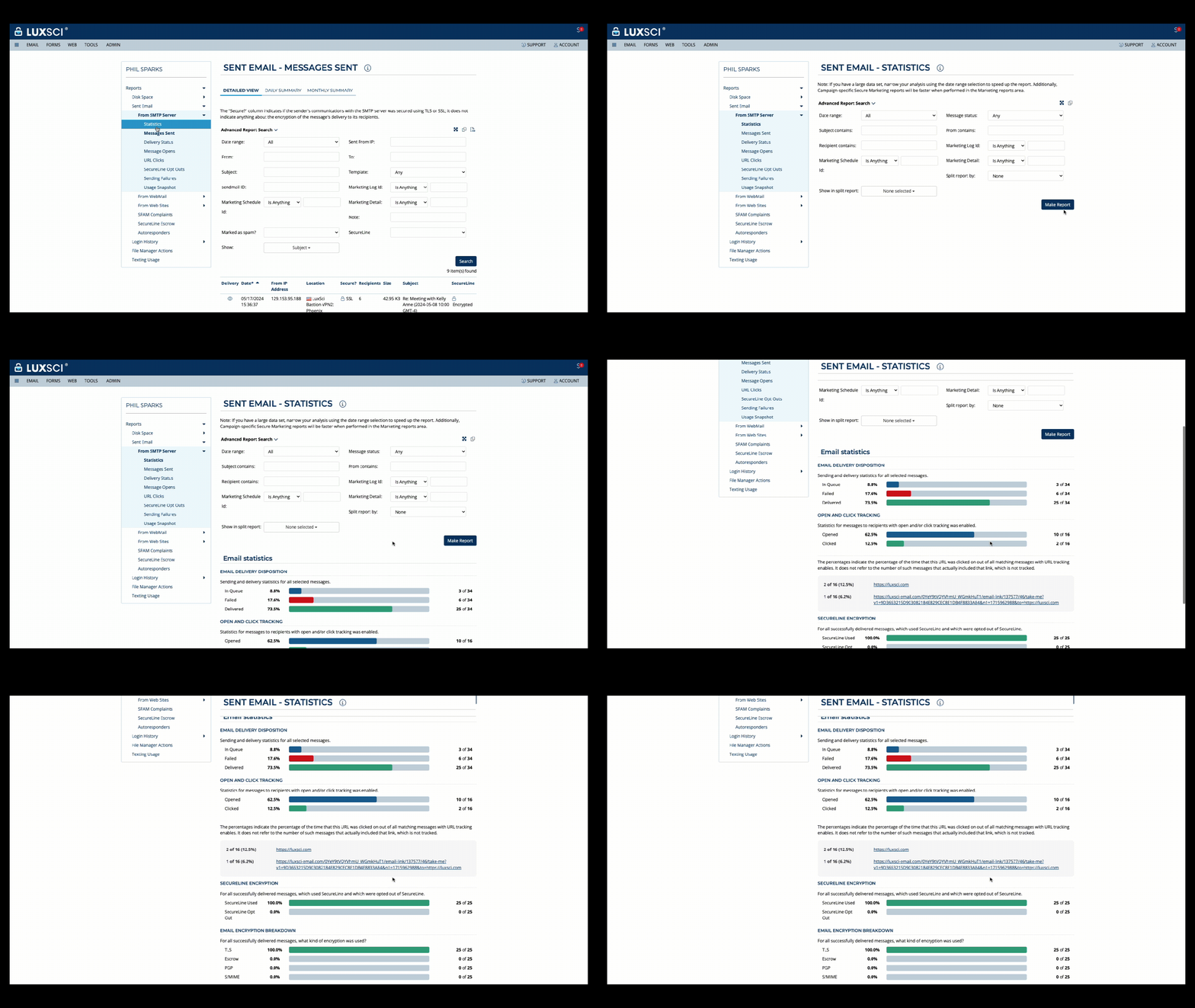
With our latest release, we made these powerful statistics easier to consume and analyze with an improved user interface for more efficiency and greater ease-of-use. Users can simply select the type of report they’d like and customize it using a range of filtering selections. This is great for diving deeper into your email performance to make adjustments on-the-fly, and to spot trends or opportunities for better engagement that you may have missed before.

New UI – Email Deliverability Statistics

LuxSci Secure Email Reporting Statistics

Get more granular, ID trends in real time with Split Reporting

As part of this release, we are pleased to introduce our Split Reporting feature, which empowers users to drill down on email deliverability statistics across a range of parameters, including:

  • subject
  • from address
  • recipient domains
  • marketing ID or campaign
  • custom field

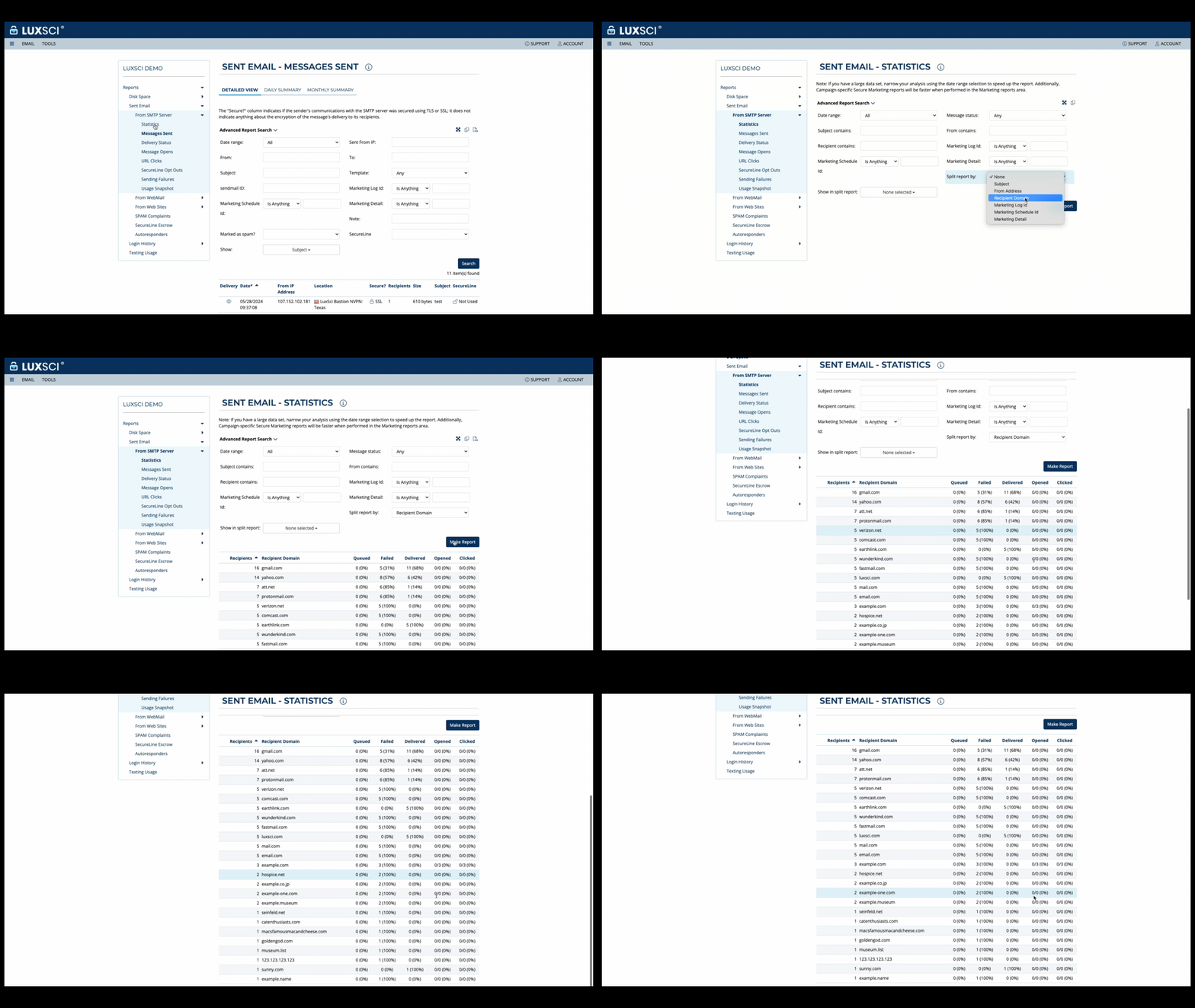
For example, users can analyze email deliverability statistics by subject to determine which ones are performing best, by use case to track results by campaign, or to track performance by recipient email domains. With split reporting, users also can analyze email volumes across queued, delivered, opened, failed and clicked parameters, and determine click-through rates (CTR) to measure effectiveness and ROI of campaigns.

New Feature Example – Split Reporting by Recipient Domain

LuxSci Secure Email Split Reporting

If you’d like to learn more, reach out and connect with us today!


Picture of LuxSci

LuxSci

Get in touch

Find The Best Solution For Your Organization

Talk To An Expert & Get A Quote


A member of our staff will reach out to you

Get Your Free E-Book!

LuxSci High Email Deliverability Best Practices Paper

What you’ll learn:

Related Posts

HIPAA Security Rule

HIPAA Security Rule Update: Email Encryption Rule Delayed to 2027

If you’ve been waiting for the final word on the new HIPAA Security Rule before you touch your email encryption strategy, you now have an official reason to keep waiting.

Our advice: Don’t do it.

What is the new HIPAA Security Rule for ePHI?

The Department of Health and Human Services’ Office for Civil Rights had targeted May 2026 for a final rule implementing the most significant update to the HIPAA Security Rule in over two decades. The proposal eliminates the “addressable” standard and makes encryption of ePHI in transit and at rest mandatory for every covered entity and business associate. That deadline came and went quietly. Now we know why: an updated federal regulatory agenda shows OCR’s timeline has moved to July 2027, with the rule-making downgraded from “final rule stage” to “long-term action.” OCR is still working through more than 4,700 public comments on the January 2025 proposal.

For an industry that had been expecting a tighter deadline, a year-plus delay is the kind of news that invites a collective exhale — and a shelved project plan. At LuxSci, we think that would be a mistake, for three reasons:

  • The current rule already requires you to address encryption. “Addressable” was never “optional.” It has always meant you must implement the safeguard, implement an equivalent alternative, or document in writing why neither is reasonable for your organization. Most healthcare organizations have never done that documentation rigorously, and OCR’s existing enforcement authority applies today, not in 2027.
  • Breach costs haven’t waited for the rule. IBM’s 2025 Cost of a Data Breach Report puts the average healthcare breach at $7.42 million, still the highest of any industry. At the same time, email remains the number one attack vector into healthcare organizations. None of that risk is paused by a regulatory delay.
  • Delay is not withdrawal. OCR has not signaled it’s abandoning the encryption mandate, only that it’s taking longer to finalize it. Organizations that build now toward the standard already proposed will be ahead (and more secure) regardless of exactly when, or in what final form, the rule lands. Organizations that wait risk a compressed scramble once it does.

What should healthcare IT and compliance leaders actually do with this news?

Reevaluate your ePHI security posture, recalibrate its urgency, and use the extra runway to do the job right, instead of racing against a deadline. This includes:

  • Getting a real inventory of where ePHI moves by email today, inbound and outbound, and where encryption is inconsistent or absent.
  • Closing the documentation gap on “addressable” now, while you have time to do it well rather than defensively.
  • Pushing your email vendor for concrete answers on encryption standards, MFA enforcement, audit logging, and breach notification — the same technical controls the proposed rule would make mandatory.
  • Building (or updating) a written, enforcement-ready posture: policies, vendor agreements, certifications and verifications, test results, and training records that would hold up under an OCR investigation today, not just in a future compliance deadline.

Get LuxSci’s new Definitive Guide on the new HIPAA Security Rule

From Addressable to Mandatory: Email Encryption Under the New HIPAA Security Rule provides the latest update on the rule, what it means for healthcare email encryption, and what you can do now to properly prepare for what’s coming in 2027. The guide also includes an interactive scorecard that lets you evaluate your current email set up and vendor across seven security and compliance dimensions in under two minutes, no email address required.

You can read the guide here: From Addressable to Mandatory: Email Encryption Under the New HIPAA Security Rule

If you want a second set of eyes on where your organization stands, our team offers a free 30-minute compliance assessment of your current email environment against the proposed rule’s requirements.

Reach out today and schedule a call.

HIPAA Security Rule Email Encryption Requirements

HIPAA Compliant Email

Your Email Platform Is Becoming Critical Healthcare Infrastructure

Most healthcare organizations view email as a utility, a necessary tool for sending messages between staff, communicating with patients, sending out newsletters, connecting workflows, and so on. Historically, IT teams focused on keeping it running, security teams worried about phishing, and compliance teams made sure sensitive emails were encrypted.

Today, however, that view is rapidly becoming outdated.

Email has evolved into one of healthcare’s most critical digital infrastructure components, and also one of it’s biggest security threats. It’s a core channel for patient engagement, care coordination, revenue cycle operations, digital marketing, remote monitoring, and increasingly, AI-powered communications. The organizations that recognize this shift are building communications platforms designed for security, performance, automation, and growth. With the new HIPAA Security Rule requiring email encryption on the horizon, those companies that don’t may find themselves constrained by systems that were never intended to support modern healthcare.

Email Is No Longer Just a Messaging Tool

Healthcare organizations now depend on email to support dozens of mission-critical workflows every day.

Patients receive appointment reminders, registration instructions, imaging results, billing notifications, Explanation of Benefits (EOBs), prescription updates, preventive care reminders, patient education, and post-discharge follow-up.  Marketing teams deliver personalized wellness campaigns and service line promotions. Clinical systems generate transactional notifications. Revenue cycle teams rely on secure digital communications to accelerate payments and reduce paper costs.

For many organizations, mission-critical patient communications flow through email every month.

When viewed collectively, email is more than a simple communications channel. It has become operational infrastructure with high levels of security needed and increasing compliance requirements.

The Stakes Continue to Rise

As healthcare becomes more digital, every communication carries greater business and clinical importance.

A delayed billing email may postpone payment. A failed appointment reminder can increase no-show rates. An undelivered care management message may impact patient outcomes. A misconfigured security policy can expose protected health information (PHI). Poor deliverability can undermine expensive patient engagement initiatives before they ever reach the inbox.

These are no longer isolated IT issues. Email can affect revenue, patient satisfaction, operational efficiency, compliance, and organizational reputation.

Today’s healthcare leaders require email infrastructure to provide the same reliability and visibility they demand from electronic health records, identity management systems, and other core infrastructure.

AI Is Raising the Bar Even Higher

There’s little doubt that artificial intelligence (AI) promises to transform patient communications.

Healthcare organizations everywhere are exploring AI-generated patient education, personalized outreach, intelligent scheduling, multilingual communications, and automated follow-up programs.

But AI also increases the importance of the underlying communications infrastructure.

Generating more personalized emails means little if organizations cannot:

  • Automatically protect PHI.
  • Apply consistent security policies.
  • Maintain complete audit trails.
  • Deliver messages reliably.
  • Integrate with EHRs, RCM and CRM platforms, and customer data platforms.
  • Demonstrate compliance during an audits.

In many ways, AI amplifies both the opportunities and the risks. Your email platform can help determine whether AI initiatives succeed or create new compliance and operational challenges.

Infrastructure Matters More Than Features

Healthcare buyers have traditionally evaluated email platforms based on individual features such as encryption, spam filtering, or secure portals.

Those capabilities remain important, but they no longer tell the whole story.

Today’s healthcare organizations should be evaluating communications platforms the same way they evaluate any mission-critical infrastructure.

Questions increasingly include:

  • Can it support both transactional and marketing communications?
  • Does it automatically enforce security policies without relying on user decisions?
  • Can it integrate with EHRs, CRM systems, CDPs, and business applications?
  • Will it scale during peak communication periods?
  • Does it provide detailed audit logging and reporting?
  • Can it adapt as regulatory expectations evolve?
  • Does it maintain high deliverability at enterprise scale?
  • Does it support single-tenant dedicated infrastructure for high performance and increased security?

These infrastructure characteristics often determine long-term success far more than any single feature comparison.

Email and the Future Of Secure Healthcare Communications

Healthcare is steadily moving toward a world where nearly every patient interaction is digital, personalized, and data-driven.

Healthcare leaders often ask whether they need a more secure email solution. That may be the wrong question.

The better question is whether their communications infrastructure is ready for where healthcare is headed over the next decade.

If you want talk about the future of your healthcare email infrastructure, reach out today and schedule a 30-minute assessment call with our experts.

Set Up a Call

HIPAA Security Rule Update

The HIPAA Security Rule Missed Its May Deadline — Here’s What We Know

The proposed HIPAA Security Rule update has become one of the most closely watched healthcare compliance developments in recent years. Designed to strengthen cybersecurity protections for electronic protected health information (ePHI), the proposal could significantly reshape how healthcare organizations approach risk management, ePHI encryption, and mandatory email encryption requirements.

A final rule was expected as early as May 2026. However, that deadline has now passed without publication from the U.S. Department of Health and Human Services (HHS) Office for Civil Rights (OCR).

So, what happens next—and what should healthcare IT directors, CISOs, and compliance officers do now?

Where Things Stand Today

The HIPAA Security Rule Notice of Proposed Rulemaking (NPRM) was published on January 6, 2025, with the goal of strengthening cybersecurity protections for ePHI in response to escalating ransomware attacks, healthcare breaches, and growing concerns about cyber resilience across the healthcare sector.

The proposal generated thousands of public comments from healthcare providers, payers, business associates, technology vendors, and industry groups. OCR has spent much of the past year reviewing this feedback and evaluating the operational and financial impact of the proposed changes.

Although the Spring Unified Regulatory Agenda identified May 2026 as a target date for a final rule, that milestone came and went without publication. As of June 2026, the proposed HIPAA Security Rule update remains under review.

While some organizations may be tempted to take a wait-and-see approach, the missed deadline should not be interpreted as a signal that the initiative has stalled. If anything, the proposal offers valuable insight into the future direction of healthcare cybersecurity regulation.

The Growing Focus on Mandatory Email Encryption

One of the most discussed aspects of the proposed HIPAA Security Rule update is encryption.

Under the current HIPAA Security Rule, encryption is generally classified as an “addressable” implementation specification. Organizations can choose alternative safeguards if they document and justify their decisions through a risk analysis process.

The proposed changes would significantly reduce that flexibility. Instead, many security safeguards, including encryption controls, would become more prescriptive and difficult to avoid.

While the final language has not yet been released, healthcare organizations should pay close attention to the proposal’s clear message: protecting ePHI through encryption is increasingly viewed as a baseline cybersecurity requirement.

This is particularly important for email communications.

Email remains one of the most widely used communication channels in healthcare, supporting everything from patient engagement and care coordination to billing, scheduling, and marketing communications. As regulators continue to focus on reducing data breach risks, mandatory email encryption is emerging as a likely area of increased scrutiny.

What Healthcare Organizations Should Do Now

The current delay creates an opportunity, not a reason to postpone action.

Healthcare organizations can begin preparing for likely requirements today by evaluating the security controls highlighted throughout the proposed rule.

Key areas to review include:

  • Encryption of ePHI across systems and communications channels
  • Comprehensive asset inventories and ePHI data mapping
  • Enhanced risk analysis and risk management processes
  • Multifactor authentication (MFA)
  • Vulnerability scanning and penetration testing
  • Incident response planning and testing
  • Backup and recovery procedures
  • Email security and secure email encryption practices

Organizations that proactively strengthen these areas now will be better prepared regardless of the final rule’s implementation timeline.

Why Secure Email Encryption Should Be a Priority

For many healthcare organizations, email remains one of the largest compliance and security risks.

Human error, misdirected messages, phishing attacks, and inconsistent encryption practices continue to contribute to breaches involving protected health information. As a result, secure email encryption is increasingly becoming a foundational component of healthcare cybersecurity strategies.

Organizations that rely on manual encryption processes or employee judgment alone may find it difficult to meet evolving regulatory expectations.

Instead, healthcare organizations should look for solutions that automate encryption decisions, reduce user error, and provide flexibility based on the sensitivity of the communication.

At LuxSci, we have long believed that security and usability must work together. We are 100% focused on secure healthcare communications, helping healthcare providers, payers, and suppliers protect sensitive data while improving patient and customer engagement. Our proven secure email solutions, used by leading companies including Athenahealth, 1-800 Contacts, and Hinge Health, help organizations protect ePHI with automated encryption capabilities that support both compliance and operational efficiency. Our unique SecureLine encryption technology enables organizations to apply the appropriate level of protection while maintaining a seamless experience for patients, customers, and staff.

For organizations already using Microsoft 365 or Google Workspace, LuxSci Secure Email Gateway can add HIPAA-compliant email security and encryption without requiring users to change their existing workflows. This approach helps reduce risk, while preserving productivity and user adoption.

The Bottom Line

The HIPAA Security Rule final rule may have missed its anticipated May deadline, but the cybersecurity challenges driving the proposal remain very real.

The OCR is still expected to make the rule change, which could require mandatory encryption of ePHI by early 2027.

The time to prepare is now!

Healthcare organizations should view the proposed HIPAA Security Rule update as an advance warning of where regulatory expectations are heading. Stronger cybersecurity controls, enhanced risk management, ePHI encryption, and mandatory email encryption requirements are all likely to remain central themes in future compliance efforts.

The organizations that begin preparing now will not only be better positioned for future regulatory changes, but will also strengthen their ability to protect patient data, reduce risk, and build trust in an increasingly challenging threat landscape.

At LuxSci, we’re proud to support the healthcare industry’s ongoing digital transformation through secure healthcare communications. Our HIPAA-compliant solutions for secure email, email marketing, and forms empower organizations to safely use and protect PHI, while delivering better patient experiences and outcomes.

Ready to strengthen your healthcare cybersecurity strategy?

Learn more about LuxSci and our complete suite of HIPAA compliant email and marketing solutions, or schedule a consultation with one of our healthcare communication experts today.

Contact us today!

You Might Also Like

LuxSci HITRUST Certified

LuxSci Achieves HITRUST Certification for Third Consecutive Term

We’re thrilled to announce our latest data security achievements here at LuxSci! Once again, LuxSci has achieved HITRUST CSF® certification, following a multi-step process that includes a deep assessment, validation, and quality assurance analysis for a company and its products. Our 2024-26 certification marks the third consecutive time that LuxSci has received the 2-year HITRUST certification, meeting the rigorous standards set by the HITRUST CSF framework.

In related news, LuxSci, which is GDPR compliant, has also renewed its US-EU Data Privacy Framework (DPF) certification for the next 12 months. According to the certification, U.S. companies that participate in the DPF provide adequate levels of security for personal data transfers received from the EU within the scope of the EU General Data Protection Regulation (GDPR). This renewal enables us to support customers in Europe, while ensuring we meet the highest data protection standards for cross-border data transfers. For customers that do business in the EU and UK, LuxSci ensures data privacy is upheld in compliance with regulations.

Our latest security certifications are a testament to our continuous and unrelenting commitment to delivering the highest levels of data protection for healthcare communications. This includes securing email, marketing, text, forms and hosting—while also improving patient engagement and outcomes with the use of protected health information (PHI) in communications.

Why HITRUST Certification Matters in Healthcare

In the healthcare industry, protecting sensitive patient data is not just a legal requirement—it’s an ethical responsibility and an imperative for any company or organization in existence today. While HIPAA compliance establishes a strong baseline for safeguarding patient information, HITRUST certification takes data protection a step further. The HITRUST Common Security Framework (CSF) integrates multiple regulatory standards, including HIPAA, to provide a comprehensive approach to information security, privacy, and risk management.

For healthcare organizations—and larger companies and enterprises, in particular—partnering with a HITRUST-certified provider like LuxSci provides peace of mind. You can trust that our security controls not only meet HIPAA standards but also go beyond them to address the latest industry challenges and emerging threats—we do this constantly, year after year.

How HITRUST Enhances Data Security Beyond HIPAA

HIPAA establishes the essential requirements for securing protected health information (PHI), putting a solid, but basic foundation in place. HITRUST certification is recognized for going beyond the basics. Here’s how:

  • Comprehensive Approach to Risk Management: HITRUST CSF combines various security, privacy, and regulatory standards such as NIST, ISO, and PCI-DSS, providing a more robust framework for managing risks in healthcare.
  • Continuous Monitoring and Improvement: HITRUST requires organizations to continuously monitor and improve their security measures, ensuring that their defenses evolve alongside new threats and new technologies.
  • Tailored Security Controls: HITRUST’s framework scales based on the size, complexity, and nature of the organization, offering flexibility while maintaining a high standard of security.
  • Third-Party Validation: Achieving HITRUST certification involves rigorous third-party audits, which demonstrate that an organization’s security practices are not only in place but have been thoroughly validated.

The Benefits of HITRUST Certification for Healthcare

For healthcare providers, payers, and suppliers, the advantages of partnering with a HITRUST-certified organization like LuxSci are clear:

  • Streamlined Compliance: HITRUST certification simplifies compliance with multiple regulatory frameworks, reducing the burden of managing multiple audits and certifications.
  • Enhanced Patient and Customer Trust: By choosing a HITRUST-certified partner, you show patients, partners, and regulators that your organization prioritizes the highest levels of security.
  • Future-Proofing: HITRUST ensures that you’re not just up to date with today’s standards but prepared for future regulatory requirements and security challenges as they arise.

At LuxSci, we remain committed to delivering secure, scalable, and flexible HIPAA-compliant healthcare communications solutions that our clients can depend on for the highest levels of data protection.

If you’d like to learn more about LuxSci’s secure healthcare communications solutions—and how we elevate your healthcare data protection to the next level—contact us today!

HIPAA Email Retention Policy

What Should a HIPAA Email Retention Policy Include?

A HIPAA email retention policy should include classification procedures for different email types, retention schedules based on content and legal requirements, secure storage and disposal methods, access controls for archived communications, and compliance monitoring procedures. The policy must address both HIPAA documentation requirements and broader legal obligations while providing clear guidance for staff implementation and ongoing management. Healthcare organizations need comprehensive retention policies that address complex regulatory landscapes without creating unnecessary administrative burden. Well-designed policies help ensure compliance while managing storage costs and supporting operational efficiency across the organization.

Email Classification and Categorization Guidelines

Content-based categories help staff identify appropriate retention periods by distinguishing between patient care communications, administrative messages, and marketing materials. Each category should have clear examples and decision criteria to ensure consistent application. PHI identification procedures enable staff to recognize when email communications contain protected health information requiring special handling and extended retention periods. These procedures should address obvious PHI like patient names as well as indirect identifiers that could reveal patient information. Business purpose classification distinguishes between emails supporting patient treatment, healthcare operations, payment activities, and other organizational functions. Different business purposes may trigger different retention requirements under various regulatory programs.

Retention Schedule Specifications

Minimum retention periods should reflect the longest applicable requirement from HIPAA email retention policy, state medical record laws, federal programs, and organizational needs. The policy should clearly state these periods for each email category and explain the basis for each requirement. Maximum retention limits help organizations manage storage costs and reduce litigation exposure by establishing when emails should be destroyed unless legal holds or other special circumstances require continued preservation. These limits should balance compliance needs with practical considerations. Exception procedures provide guidance for situations requiring deviation from standard retention schedules such as litigation holds, ongoing investigations, or patient access requests. These procedures should specify approval processes and documentation requirements for exceptions.

Storage and Archive Management Requirements

Security standards for archived emails must maintain the same level of PHI protection as active communications throughout the retention period. The policy should specify encryption requirements, access controls, and monitoring procedures for archived communications. Storage location specifications define where different types of email communications should be preserved including on-premises systems, cloud services, or hybrid approaches. These specifications should address data sovereignty, vendor requirements, and disaster recovery needs. Migration procedures ensure that archived emails remain accessible as technology systems change over time. The policy should address format preservation, system upgrades, and vendor transitions that could affect archived email accessibility.

Access Control and Retrieval Procedures

Authorization requirements define who can access archived email communications and under what circumstances. The policy should establish role-based permissions that limit access to personnel with legitimate business needs while maintaining audit trails. Search and retrieval protocols provide step-by-step procedures for locating archived emails during audits, legal discovery, or patient access requests. These protocols should specify search parameters, documentation requirements, and quality control measures. Emergency access procedures enable retrieval of archived communications during urgent situations when normal approval processes might delay patient care. These procedures should include alternative authorization methods and enhanced audit requirements.

Disposal and Destruction Standards

Secure deletion methods ensure that email content and metadata are completely removed when retention periods expire. The policy should specify approved destruction techniques that prevent unauthorized recovery of PHI from disposed communications. Certification requirements mandate documentation of email destruction activities including dates, methods used, and personnel responsible. These certifications support compliance demonstrations and help track disposal activities across the organization. Media destruction procedures address proper disposal of storage devices containing archived emails when equipment reaches end of life. A HIPAA email retention policy should specify physical destruction or certified wiping procedures that prevent PHI recovery.

Compliance Monitoring and Audit Support

Review schedules establish regular assessment of email retention practices to ensure continued compliance with policy requirements and changing regulations. These reviews should evaluate policy effectiveness, system performance, and staff compliance. Audit preparation procedures provide guidance for responding to regulatory reviews or legal discovery requests involving archived email communications. These procedures should include search protocols, production formats, and timeline management. Performance tracking helps organizations measure their success in meeting retention obligations while identifying areas needing improvement. Key metrics might include retention compliance rates, retrieval response times, and storage cost management.

Staff Training and Implementation Guidance

Training requirements specify education that personnel must receive about email retention obligations and their role in policy implementation. Training should cover classification procedures, retention schedules, and proper handling of archived communications. Implementation timelines provide realistic schedules for deploying new retention policies while allowing adequate time for staff training, system configuration, and process development. These timelines should consider organizational capacity and change management needs. Resource allocation addresses personnel, technology, and financial requirements for effective email retention policy implementation. The policy should specify roles and responsibilities while identifying budget needs for ongoing operations.

Legal and Regulatory Compliance Integration

Regulatory coordination ensures that a HIPAA email retention policy is adhered to, aligning with requirements from state laws, federal programs, and professional licensing boards. The policy should identify all applicable requirements and explain how conflicts are resolved. Legal hold procedures provide immediate preservation capabilities when litigation is anticipated or pending. These procedures should include notification processes, scope determination, and coordination with legal counsel to ensure comprehensive preservation. Update mechanisms ensure that retention policies remain current as regulations change or organizational needs evolve. A HIPAA email retention policy should specify review frequencies, approval processes, and communication procedures for policy modifications.

healthcare marketing trends

What Makes a Platform HIPAA Compliant?

A platform becomes HIPAA compliant through a combination of security features, privacy controls, and administrative processes that protect patient information according to HIPAA regulations. No platform is inherently compliant but, rather, compliance emerges from implementing required safeguards, obtaining a Business Associate Agreement, and configuring the platform HIPAA compliant settings to handle protected health information properly. Healthcare organizations must evaluate platforms based on these capabilities and implement appropriate security measures to maintain compliance.

Core Security Protections

To make a platform HIPAA compliant, entities must incorporate several fundamental security capabilities. Encryption protects data both during storage and transmission, preventing unauthorized access. Authentication systems verify user identities through methods like password requirements and multi-factor verification. Access controls restrict what information different users can view based on job roles and responsibilities. Audit logging creates records of who accessed information and what actions they performed. Backup systems maintain data availability while incorporating appropriate security protections. These features enable organizations to implement the safeguards required by the HIPAA Security Rule.

Vendor Agreement Framework

HIPAA compliant platforms provide Business Associate Agreements (BAAs) establishing vendor responsibilities for protecting healthcare information. These agreements define how the platform vendor handles protected health information and outlines security obligations. Platforms designed for healthcare use typically offer standardized BAAs as part of their service agreements. The agreement specifies which portions of the platform fall under compliance coverage, as some vendors exclude certain features or services. Organizations must obtain these agreements before storing any patient information on third-party platforms regardless of security features implemented.

Patient Data Privacy Mechanisms

Platforms supporting healthcare data incorporate privacy controls aligned with HIPAA requirements. Notice functionality allows organizations to inform patients about information usage and their privacy rights. Consent management captures and stores patient authorizations for information disclosures. Access request handling helps organizations respond when patients want copies of their records. These privacy features help organizations fulfill obligations under the HIPAA Privacy Rule. While security prevents unauthorized access, privacy controls manage authorized information usage according to regulatory requirements and patient preferences.

Compliance Evidence Generation

To make a platform HIPAA compliant, entities can adopt solutions that provide documentation capabilities demonstrating regulatory adherence. Configuration documentation shows how security settings protect patient information. Audit reports detail system access and usage patterns for compliance verification. Risk assessment tools help identify potential vulnerabilities within platform implementations. These documentation features support healthcare organizations during internal reviews and external audits. Thorough reporting capabilities allow organizations to demonstrate due diligence in protecting healthcare information when questions arise about compliance status.

Healthcare Process Enablement

Platforms designed for healthcare environments incorporate features that maintain compliance while supporting clinical and administrative workflows. Secure messaging allows providers to discuss patient care without compromising confidentiality. Document management includes appropriate security controls for clinical records. Task management tracks workforce activities while protecting associated patient information. These workflow capabilities allow healthcare organizations to maintain productivity while adhering to regulatory requirements. The platform architecture considers both security needs and practical usage patterns within healthcare environments.

Continuous Protection Adaptation

HIPAA compliant maintenance includes features that support compliance over time as threats evolve. Vulnerability scanning identifies potential security issues as they emerge. Update mechanisms implement security patches without disrupting operations. Configuration management prevents inadvertent changes that might compromise compliance status. Training tools help staff understand proper system usage and security procedures. These management capabilities help organizations maintain compliance as technology and regulations evolve. Effective platforms reduce the administrative burden of ongoing compliance management while maintaining appropriate security controls

HIPAA Compliant Hosting Requirements

Integrating HIPAA Compliant Email with EHR Systems

With digital healthcare here to stay, today’s providers, payers and suppliers are making increasing use of Electronic Health Record (EHR) systems for more connected care – and better health outcomes.

However, while EHR systems help increase the speed and efficiency at which care can be delivered to patients, healthcare companies must still consider the security of electronic protected health information (ePHI) throughout the process, especially when it comes to communicating sensitive data with patients, customers, and other organizations. 

Fortunately, integrating an EHR system with a HIPAA compliant email service provider (ESP), like LuxSci, offers a secure way to engage with your patients, while leveraging – and protecting – the wealth of information within EHR systems to personalize communications.

In this post, we discuss the benefits of integrating EHR systems with a HIPAA compliant email platform, as well as several use cases made possible by bringing these two powerful solutions together.

What is an EHR System?

An EHR system is a platform used by healthcare companies to store and manage their patient’s digital data, including PHI. In providing a digital repository for a patient’s medical history, including diagnoses, prescribed medication, lab results, and other data related to their healthcare journey, EHR systems enable organizations to access, update, and share patient data more quickly and efficiently.

As EHR systems have steadily replaced paper-based records, namely, after the HITECH Act was enacted in 2009, which incentivized EHR adoption, healthcare companies are better able to access and share PHI across different environments, greatly enhancing the coordination and cooperation of providers, payers, and suppliers.

Why Should You Integrate EHR Systems with a HIPAA Compliant Email Platform?

Let’s discuss the key benefits of integrating your EHR Systems with a HIPAA compliant email platform:

Secure ePHI Transmission

When the sensitive data in EHR systems is sent out to patients and other healthcare providers and organizations, it must be encrypted, as per HIPAA regulations to safeguard it from exposure. That way, even in the event of a security breach, it will be unreadable to malicious actors, preserving the privacy of patients and customers. In light of this, HIPAA compliant email delivery platforms emphasize strong encryption capabilities to ensure sensitive patient data is always encrypted during transmission.

LuxSci’s SecureLine encryption technology employs automatic, flexible encryption, which applies the appropriate encryption standard depending on the recipient’s email security posture and infrastructure, making sure emails are always encrypted in transit. 

HIPAA Compliant Patient Engagement Campaigns

Healthcare organizations are often reluctant to include the patient data stored in their EHR systems for fear of accidental exposure – and violating HIPAA regulations as a result. In addition to encryption, LuxSci provides other HIPAA-mandated security features, such as access control capabilities, to maintain precise control over who can access patient data, and audit logging, to track access to ePHI. Perhaps most importantly, LuxSci provides you with a Business Associate Agreement (BAA): a legal document, and key pre-requisite for HIPAA compliance, that clearly establishes its responsibilities in safeguarding the ePHI that originates in your EHR systems. 

With these security capabilities in place, healthcare providers can confidently incorporate patient and customer data from their EHR systems into their outreach efforts, using ePHI to personalize emails accordingly to maximize engagement and improve communications.

Automated Secure EHR-Driven Communication

EHR systems facilitate automated healthcare workflows, including for clinical or administrative events that require effective communications, such as appointment scheduling, a patient diagnosis, or test results becoming available, automatically triggering follow-up actions, including updating patient care plans, generating invoices, sending outbound emails. In addition to facilitating consistency and coordination between the various companies involved in a patient’s healthcare journey, it reduces the amount of required manual work, lowering each organization’s administrative overhead. 

LuxSci’s suite of HIPAA compliant, secure communications tools aid in the enhanced efficiency and productivity of EHR systems by streamlining digital communication across multiple channels. LuxSci Secure High Volume Email can automatically send personalized, HIPAA-compliant messages triggered by EHR events. Similarly, LuxSci Secure Text allows companies to notify patients via SMS, as per the situation or patient preferences. LuxSci’s Secure Forms, meanwhile, simplifies onboarding and consent processes by pre-filling web forms with EHR data, eliminating the need for manual input paperwork and manual entry.

Common Email and EHR Integration Use Cases

Integrating your EHR system with a HIPAA compliant email solution, like LuxSci, opens the door for a wide variety of enhanced patient engagement opportunities. Let’s explore some of the most valuable use cases for EHR integration below.

  • Appointment Confirmations and Reminders: companies can create EHR-driven workflows that send out an email confirmation as soon as an appointment is scheduled. Similarly, automated email reminders and text messages can be scheduled to go out a set number of days before the patient’s appointment, lowering the chance of a no-show.
  • Pre-Visit Instructions: when appropriate, tailored preparation instructions can be scheduled to be sent out by email before the appointment, according to the nature of the appointment and other relevant patient data.
  • Follow-Up Care Guidance: by the same token, an EHR event can be set up to send out personalized after-care advice, sourced from care plans or notes stored in the EHR system.
  • Test Results: an email or text can be triggered as soon as a patient’s lab results become available; this could be in the form of an alert to contact their provider to collect the results or a summary alongside a secure link to a portal for full access.
  • Preventive Screening Reminders: EHR data can be used to identify patients due for screenings, immunizations, or chronic care follow-ups.
  • Preventative Care: sending patients advice and recommendations relevant to their condition, based on ePHI stored in their healthcare provider’s EHR.
  • Early Detection Self-Assessments: EHR-driven emails can be used to send patients personalized risk assessments designed to detect early warning signs of conditions such as diabetes or cancer, based on ePHI like age, lifestyle factors, or family history.
  • Feedback Collection: healthcare organizations can schedule feedback to be collected from patients, e.g., surveys, questionnaires, etc, to measure patient satisfaction and identify key areas of improvement.  

Discover the Power of EHR Integration with LuxSci

Integrating HIPAA compliant communications solutions like LuxSci with EHR systems empowers healthcare companies to craft more timely, efficient and consistent digital healthcare communications and workflows. This personalized approach to patient and customer engagement enables efficient, effective and above all, compliant communications strategies that improve individual engagement, providing better health outcomes and a higher quality of life.

Want to learn more? Contact us today!