We recently rolled out new email reporting features, taking deliverability depth and analysis to new levels. If you’re a current LuxSci customer and haven’t checked them out, now’s the time. If you’re new to LuxSci, learn more below, and don’t hesitate to reach out for more info – or a demo.
LuxSci secure communications solutions have always featured rich reporting on email deliverability, including volumes and percentages for emails:
in queue
opened
clicked
failed
secured
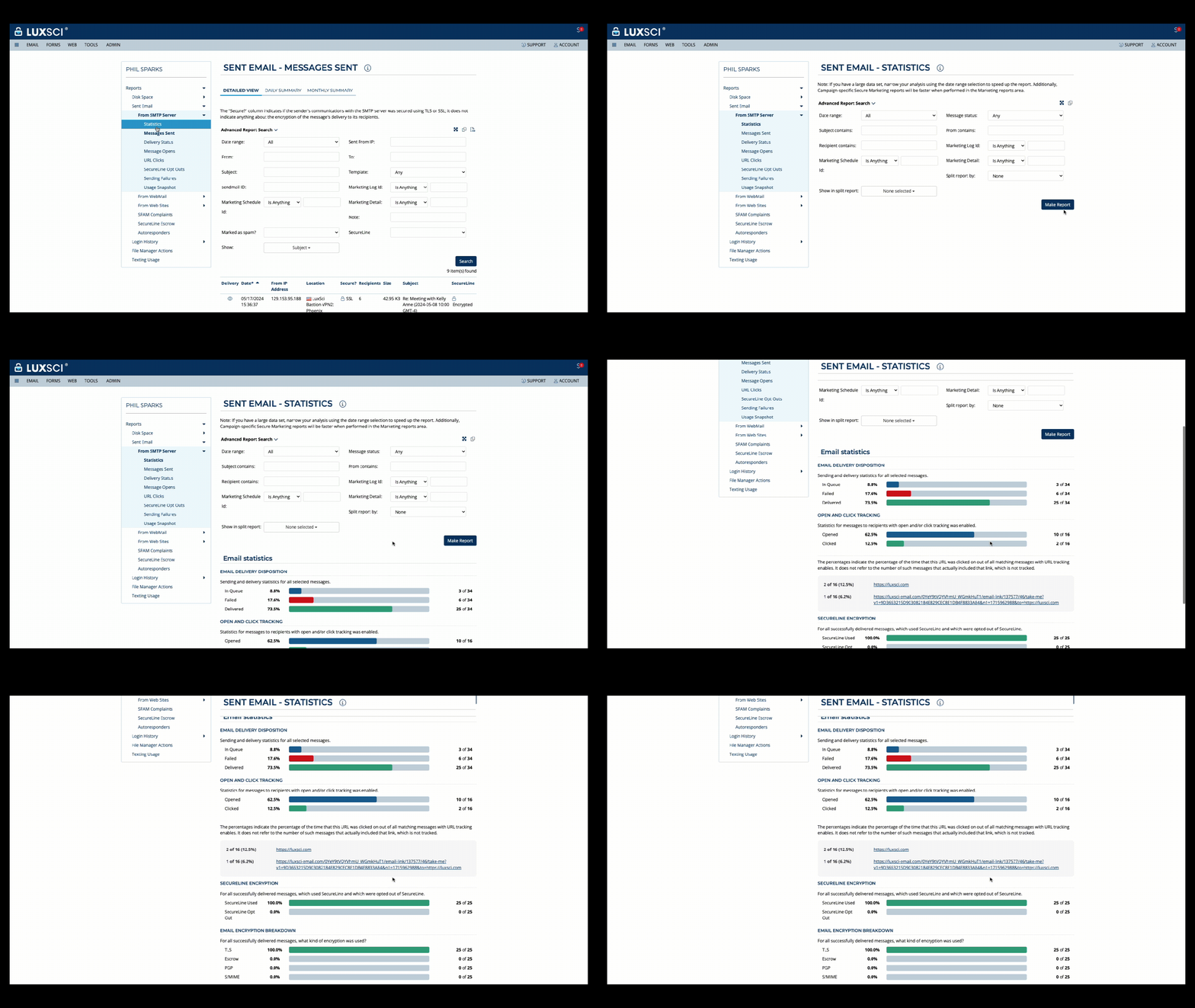
With our latest release, we made these powerful statistics easier to consume and analyze with an improved user interface for more efficiency and greater ease-of-use. Users can simply select the type of report they’d like and customize it using a range of filtering selections. This is great for diving deeper into your email performance to make adjustments on-the-fly, and to spot trends or opportunities for better engagement that you may have missed before.
New UI – Email Deliverability Statistics
Get more granular, ID trends in real time with Split Reporting
As part of this release, we are pleased to introduce our Split Reporting feature, which empowers users to drill down on email deliverability statistics across a range of parameters, including:
subject
from address
recipient domains
marketing ID or campaign
custom field
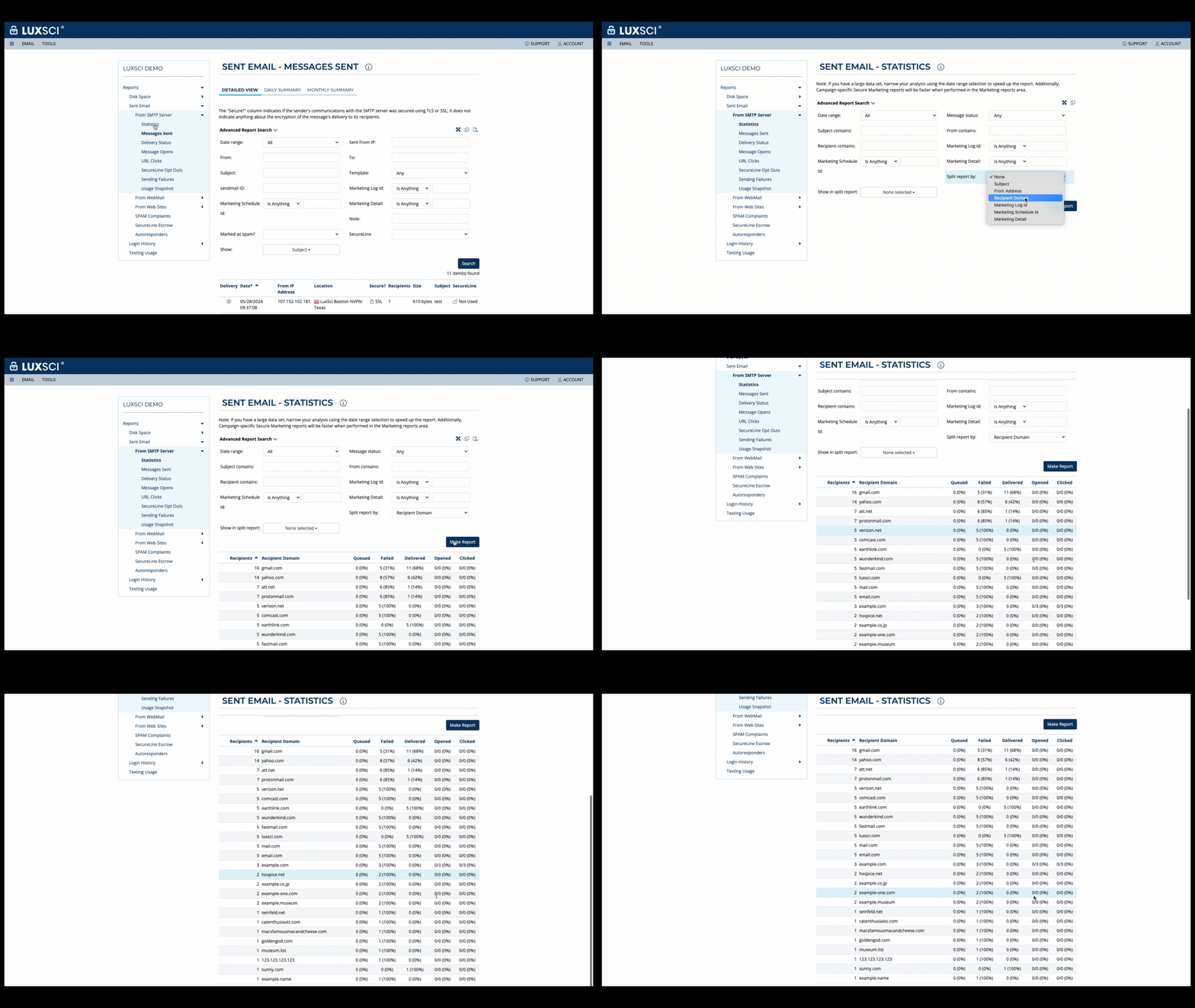
For example, users can analyze email deliverability statistics by subject to determine which ones are performing best, by use case to track results by campaign, or to track performance by recipient email domains. With split reporting, users also can analyze email volumes across queued, delivered, opened, failed and clicked parameters, and determine click-through rates (CTR) to measure effectiveness and ROI of campaigns.
New Feature Example – Split Reporting by Recipient Domain
If you’d like to learn more, reach out and connect with us today!
We’re excited to announce that LuxSci has again been recognized by G2 with 20 badges in its just-released Summer 2026 Reports, highlighting our continued leadership in secure healthcare communications and HIPAA compliant email solutions.
The new LuxSci G2 recognitions span several categories, including:
Best Estimated ROI
Best Support
High Performer
Leader
These latest LuxSci G2 awards reflect what matters most to our customers: delivering secure, HIPAA compliant healthcare communications backed by responsive support and measurable business results.
As one of the most trusted providers of HIPAA compliant email, marketing, and forms solutions, we’re proud to see our commitment recognized across multiple product categories and customer satisfaction metrics.
Recognition Built on Customer Experience
LuxSci’s G2 rankings are based on verified customer feedback and real-world user experiences, making these badges especially meaningful to our team.
This year’s Summer Reports recognized LuxSci for consistently delivering value to healthcare organizations looking to securely engage patients and customers while maintaining compliance with HIPAA requirements.
Among the highlights, the LuxSci G2 recognition includes:
Best Estimated ROI, reflecting the measurable value customers achieve through secure healthcare communications and personalization
Best Support, reinforcing LuxSci’s long-standing reputation for responsive, knowledgeable customer service
High Performer badges across multiple categories for customer satisfaction and product performance
Leader recognition for delivering secure, scalable communications solutions trusted by healthcare organizations
At LuxSci, we believe secure communications should also drive better engagement, stronger outcomes and operational efficiency. These recognitions reinforce our focus on helping healthcare providers, payers and suppliers personalize communications while protecting sensitive patient data.
Supporting the Future of Personalized Healthcare Engagement
LuxSci’s secure healthcare communication and patient engagement solutions empower organizations to safely communicate with patients and customers through:
HIPAA-compliant high volume email
Secure email marketing
Secure forms and data collection
Flexible encryption with SecureLine technology
Our solutions are designed to help healthcare organizations improve engagement, streamline workflows and personalize the healthcare journey while maintaining the highest standards of security and compliance.
These latest LuxSci G2 recognitions also build on LuxSci’s broader reputation for security, performance and customer success. Security and trust remain foundational to everything we do, alongside our commitment to delivering smart, responsive support for our customers.
Thank You to Our Customers
We’re grateful to our customers for their continued trust, collaboration and feedback. Their reviews and insights help shape our products and drive ongoing innovation across the LuxSci product set.
To learn more about LuxSci’s secure healthcare communications solutions, contact our team to schedule a secure email assessment or demo.
Healthcare organizations waiting for the final HIPAA Security Rule updates before improving email encryption and security may already be behind.
While the proposed changes to the HIPAA Security Rule are expected to be finalized in May, the direction from the U.S. Department of Health and Human Services Office for Civil Rights (OCR) is becoming increasingly clear. Across investigations, settlements, and enforcement actions, OCR continues emphasizing stronger technical safeguards, encryption, documented security programs, multi-factor authentication (MFA), risk analysis, and proactive cybersecurity operations.
For healthcare organizations, one area stands directly in the middle of all of these priorities: email.
Email remains a primary communication channel in healthcare — and one of the industry’s largest security vulnerabilities. From unauthorized PHI exposure to phishing attacks and ransomware delivery to account compromise, email continues to be at the center of healthcare cybersecurity incidents.
So, are the proposed HIPAA Security Rule changes hypothetical future guidance or a preview of OCR’s future enforcement expectations?
For healthcare email security, the implications are significant.
Email = Healthcare Cybersecurity Risk
Healthcare organizations rely on email for critical communications and healthcare workflows, including:
Patient communications
Care coordination
Claims and billing notifications
Marketing and engagement
Internal collaboration
Third-party vendor communications
Delivery of sensitive PHI
At the same time, attackers continue targeting email systems because they remain one of the easiest entry points into healthcare environments.
Insecure email workflows create unnecessary exposure of protected health information. Phishing campaigns are becoming more sophisticated. Credential theft attacks are bypassing traditional MFA methods. And business email compromise (BEC) attacks continue rising.
Recent OCR enforcement actions increasingly reflect these realities.
Organizations are being evaluated not simply on whether a breach occurred, but whether they implemented reasonable safeguards beforehand, including encryption, authentication controls, monitoring, access management, and documented risk mitigation processes.
For email systems specifically, that means healthcare organizations should expect increased scrutiny around:
Email encryption enforcement
MFA deployment
Audit logging and retention
Conditional access policies
Vendor security controls
Secure email delivery best practices
Segmentation and infrastructure isolation
Ongoing patch and vulnerability management
In many ways, email infrastructure is becoming a visible test of an organization’s overall cybersecurity posture.
Email Encryption Is Moving From Addressable to Required
Historically, healthcare organizations often interpreted HIPAA email encryption requirements with flexibility because encryption was technically categorized as an “addressable” safeguard under the Security Rule. But, OCR enforcement and broader cybersecurity realities are changing that interpretation rapidly.
Today, failing to encrypt sensitive healthcare communications increasingly creates both security and regulatory risk. The proposed Security Rule updates place even greater emphasis on encryption and technical safeguards. At the same time, OCR investigations continue examining whether organizations properly protected PHI in transit and at rest.
For healthcare email specifically, this creates several growing expectations:
Email encryption should be automated wherever possible
Human error should not determine whether PHI is protected
Organizations should maintain documented encryption policies
Secure delivery methods should adapt dynamically to recipient capabilities
Audit trails should demonstrate how messages were secured
At LuxSci, we have long believed that encryption should operate as a strategic layer of healthcare communications infrastructure, not as a manual user decision.
Our SecureLine email encryption technology automatically applies appropriate encryption methods based on organizational policies and delivery requirements, helping reduce the risks associated with human error while maintaining usability, deliverability and compliance. As enforcement expectations rise, this type of automated security enforcement is becoming increasingly important.
Healthcare organizations have historically viewed MFA deployment as sufficient protection. But attackers have adapted quickly.
MFA bypass attacks, token theft, session hijacking, and consent phishing campaigns are increasingly targeting healthcare users. As a result, regulators and cybersecurity experts are placing greater emphasis on phishing-resistant authentication approaches and contextual access controls.
For email environments, organizations should increasingly evaluate:
Whether MFA methods are resistant to phishing attacks
Conditional access policies based on device, location, and behavior
Account monitoring and anomaly detection
Administrative access protections
Session management controls
Logging and authentication auditing
The broader message is clear: healthcare organizations need authentication strategies designed for today’s threat landscape, not yesterday’s compliance checklist.
OCR Wants Proof, Not Just Policies
One of the clearest trends emerging from recent OCR activity is the increasing importance of documentation and operational evidence. Healthcare organizations must increasingly demonstrate not only that safeguards exist, but that they are consistently enforced, monitored, tested, and maintained over time.
For email systems, organizations should be prepared to demonstrate:
Email encryption policies
MFA enforcement records
Audit logs and message tracking
Vendor security documentation
Risk assessments involving email infrastructure
Patch management procedures
Employee security awareness training
Incident response procedures for email-based threats
This represents a broader shift in healthcare cybersecurity expectations.
The question is no longer: “Do you have email security controls?”
The question is increasingly: “Can you prove they are operationally effective?”
Healthcare Organizations Need a New Email Security Strategy
The healthcare industry is entering a new phase of cybersecurity enforcement.
OCR’s direction is becoming increasingly clear: organizations are expected to proactively secure systems handling PHI using modern, documented, and continuously maintained safeguards. For email security specifically, that means organizations should stop treating encryption, MFA, and secure communications as optional compliance requirements. Instead, they should view secure email infrastructure as a strategic component of enterprise cybersecurity and patient trust.
At LuxSci, we help healthcare organizations modernize secure communications with HIPAA compliant email infrastructure designed specifically for healthcare environments, including flexible encryption, secure delivery, auditability, high deliverability, access controls, and dedicated infrastructure options.
The proposed HIPAA Security Rule updates may not yet be final. But, OCR is already signaling where healthcare cybersecurity enforcement is headed next. For organizations relying on email to communicate with patients, members, customers, and partners, the time to examine your secure email infrastructure is now.
Connect with our experts to learn more using the form at the top of this page!
New right-sized offering brings advanced encryption, easy API integration, and HITRUST-certified compliance to the most underserved segment in healthcare email — with pricing starting at $99/month
CAMBRIDGE, MA — May 5, 2026 — LuxSci, a leading provider of HIPAA compliant secure healthcare communications, today announced the launch of LuxSci Secure High Volume Email for mid-sized healthcare organizations, the industry’s trusted HIPPA-compliant email solution now packaged and priced for mid-size healthcare organizations. Regional health systems, health plans, specialty group practices, urgent care networks, and multi-site regional providers can now access LuxSci’s enterprise-grade email security and encryption infrastructure at published, volume-based pricing — with no custom quote required.
LuxSci Secure High Volume Email for mid-sized healthcare organizations delivers the same HITRUST CSF r2-certified email security and flexible encryption capabilities that power communications for some of the largest healthcare organizations in the industry, including Athenahealth, 1-800 Contacts, Hinge Health and Eurofins. The new LuxSci mid-sized offer is tiered and priced for organizations with email sending volumes of between 300 and 99,000 emails per month.
LuxSci Secure High Volume Email is built on the company’s proprietary SecureLine™ encryption technology, which automatically selects the optimal email encryption method — TLS, secure portal fallback, PGP, or S/MIME — on a per-recipient basis at the time of delivery, with no action required from senders or recipients. This intelligent, adaptive encryption method goes significantly beyond TLS-only or portal fallback models offered by basic platforms, giving mid-market healthcare organizations the flexibility and cybersecurity depth they need as HIPAA regulations tighten and email threats continue to get more sophisticated.
Key capabilities include:
Automatic email encryption via SecureLine™ — encrypt every email and its content, including Protected Health Information (PHI), with per-recipient adaptive encryption across TLS, portal fallback, PGP, and S/MIME.
Advanced REST API with webhooks for dataflows into your systems — supports unlimited messages/hour with failover, queuing, plus webhooks can push email engagement data back to EHRs, CRMs, RCM and customer data platforms.
Comprehensive audit logging and reporting — message-level tracking, delivery status, engagement reporting, and downloadable reports for compliance officers.
HITRUST CSF r2 certification, BAA, GDPR-compliant, and US-EU Privacy Framework agreement all included.
Microsoft 365 and Google Workspace overlay — use LuxSci’s Secure Email Gateway add-on to integrate directly with existing M365 or Google Workspace environments, adding HIPAA-compliant encryption without migration or user retraining.
HIPAA-compliant patient engagement — secure outbound email campaigns with PHI-powered hyper-segmentation, automated workflows, and personalized emails for marketing campaigns, proactive patient communications, appointment reminders, care gap outreach, new plan enrollments, healthcare education, and more — with LuxSci Secure Marketing add-on.
New Published LuxSci Pricing
LuxSci Secure High Volume Emai for mid-sized healthcare organizations features published pricing based on monthly sending volume:
Monthly Send Volume
Monthly Price
300 to 9,999 emails/month
$99/month
10,000 – 29,999 emails/month
$199/month
30,000 – 49,999 emails/month
$299/month
50,000 – 99,999 emails/month
$399/month
100,000+ emails/month
Custom
“Mid-size healthcare organizations have been underserved for too long, forced to choose between inadequate email security tools that weren’t built for healthcare and HIPAA compliance and enterprise level solutions that felt too big or too complex,” said Mark Leanord, CEO of LuxSci. “Our new secure email packaging for mid-sized organizations changes that. We’re making the same encryption depth, ease of integration into EHRs, CRMs and other systems, and compliance rigor that powers our largest customers accessible for mid-sized organizations to easily evaluate and buy.”
Timing and Market Context
The launch comes at a critical moment for mid-size healthcare organizations. The HHS HIPAA Security Rule overhaul, expected to finalize in mid-2026, is anticipated to mandate email encryption as a required safeguard, elevating email security from addressable best practice to a regulatory requirement for thousands of organizations that have not yet upgraded their email security and compliance posture. LuxSci secure email is designed to meet these requirements, backed by HITRUST CSF r2 certification and the company’s 20-year track record in secure healthcare communications.
Availability
LuxSci Secure Email for mid-sized healthcare organizations is available immediately. Pricing and product details are published here.
LuxSci is a leading provider of secure healthcare communications solutions for the healthcare industry. The company offers secure email, marketing, forms and hosting, delivering HIPAA‑compliant communication solutions that enable organizations to safely manage and transmit sensitive data, including protected health information (PHI). Founded in 1999 and recently merged with digital care and telehealth provider Ovia Health, LuxSci serves more than 2,000 customers across healthcare verticals, including providers, payers, suppliers, and healthcare retail, home care providers, and healthcare systems, as well as organizations operating in other highly regulated industries. LuxSci is HITRUST‑certified with current customers including Athenahealth, 1800 Contacts, Lucerna Health, Eurofins, and Rotech Healthcare, among others.
Every IT investment in healthcare today is being evaluated through a sharper lens.
Budgets are tighter. Expectations are higher. AI is the shiny object. Across healthcare organizations, leadership is asking the same question: how does this investment drive measurable results?
That’s where Patient Engagement ROI comes in, and where many traditional approaches fall short.
The Hidden Cost of Ineffective Communication
Patient engagement isn’t just a healthcare priority. It’s a financial one.
Missed appointments, gaps in care, and low response rates all translate directly into increased costs, operational inefficiencies, and a poor patient experience. Yet many organizations still rely on fragmented, manual, or non-personalized communication strategies.
Why?
For many, it’s because of uncertainty around HIPAA compliance, and what’s allowed and not allowed. Too often, healthcare IT and marketing teams avoid using valuable patient data to avoid security and compliance risks, especially over the email channel. The result is often generic outreach that fails to connect, and fails to deliver meaningful results, such as better health outcomes, fewer missed appointments, and increased sales.
How Secure Email Delivers ROI in Healthcare
Among all healthcare IT investments, secure email stands out for one reason: it directly impacts both patient engagement and staff and process efficiency.
With the right HIPAA-compliant marketing automation platform, secure email enables organizations to:
Deliver personalized, relevant messages using PHI data in their emails
Automate outreach at scale with triggered, engagement-driven campaigns
Improve patient response rates and adherence for better outcomes
Reduce manual workload across teams for greater productivity
This is where patient engagement ROI becomes tangible.
Instead of one-size-fits-all messaging, organizations can connect with patients based on unique needs and health conditions, such as appointments, care plans, preventative care reminders, new product needs, and more. And because it’s automated, these improvements scale without adding to workloads.
Turning Compliance into Better Outcomes and Growth
HIPAA is often viewed as a constraint. In reality, it’s an opportunity. If you have the right tools.
At LuxSci, we focus exclusively on secure healthcare communications, helping organizations safely unlock the value of their data and communications. Our solutions are designed to remove the friction between compliance and communication, so you don’t have to choose between security and growth.
With capabilities like flexible encryption, advanced segmentation, and high-volume delivery, secure email marketing becomes more than a safeguard, it becomes a growth driver.
And with industry-leading security performance and recognition, organizations can trust that their communications are protected at every level with LuxSci.
Scaling Patient Engagement ROI with Automation
The real power of secure email comes when it’s combined with automated healthcare workflows.
HIPAA compliant marketing automation allows you to build multi-step, data-driven patient journeys that run continuously in the background, taking adaptive steps based on each individual’s email engagement activity. This can include:
Appointment reminders that reduce no-shows
Follow-up communications that improve outcomes
Preventative care outreach for check-ups, annual test and care reminders
New product offers, upgrades and promotions
Educational email campaigns that drive long-term engagement and better health
Each interaction is an opportunity to improve both patient experience and your financial performance. Over time, these incremental gains compound, resulting in significantly higher patient engagement that delivers real value to your business.
Why Act Now?
Healthcare organizations can no longer afford IT investments that don’t deliver clear, measurable value. Secure email, powered by HIPAA compliant marketing automation, offers one of the most direct paths to improving engagement, efficiency, and outcomes, all while maintaining the highest standards of security.
Ready to see how LuxSci secure email can transform your patient engagement into real ROI?
As the healthcare industry moves toward delivering more efficient, value-driven care, the effective use of patient data, including Protected Health Information (PHI), to personalize communications is an essential component of data-driven care: strategies for improving engagement, fostering trust, and promoting healthier patient outcomes.
However, using PHI in email and communications to facilitate data-driven care requires careful attention to implementing the appropriate security measures required to safeguard sensitive patient data and satisfy HIPAA compliance requirements.
In this article, we detail how healthcare providers, payers, and suppliers can securely use PHI to tailor email messages and improve patient relationships using a data-driven approach, delivering greater efficiency and a greater experience for all.
What is data-driven care?
Data-driven care involves the use of patient data, analytics, and, in recent years, AI-driven insights to improve decision-making, personalize treatments, and improve health outcomes for patients.
In the past patient care was driven by clinical experience, generalized treatment protocols, and, the comparatively limited data kept on paper records. Naturally, despite healthcare professionals doing their best, this approach had several limitations. Clinical experience can easily be defied by unique health circumstances. Patients may not respond to general treatment plans, and paper records are prone to loss, damage, and human error, as well as being often slow and/or complicated to transfer.
Fortunately, the digitization of patient data (transforming it from PHI to ePHI (electronic protected health information) marked the advent of data-driven care. With patient data stored in Electronic Health Record (EHR) systems, customer data platforms (CDP), and revenue cycle management platforms (RCM), it became easier for healthcare organizations to store, update and, most importantly, back up and share patient data.
Additionally, advanced analytics has made it easier for healthcare companies to offer more effective proactive outreach and engagement, based on pertinent data points, as opposed to merely reacting to symptoms that a patient may display over time.
Better still, technological advancements have shown that we’re just scratching the service when it comes to the advancement and potential of data-driven care. For example, AI models are becoming increasingly effective at designing personalized treatment plans for patients: using the ePHI collected by their healthcare providers.
As these digital solutions grow in sophistication and dependability, they’ll be able to consistently assist healthcare professionals in treating, engaging and marketing to patients effectively. Should these technologies reach their potential, patients will better respond to their personalized treatment plans, and healthcare providers will be able to treat more patients in less time – and a greater number of people will enjoy positive health outcomes and a better quality of life.
What Are the Benefits of Data-Driven Care?
Better Decision-Making: the more information a healthcare professional any segment of the industry has at their disposal, the better their ability to make decisions about potential treatment options, education and communications, and ongoing care.
Personalized Treatment Plans: using patient history, genetics, and lifestyle data, applications can tailor treatments to an individual’s state of health.
Early Disease Detection: predictive analytics help identify health risks before symptoms appear, increasing the chances of a condition being caught early and becoming more detrimental to the patient’s health
Operational Efficiency: better decision-making saves time, preserves scarce resources, and helps ensure healthcare practitioners are employed to their full capabilities.
Better Patient Engagement: data-driven insights promote proactive patient communication, such as appointment reminders, annual check-up or test reminders, and preventative care advice.
How Does Data-Driven Care Relate to HIPAA Compliance?
Data-driven care depends on collecting, storing, and sharing sensitive patient data, which must comply with HIPAA’s Privacy and Security Rules, both of which are designed to ensure that the proper safeguards are put in place to secure ePHI. With this in mind, key compliance concerns surrounding data-driven care include:
Data Security: ensuring end-to-send PHI encryption in transit and at rest.
Access Controls: limiting PHI access to authorized personnel only, i.e., those who have reason to access it as part of their jobs.
Third-Party Risk Management: ensuring you have Business Associate Agreements (BAAs) in place with any third parties with access to the PHI under your care, e.g., email platforms, equipment suppliers, online pharmacists, etc.
Audit Trails & Compliance Reporting: tracking who accesses patient data and how it’s used. Additionally, retaining copies of these logs for extended periods as per differing compliance regulations (e.g., retaining them for six years as per HIPAA regulations).
What Types of PHI Can Be Used in Email Communications?
When it comes to using PHI for personalized emails, healthcare organizations need to be clear about what information can be included. PHI can encompass a wide range of data, including:
Personal Identifiers: these identifiers include a patient’s name, address, contact details, Social Security number, and other personal information. On their own, they may not necessarily count as PHI, but when medical-related data, it must be secured as per HIPAA regulations.
Medical History: conditions, diagnoses, treatment plans, lab results, and medications.
Clinical Data: this includes test results, imaging reports, medical procedures, surgical history, and appointment information.
Treatment Information: recommendations for medications, treatments, and care plans, which can be personalized based on the patient’s health needs and the PHI held by their healthcare providers.
Insurance and Billing Information: Information related to insurance coverage, claims, and billing.
These valuable data insights of PHI can be included in email communications to craft relevant, tailored content that resonates with the patient or customer, but only of you’re email is HIPAA compliant.
For example, a healthcare provider might send an email about a new medication to a patient who has been recently diagnosed with a specific condition. Similarly, an insurance provider could send a tailored wellness program and preventative care tips based on the patient’s health data.
Benefits of Using PHI for Personalized Patient Engagement
When used effectively, and, above all, securely, personalized communication based on the intelligent use of PHI can lead to numerous benefits for healthcare providers, payers, and suppliers, which include, but aren’t limited to:
Improved Engagement: patients and customers are more likely to open and engage with email communications that are relevant to their health needs and concerns. Personalized email messaging that uses PHI, including treatment suggestions, appointment reminders, or wellness tips, increases the likelihood of the recipient engaging with the message.
Timely and Relevant Information: Sending timely messages, like reminders for health screenings, prescription refills, or post-operative care, keeps patients engaged with their care plan, ensures better adherence to prescribed medical advice, and takes a more active role in their overall healthcare journey. This is particularly important for chronic disease management, where proactive communication can help prevent complications and reduce hospital readmissions.
Better Relationships with Payers and Suppliers: healthcare payers and suppliers can also leverage PHI for personalized communications. For example, insurers can send targeted messages about new health plan options, plan renewals, claims processes, or wellness programs tailored to the patient’s health needs. Suppliers, meanwhile, can use data to communicate directly with patients about new product offerings, adherence tools, or therapies based on their present state of health. This personalized engagement can enhance customer satisfaction and loyalty.
Stronger Brand Loyalty: all combined, consistently engaging with patients and customers about topics related to their health needs and concerns – subjects, in some cases, they may not be discussing with anyone else – helps them develop trust in their healthcare providers. This, subsequently, makes them more receptive to future email communications, resulting in better adherence to treatment plans, better healthcare outcomes, and higher levels of satisfaction with their healthcare provision.
Ensuring HIPAA-Compliant Data-Driven Care
Before any PHI is included in email communications, healthcare organizations must follow proper security protocols to ensure HIPAA compliance. Here are some of the most fundamental ways to ensure HIPAA compliance when implementing data-driven care practices.
1. Patient Consent
First and foremost, healthcare organizations must obtain explicit consent from patients before sending their PHI via email. HIPAA compliant email marketing requires that all recipients opt-in before receiving emails. Patients should be informed about the types of communications they will receive and should have the option to opt in or opt out of receiving different types of communications containing PHI.
2. Encryption
Encrypting email communications is essential to protecting PHI. Email encryption ensures that the message is unreadable to a malicious actor if it’s intercepted during transmission. Any email that contains PHI must be encrypted end-to-end, i.e., in transit and at rest, which includes both the message content and any attachments. It’s also important that the email service being used is fully HIPAA-compliant, meaning it must have the technical safeguards required under its stringent regulations.
3. Secure Email Solutions
HIPAA compliant email platforms, such as LuxSci, offer built-in, automated encryption, authentication, and access controls to safeguard patient data. These solutions ensure that PHI is only accessible to authorized individuals and that the integrity and privacy of the data are maintained.
4. Access Control and Authentication
To protect PHI, email systems must be configured with strict access control measures. This includes setting up multi-factor authentication (MFA) for accessing email accounts or documents that contain sensitive data. MFA adds an additional layer of security, ensuring that even if a password is compromised, the account cannot be accessed without additional verification methods, e.g., a security access token, or biometric scan.
5. Data Minimization
When sending PHI via email, it’s important to limit the amount of information shared to what is necessary for the communication. For instance, while treatment instructions may be relevant, healthcare organizations must avoid sharing overly detailed medical histories or unnecessary personal identifiers when it’s outside the scope of the communication, or the topic being discussed.
By the same token, data minimization must also apply to access control privileges, ensuring that those who handle PHI only have access to the patient data they require for their job role.
How LuxSci Can Help with Data-Driven Care
At LuxSci, we specialize in providing secure, HIPAA compliant solutions that enable healthcare organizations to execute effective, personalized data-driven care communication campaigns. With over 25 years of experience, helping 2000 healthcare organizations securely deliver more than 20 billion emails, LuxSci thoroughly understands the intricacies of HIPAA compliance and has crafted powerful tools designed for the particular security and regulatory needs of the healthcare industry.
To learn more about how LuxSci can help your organization leverage PHI for personalized, secure email communications, contact us today. We’re here to help you create more meaningful patient and customer relationships using today’s latest healthcare strategies, including data-driven care.
Making a computer HIPAA compliant involves implementing security measures that protect electronic protected health information according to HIPAA regulations. This includes encryption, access controls, automatic logoff, audit controls, and malware protection. No single setting makes a computer HIPAA compliant, as becoming HIPAA compliant requires a combination of hardware controls, software configurations, and appropriate user behavior to protect patient information from unauthorized access or disclosure.
Hardware Security Considerations
Computer hardware plays a role in HIPAA compliance through physical protection measures. Laptop privacy screens prevent visual access to patient information when working in public spaces. Cable locks secure devices to prevent theft when left unattended. Hard drive encryption provides protection if devices are lost or stolen. For desktop computers, positioning screens away from public view helps prevent incidental disclosure of patient information. Physical access controls limit who can use the device, particularly in shared clinical environments. These hardware elements work with software protections to create a more secure environment for patient data.
Operating System Protections
Modern operating systems include several built-in security features that support HIPAA compliance when properly configured. Automatic operating system updates ensure security patches are applied promptly to address vulnerabilities. User account controls create separate profiles for different staff members with appropriate permission levels. Disk encryption protects data if computers are lost or stolen. Inactivity timeouts automatically lock screens after periods without user input. Firewall configurations block unauthorized network access attempts. These operating system settings form the foundation of a HIPAA compliant computer environment.
Data Encryption Implementation
HIPAA requires encryption for protected health information, making this a fundamental element of computer compliance. Full-disk encryption protects all data stored on computer hard drives. File-level encryption allows protection of individual documents containing sensitive information. Email encryption secures patient information sent through electronic messages. Virtual Private Networks (VPNs) encrypt data transmitted over public networks. Proper encryption key management ensures authorized users maintain access while protecting against unauthorized disclosure. Many healthcare organizations establish encryption standards for all devices handling patient information.
Access Control Mechanisms
Restricting who can use computers and access patient information represents a central aspect of being HIPAA compliant. Strong password policies require complex passwords that change regularly. Multi-factor authentication adds additional verification beyond passwords. Automatic logoff terminates sessions after periods of inactivity. Role-based access limits information viewing based on job responsibilities. Session monitoring records login attempts and system usage patterns. User provisioning procedures ensure access rights change when staff roles change. These access controls help prevent both unauthorized external access and inappropriate internal information viewing.
Malware Protection Systems
Healthcare computers need robust protection against malicious software that could compromise patient data. Antivirus software scans for known threats and suspicious behaviors. Anti-malware tools provide additional protection against ransomware and other evolving threats. Email filtering helps prevent phishing attempts targeting healthcare staff. Web filtering blocks access to dangerous websites that might install malware. Application controls prevent unauthorized software installation. Regular malware definition updates ensure protection against new threats. These protections work together to defend against various attack vectors that could compromise patient information.
Documentation and Monitoring
HIPAA compliance requires ongoing monitoring and documentation of computer security measures. Activity logs record who accessed what information and when. Audit tools analyze these logs for unusual patterns that might indicate security problems. Vulnerability scanning identifies potential security weaknesses before they lead to breaches. Incident response procedures outline steps for addressing potential security issues. Security assessment documentation demonstrates compliance efforts during audits or reviews. These monitoring practices help healthcare organizations maintain compliance while providing evidence of their security efforts when questions arise.
Explanation of benefits notifications are detailed summaries of healthcare claims processing that health plans send to members after receiving and adjudicating medical service claims from healthcare providers. These documents contain protected health information including patient names, dates of service, provider details, diagnostic codes, and payment information that falls under HIPAA privacy and security requirements. Healthcare providers, payers, and suppliers must understand how HIPAA regulations govern the creation, transmission, and storage of explanation of benefits communications to maintain compliance while serving their members effectively. Understanding the intersection of HIPAA requirements and explanation of benefits processes helps healthcare organizations avoid costly violations while maintaining transparent communication with patients about their healthcare coverage and claims.
Privacy Requirements for Explanation of Benefits Content
HIPAA privacy regulations establish specific requirements for how explanation of benefits documents can include, display, and protect patient information during all phases of the communication process. Health plans must ensure that explanation of benefits contain only the minimum necessary information required to inform patients about their claims processing while avoiding unnecessary disclosure of sensitive medical details. This requirement means that diagnosis codes, procedure descriptions, and provider notes should be limited to what patients need to understand their coverage and payment responsibilities.
The privacy rule permits health plans to include certain types of information in explanation of benefits without obtaining additional patient authorization, as these communications fall under permitted uses for payment and healthcare operations. Patient names, dates of service, provider names, and basic claim information can be included because they serve legitimate business purposes in helping patients understand their insurance coverage. Detailed clinical notes, mental health treatment specifics, or other sensitive medical information may require additional privacy protections or patient consent.
Explanation of benefits documents must include clear privacy notices that inform patients about how their protected health information is being used and their rights regarding this information. These notices should explain how patients can request restrictions on information use, file complaints about privacy practices, and access their complete medical records. Health plans must also provide contact information for privacy officers who can address patient concerns about their explanation of benefits communications.
The minimum necessary standard requires health plans to evaluate whether all information included in explanation of benefits serves a legitimate purpose for patient understanding or claims administration. This evaluation should consider whether patients truly need access to specific diagnostic codes, provider credentials, or detailed procedure descriptions to understand their coverage. Regular review of explanation of benefits content helps ensure compliance with privacy requirements while maintaining useful communication with plan members.
Security Safeguards for Electronic Explanation of Benefits
Electronic transmission and storage of explanation of benefits requires implementation of administrative, physical, and technical safeguards to protect the protected health information contained within these documents. Administrative safeguards include appointing security officers responsible for explanation of benefits systems, conducting regular workforce training on privacy requirements, and establishing procedures for granting and revoking access to explanation of benefits databases. These safeguards help ensure that only authorized personnel can access patient information during explanation of benefits processing.
Physical safeguards protect the computer systems, equipment, and facilities where explanation of benefits are created, stored, and transmitted from unauthorized access or environmental hazards. Health plans must implement access controls for data centers, secure workstation configurations for staff accessing explanation of benefits systems, and media disposal procedures for devices containing patient information. Protections help prevent unauthorized individuals from accessing explanation of benefits data through physical security breaches.
Technical safeguards focus on access controls, audit logging, data integrity measures, and transmission security for explanation of benefits systems. Health plans must implement user authentication systems that verify the identity of individuals accessing explanation of benefits data, maintain detailed audit logs of all system activities, and use encryption to protect explanation of benefits during transmission and storage. Technical controls help detect and prevent unauthorized access to patient information.
Regular security assessments of explanation of benefits systems help identify vulnerabilities that could lead to data breaches or unauthorized disclosures. Health plans should conduct penetration testing, vulnerability scanning, and security audits of their explanation of benefits platforms to ensure that technical safeguards remain effective against evolving cyber threats. Documentation of these assessments demonstrates ongoing commitment to protecting patient information in explanation of benefits communications.
Patient Rights and Access to Explanation of Benefits
Patients have specific rights under HIPAA regarding their explanation of benefits, including the right to receive copies in accessible formats, request amendments to incorrect information, and control how these documents are delivered to them. Health plans must accommodate reasonable requests for explanation of benefits in alternative formats, such as large print, electronic delivery, or translation into other languages when patients have communication barriers. Accommodations help ensure that all patients can understand their coverage and claims processing regardless of their individual circumstances.
The right to request amendments applies when patients identify errors in their explanation of benefits, such as incorrect dates of service, wrong provider information, or inaccurate claim amounts. Health plans must have established procedures for handling these amendment requests, including timeframes for responding to patients and processes for investigating and correcting errors. When amendments are approved, health plans must notify patients and update their records accordingly.
Patients can designate how they prefer to receive explanation of benefits notifications, including requesting that documents be sent to alternative addresses for safety reasons or medical necessity. Health plans must honor these requests when they are reasonable and help protect patient privacy or safety. This flexibility allows patients to maintain control over their personal information while ensuring they receive important coverage information.
Access rights extend to requesting accounting of disclosures related to explanation of benefits information, allowing patients to understand who has received their protected health information and for what purposes. Health plans must maintain records of explanation of benefits disclosures and provide this information to patients upon request. These accounting requirements help patients monitor how their information is being shared and identify any unauthorized uses.
Disclosure Rules for Explanation of Benefits Information
HIPAA establishes specific rules governing when and how health plans can disclose explanation of benefits information to third parties, including healthcare providers, family members, and business partners. Disclosure for treatment purposes allows health plans to share relevant explanation of benefits information with healthcare providers who need this data to coordinate patient care or understand coverage limitations. These disclosures must be limited to information necessary for the specific treatment purpose.
Payment-related disclosures permit health plans to share explanation of benefits information with healthcare providers for billing and claims processing purposes. Providers may need access to explanation of benefits data to understand payment amounts, coverage decisions, and patient responsibility amounts. These disclosures help facilitate efficient payment processing while maintaining patient privacy protections.
Healthcare operations disclosures allow health plans to share explanation of benefits information for quality improvement activities, care coordination, and administrative functions that support patient care. These uses must serve legitimate business purposes and comply with minimum necessary standards. Health plans must evaluate whether proposed disclosures serve appropriate healthcare operations purposes before sharing explanation of benefits information.
Disclosure to family members or personal representatives requires either patient authorization or demonstration that the person has legal authority to act on behalf of the patient. Health plans cannot automatically share explanation of benefits information with spouses, adult children, or other family members without proper authorization. Emergency situations may provide exceptions to this requirement when immediate disclosure is necessary for patient safety or care coordination.
Business Associate Requirements for Explanation of Benefits Processing
Third-party vendors involved in explanation of benefits processing must operate as business associates under HIPAA and comply with specific privacy and security requirements when handling protected health information. Business associate agreements must clearly define how vendors will protect explanation of benefits data, limit its use to authorized purposes, and implement appropriate safeguards during processing activities. Agreements of this nature help ensure that outsourced explanation of benefits functions maintain the same privacy protections required of health plans.
Common business associates in explanation of benefits processing include printing companies, mailing services, electronic delivery platforms, and customer service providers. Each of these relationships requires careful evaluation of privacy and security risks, along with appropriate contractual protections. Health plans must verify that business associates have adequate security measures in place before allowing them to handle explanation of benefits information.
Business associates must implement their own administrative, physical, and technical safeguards for explanation of benefits data and ensure that any subcontractors also comply with HIPAA requirements. This includes providing security training to their workforce, maintaining audit logs of information access, and reporting security incidents to the health plan. Business associates also must return or destroy explanation of benefits information when their contracts end, unless retention is required for legal purposes.
Regular monitoring and oversight of business associate performance helps ensure ongoing compliance with HIPAA requirements for explanation of benefits processing. Health plans should conduct periodic audits of business associate security practices, review incident reports, and verify that contractual obligations are being met. This oversight helps identify potential compliance issues before they result in privacy violations or security breaches.
Compliance Monitoring and Breach Response
Healthcare organizations must establish comprehensive monitoring programs to ensure that explanation of benefits processing remains compliant with HIPAA requirements and identify potential issues before they result in violations. Regular audits should examine explanation of benefits content for appropriate privacy protections, verify that security safeguards are functioning correctly, and assess whether disclosure practices comply with regulatory requirements. Audits help demonstrate ongoing commitment to protecting patient information.
Incident response procedures specifically address explanation of benefits-related security breaches or privacy violations, including notification requirements and remediation steps. Health plans must have clear procedures for investigating potential breaches, determining whether notification is required, and implementing corrective actions to prevent future incidents. Training on incident response helps ensure that staff can recognize and respond appropriately to explanation of benefits security issues.
Documentation requirements include maintaining records of explanation of benefits policies, training activities, security assessments, and compliance monitoring efforts. This documentation helps demonstrate compliance efforts during regulatory investigations and supports continuous improvement of explanation of benefits processes. Health plans should retain documentation for required periods and ensure that records are complete and accessible when needed.
Staff training programs must address HIPAA requirements specific to explanation of benefits processing, including privacy obligations, security procedures, and appropriate handling of patient information. Training should be provided to all personnel involved in explanation of benefits creation, transmission, and storage, with regular updates to address regulatory changes and emerging threats. Competency assessments help verify that staff understand their responsibilities for protecting patient information in explanation of benefits communications.
Ensuring HIPAA compliance for email is crucial for healthcare organizations and their business associates when handling Protected Health Information (PHI). HIPAA regulations require strict safeguards, including access controls, audit logs, integrity protections, and transmission security, to prevent unauthorized access and breaches. Encryption plays a key role in securing PHI during email exchanges, and organizations must establish comprehensive email policies aligned with the HIPAA Privacy Rule. Additionally, some state laws may impose stricter requirements, such as obtaining explicit patient consent before using email for PHI. Understanding these regulations is essential for maintaining compliance, protecting patient data, and avoiding costly penalties.
The Health Insurance Portability and Accountability Act (HIPAA) is a complicated law that sets the standards for collecting, transmitting, and storing protected health information (PHI). When information is stored or exchanged electronically, the HIPAA Security and Privacy Rules require covered entities to safeguard its integrity and confidentiality. One of the most common ways that PHI is shared electronically is via email. Understanding how HIPAA email rules apply is essential to meet HIPAA requirements and protect sensitive data.
The HIPAA Email Security Rule
It’s important to note that HIPAA does not require the use of any specific technology or vendor to meet its requirements. Generally speaking, the Security Rule requirements for email fall into four categories:
Organizational requirements state the specific functions a covered entity must perform, including implementing policies and procedures and obligations concerning business associate contracts.
Administrative requirements relate to employee training, professional development, and management of PHI.
Physical safeguards encompass the security of computer systems, servers, and networks, access to the facility and workstations, data backup and storage, and the destruction of obsolete data.
Technical safeguards ensure the security of email data transmitted over an open electronic network and the storage of that data.
Below, we discuss some of the main requirements that apply to email and the steps you need to take to secure email accounts that transmit and store PHI.
HIPAA Compliance Email Rules
While email encryption gets most of the spotlight during discussions on HIPAA compliant email security, HIPAA regulations for email cover a range of behaviors, controls, and services that work together to address eight key areas.
1. Access: Access controls help safeguard access to your email accounts and messages. Implementing access controls is essential to keep out unauthorized users and secure your data. Some key steps to take include:
Using strong passwords that cannot be easily guessed or memorized.
Creating different passwords for different sites and applications.
Using two-factor authentication.
Securing connections to your email service provider using TLS and a VPN.
Blocking unencrypted connections.
Being prepared with software that remotely wipes sensitive email off your mobile device when it is stolen or misplaced.
Logging off from your system when it is not in use and when employees are away from workstations.
Emphasizing opt-out email encryption to minimize breaches resulting from human error.
2. Encryption: Email is inherently insecure and at risk of being read, stolen, eavesdropped on, modified, and forged (repudiated). Covered entities should go beyond the technical safeguards of the HIPAA Security Rule and take steps beyond what is required to futureproof their communications. Some email encryption features to adopt include the following:
The ability to send secure messages to anyone with any email address.
The ability to receive secure messages from anyone.
Implementing measures to prevent the insecure transmission of sensitive data via email.
Exploring message retraction features to retrieve email messages sent to the wrong address.
Avoiding opt-in encryption to satisfy HIPAA Omnibus Rule.
3. Backups and Archival: HIPAA email retention rules require copies of messages containing PHI to be retained for at least six years. To address these requirements, organizations must consider the following:
How are email folders backed up?
Are there at least two different backups at two different geographical locations? The processes updating these backups should be independent of each other as a measure against backup system failures.
Have you maintained separate, permanent, and searchable archives? While the emails should be tamper-proof, with no way to delete or edit them, they should be easily retrievable to facilitate discovery, comply with audit requests, and support business-critical scenarios.
4. Defense: Cyber threats against healthcare organizations are continually increasing. Some may be surprised to learn that HIPAA secure email requirements mandate that organizations take steps to defend against possible attackers. To defend against malicious messages, consider implementing the following technologies:
Server-side inbound email malware and anti-virus scanning to detect phishing and malicious links
Showing the sender’s email address by default on received messages
Email filtering software to detect fraudulent messages and ensure it uses SPF, DKIM, and DMARC information to classify messages
Scanning outbound email
Scanning workstations for malware and virus
Using plain text previews of your messages
5. Authorization: A crucial aspect of HIPAA secure email requirements is ensuring that bad actors cannot impersonate your company or employees. Configuring your domains with SPF and DKIM is essential to verify your identity as an authorized sender of mail from your domains. Also, ensure that users cannot send messages through your email servers without authentication and encryption.
6. Reporting: Setting accountability standards for email security is essential to establishing and improving your HIPAA compliance posture. Some important steps to take include:
Creating login audit trails.
Receiving login failure and success alerts.
Auto-blocking known attackers.
Maintaining a log of all sent messages.
7. Reviews and Policies: Humans are the greatest vulnerability to any security and compliance plan. Create policies and procedures that focus on plugging vulnerabilities and preventing human errors. Some ways to reduce risk include:
Inviting independent third parties to review your email policies and user settings. Fresh, unbiased eyes can weed out issues quickly.
Disallowing the use of public Wi-Fi for devices that connect to your sensitive email.
Creating email policies prohibiting users from clicking on links or opening attachments that are not expected or requested.
8. Vendor Management: Most people do not manage their email in-house. Properly vetting and researching whoever will be responsible for your email services is essential. Perform a yearly review of your email security and stay on top of emerging cybersecurity threats to take proactive action when necessary for sustained HIPAA compliance.
LuxSci’s secure email solutions were designed to help organizations tackle complicated HIPAA email rules. Contact us today to learn more how we can help you secure sensitive data.
Documenting HIPAA Compliance For Email
HIPAA compliant email requires documented proof that privacy and security protocols are being followed. HIPAA email systems must include audit trails, policy records, and incident response documentation that demonstrate appropriate safeguards are in place. Healthcare organizations benefit from clear documentation practices that satisfy regulatory inspectors while supporting daily operations and staff training activities.
Email Policy Documentation and Implementation Records
Healthcare organizations must develop written policies that govern HIPAA email usage according to Privacy Rule and Security Rule standards. Email policies should specify encryption requirements, staff responsibilities for handling patient information, and procedures for responding to security incidents. Policy documents must include implementation dates, responsible staff members, and update procedures when regulations change or organizational needs evolve.
Training records provide evidence that employees understand their HIPAA email obligations and can properly implement security procedures. Documentation should capture completion dates, training topics, assessment scores, and remedial training when staff members fail initial evaluations. Organizations that cannot produce training records struggle to prove employees received instruction appropriate to their job functions and access to patient information.
Business Associate Agreement files cover relationships with email service providers and other vendors handling protected health information. Contract documentation should include security specifications, incident reporting procedures, and audit rights that allow healthcare organizations to verify vendor performance. Without proper agreements, healthcare organizations expose themselves to liability when vendors mishandle patient information.
Risk assessment documentation identifies vulnerabilities in HIPAA email systems and describes corrective measures implemented to address identified problems. Assessment records should include evaluation methods, discovered issues, remediation plans, and verification that fixes have been properly implemented. Many organizations conduct risk assessments but fail to document their findings, making it difficult to track improvements over time.
Audit Trail Management and Log Analysis
HIPAA compliance for email depends on audit logs that track user activities, system access, and message handling throughout email platforms. Audit systems should capture login events, message transmission records, administrative changes, and security alerts that might indicate potential violations. Log protection prevents tampering while ensuring data remains accessible for regulatory review periods.
Monitoring systems can identify unusual email usage patterns that suggest security incidents or policy violations. Alert capabilities should flag failed login attempts, large file transfers, abnormal message volumes, and access from unauthorized locations. Real-time monitoring helps healthcare organizations respond quickly to potential security events before they escalate into breaches.
Log review schedules ensure audit data receives regular examination for potential security incidents or policy violations. Review procedures should specify analysis frequency, responsible personnel, and escalation steps when suspicious activities are discovered. Some entities collect extensive audit data but never review it, missing opportunities to identify security problems early.
Log retention policies balance storage costs with regulatory requirements and potential legal discovery obligations. Retention schedules should consider HIPAA requirements alongside other applicable regulations that might demand longer storage periods.Log data must be destroyed properly when retention periods expire to prevent unauthorized access to historical communications.
Incident Response Documentation and Breach Investigation
HIPAA email incident response procedures must address security events and human errors that might compromise patient information. Response plans should include assessment procedures, containment steps, investigation protocols, and notification requirements for different incident types. Quick response often determines whether a minor security event becomes a reportable breach.
Breach investigation procedures help healthcare organizations determine whether email incidents constitute breaches of unsecured protected health information under HIPAA definitions. Investigation protocols should include evidence collection methods, impact assessments, timeline development, and documentation standards that support internal decisions and potential regulatory reporting. Complex incidents may require external legal and technical expertise.
Notification procedures vary based on incident severity and the type of information potentially compromised. Internal notification processes ensure appropriate personnel are informed about incidents and can participate in response activities. Patient notification requirements create legal obligations that organizations must fulfill within timeframes established by federal regulations.
Corrective action documentation describes measures implemented to prevent similar incidents and demonstrates organizational commitment to improving email security. Action plans should include root cause analysis, remediation steps, implementation timelines, and verification procedures that confirm corrective measures work as intended. Organizations that implement fixes without documenting them may repeat the same mistakes when staff turnover occurs.
Staff Training Documentation and Competency Records
HIPAA email training programs must address technical email operations and regulatory requirements for handling protected health information. Training materials should cover encryption procedures, access controls, incident reporting, and acceptable use policies for email communications. Role-based training ensures different staff groups receive instruction appropriate to their job functions and patient information access levels.
Competency verification procedures help healthcare organizations confirm staff members understand and can properly implement HIPAA email security measures. Verification methods may include written tests, practical demonstrations, and performance monitoring that evaluate staff compliance with email policies. Training programs without competency verification cannot prove that employees actually learned the required information.
Refresher training schedules ensure staff members stay current with evolving threats, policy updates, and new email system features. Training frequency should consider technology change rates, emerging security threats, and organizational policy modifications. Staff members who received training years ago may not remember procedures or may have developed bad habits that compromise security.
Training effectiveness measurement helps healthcare organizations evaluate whether HIPAA email training programs meet learning objectives. Measurement approaches may include before and after assessments, incident rate analysis, and feedback collection that provide insights into training quality. Organizations should adjust training content based on effectiveness data to ensure educational efforts support compliance goals.
System Configuration and Change Control Records
Email system configuration documentation provides detailed records of security settings, access controls, and integration setups that support HIPAA compliance for email. Configuration records should include baseline security settings, approved modifications, and verification procedures that confirm systems maintain appropriate security levels. System administrators need current configuration records to troubleshoot problems and maintain security standards.
Change management procedures ensure modifications to HIPAA email systems receive proper evaluation, testing, and documentation before implementation. Change processes should include security impact assessments, testing protocols, approval workflows, and rollback procedures that minimize risks to email security. Changes made without proper documentation and approval create security vulnerabilities that may not be discovered until a breach occurs.
Version control procedures help healthcare organizations track changes to email system configurations and maintain the ability to restore previous settings when problems occur. Version documentation should include change descriptions, implementation dates, responsible personnel, and verification that modifications function properly. Organizations need version control to understand how their systems evolved and to reverse changes that cause problems.
Patch management procedures ensure email systems receive security updates promptly while maintaining system stability and compliance. Patch processes should include vulnerability assessment, testing protocols, deployment schedules, and verification that updates install correctly. Delayed patching leaves systems vulnerable to known exploits that criminals actively target.
HIPAA Compliant Email Vendor Management and Contract Documentation
Email service provider relationships must include Business Associate Agreements that specify security requirements, compliance obligations, and incident reporting procedures. Contract documentation should cover data handling standards, audit rights, and termination procedures that protect healthcare organizations when vendor relationships end. Regular vendor performance reviews ensure service providers continue meeting contractual obligations.
Vendor compliance verification ensures email service providers maintain their obligations under Business Associate Agreements and healthcare security standards. Verification activities may include security certification reviews, audit report analysis, and compliance documentation that demonstrates ongoing adherence to healthcare privacy requirements. Healthcare organizations that trust vendors without verification may discover compliance failures only after incidents occur.
Service level agreement documentation defines performance expectations, availability targets, and response times for email services and security incidents. Agreement records should include uptime guarantees, incident response procedures, and remediation steps when service levels are not met. Performance tracking helps healthcare organizations evaluate vendor reliability and compliance with contractual commitments.
Vendor communication records document interactions about security updates, policy changes, and compliance requirements that affect email services. Communication logs should include update notifications, compliance discussions, and resolution of security concerns that arise during vendor relationships. Good communication records help resolve disputes and ensure both parties understand their obligations when changes occur.