LuxSci

New Reporting Features Go Deeper on Email Deliverability Statistics, Trends and Analysis

LuxSci Secure Email Reporting Statistics

We recently rolled out new email reporting features, taking deliverability depth and analysis to new levels. If you’re a current LuxSci customer and haven’t checked them out, now’s the time. If you’re new to LuxSci, learn more below, and don’t hesitate to reach out for more info – or a demo.

LuxSci secure communications solutions have always featured rich reporting on email deliverability, including volumes and percentages for emails:

  • in queue
  • opened
  • clicked
  • failed
  • secured

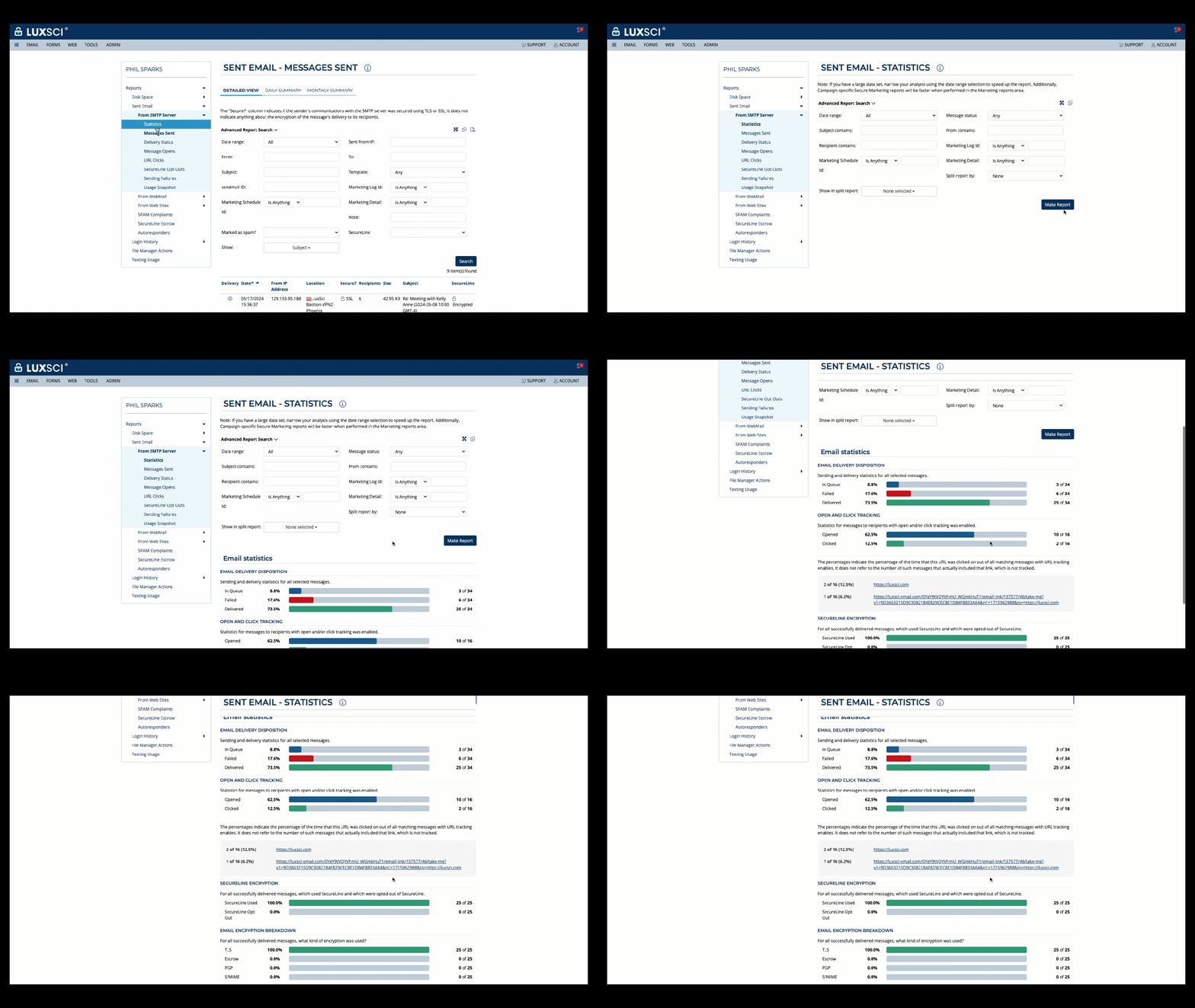
With our latest release, we made these powerful statistics easier to consume and analyze with an improved user interface for more efficiency and greater ease-of-use. Users can simply select the type of report they’d like and customize it using a range of filtering selections. This is great for diving deeper into your email performance to make adjustments on-the-fly, and to spot trends or opportunities for better engagement that you may have missed before.

New UI – Email Deliverability Statistics

LuxSci Secure Email Reporting Statistics

Get more granular, ID trends in real time with Split Reporting

As part of this release, we are pleased to introduce our Split Reporting feature, which empowers users to drill down on email deliverability statistics across a range of parameters, including:

  • subject
  • from address
  • recipient domains
  • marketing ID or campaign
  • custom field

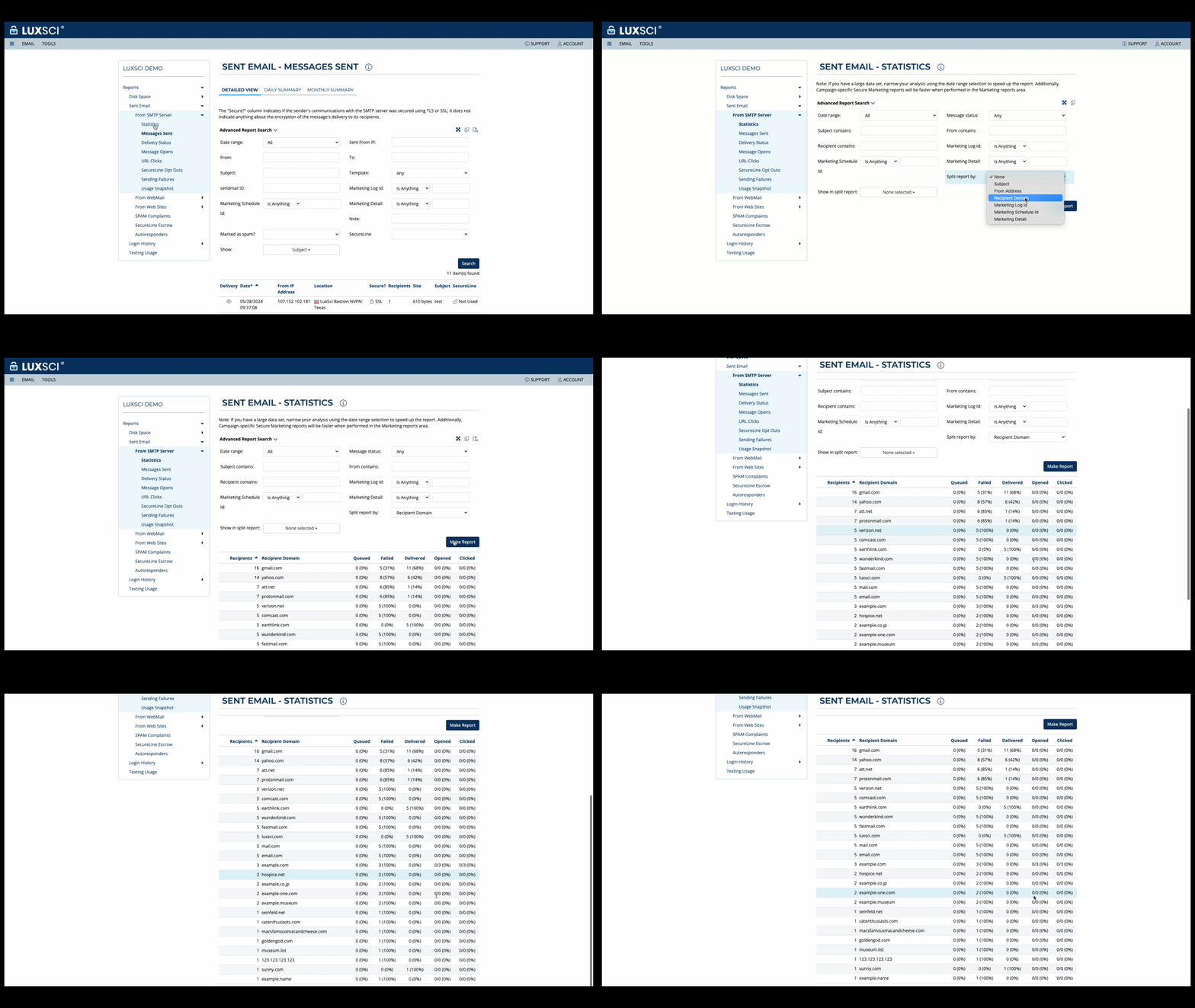
For example, users can analyze email deliverability statistics by subject to determine which ones are performing best, by use case to track results by campaign, or to track performance by recipient email domains. With split reporting, users also can analyze email volumes across queued, delivered, opened, failed and clicked parameters, and determine click-through rates (CTR) to measure effectiveness and ROI of campaigns.

New Feature Example – Split Reporting by Recipient Domain

LuxSci Secure Email Split Reporting

If you’d like to learn more, reach out and connect with us today!


Picture of LuxSci

LuxSci

Get in touch

Find The Best Solution For Your Organization

Talk To An Expert & Get A Quote


A member of our staff will reach out to you

Get Your Free E-Book!

LuxSci High Email Deliverability Best Practices Paper

What you’ll learn:

Related Posts

HIPAA Security Rule Email Encryption Requirements

HIPAA Compliant Email

Your Email Platform Is Becoming Critical Healthcare Infrastructure

Most healthcare organizations view email as a utility, a necessary tool for sending messages between staff, communicating with patients, sending out newsletters, connecting workflows, and so on. Historically, IT teams focused on keeping it running, security teams worried about phishing, and compliance teams made sure sensitive emails were encrypted.

Today, however, that view is rapidly becoming outdated.

Email has evolved into one of healthcare’s most critical digital infrastructure components, and also one of it’s biggest security threats. It’s a core channel for patient engagement, care coordination, revenue cycle operations, digital marketing, remote monitoring, and increasingly, AI-powered communications. The organizations that recognize this shift are building communications platforms designed for security, performance, automation, and growth. With the new HIPAA Security Rule requiring email encryption on the horizon, those companies that don’t may find themselves constrained by systems that were never intended to support modern healthcare.

Email Is No Longer Just a Messaging Tool

Healthcare organizations now depend on email to support dozens of mission-critical workflows every day.

Patients receive appointment reminders, registration instructions, imaging results, billing notifications, Explanation of Benefits (EOBs), prescription updates, preventive care reminders, patient education, and post-discharge follow-up.  Marketing teams deliver personalized wellness campaigns and service line promotions. Clinical systems generate transactional notifications. Revenue cycle teams rely on secure digital communications to accelerate payments and reduce paper costs.

For many organizations, mission-critical patient communications flow through email every month.

When viewed collectively, email is more than a simple communications channel. It has become operational infrastructure with high levels of security needed and increasing compliance requirements.

The Stakes Continue to Rise

As healthcare becomes more digital, every communication carries greater business and clinical importance.

A delayed billing email may postpone payment. A failed appointment reminder can increase no-show rates. An undelivered care management message may impact patient outcomes. A misconfigured security policy can expose protected health information (PHI). Poor deliverability can undermine expensive patient engagement initiatives before they ever reach the inbox.

These are no longer isolated IT issues. Email can affect revenue, patient satisfaction, operational efficiency, compliance, and organizational reputation.

Today’s healthcare leaders require email infrastructure to provide the same reliability and visibility they demand from electronic health records, identity management systems, and other core infrastructure.

AI Is Raising the Bar Even Higher

There’s little doubt that artificial intelligence (AI) promises to transform patient communications.

Healthcare organizations everywhere are exploring AI-generated patient education, personalized outreach, intelligent scheduling, multilingual communications, and automated follow-up programs.

But AI also increases the importance of the underlying communications infrastructure.

Generating more personalized emails means little if organizations cannot:

  • Automatically protect PHI.
  • Apply consistent security policies.
  • Maintain complete audit trails.
  • Deliver messages reliably.
  • Integrate with EHRs, RCM and CRM platforms, and customer data platforms.
  • Demonstrate compliance during an audits.

In many ways, AI amplifies both the opportunities and the risks. Your email platform can help determine whether AI initiatives succeed or create new compliance and operational challenges.

Infrastructure Matters More Than Features

Healthcare buyers have traditionally evaluated email platforms based on individual features such as encryption, spam filtering, or secure portals.

Those capabilities remain important, but they no longer tell the whole story.

Today’s healthcare organizations should be evaluating communications platforms the same way they evaluate any mission-critical infrastructure.

Questions increasingly include:

  • Can it support both transactional and marketing communications?
  • Does it automatically enforce security policies without relying on user decisions?
  • Can it integrate with EHRs, CRM systems, CDPs, and business applications?
  • Will it scale during peak communication periods?
  • Does it provide detailed audit logging and reporting?
  • Can it adapt as regulatory expectations evolve?
  • Does it maintain high deliverability at enterprise scale?
  • Does it support single-tenant dedicated infrastructure for high performance and increased security?

These infrastructure characteristics often determine long-term success far more than any single feature comparison.

Email and the Future Of Secure Healthcare Communications

Healthcare is steadily moving toward a world where nearly every patient interaction is digital, personalized, and data-driven.

Healthcare leaders often ask whether they need a more secure email solution. That may be the wrong question.

The better question is whether their communications infrastructure is ready for where healthcare is headed over the next decade.

If you want talk about the future of your healthcare email infrastructure, reach out today and schedule a 30-minute assessment call with our experts.

Set Up a Call

HIPAA Security Rule Update

The HIPAA Security Rule Missed Its May Deadline — Here’s What We Know

The proposed HIPAA Security Rule update has become one of the most closely watched healthcare compliance developments in recent years. Designed to strengthen cybersecurity protections for electronic protected health information (ePHI), the proposal could significantly reshape how healthcare organizations approach risk management, ePHI encryption, and mandatory email encryption requirements.

A final rule was expected as early as May 2026. However, that deadline has now passed without publication from the U.S. Department of Health and Human Services (HHS) Office for Civil Rights (OCR).

So, what happens next—and what should healthcare IT directors, CISOs, and compliance officers do now?

Where Things Stand Today

The HIPAA Security Rule Notice of Proposed Rulemaking (NPRM) was published on January 6, 2025, with the goal of strengthening cybersecurity protections for ePHI in response to escalating ransomware attacks, healthcare breaches, and growing concerns about cyber resilience across the healthcare sector.

The proposal generated thousands of public comments from healthcare providers, payers, business associates, technology vendors, and industry groups. OCR has spent much of the past year reviewing this feedback and evaluating the operational and financial impact of the proposed changes.

Although the Spring Unified Regulatory Agenda identified May 2026 as a target date for a final rule, that milestone came and went without publication. As of June 2026, the proposed HIPAA Security Rule update remains under review.

While some organizations may be tempted to take a wait-and-see approach, the missed deadline should not be interpreted as a signal that the initiative has stalled. If anything, the proposal offers valuable insight into the future direction of healthcare cybersecurity regulation.

The Growing Focus on Mandatory Email Encryption

One of the most discussed aspects of the proposed HIPAA Security Rule update is encryption.

Under the current HIPAA Security Rule, encryption is generally classified as an “addressable” implementation specification. Organizations can choose alternative safeguards if they document and justify their decisions through a risk analysis process.

The proposed changes would significantly reduce that flexibility. Instead, many security safeguards, including encryption controls, would become more prescriptive and difficult to avoid.

While the final language has not yet been released, healthcare organizations should pay close attention to the proposal’s clear message: protecting ePHI through encryption is increasingly viewed as a baseline cybersecurity requirement.

This is particularly important for email communications.

Email remains one of the most widely used communication channels in healthcare, supporting everything from patient engagement and care coordination to billing, scheduling, and marketing communications. As regulators continue to focus on reducing data breach risks, mandatory email encryption is emerging as a likely area of increased scrutiny.

What Healthcare Organizations Should Do Now

The current delay creates an opportunity, not a reason to postpone action.

Healthcare organizations can begin preparing for likely requirements today by evaluating the security controls highlighted throughout the proposed rule.

Key areas to review include:

  • Encryption of ePHI across systems and communications channels
  • Comprehensive asset inventories and ePHI data mapping
  • Enhanced risk analysis and risk management processes
  • Multifactor authentication (MFA)
  • Vulnerability scanning and penetration testing
  • Incident response planning and testing
  • Backup and recovery procedures
  • Email security and secure email encryption practices

Organizations that proactively strengthen these areas now will be better prepared regardless of the final rule’s implementation timeline.

Why Secure Email Encryption Should Be a Priority

For many healthcare organizations, email remains one of the largest compliance and security risks.

Human error, misdirected messages, phishing attacks, and inconsistent encryption practices continue to contribute to breaches involving protected health information. As a result, secure email encryption is increasingly becoming a foundational component of healthcare cybersecurity strategies.

Organizations that rely on manual encryption processes or employee judgment alone may find it difficult to meet evolving regulatory expectations.

Instead, healthcare organizations should look for solutions that automate encryption decisions, reduce user error, and provide flexibility based on the sensitivity of the communication.

At LuxSci, we have long believed that security and usability must work together. We are 100% focused on secure healthcare communications, helping healthcare providers, payers, and suppliers protect sensitive data while improving patient and customer engagement. Our proven secure email solutions, used by leading companies including Athenahealth, 1-800 Contacts, and Hinge Health, help organizations protect ePHI with automated encryption capabilities that support both compliance and operational efficiency. Our unique SecureLine encryption technology enables organizations to apply the appropriate level of protection while maintaining a seamless experience for patients, customers, and staff.

For organizations already using Microsoft 365 or Google Workspace, LuxSci Secure Email Gateway can add HIPAA-compliant email security and encryption without requiring users to change their existing workflows. This approach helps reduce risk, while preserving productivity and user adoption.

The Bottom Line

The HIPAA Security Rule final rule may have missed its anticipated May deadline, but the cybersecurity challenges driving the proposal remain very real.

The OCR is still expected to make the rule change, which could require mandatory encryption of ePHI by early 2027.

The time to prepare is now!

Healthcare organizations should view the proposed HIPAA Security Rule update as an advance warning of where regulatory expectations are heading. Stronger cybersecurity controls, enhanced risk management, ePHI encryption, and mandatory email encryption requirements are all likely to remain central themes in future compliance efforts.

The organizations that begin preparing now will not only be better positioned for future regulatory changes, but will also strengthen their ability to protect patient data, reduce risk, and build trust in an increasingly challenging threat landscape.

At LuxSci, we’re proud to support the healthcare industry’s ongoing digital transformation through secure healthcare communications. Our HIPAA-compliant solutions for secure email, email marketing, and forms empower organizations to safely use and protect PHI, while delivering better patient experiences and outcomes.

Ready to strengthen your healthcare cybersecurity strategy?

Learn more about LuxSci and our complete suite of HIPAA compliant email and marketing solutions, or schedule a consultation with one of our healthcare communication experts today.

Contact us today!

LuxSci G2

LuxSci Awarded 20 Badges in the G2 Summer 2026 Reports

We’re excited to announce that LuxSci has again been recognized by G2 with 20 badges in its just-released Summer 2026 Reports, highlighting our continued leadership in secure healthcare communications and HIPAA compliant email solutions.

The new LuxSci G2 recognitions span several categories, including:

  • Best Estimated ROI
  • Best Support
  • High Performer
  • Leader

These latest LuxSci G2 awards reflect what matters most to our customers: delivering secure, HIPAA compliant healthcare communications backed by responsive support and measurable business results.

As one of the most trusted providers of HIPAA compliant email, marketing, and forms solutions, we’re proud to see our commitment recognized across multiple product categories and customer satisfaction metrics.

Recognition Built on Customer Experience

LuxSci’s G2 rankings are based on verified customer feedback and real-world user experiences, making these badges especially meaningful to our team.

This year’s Summer Reports recognized LuxSci for consistently delivering value to healthcare organizations looking to securely engage patients and customers while maintaining compliance with HIPAA requirements.

Among the highlights, the LuxSci G2 recognition includes:

  • Best Estimated ROI, reflecting the measurable value customers achieve through secure healthcare communications and personalization
  • Best Support, reinforcing LuxSci’s long-standing reputation for responsive, knowledgeable customer service
  • High Performer badges across multiple categories for customer satisfaction and product performance
  • Leader recognition for delivering secure, scalable communications solutions trusted by healthcare organizations

At LuxSci, we believe secure communications should also drive better engagement, stronger outcomes and operational efficiency. These recognitions reinforce our focus on helping healthcare providers, payers and suppliers personalize communications while protecting sensitive patient data.

Supporting the Future of Personalized Healthcare Engagement

LuxSci’s secure healthcare communication and patient engagement solutions empower organizations to safely communicate with patients and customers through:

  • HIPAA-compliant high volume email
  • Secure email marketing
  • Secure forms and data collection
  • Flexible encryption with SecureLine technology

Our solutions are designed to help healthcare organizations improve engagement, streamline workflows and personalize the healthcare journey while maintaining the highest standards of security and compliance.

These latest LuxSci G2 recognitions also build on LuxSci’s broader reputation for security, performance and customer success. Security and trust remain foundational to everything we do, alongside our commitment to delivering smart, responsive support for our customers.

Thank You to Our Customers

We’re grateful to our customers for their continued trust, collaboration and feedback. Their reviews and insights help shape our products and drive ongoing innovation across the LuxSci product set.

To learn more about LuxSci’s secure healthcare communications solutions, contact our team to schedule a secure email assessment or demo.

Connect with us today!

Follow us on LinkedIn

You Might Also Like

Patient Engagement Technology

How Does Patient Engagement Technology Influence Healthcare Delivery?

Patient engagement technology involves digital platforms and tools that facilitate active patient participation in healthcare decision-making, treatment adherence, and health management through secure communication channels, educational resources, and remote monitoring capabilities. These comprehensive solutions enable healthcare organizations to extend their reach beyond clinical settings while maintaining continuous connections with patients between appointments. Modern patient engagement technology integrates with electronic health records, practice management systems, and clinical workflows to create seamless experiences that improve health outcomes, reduce costs, and enhance patient satisfaction across diverse healthcare settings.

Digital Communication Platforms and Secure Messaging

Secure messaging platforms enable real-time communication between patients and healthcare teams through encrypted channels that protect sensitive health information during transmission and storage. These communication tools allow patients to ask questions about their treatment plans, report symptom changes, and request prescription refills without requiring telephone calls during busy clinical hours. Healthcare providers can respond to patient inquiries efficiently while maintaining detailed documentation of all communications that integrate seamlessly with electronic health record systems.

Video consultation capabilities expand access to healthcare services by enabling remote consultations that eliminate geographic barriers and transportation challenges for patients. Telehealth integration within patient engagement technology provides scheduling, documentation, and billing support that streamlines virtual care delivery while maintaining the same security standards as in-person visits. Mobile applications extend communication opportunities by allowing patients to connect with their healthcare providers from smartphones and tablets, increasing engagement accessibility for diverse patient populations.

Patient portal functionality creates centralized hubs where individuals can access their complete health information, review test results, and communicate with multiple providers involved in their care coordination. These portals enable patients to download medical records, share information with family members or other healthcare providers, and maintain personal health records that support informed decision-making. Integration capabilities ensure that patient communications and data sharing activities are properly documented within clinical systems while maintaining appropriate privacy protections.

Automated communication systems deliver appointment reminders, medication alerts, and health education content through patients’ preferred communication channels including email, text messaging, and mobile push notifications. These automated touchpoints maintain patient engagement between visits while reducing no-show rates and improving medication adherence through timely reminders. Customization options allow healthcare organizations to tailor communication frequency and content based on individual patient preferences and clinical requirements.

Remote Monitoring and Health Data Collection

Wearable device integration enables continuous health monitoring that provides healthcare teams with real-time data about patient activity levels, vital signs, and symptom patterns between clinical encounters. Patient engagement technology platforms can collect data from fitness trackers, blood pressure monitors, glucose meters, and other connected devices to create comprehensive pictures of patient health status. This continuous monitoring capability allows healthcare providers to identify concerning trends early and intervene before conditions require emergency treatment or hospitalization.

Home monitoring systems enable patients with chronic conditions to track their health metrics daily and share this information automatically with their healthcare teams through secure data transmission protocols. Heart failure patients can monitor their weight and symptoms through connected scales and symptom tracking applications that alert providers when concerning changes occur. Diabetic patients can share glucose readings, medication compliance data, and lifestyle factors that help providers optimize treatment plans based on real-world behavior patterns rather than periodic clinic visit snapshots.

Patient-reported outcomes collection through digital surveys and questionnaires provides healthcare teams with structured data about symptom severity, treatment effectiveness, and quality of life impacts that support clinical decision-making. These digital assessment tools can be deployed before appointments to help patients prepare for visits and enable providers to focus consultation time on addressing specific concerns rather than gathering basic information. Longitudinal tracking of patient-reported outcomes helps healthcare teams measure treatment effectiveness over time and adjust care plans based on patient experiences.

Data visualization tools transform complex health information into understandable charts and graphs that help patients comprehend their health trends and treatment progress. Interactive dashboards enable patients to explore their health data, set personal goals, and track their progress toward achieving better health outcomes. These visualization capabilities empower patients to take active roles in their healthcare management by providing clear feedback about how their behaviors and treatment adherence affect their health status.

Educational Resources and Health Literacy Support

Personalized health education delivery through patient engagement technology ensures that individuals receive relevant information about their specific conditions, treatment options, and prevention strategies. Content management systems enable healthcare organizations to create libraries of educational materials that can be customized based on patient diagnoses, treatment plans, and health literacy levels. Multilingual content support accommodates diverse patient populations while interactive formats improve information retention compared to static printed materials.

Video education libraries provide patients with visual learning opportunities that demonstrate proper medication administration, exercise techniques, and self-care procedures that support treatment plan adherence. Professional-quality educational videos can be integrated into patient portals and mobile applications to provide convenient access to learning resources whenever patients need information or reminders. Progress tracking capabilities enable healthcare providers to monitor which educational materials patients have accessed and identify knowledge gaps that may require additional support.

Interactive decision support tools help patients understand treatment options, potential risks and benefits, and expected outcomes to support informed consent and shared decision-making processes. These digital tools can present complex medical information in accessible formats that help patients evaluate their preferences and values when choosing between different treatment approaches. Decision aids have been shown to improve patient satisfaction with treatment choices and reduce decision regret by ensuring patients understand their options thoroughly.

Health coaching platforms provide structured support programs that guide patients through behavior change processes using evidence-based techniques and motivational strategies. Digital coaching tools can deliver personalized goal-setting assistance, progress tracking, and encouragement messages that help patients develop healthy habits and maintain treatment adherence over time. Integration with clinical workflows enables healthcare providers to monitor patient coaching program participation and adjust clinical support based on patient engagement levels and progress toward health goals.

Care Coordination and Team Communication

Multi-provider communication tools enable seamless information sharing between primary care physicians, specialists, and other healthcare team members involved in patient care coordination. Patient engagement technology can facilitate secure messaging between providers, appointment scheduling coordination, and treatment plan sharing that ensures all team members have access to current patient information. Care team directories help patients understand their healthcare team composition and know whom to contact for different types of questions or concerns.

Care plan management systems create structured frameworks for coordinating complex treatment regimens that involve multiple providers, medications, and lifestyle modifications. Digital care plans can be shared with patients and all members of their healthcare team to ensure everyone understands treatment goals, responsibilities, and timelines for achieving desired outcomes. Progress tracking capabilities enable care teams to monitor patient adherence to treatment plans and identify areas where additional support may be needed.

Referral management tools streamline the process of connecting patients with specialist care by enabling electronic referral submission, appointment scheduling coordination, and information sharing between referring and receiving providers. Patient engagement technology can automate referral status updates, provide patients with clear instructions for specialist visits, and ensure that all relevant medical information is available to consulting physicians. These coordination tools reduce delays in specialty care access while improving communication between all parties involved in referral processes.

Family member access controls enable patients to grant appropriate family members or caregivers access to their health information and communication platforms while maintaining privacy boundaries they feel comfortable with. Caregiver portal functionality allows family members to help manage appointments, medication reminders, and communication with healthcare providers when patients need assistance with technology or health management tasks. These collaborative features support patients who may have cognitive impairments, mobility limitations, or other challenges that make independent health management difficult.

Clinical Workflow Integration and Provider Tools

Electronic health record integration ensures that all patient engagement activities are properly documented within clinical systems and available to providers during patient encounters. API connectivity enables patient communications, health monitoring data, and engagement metrics to populate appropriate sections of medical records automatically. Real-time data synchronization ensures that providers have access to the most current patient information when making clinical decisions or responding to patient inquiries.

Clinical decision support integration provides healthcare teams with alerts and recommendations based on patient engagement data and health monitoring information. These tools can identify patients who may be experiencing medication adherence problems, concerning symptom changes, or gaps in preventive care based on their engagement patterns and reported information. Automated alerts enable proactive intervention before problems escalate to require emergency care or hospitalization.

Provider dashboard tools aggregate patient engagement metrics, communication volumes, and health monitoring data to help healthcare teams manage their patient populations efficiently. These dashboards can identify patients who may need additional support, highlight concerning health trends across patient populations, and provide insights into engagement program effectiveness. Analytics capabilities enable healthcare organizations to measure the impact of patient engagement technology on clinical outcomes, patient satisfaction, and operational efficiency.

Workflow automation tools reduce administrative burden on healthcare staff by automating routine tasks like appointment confirmations, medication refill approvals, and routine health screening reminders. These automation capabilities free up staff time for higher-value activities like patient education, care coordination, and complex problem-solving. Customizable automation rules enable healthcare organizations to tailor workflow support to their specific operational requirements and patient population needs.

Implementation Strategies and Change Management

Phased deployment approaches enable healthcare organizations to implement patient engagement technology gradually while managing change effectively and minimizing workflow disruption. Organizations might begin with basic secure messaging functionality before expanding to include remote monitoring, educational resources, and advanced care coordination tools. This incremental approach allows staff and patients to adapt to new technologies progressively while enabling organizations to address challenges and optimize workflows before full-scale deployment.

Staff training programs prepare healthcare teams to use patient engagement technology effectively while maintaining productivity and patient care quality during implementation periods. Training should address both technology usage and workflow changes that result from implementing digital patient engagement tools. Change management strategies help overcome resistance to new technologies while ensuring consistent adoption across all departments and provider types within healthcare organizations.

Patient onboarding procedures ensure that individuals understand how to access and use engagement technology platforms while maintaining security standards and protecting their health information. Training materials should accommodate different technology comfort levels and provide multiple learning formats including written instructions, video tutorials, and in-person assistance. Support resources should be readily available to help patients troubleshoot problems and maximize their engagement with available tools and resources.

Success measurement frameworks enable healthcare organizations to evaluate the effectiveness of patient engagement technology investments through objective metrics and patient feedback. Key performance indicators might include engagement rates, patient satisfaction scores, clinical outcome improvements, and operational efficiency gains. Regular assessment procedures help organizations optimize their technology deployments and demonstrate return on investment to stakeholders and leadership teams.

HIPAA Compliant Marketing Automation Tools

What Are HIPAA Compliant Marketing Automation Tools?

HIPAA compliant marketing automation tools are specialized software platforms that enable healthcare organizations to execute automated marketing campaigns while protecting Protected Health Information (PHI) according to federal privacy regulations. These platforms incorporate security controls, audit logging, and access management features required by the HIPAA Security Rule when handling patient data for marketing purposes. Healthcare organizations use these tools to improve patient communications, manage email campaigns, and track marketing performance while maintaining compliance with privacy requirements and avoiding costly violations.

Why Healthcare Organizations Need HIPAA Compliant Marketing Automation Tools

Healthcare organizations need marketing automation tools to meet federal privacy requirements while executing effective patient outreach campaigns. Standard marketing platforms lack the security controls and audit capabilities necessary to protect patient information during automated marketing processes. The HIPAA Security Rule mandates specific safeguards for systems that handle PHI, making general-purpose marketing tools inadequate for healthcare applications. Efficiency gains from marketing automation help healthcare organizations manage large patient populations and complex communication workflows without overwhelming staff resources. Automated systems can segment patient lists, personalize email content, and schedule communications based on treatment schedules or health milestones. These capabilities allow healthcare marketers to deliver relevant, timely communications while reducing manual workload and human error risks.

Risk mitigation drives adoption of compliant marketing automation as healthcare organizations face substantial penalties for privacy violations. The Office for Civil Rights can impose fines exceeding $2 million for HIPAA violations involving marketing activities. Organizations using non-compliant marketing tools expose themselves to enforcement actions, patient lawsuits, and reputation damage that can far exceed the cost of implementing appropriate technology solutions. Competitive positioning requires healthcare organizations to maintain sophisticated marketing capabilities while adhering to stricter privacy standards than other industries. Patients expect personalized, relevant communications from their healthcare providers, but organizations must achieve this personalization within HIPAA constraints. HIPAA compliant marketing automation tools enable healthcare organizations to compete effectively while maintaining patient trust through transparent privacy practices.

Security Features of HIPAA Compliant Marketing Automation Tools

Encryption capabilities protect patient information both during transmission and while stored within marketing automation platforms. HIPAA compliant marketing automation tools implement advanced encryption standards for all data at rest and in transit, ensuring that patient information remains protected throughout automated marketing processes. The platforms maintain encryption keys securely and provide key management features that meet federal security requirements. Access control mechanisms ensure that only authorized healthcare personnel can access patient information within marketing automation systems. Role-based permissions limit user access to specific patient segments, campaign types, or system functions based on job responsibilities. Multi-factor authentication adds security layers that protect against unauthorized access attempts while maintaining usability for legitimate users. Audit logging functionality tracks all system activities to create detailed compliance documentation for regulatory reviews. The platforms log user access, campaign creation, email sends, and data modifications to provide complete audit trails.

Automated reporting features help healthcare organizations monitor system usage, identify potential security incidents, and demonstrate compliance during inspections or investigations. Data backup and recovery features protect against information loss while maintaining security controls throughout the backup process. Marketing automation platforms create encrypted backups of patient information and campaign data, storing them securely with geographic redundancy. Recovery procedures ensure that patient information can be restored quickly after system failures while preserving all privacy protections and audit trails.

Implementing HIPAA Compliant Marketing Automation Tools

Vendor evaluation processes help healthcare organizations identify marketing automation providers that understand healthcare compliance requirements and can support their operational needs. Organizations examine vendor security certifications, HIPAA compliance documentation, and willingness to sign Business Associate Agreements. The evaluation includes reviewing platform architecture, data processing practices, and incident response procedures to ensure alignment with healthcare privacy requirements. Integration planning addresses how marketing automation tools will connect with existing healthcare systems such as electronic health records, patient portals, and practice management platforms. Healthcare organizations need seamless data flow between systems while maintaining security controls and audit capabilities. API compatibility and data synchronization features affect how efficiently organizations can implement automated marketing workflows. Staff training programs prepare healthcare teams to use HIPAA compliant marketing automation tools compliantly and effectively. Training covers platform functionality, privacy requirements, and workflows for creating compliant marketing campaigns. Healthcare organizations need ongoing education programs to keep marketing staff current with platform updates and evolving compliance requirements. Policy development establishes clear guidelines for using marketing automation tools within HIPAA constraints. Healthcare organizations create policies covering patient authorization requirements, data usage restrictions, and incident response procedures. The policies address when HIPA compliant marketing automation can be used, what types of patient information are permissible for different campaigns, and how to handle system security incidents or patient privacy complaints.

Implementation Challenges

Data migration complexity arises when healthcare organizations transfer existing patient lists and marketing data to new compliant automation platforms. Historical patient information must be mapped correctly to new system formats while maintaining data integrity and privacy protections. The migration process requires careful validation to ensure that all patient authorization status and communication preferences transfer accurately to the new platform. Workflow integration challenges emerge when HIPAA compliant marketing automation tools need to work seamlessly with existing healthcare operations and staff responsibilities. Healthcare organizations must redesign marketing processes to accommodate automation capabilities while ensuring that clinical staff can participate in patient communications appropriately. Change management support helps teams adapt to new workflows without disrupting patient care or administrative operations.

Performance optimization is necessary as marketing automation systems handle large volumes of patient communications and complex segmentation rules. Healthcare organizations need platforms that maintain responsiveness under peak usage while processing sophisticated targeting criteria based on patient demographics, treatment history, or health status. Monitoring tools help organizations identify performance bottlenecks and optimize system configurations for their specific usage patterns.

Best Secure Email Hosting

Healthcare Email Threat Readiness Strategies

Are you up to date on the latest email security threats?

In this post, we share details from our just-released Email Cyber Threat Readiness Report, exploring the most effective ways to strengthen your healthcare organization’s email cyber threat readiness in 2025.

Let’s go!

Conduct Regular Risk Assessments 

To strengthen your company’s email security posture, you must first identify vulnerabilities in your infrastructure that malicious actors could exploit. Frequent risk assessments will highlight the security gaps in your email infrastructure and allow you to implement the appropriate strategies to mitigate threats.

A comprehensive email risk assessment should include:

  • Assessment of email encryption practices.
  • Review of email authentication protocols, i.e., SPF, DKIM, DMARC.
  • Evaluation of access control policies and practices.
  • Assessment of malware detection capabilities.
  • Audit of third-party integrations.
  • Testing of employee email threat awareness through simulated attacks to determine threat readiness and training needs.
  • Review of incident response and business continuity plans, especially, in this case, in regard to email-based threats.

A risk assessment may also involve the use of vulnerability scanning tools, which scan your email infrastructure looking for conditions that match those stored in a database of known security flaws, or Common Vulnerabilities and Exposures (CVEs). Alternatively, healthcare companies often employ the services of ethical, or ‘white hat’, hackers who carry out penetration tests, in which they purposely attempt to breach your email security measures to pinpoint its flaws.

​​Implement Email Authentication Protocols

As touched on above, enabling and correctly configuring the right email authentication protocols is an essential mitigation measure against phishing and BEC attacks, domain spoofing and impersonation, and other increasingly common email threats. Just as importantly, it allows recipient email servers to verify that a message is authentic and originated from your servers, which reduces the risk of your domain being blacklisted and your emails being directed to spam folders instead of the intended recipient’s inbox.

The three main email authentication protocols are:

  • DomainKeys Identified Mail (DKIM): adds a cryptographic signature to outgoing emails, allowing the recipient’s server to verify that the email was not altered in transit. 
  • Sender Policy Framework (SPF): allows domain owners to specify which servers are authorized to send emails on their behalf, mitigating domain spoofing and other forms of impersonation.
  • Domain-based Message Authentication, Reporting & Conformance (DMARC): builds on SPF and DKIM by establishing policies for handling unauthorized emails. It instructs the recipient email server to monitor, quarantine, or reject emails that fail authentication checks. 

Establish Robust Access Control Policies

Implementing comprehensive access control policies reduces the chances of ePHI exposure by restricting its access to individuals authorized to handle it. Additionally, access privileges shouldn’t be equal and should be granted based on the employee’s job requirements, i.e., role-based access control (RBAC).

Zero Trust Architecture (ZTA), in contrast, is a rapidly emerging, and more secure, alternative to RBAC. ZTA’s core principles are “least privilege”, i.e., only granting the minimum necessary access rights, and “never trust, always verify”, i.e., continually asking for the user to confirm their identity as the conditions of their session change, e.g., their location, the resources they request access to, etc. 

Enable User Authentication Measures

Because a user’s login credentials can be compromised, through a phishing attack or session hijacking, for instance, access control, though vital, only protects ePHI to an extent. Subsequently, you must require a user to prove their identity, through a variety of authentication measures – with a common method being multi-factor authentication (MFA).

Recommended by HIPAA, MFA requires users to verify their identity in two or more ways, which could include:

  • Something they know (e.g., one-time password (OTP), security questions)
  • Something they have (e.g., a keycard or security token)
  • Something they are (i.e., biometrics: retinal scans, fingerprints, etc.). 

What’s more, it’s important to note that the need to enable MFA will be emphasized to a greater degree when the proposed changes to the HIPAA Security Rule go into effect in late 2025.

Identify and Manage Supply Chain Risk

While on the subject of access control, one of the most significant security concerns faced by healthcare organizations is that several third-party organizations, such as vendors and supply chain partners, have access to the patient data under their care to various degrees. As a result, cybercriminals don’t have to breach your email security measures to access ePHI – they could get their hands on your patients’ data through your vendors.

Consequently, third-party risk management must be a fundamental part of every healthcare organization‘s email threat mitigation strategy.  This requires you to ensure that each vendor you work with has strong email security measures in place. In light of this, a HIPAA requirement is to have a business associate agreement (BAA) in place with each third party, or business associate, so you both formally establish your responsibilities in securing ePHI. 

Set Up Encryption for Data In Transit and At Rest

Encrypting the patient data contained in email communication is a HIPAA regulation, as it prevents its exposure in the event of its interception by a cybercriminal. You should encrypt ePHI both in transit, i.e., when being included in emails, and at rest, i.e., when stored in a database.

Encryption standards sufficient for HIPAA compliance include:

  • TLS (1.2 +): a commonly-used encryption protocol that secures email in transit; popular due to being ‘invisible’, i.e., simple to use.
  • AES-256: a powerful encryption standard primarily used to safeguard stored data, e.g., emails stored in databases or archives.
  • PGP: uses public and private key pairs to encrypt and digitally sign emails for end-to-end security.
  • S/MIME: encrypts and signs emails using digital certificates issued by trusted authorities.

Develop a Patch Management Strategy

One of the most common means of infiltrating company networks, or attack vectors, is exploiting known security vulnerabilities in applications and hardware. Vendors release updates and patches to fix these vulnerabilities, so it’s crucial to establish a routine for regularly updating and patching email delivery platforms and the systems and infrastructure that underpin them.


Additionally, vendors periodically stop supporting particular versions of their applications or hardware, leaving them more susceptible to security breaches. With this in mind, you must track which elements of your IT ecosystem are nearing their end-of-support (EOS) date and replace them with suitable, HIPAA-compliant alternatives.

Implement Continuous Monitoring Protocols

Continuously monitoring your IT infrastructure is crucial for remaining aware of suspicious activity in your email traffic and potential security breaches. Without continuous monitoring, cybercriminals have a prime opportunity to infiltrate your network between periodic risk assessments. 

Worse, they can remain undetected for longer periods, allowing them to move laterally within your network and access your most critical data and systems. Conversely, continuous monitoring solutions employ anomaly detection to identify suspicious behavior, unusual login locations, etc. 

Develop Business Continuity and Disaster Recovery Plans

The unfortunate combination of organizations being so reliant upon email communication, email threats being so prevalent, and the healthcare sector being a consistent target for cyber attacks makes a data breach a near inevitability rather than a mere possibility. 

Consequently, it’s imperative to develop business continuity and disaster recovery protocols so you can resume normal operations as soon as possible in the event of a cyber attack. An essential part of a disaster recovery plan is making regular data backups, minimizing the impact on the service provided to patients and customers.

Implement Email Threat Awareness Training for Employees

Healthcare organizations must invest in email threat awareness training for their employees, so they can recognize the variety of email-based cyber attacks they’re likely to face and can play a role in their mitigation.

Email threat awareness training should include:

  • The different email-based cyber threats (e.g., phishing), how they work, and how to avoid them, including AI-powered threats.
  • Who to inform of suspicious activity, i.e., incident response procedures.
  • Your disaster recovery protocols.
  • Cyber attack simulations, e.g., a phishing attack or malware download.

While educating your employees will increase their email threat readiness, failing to equip them with the knowledge and skills to recognize email-based attacks could undermine your other mitigation efforts. 

Download LuxSci’s Email Cyber Threat Readiness Report

To gain further insight into the most effective email threat readiness strategies and how to better defend your healthcare organization from the ever-evolving threat landscape, download your copy of LuxSci’s Email Cyber Threat Readiness Report for 2025

You’ll also learn about the top email threats facing healthcare organizations in 2025, as well as how the upcoming changes to the HIPAA Security Rule may further impact your company’s cybersecurity and compliance strategies.

Grab your copy of the report here and reach out to us today if you want to learn more.

Why Should You Integrate CDPs and Email?

Why Should You Integrate CDPs and Email?

Growing numbers of healthcare organizations are turning to Customer Data Platforms (CDPs) to consolidate and leverage patient data (or electronic protected health information (ePHI) from electronic health record (EHR) systems, RCM platforms, CRM systems, websites, communications channels, and other various sources. 

CDPs enable healthcare providers, payers, and retailers to better understand each patient’s needs, health conditions, treatment schedules, ongoing care, and so on, enabling them to take the right actions, at the right time to improve engagement. This results in more patient participation, enhanced coordination with providers and companies, and, ultimately, improved patient outcomes.

Why Should You Integrate CDPs and Email?

Integrating the functionality of a CDP with a HIPAA compliant email platform, such as LuxSci, empowers you to put your data into action. This includes enabling you to better target your various segments using real-time communications data – such as email opens, clicks and conversions – as well as using PHI in secure messages for greater personalization – all while operating within the bounds of HIPAA (the Health Insurance Portability and Accountability Act) regulations. 

With this in mind, this post discusses the benefits of integrating your organization’s CDP solution with a HIPAA compliant email solution. We’ll explore the main benefits and how to integrate the two solutions, as well as several effective strategies for leveraging the valuable PHI stored within your CPD to increase patient and customer engagement.

Benefits of Integrating a CDP with HIPAA Compliant Email

Let’s begin by looking at the main advantages of pairing your CDP with a HIPAA compliant email platform.

Increased Protection of Customer Data

Above all, HIPAA compliant email platforms are specifically designed with the stringent data privacy and security requirements of the healthcare industry in mind. As a result, they contain a range of data security features, including encryption, access control, user authentication, and audit logging, that both better safeguard ePHI from unauthorized access and ensure HIPAA compliance. In short, HIPAA compliant email helps ensure that when valuable and sensitive CDP information is put into use, i.e. using it in patient emails and communications, it’s protected and safe both in transit and at rest.

Avoid the Consequences of HIPAA Violations

By opting for an email provider that meets the security requirements for HIPAA compliance – and better yet, HITRUST certification – your company can better mitigate the risk of data breaches, and the compliance violations that accompany them. The consequences of HIPAA compliance violations include: 

  • Financial penalties: this includes regulatory fines, legal fees and compensation to affected parties, and state-level fines (in certain cases). In the event that compliance officers can prove willful neglect, your company may even face criminal charges, incurring further damage.  
  • Operational disruptions: suffering a security breach requires healthcare organizations to spend time on containment and notifying and reassuring affected parties, as well as taking subsequent mitigation efforts – all of which take time away from running the day-to-day business.
  • Reputational damage: displaying an inability to safeguard sensitive data will cause patients and customers to lose trust in your organization and move to other providers or suppliers.

Enhanced Personalization in Engagement Efforts

With ongoing uncertainty around HIPAA regulations, healthcare companies are often reluctant to include PHI in their email communications and campaigns, missing opportunities to fully leverage your CDP to create more effective, more relevant messages, targeting highly segmented audiences. Safe in the knowledge that customer data derived from your CDP will be secured by your HIPAA compliant email provider or HIPAA compliant marketing solution, you can confidently include PHI in communications to craft more personalized – and potent – engagement opportunities.  

The data aggregated by CDPs can be used to divide, or segment, customers into smaller groups with particular commonalities, such as a health condition like diabetes, or users of a particular type of medical equipment. Healthcare marketers can use the shared needs and problems of each patient or customer segment to drive more effective and targeted campaigns that deliver more opens, clicks, and conversions.

Strategies for Leveraging Customer Data Through CDP and Email Integration

Having a better understanding of the benefits of CDP integration with your email communications, let’s move on to a few of the most effective ways to leverage your customer data through a HIPAA compliant, secure email services provider (ESP).

Segmenting Customers by Health Condition or Risk Profile

The first strategy, as alluded to above, is to use the health-oriented data stored in your CDP to group customers into segments that you can target with highly personalized messaging – using PHI to your advantage. Segmentation could be based on health conditions, such as demographics, location, or by a patient’s lifestyle risk factors, e.g., smokers. 

Having defined your segments, you can create personalized email campaigns for each, which are far more likely to drive engagement and actions versus messages designed to appeal to everyone or with limited information. Better still, you can create different email campaigns to fulfill different purposes with automated workflows based on how your patients respond, giving you a range of opportunities to reach out and connect. Using intelligence from your CDP, you can design your email campaigns to:

  • Educate: send patients and customers educational materials designed to increase their understanding of their state of health and the options available to them for creating the most favorable outcomes. 
  • Offer adherence advice: include information on how to best adhere to a prescribed care or treatment plan, resources on overcoming common challenges, where to go for support, etc. 
  • Provide preventive care tips: help patients who fit a particular risk profile, such as diabetes or heart disease, make better lifestyle choices, with the ultimate aim of avoiding the disease they’re at risk of. 

Lifecycle-Based Messaging

This is a variation on the above strategy that segments patients and customers based on how far along they are in their treatment lifecycle, for instance: 

  • Onboarding: messaging that introduces your services, explains how to access care, and covers other preliminary details; this stage is essential for setting expectations and establishing trust with your patients and customers.
  • Active Treatments: regular check-ins, medication reminders, preparation guides, and educational resources based on their condition or treatment plan; this messaging is designed to support adherence and improve healthcare outcomes.
  • Follow-Up and Recovery: personalized care instructions, satisfaction surveys, or information about next steps; this shows ongoing support and maintains consistent communication when a patient may be feeling most vulnerable. 
  • Preventive and Long-Term Care: triggering routine screening reminders, vaccine alerts, or wellness tips based on age, history, and risk factors; an integrated CDP and email system can track when patients are due for services and automate communication accordingly.
  • Re-engagement: sending patients who have been inactive for a while tailored prompts, e.g., “We haven’t seen you in a while…”; this encourages proactivity and helps highlight new services that may be of interest.

Behavior-Triggered Messaging

Integrating your CDP with a HIPAA compliant email platform enables you to automate email delivery and workflows based on a customer’s behavior and engagement patterns. This type of email is enabled by the CDP’s ability to monitor events and behaviors across multiple activities and locations, enabling you to create email campaign strategies and workflows accordingly. This approach allows for a range of timely and relevant engagement opportunities, including: 

  • Missed appointments: sending a message if a patient misses an appointment that encourages them to reschedule and assists them in how to do so. 
  • Periodic checkup reminders: similarly, if a patient is supposed to have regular checkups, follow-up appointments, a recommended health screening, etc., this data can be passed from the CDP to the email client to schedule automated emails that drive up appointment bookings.  
  • Unfilled prescriptions: if a patient hasn’t picked up their prescribed medication, you can automatically trigger an email reminder and automated workflow to get the prescription filled; this information can also be fed back to their healthcare providers if repeated reminders see the prescription remain unfilled. 
  • Patient portal inactivity: if a user hasn’t logged into a portal for a predefined time frame, this can prompt a re-engagement email encouraging them to check messages in their portal, view test results, etc. 
  • Form completion: after inputting data into a web form, an integrated CDP can help facilitate the delivery of a tailored email that offers guidance on next steps or the most relevant products or services based on given answers.

Implement Feedback Loops for Optimized Engagement

Finally, a key benefit of integrating a CDP with a HIPAA compliant email platform is that it enables you to close the loop between engagement and results. By feeding campaign performance data, such as email opens, clicks, conversions, and other key metrics, back into your CDP, you can continuously refine your email outreach strategies to enhance engagement, while developing a more complete data profile of patients and customers.

Put Your CDP into Action with LuxSci Secure Email

Integrating HIPAA compliant communications solutions like LuxSci with your healthcare organization’s CDP empowers you to securely harness your customer data in email communications for consistent, timely, and relevant engagement – for better health outcomes and better business. 

To learn more about LuxSci’s suite of secure HIPAA compliant communication solutions and how we seamlessly integrate with leading CDP solutions to improve engagement, contact us today!