LuxSci

New Reporting Features Go Deeper on Email Deliverability Statistics, Trends and Analysis

LuxSci Secure Email Reporting Statistics

We recently rolled out new email reporting features, taking deliverability depth and analysis to new levels. If you’re a current LuxSci customer and haven’t checked them out, now’s the time. If you’re new to LuxSci, learn more below, and don’t hesitate to reach out for more info – or a demo.

LuxSci secure communications solutions have always featured rich reporting on email deliverability, including volumes and percentages for emails:

  • in queue
  • opened
  • clicked
  • failed
  • secured

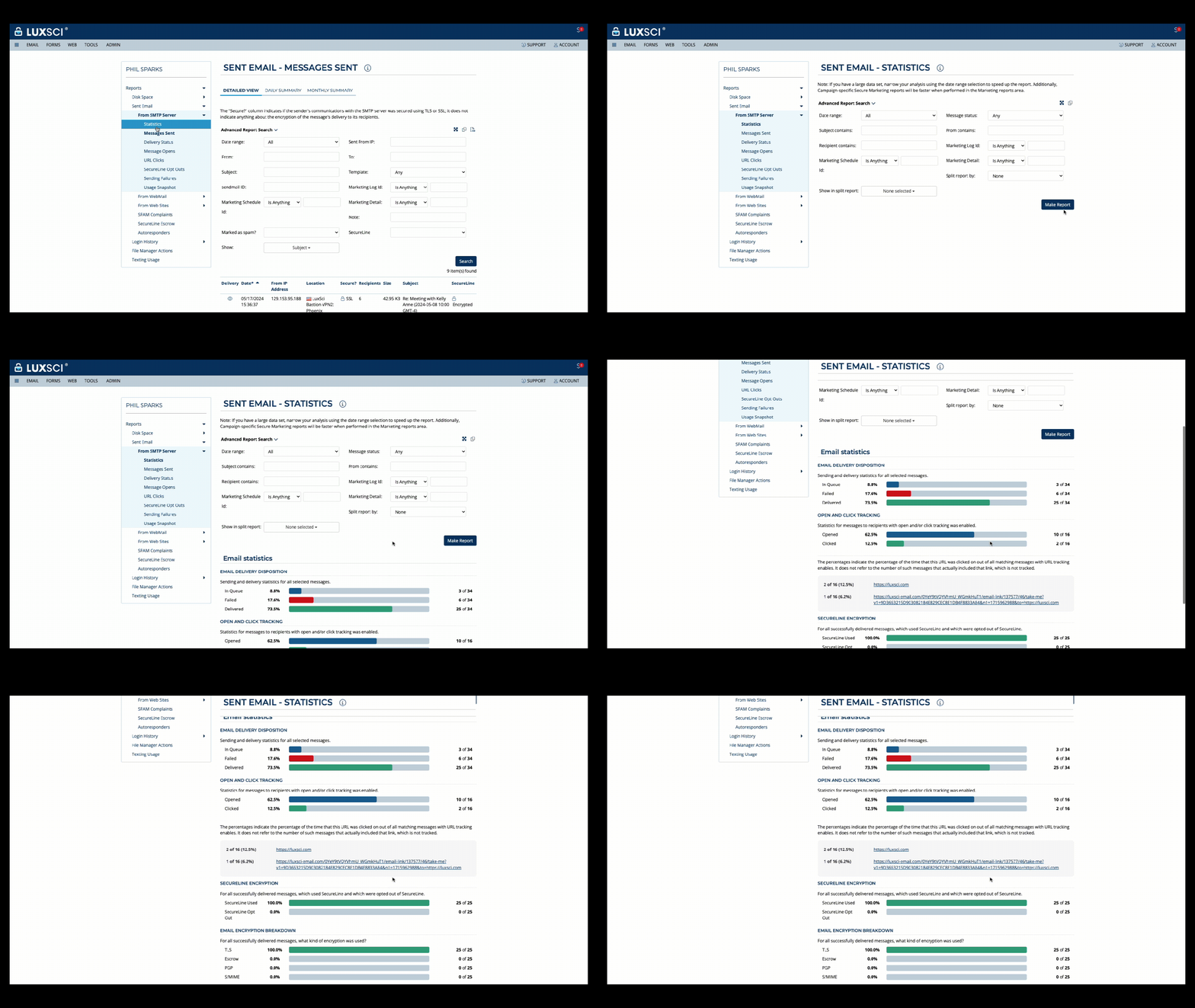
With our latest release, we made these powerful statistics easier to consume and analyze with an improved user interface for more efficiency and greater ease-of-use. Users can simply select the type of report they’d like and customize it using a range of filtering selections. This is great for diving deeper into your email performance to make adjustments on-the-fly, and to spot trends or opportunities for better engagement that you may have missed before.

New UI – Email Deliverability Statistics

LuxSci Secure Email Reporting Statistics

Get more granular, ID trends in real time with Split Reporting

As part of this release, we are pleased to introduce our Split Reporting feature, which empowers users to drill down on email deliverability statistics across a range of parameters, including:

  • subject
  • from address
  • recipient domains
  • marketing ID or campaign
  • custom field

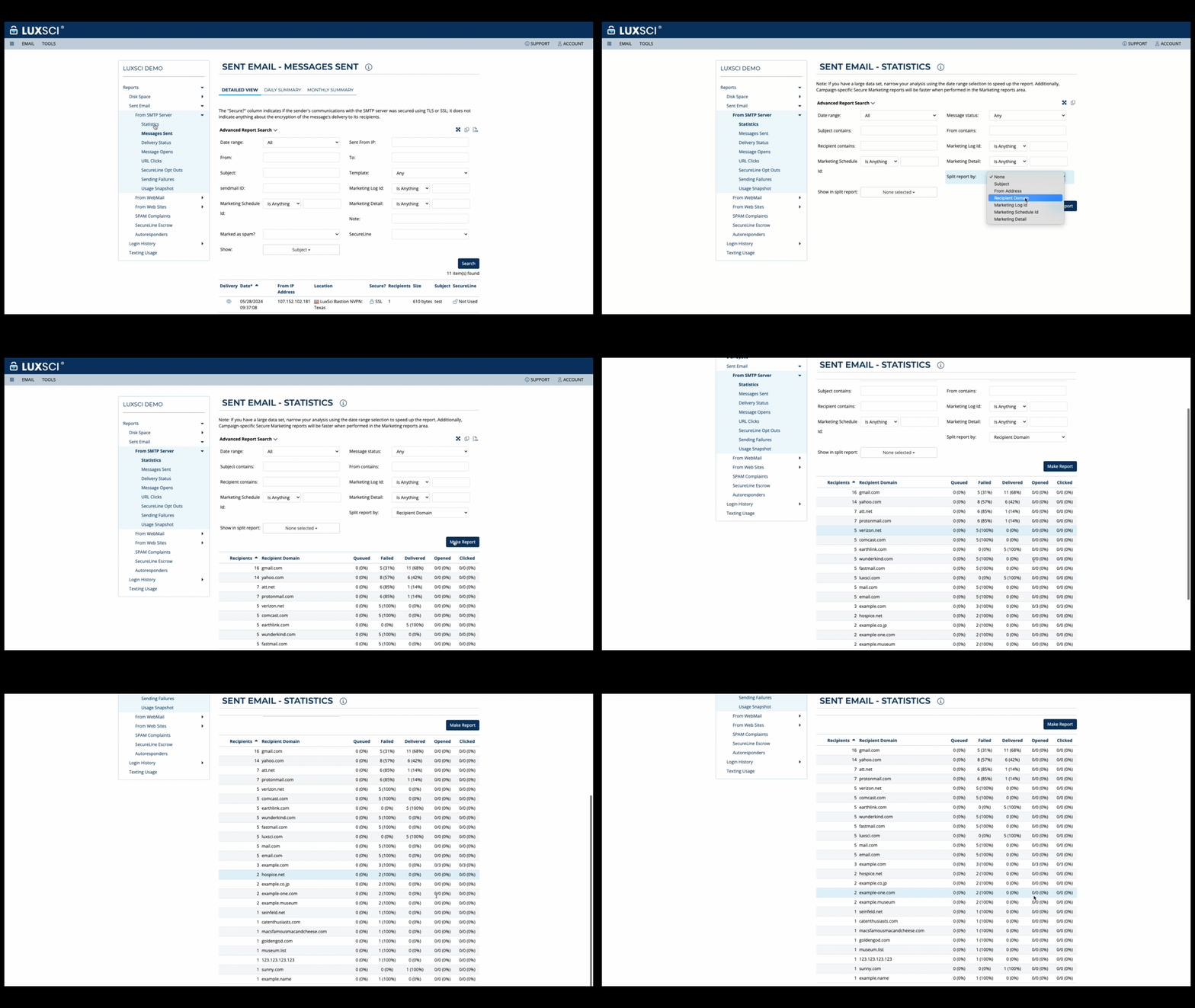
For example, users can analyze email deliverability statistics by subject to determine which ones are performing best, by use case to track results by campaign, or to track performance by recipient email domains. With split reporting, users also can analyze email volumes across queued, delivered, opened, failed and clicked parameters, and determine click-through rates (CTR) to measure effectiveness and ROI of campaigns.

New Feature Example – Split Reporting by Recipient Domain

LuxSci Secure Email Split Reporting

If you’d like to learn more, reach out and connect with us today!


Picture of LuxSci

LuxSci

Get in touch

Find The Best Solution For Your Organization

Talk To An Expert & Get A Quote


A member of our staff will reach out to you

Get Your Free E-Book!

LuxSci High Email Deliverability Best Practices Paper

What you’ll learn:

Related Posts

HIPAA Security Rule Email Encryption Requirements

HIPAA Compliant Email

Your Email Platform Is Becoming Critical Healthcare Infrastructure

Most healthcare organizations view email as a utility, a necessary tool for sending messages between staff, communicating with patients, sending out newsletters, connecting workflows, and so on. Historically, IT teams focused on keeping it running, security teams worried about phishing, and compliance teams made sure sensitive emails were encrypted.

Today, however, that view is rapidly becoming outdated.

Email has evolved into one of healthcare’s most critical digital infrastructure components, and also one of it’s biggest security threats. It’s a core channel for patient engagement, care coordination, revenue cycle operations, digital marketing, remote monitoring, and increasingly, AI-powered communications. The organizations that recognize this shift are building communications platforms designed for security, performance, automation, and growth. With the new HIPAA Security Rule requiring email encryption on the horizon, those companies that don’t may find themselves constrained by systems that were never intended to support modern healthcare.

Email Is No Longer Just a Messaging Tool

Healthcare organizations now depend on email to support dozens of mission-critical workflows every day.

Patients receive appointment reminders, registration instructions, imaging results, billing notifications, Explanation of Benefits (EOBs), prescription updates, preventive care reminders, patient education, and post-discharge follow-up.  Marketing teams deliver personalized wellness campaigns and service line promotions. Clinical systems generate transactional notifications. Revenue cycle teams rely on secure digital communications to accelerate payments and reduce paper costs.

For many organizations, mission-critical patient communications flow through email every month.

When viewed collectively, email is more than a simple communications channel. It has become operational infrastructure with high levels of security needed and increasing compliance requirements.

The Stakes Continue to Rise

As healthcare becomes more digital, every communication carries greater business and clinical importance.

A delayed billing email may postpone payment. A failed appointment reminder can increase no-show rates. An undelivered care management message may impact patient outcomes. A misconfigured security policy can expose protected health information (PHI). Poor deliverability can undermine expensive patient engagement initiatives before they ever reach the inbox.

These are no longer isolated IT issues. Email can affect revenue, patient satisfaction, operational efficiency, compliance, and organizational reputation.

Today’s healthcare leaders require email infrastructure to provide the same reliability and visibility they demand from electronic health records, identity management systems, and other core infrastructure.

AI Is Raising the Bar Even Higher

There’s little doubt that artificial intelligence (AI) promises to transform patient communications.

Healthcare organizations everywhere are exploring AI-generated patient education, personalized outreach, intelligent scheduling, multilingual communications, and automated follow-up programs.

But AI also increases the importance of the underlying communications infrastructure.

Generating more personalized emails means little if organizations cannot:

  • Automatically protect PHI.
  • Apply consistent security policies.
  • Maintain complete audit trails.
  • Deliver messages reliably.
  • Integrate with EHRs, RCM and CRM platforms, and customer data platforms.
  • Demonstrate compliance during an audits.

In many ways, AI amplifies both the opportunities and the risks. Your email platform can help determine whether AI initiatives succeed or create new compliance and operational challenges.

Infrastructure Matters More Than Features

Healthcare buyers have traditionally evaluated email platforms based on individual features such as encryption, spam filtering, or secure portals.

Those capabilities remain important, but they no longer tell the whole story.

Today’s healthcare organizations should be evaluating communications platforms the same way they evaluate any mission-critical infrastructure.

Questions increasingly include:

  • Can it support both transactional and marketing communications?
  • Does it automatically enforce security policies without relying on user decisions?
  • Can it integrate with EHRs, CRM systems, CDPs, and business applications?
  • Will it scale during peak communication periods?
  • Does it provide detailed audit logging and reporting?
  • Can it adapt as regulatory expectations evolve?
  • Does it maintain high deliverability at enterprise scale?
  • Does it support single-tenant dedicated infrastructure for high performance and increased security?

These infrastructure characteristics often determine long-term success far more than any single feature comparison.

Email and the Future Of Secure Healthcare Communications

Healthcare is steadily moving toward a world where nearly every patient interaction is digital, personalized, and data-driven.

Healthcare leaders often ask whether they need a more secure email solution. That may be the wrong question.

The better question is whether their communications infrastructure is ready for where healthcare is headed over the next decade.

If you want talk about the future of your healthcare email infrastructure, reach out today and schedule a 30-minute assessment call with our experts.

Set Up a Call

HIPAA Security Rule Update

The HIPAA Security Rule Missed Its May Deadline — Here’s What We Know

The proposed HIPAA Security Rule update has become one of the most closely watched healthcare compliance developments in recent years. Designed to strengthen cybersecurity protections for electronic protected health information (ePHI), the proposal could significantly reshape how healthcare organizations approach risk management, ePHI encryption, and mandatory email encryption requirements.

A final rule was expected as early as May 2026. However, that deadline has now passed without publication from the U.S. Department of Health and Human Services (HHS) Office for Civil Rights (OCR).

So, what happens next—and what should healthcare IT directors, CISOs, and compliance officers do now?

Where Things Stand Today

The HIPAA Security Rule Notice of Proposed Rulemaking (NPRM) was published on January 6, 2025, with the goal of strengthening cybersecurity protections for ePHI in response to escalating ransomware attacks, healthcare breaches, and growing concerns about cyber resilience across the healthcare sector.

The proposal generated thousands of public comments from healthcare providers, payers, business associates, technology vendors, and industry groups. OCR has spent much of the past year reviewing this feedback and evaluating the operational and financial impact of the proposed changes.

Although the Spring Unified Regulatory Agenda identified May 2026 as a target date for a final rule, that milestone came and went without publication. As of June 2026, the proposed HIPAA Security Rule update remains under review.

While some organizations may be tempted to take a wait-and-see approach, the missed deadline should not be interpreted as a signal that the initiative has stalled. If anything, the proposal offers valuable insight into the future direction of healthcare cybersecurity regulation.

The Growing Focus on Mandatory Email Encryption

One of the most discussed aspects of the proposed HIPAA Security Rule update is encryption.

Under the current HIPAA Security Rule, encryption is generally classified as an “addressable” implementation specification. Organizations can choose alternative safeguards if they document and justify their decisions through a risk analysis process.

The proposed changes would significantly reduce that flexibility. Instead, many security safeguards, including encryption controls, would become more prescriptive and difficult to avoid.

While the final language has not yet been released, healthcare organizations should pay close attention to the proposal’s clear message: protecting ePHI through encryption is increasingly viewed as a baseline cybersecurity requirement.

This is particularly important for email communications.

Email remains one of the most widely used communication channels in healthcare, supporting everything from patient engagement and care coordination to billing, scheduling, and marketing communications. As regulators continue to focus on reducing data breach risks, mandatory email encryption is emerging as a likely area of increased scrutiny.

What Healthcare Organizations Should Do Now

The current delay creates an opportunity, not a reason to postpone action.

Healthcare organizations can begin preparing for likely requirements today by evaluating the security controls highlighted throughout the proposed rule.

Key areas to review include:

  • Encryption of ePHI across systems and communications channels
  • Comprehensive asset inventories and ePHI data mapping
  • Enhanced risk analysis and risk management processes
  • Multifactor authentication (MFA)
  • Vulnerability scanning and penetration testing
  • Incident response planning and testing
  • Backup and recovery procedures
  • Email security and secure email encryption practices

Organizations that proactively strengthen these areas now will be better prepared regardless of the final rule’s implementation timeline.

Why Secure Email Encryption Should Be a Priority

For many healthcare organizations, email remains one of the largest compliance and security risks.

Human error, misdirected messages, phishing attacks, and inconsistent encryption practices continue to contribute to breaches involving protected health information. As a result, secure email encryption is increasingly becoming a foundational component of healthcare cybersecurity strategies.

Organizations that rely on manual encryption processes or employee judgment alone may find it difficult to meet evolving regulatory expectations.

Instead, healthcare organizations should look for solutions that automate encryption decisions, reduce user error, and provide flexibility based on the sensitivity of the communication.

At LuxSci, we have long believed that security and usability must work together. We are 100% focused on secure healthcare communications, helping healthcare providers, payers, and suppliers protect sensitive data while improving patient and customer engagement. Our proven secure email solutions, used by leading companies including Athenahealth, 1-800 Contacts, and Hinge Health, help organizations protect ePHI with automated encryption capabilities that support both compliance and operational efficiency. Our unique SecureLine encryption technology enables organizations to apply the appropriate level of protection while maintaining a seamless experience for patients, customers, and staff.

For organizations already using Microsoft 365 or Google Workspace, LuxSci Secure Email Gateway can add HIPAA-compliant email security and encryption without requiring users to change their existing workflows. This approach helps reduce risk, while preserving productivity and user adoption.

The Bottom Line

The HIPAA Security Rule final rule may have missed its anticipated May deadline, but the cybersecurity challenges driving the proposal remain very real.

The OCR is still expected to make the rule change, which could require mandatory encryption of ePHI by early 2027.

The time to prepare is now!

Healthcare organizations should view the proposed HIPAA Security Rule update as an advance warning of where regulatory expectations are heading. Stronger cybersecurity controls, enhanced risk management, ePHI encryption, and mandatory email encryption requirements are all likely to remain central themes in future compliance efforts.

The organizations that begin preparing now will not only be better positioned for future regulatory changes, but will also strengthen their ability to protect patient data, reduce risk, and build trust in an increasingly challenging threat landscape.

At LuxSci, we’re proud to support the healthcare industry’s ongoing digital transformation through secure healthcare communications. Our HIPAA-compliant solutions for secure email, email marketing, and forms empower organizations to safely use and protect PHI, while delivering better patient experiences and outcomes.

Ready to strengthen your healthcare cybersecurity strategy?

Learn more about LuxSci and our complete suite of HIPAA compliant email and marketing solutions, or schedule a consultation with one of our healthcare communication experts today.

Contact us today!

LuxSci G2

LuxSci Awarded 20 Badges in the G2 Summer 2026 Reports

We’re excited to announce that LuxSci has again been recognized by G2 with 20 badges in its just-released Summer 2026 Reports, highlighting our continued leadership in secure healthcare communications and HIPAA compliant email solutions.

The new LuxSci G2 recognitions span several categories, including:

  • Best Estimated ROI
  • Best Support
  • High Performer
  • Leader

These latest LuxSci G2 awards reflect what matters most to our customers: delivering secure, HIPAA compliant healthcare communications backed by responsive support and measurable business results.

As one of the most trusted providers of HIPAA compliant email, marketing, and forms solutions, we’re proud to see our commitment recognized across multiple product categories and customer satisfaction metrics.

Recognition Built on Customer Experience

LuxSci’s G2 rankings are based on verified customer feedback and real-world user experiences, making these badges especially meaningful to our team.

This year’s Summer Reports recognized LuxSci for consistently delivering value to healthcare organizations looking to securely engage patients and customers while maintaining compliance with HIPAA requirements.

Among the highlights, the LuxSci G2 recognition includes:

  • Best Estimated ROI, reflecting the measurable value customers achieve through secure healthcare communications and personalization
  • Best Support, reinforcing LuxSci’s long-standing reputation for responsive, knowledgeable customer service
  • High Performer badges across multiple categories for customer satisfaction and product performance
  • Leader recognition for delivering secure, scalable communications solutions trusted by healthcare organizations

At LuxSci, we believe secure communications should also drive better engagement, stronger outcomes and operational efficiency. These recognitions reinforce our focus on helping healthcare providers, payers and suppliers personalize communications while protecting sensitive patient data.

Supporting the Future of Personalized Healthcare Engagement

LuxSci’s secure healthcare communication and patient engagement solutions empower organizations to safely communicate with patients and customers through:

  • HIPAA-compliant high volume email
  • Secure email marketing
  • Secure forms and data collection
  • Flexible encryption with SecureLine technology

Our solutions are designed to help healthcare organizations improve engagement, streamline workflows and personalize the healthcare journey while maintaining the highest standards of security and compliance.

These latest LuxSci G2 recognitions also build on LuxSci’s broader reputation for security, performance and customer success. Security and trust remain foundational to everything we do, alongside our commitment to delivering smart, responsive support for our customers.

Thank You to Our Customers

We’re grateful to our customers for their continued trust, collaboration and feedback. Their reviews and insights help shape our products and drive ongoing innovation across the LuxSci product set.

To learn more about LuxSci’s secure healthcare communications solutions, contact our team to schedule a secure email assessment or demo.

Connect with us today!

Follow us on LinkedIn

You Might Also Like

LuxSci Email EOBs

How Insurers Can Save Millions Per Month with Secure Email EOBs

Have you looked into what it’s costing your company to snail mail EOBs these days?

EOBs give an individual an increased understanding of their insurance coverage, the cost of care, and their out of pocket expenses. As a result, it’s absolutely critical that health insurers deliver EOBs quickly and effectively.

However, the most commonly used method for sending out EOBs, traditional mail or snail mail, has several drawbacks that can prevent important information about healthcare coverage from reaching people in a timely manner – not to mention the high cost insurers take on to send them. This can leave policyholders in the dark about their healthcare coverage, which can lead to confusion and dissatisfaction with their insurance provider when they receive an unexpected medical bill. 

Furthermore, because EOBs contain the protected health information (PHI) of policyholders or members, insurers are bound by HIPAA (the Health Insurance Portability and Accountability Act) regulations to ensure their secure delivery. Consequently, the risks inherent to sending paper EOB statements in the mail not only have security implications but also potential consequences for non-compliance.  

With all this in mind, this post discusses why healthcare insurers should send EOBs to their policyholders via secure email instead of traditional mail. We detail the various benefits of making the switch to email EOBs, which include enhanced security, better adherence to compliance regulations, higher deliverability rates, and significant cost savings. 

Security Benefits

Insurance companies that send out EOBs via email as opposed to traditional mail are less likely to be at risk for a data breach or leak of PHI.  Firstly, sending an EOB via email drastically decreases the risk of interception. When sent in paper form, an EOB could be:

  • Lost, stolen or damaged in transit
  • Delivered to the wrong address
  • Not properly deposited in a letter or mailbox, then stolen
  • Intercepted within the intended address by another individual who lives at or has access to the residence. 

Conversely, as detailed later in this post, email allows for various controls and processes, which mitigate the risks of unsuccessful message delivery.

Additionally, secure, HIPAA compliant email provides data encryption, which safeguards the sensitive patient data within EOBs during transmission and at rest by rendering it unreadable to malicious actors who might intercept it or gain access to it. Physical mail, in contrast, offers no such protection, as someone who intercepts a paper EOB notice can simply open it and freely read its contents. 

Finally, secure email delivery platforms, such as LuxSci, feature identity verification and access controls that enable healthcare insurers to restrict access to PHI, limiting its exposure. Similarly, HIPAA compliant email also provides auditing logging capabilities to track access to patient data, to quickly identify the source of security breaches.

Increased Delivery

Once a person opts-in, sending an EOB by email greatly increases its deliverability, up to 98% or more – almost instantly. By better ensuring a policyholder receives their EOBs, healthcare insurers increase the chance of successfully communicating the intended information they contain, namely, the cost of a service and how much they’re required to cover.

Additionally, the ability to track secure email in near real-time also enhances its deliverability, as it allows organizations to determine the cause of delivery failure and make subsequent attempts to get the EOB delivered. At the same time, the process of determining the reason for the message failure may also reveal security concerns; a process that is very difficult, if not impossible, to achieve with traditional physical mail.

Radical Cost Savings 

Simply put, sending EOBs via email instead of traditional mail can save health insurers massive amounts of money. By saving a dollar or more per EOB, the cost savings can quickly add up to millions of dollars per month in savings.

If you’re curious about just how much you can save with email EOBs, try our just-released email EOB ROI calculator. You can see how much your company can save with just a 30 percent shift from physical mail

The most significant cost reduction is the money saved on printing and mailing paper EOB statements. Additionally, the cost of administering the delivery of EOB notices is lowered when it’s done electronically. Resending EOBs in the event of their non-delivery also is much easier, faster and cheaper via email.

Compliance Benefits

Because sending an EOB via email requires HIPAA compliance, your communications are encrypted by default, protecting patient privacy and keeping PHI out of the hands of malicious actors, all while reducing the risk of HIPAA compliance violations. The security features built into HIPAA compliant email platforms, such as encryption, access control, and audit logs, help insurers satisfy the requirements of HIPAA’s Privacy and Security Rules in their compliance efforts.  

Another considerable benefit of using secure email to send policyholders their EoBs, or, in fact, any communication containing PHI, is that it’s far easier to implement breach notification protocols. HIPAA compliant email delivery platforms provide real-time tracking, so companies can pinpoint email message failures quickly and act accordingly. Similarly, intrusion detection systems and other cybersecurity measures that support email systems enable the faster detection and containment of data breaches. 

In stark contrast, physical mail is far more difficult to track. Consequently, security breaches via mail could go unnoticed for days or even weeks. If you’re unaware of a data breach, let alone have not yet contained or mitigated it, you’re unable to inform all affected parties, resulting in further HIPAA violations and a loss of customer trust. 

Reduced Carbon Footprint

It’s difficult to highlight the cost benefits of sending EOBs to policyholders by email without recognizing the positive environmental impact, too. Email EOBs cuts down on paper usage, for both the notices themselves and the envelopes they’re mailed in. Then there’s the matter of the electricity and ink involved in printing them, the emissions produced in their delivery, etc.  Opting to send EOBs via email reduces all these factors, which enables healthcare organizations to lower their carbon footprint and, where applicable, meet their sustainability obligations. 

Now’s the Time to Move to Email EOBs

LuxSci’s HIPAA compliant Secure High Volume Email solution enables healthcare insurers to instantly send EOBs to policyholders securely and at scale, extending into hundreds of thousands and millions of messages a month. 

Our HIPAA compliant email delivery platform features:  

  • Dedicated IPs that isolate critical transactional messages, such as EOBs, from other email traffic, allowing our clients to reach deliverability rates of 98% or more. 
  • Real-time tracking for determining the delivery status of EOBs, as well as troubleshooting unsuccessful delivery attempts.
  • Flexible encryption through LuxSci’s proprietary SecureLine Technology, which automatically adjusts encryption according to the recipient to better ensure the protection of sensitive data, including for EOBs or any sensitive healthcare communication.

Contact us today to learn more about how your organization can begin the transition to electronic EoBs, reducing costs and improving the customer experience.

secure communication platform

What Is The Best Secure Communication Platform For Healthcare?

The best secure communication platform combines strong encryption, reliable access control, detailed audit tracking, and legal accountability under the HIPAA Privacy and Security Rules. Healthcare teams rely on these systems to exchange Protected Health Information without disruption. A secure communication platform that integrates with clinical tools, automates security standards, and provides transparent monitoring allows providers to maintain compliance while focusing on patient care.

Importance of a secure communication platform in healthcare

Healthcare depends on constant coordination between physicians, staff, and patients. Emails, messages, and shared files often include sensitive medical information that requires protection at every stage. A secure communication platform helps prevent data loss or exposure by enforcing encryption both in transit and at rest. It also preserves trust between patients and providers by ensuring confidentiality. When security controls operate automatically in the background, communication becomes smoother, and staff can work without worrying about compliance gaps that may place data at risk.

Encryption and identity protection

Encryption is the foundation of message security. Transport Layer Security establishes a private path between servers, while message-level encryption adds another layer for content that travels beyond trusted systems. Access to these communications depends on verified identity through multi-factor authentication, biometric checks, or device-based tokens. Timeout rules reduce risk on shared computers where several staff members may use the same terminal. These features work together to protect patient data from interception or misuse and give healthcare organizations tangible proof that messages remain secure.

Business Associate Agreements and legal accountability

Any organization that handles Protected Health Information must ensure its vendors meet the same compliance standards. A Business Associate Agreement defines each party’s responsibilities for data protection, breach notification, and record retention. It should reference specific safeguards listed in 45 CFR 164.308 and 164.312 to confirm that the platform follows HIPAA’s requirements. Independent audits such as SOC 2 Type II or HITRUST add assurance that these controls are active and reliable. Having clear contractual obligations supported by certifications limits ambiguity and strengthens legal protection for all involved parties.

Clinical integration and workflow compatibility

For a secure communication platform to be effective, it must fit naturally into the healthcare environment. Direct integration with electronic health records allows staff to manage messages within existing systems rather than switching between separate tools. Open APIs let hospitals customize data flow between scheduling, billing, and messaging platforms. Single sign-on simplifies authentication so clinicians can access messages quickly while maintaining compliance. Mobile access that retains encryption helps providers respond from different locations without compromising security. When communication aligns with daily routines, adoption improves and administrative burden drops.

Monitoring and audit visibility

Maintaining compliance requires visibility into system activity. An effective platform records message access, file downloads, and configuration changes through immutable logs. These records enable privacy officers to trace who viewed information and when it was accessed. Alerts for suspicious logins or unusual traffic help identify problems early. Retention settings that match policy requirements simplify discovery requests while preventing unnecessary storage costs. This combination of automation and transparency allows healthcare organizations to demonstrate compliance rather than merely claim it.

Evaluating usability and implementation

Selecting a platform should include a structured pilot across departments. Rather than focusing only on technical features, decision makers should observe how easily clinicians and staff adapt to the workflow. A useful evaluation looks at message turnaround times, administrative effort, and support responsiveness. Gathering feedback from multiple roles reveals practical issues that may not appear during demonstrations. Vendors that assist with migration, setup, and staff training tend to reduce deployment time and lower the likelihood of communication errors during transition.

Balancing cost, scalability, and compliance

Cost considerations extend well beyond subscription fees. Storage limits, archive access, and support tiers influence total expense over time. Aligning pricing with staff size and data retention policies prevents unplanned spending as the organization grows. Role-based administration and delegated access can reduce reliance on central IT teams, creating flexibility in large healthcare networks. A secure communication platform that scales smoothly maintains the same encryption, authentication, and monitoring standards as the user base expands. When compliance, usability, and affordability intersect, patient communication becomes safer, faster, and more reliable for everyone involved.

Is AWS IAM HIPAA Compliant

Is AWS IAM HIPAA Compliant?

AWS Identity and Access Management (IAM) can be part of a HIPAA-compliant AWS environment when properly configured and used to control access to HIPAA-eligible services covered under Amazon’s Business Associate Agreement (BAA). IAM itself provides the access control mechanisms necessary for protecting healthcare data, but doesn’t automatically create HIPAA compliance. Healthcare organizations must implement appropriate IAM policies, permission boundaries, and monitoring to become HIPAA compliant.

Access Control Management

AWS IAM manages access permissions for AWS resources through users, groups, and roles with various policies. Healthcare organizations use IAM to restrict who can access AWS services that store or process protected health information. This service helps fulfill the HIPAA Security Rule requirements for access management and authorization controls. IAM enables detailed permissions that follow the principle of least privilege, giving users only the access they need to perform their jobs. While IAM provides these security capabilities, healthcare organizations remain responsible for configuring them properly to be HIPAA compliant.

Configuration Steps

Healthcare organizations must implement particular IAM configurations to support HIPAA compliance. Multi-factor authentication adds an extra verification layer beyond passwords for accounts accessing patient data. Permission boundaries limit maximum privileges that can be granted to users or roles. IAM policies should restrict access based on job functions and responsibilities. Regular access reviews verify that permissions remain appropriate as staff roles change. Password policies enforce complexity requirements and regular rotation. Organizations typically document these configuration decisions as part of their overall security planning to demonstrate efforts to become HIPAA compliant.

Audit Trail Implementation

HIPAA requires tracking who accesses protected health information and when this access occurs. AWS IAM integrates with CloudTrail to log all user activities and API calls. These logs create audit trails showing who performed what actions within AWS services that manage healthcare data. Organizations must configure appropriate log retention periods based on their compliance requirements. Monitoring tools should alert security teams about suspicious activities like failed login attempts or unusual access patterns. This monitoring capability helps organizations identify potential security issues and respond promptly to maintain HIPAA compliance.

Complementary AWS Security Services

IAM works with other AWS services to create a complete HIPAA compliance environment. AWS Organizations helps manage multiple accounts with centralized policy control for healthcare environments. AWS Key Management Service (KMS) handles encryption keys that protect healthcare data. AWS Secrets Manager securely stores database credentials and API keys. AWS Control Tower provides guardrails that enforce security policies across multiple accounts. Healthcare organizations often implement these services together to create thorough security architectures. This integrated approach helps maintain consistent controls across all systems handling protected health information.

Permission Management Approaches

Effective IAM policy management forms an essential part of maintaining HIPAA compliance. Organizations should document their IAM policy creation and review processes. Templates for common healthcare roles help maintain consistency when creating new accounts. Regular policy reviews identify and remove unnecessary permissions. Automated tools can validate that policies align with security standards and best practices. Changes to IAM permissions should follow change management procedures with appropriate approvals. These practices help organizations maintain proper access controls throughout their AWS environment.

BAA HIPAA Compliant Requirements

AWS offers a Business Associate Agreement (BAA) that applies to specific HIPAA-eligible AWS services used to store, process, or transmit protected health information. AWS Identity and Access Management (IAM) itself does not store or process ePHI, but is used to control access to HIPAA-eligible services covered under the BAA. Healthcare organizations must execute the AWS BAA before storing any patient data in HIPAA-eligible AWS services. While IAM plays a critical role in enforcing access controls, organizations remain responsible for properly configuring and managing IAM as part of their overall HIPAA compliance program.

HIPAA Compliant Email

New HIPAA Security Rule Makes Email Encryption Mandatory—Act Now!

The 2026 Deadline Is Closer Than You Think

The upcoming HIPAA Security Rule overhaul is expected to finalize by mid-2026, and it’s shaping up to be one of the most significant updates in years. Healthcare organizations that fail to prepare, especially when it comes to email security, will face immediate compliance gaps the moment enforcement begins.

Mid-2026 may sound distant, but for healthcare IT and compliance leaders, it’s right around the corner. Regulatory change at this scale doesn’t happen overnight, it requires planning, vendor evaluation, implementation, and internal alignment.

This isn’t a gradual shift. It’s a hard requirement.

Encryption Is About to Become Mandatory

For years, HIPAA has treated encryption as “addressable,” giving organizations flexibility in how they protect sensitive data. That flexibility is disappearing.

Under the updated rule, encryption, particularly for email containing protected health information (PHI), is expected to become a required safeguard.

That means:

  • Encryption must be automatic and standard for email, not optional
  • Policies must be enforced consistently
  • Email security can’t depend on human behavior

If your current system relies on users to manually trigger encryption, it’s already out of step with where compliance is heading. If you’re not encrypting your emails at all, then now is the time to re-evaluate and rest your technology and policies.

Email Is the Weakest Link in Healthcare Security

Email remains the most widely used communication tool in healthcare—and the most common source of data exposure. Every day, sensitive information flows through inboxes, including patient records, lab results, billing details, plan renewals and appointment reminders. Yet many organizations still depend on:

  • Basic TLS encryption that only works under certain conditions
  • Manual processes that leave room for human error
  • Limited visibility into email activity and risk

It only takes one mistake, such as a missed encryption trigger or a misaddressed email, to create a reportable breach. Regulators are well aware of this. That’s why email is a primary focus of the upcoming HIPAA Security Rule changes.

The Cost of Waiting Is Higher Than You Think

Delaying action may feel easier in the short term, but it significantly increases risk. Once the new rule is finalized, organizations without compliant systems may face:

  • Immediate audit failures
  • Regulatory penalties
  • Expensive, rushed remediation efforts
  • Or worst of all, an email security breach

Beyond financial consequences, there’s also reputational harm. Patients expect their data to be protected. A single incident can immediately erode trust and damage your brand beyond repair.

Waiting until the end of 2026 also means that you’ll be competing with every other organization trying to fix the same problem at the same time, driving up costs and limiting vendor availability.

Most Email Solutions Won’t Meet the New Standard

Here’s the uncomfortable reality: many existing email platforms won’t be enough, especially those that are not HIPAA compliant. Common gaps include:

  • Encryption that isn’t automatic or policy-driven
  • Lack of Data Loss Prevention (DLP)
  • Insufficient audit logging for compliance reporting
  • Lack of Zero Trust security principles

On top of that, vendors without alignment to HITRUST certification and Zero-Trust architectures may struggle to demonstrate the level of assurance regulators will expect moving forward.

If your current solution wasn’t designed specifically for healthcare and HIPAA compliance, it’s likely not ready for what’s coming.

LuxSci Secure Email: Built for What’s Next

This is where a purpose-built solution makes all the difference. LuxSci HIPAA compliant email is designed specifically for healthcare organizations navigating the latest compliance requirements, not just today, but in the future regulatory landscape.

LuxSci delivers:

  • Automatic, policy-based encryption that removes user guesswork
  • Advanced DLP controls to prevent PHI exposure before it happens
  • Comprehensive audit logs to support audits and investigations
  • Zero Trust architecture that verifies every user and action

Additionally, LuxSci is HITRUST-certified, helping organizations demonstrate a mature and defensible security posture as regulations tighten. Email data protection isn’t about patching gaps, it’s about eliminating them.

Act Now or Pay Later

If there’s one takeaway, it’s this: the time to act is now. Start by asking a few direct questions:

  • Is our email encryption automatic and enforced?
  • Do we have full visibility into email activity and risk?
  • Is our vendor equipped for evolving HIPAA requirements?

If the answer to any of these is unclear, now’s the time to take action. Organizations that move early will have time to implement the right solution, train their teams, and validate compliance. Those that wait will be forced into reactive decisions under pressure.

Conclusion: The Time to Act is Now!

The HIPAA Security Rule overhaul is coming fast, and it’s raising expectations across the board. Encryption will no longer be addressable, but rather mandatory. As a result, email security can no longer be overlooked, and compliance will no longer tolerate gaps.

LuxSci HIPAA compliant email provides a clear, future-ready path for your organization, combining automated encryption, DLP, auditability, and Zero Trust security in one solution.

The real question isn’t whether change is coming. It’s whether your organization will be ready when it does.

Reach out today. We can look at your existing set up, help you identify the gaps, and show you how LuxSci can help!

FAQs

1. When will the updated HIPAA Security Rule take effect?
The changes to the HIPAA Security Rule are expected to be finalized and announced around mid-2026, with enforcement likely soon after, by the end of the year.

2. Will email encryption truly be mandatory?
Yes, current direction strongly indicates encryption will become a required safeguard, which could start later this year or in early 2027.

3. Is TLS encryption enough for compliance?
No. TLS alone does not provide sufficient, guaranteed protection for PHI.

4. Why is HITRUST important in this context?
HITRUST certification demonstrates a vendor’s strong alignment with healthcare security standards and will likely carry more weight with regulators.

5. How does LuxSci help organizations prepare?
HITRUST-certified LuxSci offers secure email with automated encryption, DLP, audit logs, and Zero Trust architecture, helping organizations meet evolving compliance demands.