LuxSci

New Reporting Features Go Deeper on Email Deliverability Statistics, Trends and Analysis

LuxSci Secure Email Reporting Statistics

We recently rolled out new email reporting features, taking deliverability depth and analysis to new levels. If you’re a current LuxSci customer and haven’t checked them out, now’s the time. If you’re new to LuxSci, learn more below, and don’t hesitate to reach out for more info – or a demo.

LuxSci secure communications solutions have always featured rich reporting on email deliverability, including volumes and percentages for emails:

  • in queue
  • opened
  • clicked
  • failed
  • secured

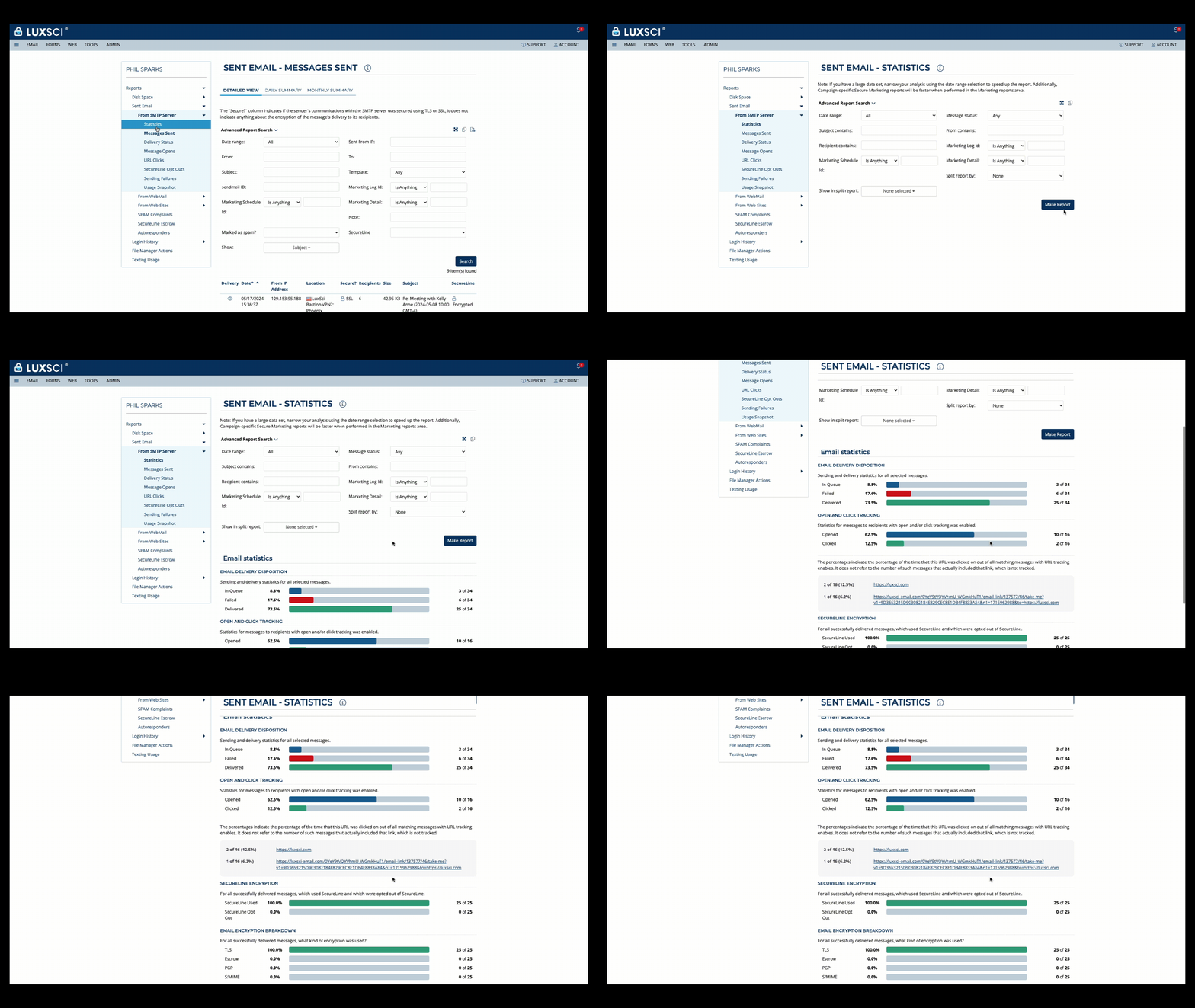
With our latest release, we made these powerful statistics easier to consume and analyze with an improved user interface for more efficiency and greater ease-of-use. Users can simply select the type of report they’d like and customize it using a range of filtering selections. This is great for diving deeper into your email performance to make adjustments on-the-fly, and to spot trends or opportunities for better engagement that you may have missed before.

New UI – Email Deliverability Statistics

LuxSci Secure Email Reporting Statistics

Get more granular, ID trends in real time with Split Reporting

As part of this release, we are pleased to introduce our Split Reporting feature, which empowers users to drill down on email deliverability statistics across a range of parameters, including:

  • subject
  • from address
  • recipient domains
  • marketing ID or campaign
  • custom field

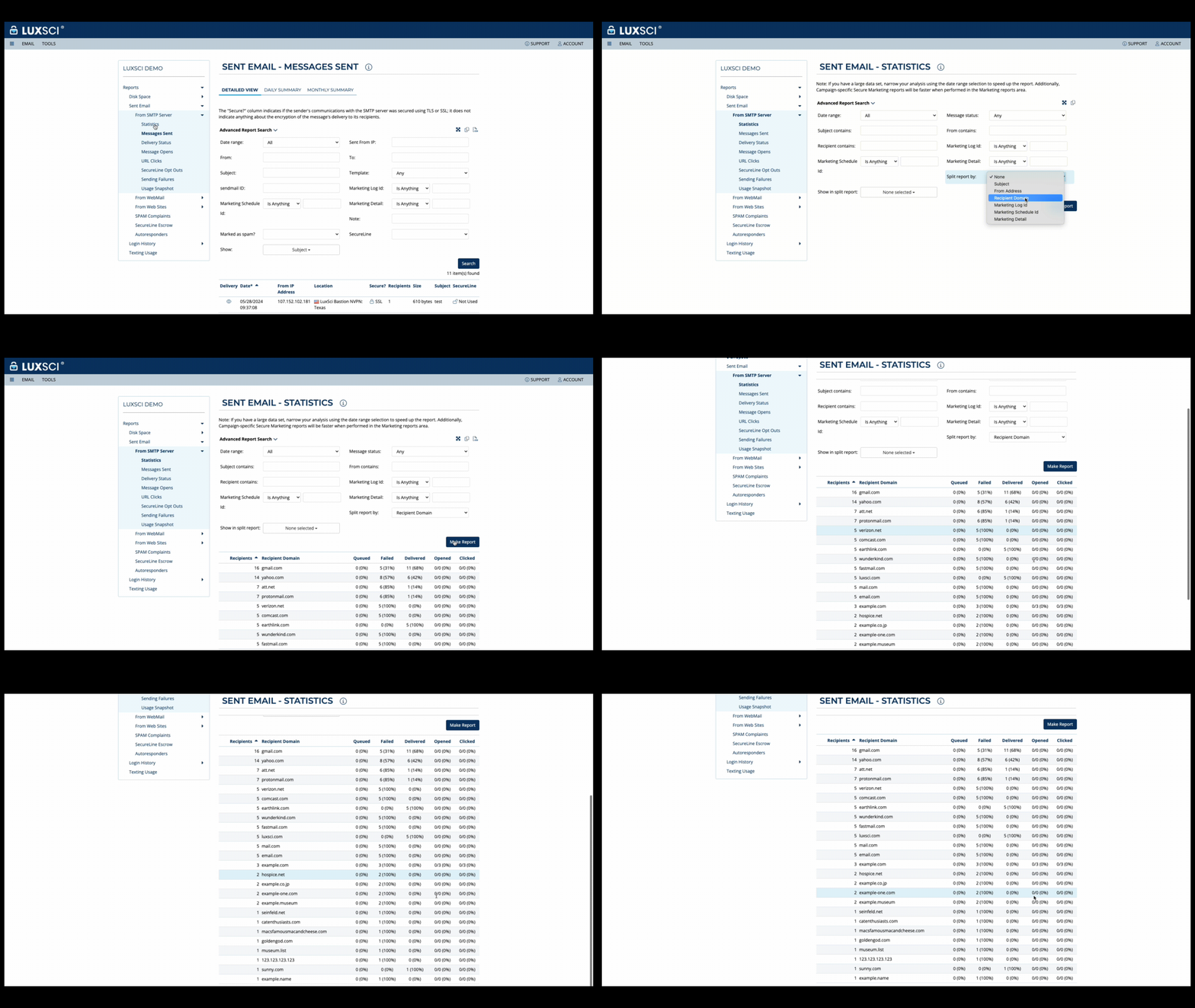
For example, users can analyze email deliverability statistics by subject to determine which ones are performing best, by use case to track results by campaign, or to track performance by recipient email domains. With split reporting, users also can analyze email volumes across queued, delivered, opened, failed and clicked parameters, and determine click-through rates (CTR) to measure effectiveness and ROI of campaigns.

New Feature Example – Split Reporting by Recipient Domain

LuxSci Secure Email Split Reporting

If you’d like to learn more, reach out and connect with us today!


Picture of LuxSci

LuxSci

Get in touch

Find The Best Solution For Your Organization

Talk To An Expert & Get A Quote


A member of our staff will reach out to you

Get Your Free E-Book!

LuxSci High Email Deliverability Best Practices Paper

What you’ll learn:

Related Posts

HIPAA Security Rule Email Encryption Requirements

HIPAA Compliant Email

Your Email Platform Is Becoming Critical Healthcare Infrastructure

Most healthcare organizations view email as a utility, a necessary tool for sending messages between staff, communicating with patients, sending out newsletters, connecting workflows, and so on. Historically, IT teams focused on keeping it running, security teams worried about phishing, and compliance teams made sure sensitive emails were encrypted.

Today, however, that view is rapidly becoming outdated.

Email has evolved into one of healthcare’s most critical digital infrastructure components, and also one of it’s biggest security threats. It’s a core channel for patient engagement, care coordination, revenue cycle operations, digital marketing, remote monitoring, and increasingly, AI-powered communications. The organizations that recognize this shift are building communications platforms designed for security, performance, automation, and growth. With the new HIPAA Security Rule requiring email encryption on the horizon, those companies that don’t may find themselves constrained by systems that were never intended to support modern healthcare.

Email Is No Longer Just a Messaging Tool

Healthcare organizations now depend on email to support dozens of mission-critical workflows every day.

Patients receive appointment reminders, registration instructions, imaging results, billing notifications, Explanation of Benefits (EOBs), prescription updates, preventive care reminders, patient education, and post-discharge follow-up.  Marketing teams deliver personalized wellness campaigns and service line promotions. Clinical systems generate transactional notifications. Revenue cycle teams rely on secure digital communications to accelerate payments and reduce paper costs.

For many organizations, mission-critical patient communications flow through email every month.

When viewed collectively, email is more than a simple communications channel. It has become operational infrastructure with high levels of security needed and increasing compliance requirements.

The Stakes Continue to Rise

As healthcare becomes more digital, every communication carries greater business and clinical importance.

A delayed billing email may postpone payment. A failed appointment reminder can increase no-show rates. An undelivered care management message may impact patient outcomes. A misconfigured security policy can expose protected health information (PHI). Poor deliverability can undermine expensive patient engagement initiatives before they ever reach the inbox.

These are no longer isolated IT issues. Email can affect revenue, patient satisfaction, operational efficiency, compliance, and organizational reputation.

Today’s healthcare leaders require email infrastructure to provide the same reliability and visibility they demand from electronic health records, identity management systems, and other core infrastructure.

AI Is Raising the Bar Even Higher

There’s little doubt that artificial intelligence (AI) promises to transform patient communications.

Healthcare organizations everywhere are exploring AI-generated patient education, personalized outreach, intelligent scheduling, multilingual communications, and automated follow-up programs.

But AI also increases the importance of the underlying communications infrastructure.

Generating more personalized emails means little if organizations cannot:

  • Automatically protect PHI.
  • Apply consistent security policies.
  • Maintain complete audit trails.
  • Deliver messages reliably.
  • Integrate with EHRs, RCM and CRM platforms, and customer data platforms.
  • Demonstrate compliance during an audits.

In many ways, AI amplifies both the opportunities and the risks. Your email platform can help determine whether AI initiatives succeed or create new compliance and operational challenges.

Infrastructure Matters More Than Features

Healthcare buyers have traditionally evaluated email platforms based on individual features such as encryption, spam filtering, or secure portals.

Those capabilities remain important, but they no longer tell the whole story.

Today’s healthcare organizations should be evaluating communications platforms the same way they evaluate any mission-critical infrastructure.

Questions increasingly include:

  • Can it support both transactional and marketing communications?
  • Does it automatically enforce security policies without relying on user decisions?
  • Can it integrate with EHRs, CRM systems, CDPs, and business applications?
  • Will it scale during peak communication periods?
  • Does it provide detailed audit logging and reporting?
  • Can it adapt as regulatory expectations evolve?
  • Does it maintain high deliverability at enterprise scale?
  • Does it support single-tenant dedicated infrastructure for high performance and increased security?

These infrastructure characteristics often determine long-term success far more than any single feature comparison.

Email and the Future Of Secure Healthcare Communications

Healthcare is steadily moving toward a world where nearly every patient interaction is digital, personalized, and data-driven.

Healthcare leaders often ask whether they need a more secure email solution. That may be the wrong question.

The better question is whether their communications infrastructure is ready for where healthcare is headed over the next decade.

If you want talk about the future of your healthcare email infrastructure, reach out today and schedule a 30-minute assessment call with our experts.

Set Up a Call

HIPAA Security Rule Update

The HIPAA Security Rule Missed Its May Deadline — Here’s What We Know

The proposed HIPAA Security Rule update has become one of the most closely watched healthcare compliance developments in recent years. Designed to strengthen cybersecurity protections for electronic protected health information (ePHI), the proposal could significantly reshape how healthcare organizations approach risk management, ePHI encryption, and mandatory email encryption requirements.

A final rule was expected as early as May 2026. However, that deadline has now passed without publication from the U.S. Department of Health and Human Services (HHS) Office for Civil Rights (OCR).

So, what happens next—and what should healthcare IT directors, CISOs, and compliance officers do now?

Where Things Stand Today

The HIPAA Security Rule Notice of Proposed Rulemaking (NPRM) was published on January 6, 2025, with the goal of strengthening cybersecurity protections for ePHI in response to escalating ransomware attacks, healthcare breaches, and growing concerns about cyber resilience across the healthcare sector.

The proposal generated thousands of public comments from healthcare providers, payers, business associates, technology vendors, and industry groups. OCR has spent much of the past year reviewing this feedback and evaluating the operational and financial impact of the proposed changes.

Although the Spring Unified Regulatory Agenda identified May 2026 as a target date for a final rule, that milestone came and went without publication. As of June 2026, the proposed HIPAA Security Rule update remains under review.

While some organizations may be tempted to take a wait-and-see approach, the missed deadline should not be interpreted as a signal that the initiative has stalled. If anything, the proposal offers valuable insight into the future direction of healthcare cybersecurity regulation.

The Growing Focus on Mandatory Email Encryption

One of the most discussed aspects of the proposed HIPAA Security Rule update is encryption.

Under the current HIPAA Security Rule, encryption is generally classified as an “addressable” implementation specification. Organizations can choose alternative safeguards if they document and justify their decisions through a risk analysis process.

The proposed changes would significantly reduce that flexibility. Instead, many security safeguards, including encryption controls, would become more prescriptive and difficult to avoid.

While the final language has not yet been released, healthcare organizations should pay close attention to the proposal’s clear message: protecting ePHI through encryption is increasingly viewed as a baseline cybersecurity requirement.

This is particularly important for email communications.

Email remains one of the most widely used communication channels in healthcare, supporting everything from patient engagement and care coordination to billing, scheduling, and marketing communications. As regulators continue to focus on reducing data breach risks, mandatory email encryption is emerging as a likely area of increased scrutiny.

What Healthcare Organizations Should Do Now

The current delay creates an opportunity, not a reason to postpone action.

Healthcare organizations can begin preparing for likely requirements today by evaluating the security controls highlighted throughout the proposed rule.

Key areas to review include:

  • Encryption of ePHI across systems and communications channels
  • Comprehensive asset inventories and ePHI data mapping
  • Enhanced risk analysis and risk management processes
  • Multifactor authentication (MFA)
  • Vulnerability scanning and penetration testing
  • Incident response planning and testing
  • Backup and recovery procedures
  • Email security and secure email encryption practices

Organizations that proactively strengthen these areas now will be better prepared regardless of the final rule’s implementation timeline.

Why Secure Email Encryption Should Be a Priority

For many healthcare organizations, email remains one of the largest compliance and security risks.

Human error, misdirected messages, phishing attacks, and inconsistent encryption practices continue to contribute to breaches involving protected health information. As a result, secure email encryption is increasingly becoming a foundational component of healthcare cybersecurity strategies.

Organizations that rely on manual encryption processes or employee judgment alone may find it difficult to meet evolving regulatory expectations.

Instead, healthcare organizations should look for solutions that automate encryption decisions, reduce user error, and provide flexibility based on the sensitivity of the communication.

At LuxSci, we have long believed that security and usability must work together. We are 100% focused on secure healthcare communications, helping healthcare providers, payers, and suppliers protect sensitive data while improving patient and customer engagement. Our proven secure email solutions, used by leading companies including Athenahealth, 1-800 Contacts, and Hinge Health, help organizations protect ePHI with automated encryption capabilities that support both compliance and operational efficiency. Our unique SecureLine encryption technology enables organizations to apply the appropriate level of protection while maintaining a seamless experience for patients, customers, and staff.

For organizations already using Microsoft 365 or Google Workspace, LuxSci Secure Email Gateway can add HIPAA-compliant email security and encryption without requiring users to change their existing workflows. This approach helps reduce risk, while preserving productivity and user adoption.

The Bottom Line

The HIPAA Security Rule final rule may have missed its anticipated May deadline, but the cybersecurity challenges driving the proposal remain very real.

The OCR is still expected to make the rule change, which could require mandatory encryption of ePHI by early 2027.

The time to prepare is now!

Healthcare organizations should view the proposed HIPAA Security Rule update as an advance warning of where regulatory expectations are heading. Stronger cybersecurity controls, enhanced risk management, ePHI encryption, and mandatory email encryption requirements are all likely to remain central themes in future compliance efforts.

The organizations that begin preparing now will not only be better positioned for future regulatory changes, but will also strengthen their ability to protect patient data, reduce risk, and build trust in an increasingly challenging threat landscape.

At LuxSci, we’re proud to support the healthcare industry’s ongoing digital transformation through secure healthcare communications. Our HIPAA-compliant solutions for secure email, email marketing, and forms empower organizations to safely use and protect PHI, while delivering better patient experiences and outcomes.

Ready to strengthen your healthcare cybersecurity strategy?

Learn more about LuxSci and our complete suite of HIPAA compliant email and marketing solutions, or schedule a consultation with one of our healthcare communication experts today.

Contact us today!

LuxSci G2

LuxSci Awarded 20 Badges in the G2 Summer 2026 Reports

We’re excited to announce that LuxSci has again been recognized by G2 with 20 badges in its just-released Summer 2026 Reports, highlighting our continued leadership in secure healthcare communications and HIPAA compliant email solutions.

The new LuxSci G2 recognitions span several categories, including:

  • Best Estimated ROI
  • Best Support
  • High Performer
  • Leader

These latest LuxSci G2 awards reflect what matters most to our customers: delivering secure, HIPAA compliant healthcare communications backed by responsive support and measurable business results.

As one of the most trusted providers of HIPAA compliant email, marketing, and forms solutions, we’re proud to see our commitment recognized across multiple product categories and customer satisfaction metrics.

Recognition Built on Customer Experience

LuxSci’s G2 rankings are based on verified customer feedback and real-world user experiences, making these badges especially meaningful to our team.

This year’s Summer Reports recognized LuxSci for consistently delivering value to healthcare organizations looking to securely engage patients and customers while maintaining compliance with HIPAA requirements.

Among the highlights, the LuxSci G2 recognition includes:

  • Best Estimated ROI, reflecting the measurable value customers achieve through secure healthcare communications and personalization
  • Best Support, reinforcing LuxSci’s long-standing reputation for responsive, knowledgeable customer service
  • High Performer badges across multiple categories for customer satisfaction and product performance
  • Leader recognition for delivering secure, scalable communications solutions trusted by healthcare organizations

At LuxSci, we believe secure communications should also drive better engagement, stronger outcomes and operational efficiency. These recognitions reinforce our focus on helping healthcare providers, payers and suppliers personalize communications while protecting sensitive patient data.

Supporting the Future of Personalized Healthcare Engagement

LuxSci’s secure healthcare communication and patient engagement solutions empower organizations to safely communicate with patients and customers through:

  • HIPAA-compliant high volume email
  • Secure email marketing
  • Secure forms and data collection
  • Flexible encryption with SecureLine technology

Our solutions are designed to help healthcare organizations improve engagement, streamline workflows and personalize the healthcare journey while maintaining the highest standards of security and compliance.

These latest LuxSci G2 recognitions also build on LuxSci’s broader reputation for security, performance and customer success. Security and trust remain foundational to everything we do, alongside our commitment to delivering smart, responsive support for our customers.

Thank You to Our Customers

We’re grateful to our customers for their continued trust, collaboration and feedback. Their reviews and insights help shape our products and drive ongoing innovation across the LuxSci product set.

To learn more about LuxSci’s secure healthcare communications solutions, contact our team to schedule a secure email assessment or demo.

Connect with us today!

Follow us on LinkedIn

You Might Also Like

HIPAA Compliant Marketing

What is a Secure Email Gateway?

Email communication is indispensable in today’s fast-paced, digitally-driven healthcare world. Unfortunately, for healthcare organizations, cyber criminals are aware of this too, which is why email-based cyber threats, such as unauthorized access, PHI exposure, phishing and ransomware, remain as prevalent as ever. A Secure Email Gateway can help, providing a security solution that sits between an organization’s email server and the outside world to monitor, filter, and control all incoming and outgoing email traffic.

As healthcare companies learn to recognize and mitigate email security threats, malicious actors grow more sophisticated, developing new ways of breaching organizations’ email security measures. In light of this, healthcare companies must find ways to better safeguard the electronic protected health information (ePHI) within their IT infrastructure, especially for email. Not only will this help maintain operational consistency, delivering high-quality and expedient service to their patients and customers, but it helps them comply with the regulatory guidelines mandated by the Health Insurance Portability and Accountability Act (HIPAA).  

A secure email gateway provides an excellent solution to the problem of an evolving email cyber threat landscape, without a healthcare company having to make significant changes to their IT infrastructure. So, with this in mind, this post explores the concept of secure email gateways, how they better safeguard sensitive patient data, and how they support HIPAA compliance efforts. 

What Is a Secure Email Gateway?

A secure email gateway is a security tool that filters inbound and outbound email communications to mitigate a variety of email-based cyber threats, including phishing, malware (e.g., ransomware, viruses, etc), PHI exposure, and spam mail. 

Effectively providing an additional security layer for your organization’s email accounts, a secure email gateway acts as a checkpoint between its email systems and the internet, enforcing your healthcare company’s security policies and ensuring HIPAA compliance.

How Do Secure Email Gateways Work?

A secure email gateway sits between a company’s email platform (e.g., Microsoft 365, Google Workspace) and external email traffic, scanning messages for potential malicious activity and security policy violations.

When sending an outbound email, the message is encrypted before being passed onto the recipient. This prevents the exposure of any ePHI contained in the email, in the event of its interception. Without the encryption key, the email is rendered unreadable by cyber criminals, ensuring data privacy and regulatory compliance. By the same token, depending on its nature, the secure email gateway may automatically archive the email to help satisfy compliance requirements for message retention – something that will be all the more important when the updated HIPAA Security Rule comes into effect in later 2025.

AD 4nXchHrc53bASpLbkOWhiJf2npaL YTaNECQUl1IL wGJrNXeQJTyLDW9yUkKNT4peJckN3Xk4cCjiHRhv9uO17dmjJR5XkFH3N9wWUJNXuOzD What is a Secure Email Gateway?

Conversely, for incoming traffic, a secure email gateway utilizes filtering tools to identify and quarantine suspicious messages. By preventing potentially malicious messages from reaching employee inboxes, a gateway reduces instances of phishing, malware installation, credential compromise – and any email cyber threat that requires human error or negligence.  

When Should You Opt For a Secure Email Gateway?

The key reason to opt for a secure email gateway solution is that you want to enhance your company’s email security without replacing your existing email infrastructure.

A key advantage offered by secure email gateways is that they’re easy to install, manage, and use. This keeps the administrative burden on a company’s IT and operations departments to a minimum while still achieving the key objectives of boosting email security and aiding compliance efforts. 

More specifically, installing a secure email gateway can be an easy solution for healthcare care companies looking to quickly achieve HIPAA compliance for email. By simply sitting on top of a company’s existing email service, like Microsoft 365 or Google Workspace, a secure email gateway can be easier for IT teams to install and maintain, especially for smaller companies and organizations. Additionally, employees won’t require additional training or have to make any adjustments: they can simply keep using their existing email accounts without interruption.

Enhance Your Email Security Posture With Luxsci’s Secure Email Gateway

LuxSci’s Secure Email Gateway can be easily integrated with Microsoft 365, Google Workspace, or your on-premise email client to better safeguard ePHI and ensure HIPAA compliance – with zero disruption to your current systems, employees, or your quality of service.   

Using LuxSci’s proprietary SecureLine encryption technology, our Secure Email Gateway solution automatically encrypts every email, protecting sensitive patient data without the need for explicit employee intervention before sending the message.  

Want to know more about how HIPAA compliant email will boost your security and compliance? Contact us to learn more and get started!

AI-based Email Security Threats

How to Avoid AI-Based Email Security Threats

Artificial intelligence (AI) has been the hottest topic in technology for the past few years now, with a focus on how it’s transforming business and the way we work. While we’d seen glimpses of AI’s capabilities before, the release of ChatGPT (containing OpenAI’s groundbreaking GPT-3.5 AI model) put the technology’s limitless potential on full display. Soon, stakeholders in every industry looked to find ways to integrate AI into their organizations, so they could harness its huge productivity and efficiency benefits.

The problem? Hackers and bad actors are using AI too, and it’s only strengthening their ability to carry out data breaches, including AI-based email security threats. 

While AI brings considerable advantages to all types of businesses, unfortunately, its vast capabilities can be used for malicious purposes too. With their unparalleled ability to process data and generate content, cybercriminals can use a variety of AI tools to make their attacks more potent, increasing their potential to get past even the most secure safeguards. 

With all this in mind, this post discusses how AI is helping cyber criminals massively scale their efforts and carry out more sophisticated, widespread attacks. We’ll explore how malicious actors are harnessing AI tools to make AI-based email cyber attacks more personalized, potent, and harmful, and cover three of the most common threats to email security that are being made significantly more dangerous with AI. This includes phishing, business email compromise (BEC) attacks, and malware. We’ll also offer strategic insights on how healthcare organizations can best mitigate AI-enhanced email threats and continue to safeguard the electronic protected health information (ePHI) under their care. 

How Does AI Increase Threats To Email Security?

AI’s effect on email security threats warrants particular concern because it enhances them in three ways: by making email-focused attacks more scalable, sophisticated, and difficult to detect.

Scalability 

First and foremost, AI tools allow cybercriminals to scale effortlessly, enabling them to achieve exponentially more in less time, with few additional resources, if any at all. 

The most obvious example of the scalable capabilities of generative AI involves systems that can create new content from simple instructions, or prompts. In particular, large language models (LLMs), such as those found in widely used AI applications like ChatGPT, allow malicious actors to rapidly generate phishing email templates and similar content that can be used in social engineering attacks, with a level of accuracy in writing and grammar not seen before. Now, work that previously would take email cybercriminals hours can be achieved in mere seconds, with the ability to make near-instant improvements and produce countless variations.   

Similarly, should a social engineering campaign yield results, i.e., getting a potential victim to engage, malicious actors can automate the interaction through AI-powered chatbots, which are capable of extended conversations via email. This increases the risk of a cybercriminal successfully fooling an employee at a healthcare organization to grant access to sensitive patient data or reveal their login credentials so they can breach their company’s email system. 

Additionally, AI allows cybercriminals to scale their efforts by automating aspects of their actions, and gathering information about a victim, i.e., a healthcare organization before launching an attack. AI tools also can scan email systems, metadata, and publicly available information on the internet to identify vulnerable targets, and their respective security flaws. They can then use this information to pinpoint and prioritize high-value victims for future cyber attacks.

Sophistication

In addition to facilitating larger and more frequent cyber attacks, AI systems allow malicious actors to make them more convincing. As mentioned above, generative AI allows cybercriminals to create content quickly, and craft higher-quality content than they’d be capable of through their own manual efforts. 

Again, using phishing as an example, AI can refine phishing emails by eliminating grammatical errors and successfully mimicking distinct communication styles to make them increasingly indistinguishable from legitimate emails. Cybercriminals are also using AI to make their fraudulent communications more context-aware, referencing recent conversations or company events and incorporating data from a variety of sources, such as social media, to increase their perceived legitimacy.  

In the case of another common email attack vector, malware, AI can be used to create constantly evolving malware that can be attached to emails. This creates distinct versions of malware that are more difficult for anti-malware tools to stop.

More Difficult to Detect

This brings us to the third way in which AI tools enhance email threats: by making them harder to detect and helping them evade traditional security measures. 

AI-powered email threats can adapt to a healthcare organization’s cybersecurity measures, observing how its defenses, such as spam filters, flag and block malicious activity before automatically adjusting its behavior until it successfully bypasses them. 

After breaching a healthcare organization’s network, AI offers cybercriminals several new and enhanced capabilities that help them expedite the achievement of their malicious objectives, while making detection more difficult. 

These include:  

  • Content Scanning: AI tools can scan emails, both incoming and outgoing, in real-time to identify patterns pertaining to sensitive data. This allows malicious actors to identify target data in less time, making them more efficient and capable of extracting greater amounts of PHI.  
  • Context-Aware Data Extraction: similarly, AI can differentiate between regular text and sensitive data by recognizing specific formats (e.g., medical record numbers, insurance details, social security numbers, etc.)
  • Stealthy Data Exfiltration: analyzing and extracting PHI, login credentials, and other sensitive data from emails, while blending into normal network traffic. 
  • Distributed Exfiltration: instead of transferring large amounts of data at once, which is likely to trigger cyber defenses, hackers can use AI systems that slowly exfiltrate PHI in smaller payloads over time, better blending into regular network activity.

AI and Phishing

Phishing attacks involve malicious actors impersonating legitimate companies, or employees of a company, to trick victims into revealing sensitive patient data. Typical phishing attack campaigns rely on volume and trial and error. The more messages sent out by cybercriminals, the greater the chance of snaring a victim. Unfortunately, AI applications allow malicious actors to raise the efficacy of their phishing attacks in several ways.

First, AI allows scammers to craft higher-quality messaging. One of the limitations of phishing emails for healthcare companies is that they’re often easy to identify, since they are replete with mis-spelled words, poor grammar, and bad formatting. AI allows malicious actors to overcome these inadequacies and create more convincing messages that are more likely to fool healthcare employees.  

On a similar note, because healthcare is a critical industry, it’s consistently under threat from cybercriminals, which are also known as advanced persistent threats (APTs) or even cyber terrorists. By definition, such malicious actors often reside outside the US and English isn’t their first language. 

While, in the past, this may have been obvious, AI now provides machine translation capabilities, allowing cybercriminals to write messages in their native language, translating them to English, and refining them accordingly. Consequently,  scammers can craft emails with fewer tell-tale signs that healthcare organizations can train their employees to recognize. 

Additionally, as alluded to earlier, AI models can produce countless variations of phishing messages, significantly streamlining the trial-and-error aspect of phishing campaigns and allowing scammers to discover which messaging works best in far less time. 

Lastly, as well as enhancing the efficacy of conventional phishing attacks, AI helps improve spear phishing campaigns, a type of fraudulent email that targets a particular organization or employee who works there, as opposed to the indiscriminate, “scatter” approach of regular phishing.

While, traditionally, spear phishing requires a lot of research, AI can scrape data from a variety of sources, such as social media, forums, and other web pages, to automate a lot of this manual effort. This then allows cybercriminals to carry out the reconnaissance required for successful attacks faster and more effectively, increasing their frequency and, subsequently, their rate of success. 

AI and Business Email Compromise (BEC) Attacks

A business email compromise (BEC) is a type of targeted email attack that involves cybercriminals gaining access to or spoofing (i.e., copying) a legitimate email account to manipulate those who trust its owner into sharing sensitive data or executing fraudulent transactions. BEC attacks can be highly effective and, therefore, damaging to healthcare companies, but they typically require extensive research on the target organization to be carried out successfully. However, as with spear phishing, AI tools can drastically reduce the time it takes to identify potential targets and pinpoint possible attack vectors. 

For a start, cybercriminals can use AI to undertake reconnaissance tasks in a fraction of the time required previously. This includes identifying target companies and employees whose email addresses they’d like to compromise, generating lists of vendors that do business with said organization, and even researching specific individuals who are likely to interact with the target.  

Once a target is acquired, malicious actors can use AI tools in a number of terrifying ways to create more convincing messaging. By analyzing existing emails, AI solutions can quickly mimic the writing style of the owner of the compromised account, giving them a better chance of fooling the people they interact with. 

By the same token, they can use information gleaned from past emails to better contextualize fraudulent messages, i.e., adding particular information to make subsequent requests more plausible. For example, requesting data or login credentials in relation to a new project or recently launched initiative. 

Taking this a step further, cybercriminals could supplement a BEC attack with audio or video deepfakes created by AI to further convince victims of their legitimacy. Scammers can use audio deepfakes to leave voicemails or, if being especially brazen, conduct entire phone conversations to make their identity theft especially compelling.

Meanwhile, scammers can create video deepfakes that relay special instructions, such as transferring money, and attach them to emails. Believing the request came from a legitimate source, there’s a chance employees will comply with the request, boosting the efficacy of the BEC attack in the process. Furthermore, the less familiar an employee is with attacks of this kind, the more likely they are to fall victim to them.   

In short, AI models make it easier to carry out BEC attacks, which makes it all the more likely for cybercriminals to attempt them.

AI and Malware 

Malware refers to any kind of malicious software (hence, “mal(icous) (soft)ware”), such as viruses, Trojan horses, spyware, and ransomware, all of which can be enhanced by AI in several ways.

Most notable is AI’s effect on polymorphic malware, which has the ability to constantly evolve to bypass email security measures, making malicious attachments harder to detect. Malware, as with any piece of software, carries a unique digital signature that can be used to identify it and confirm its legitimacy. Anti-malware solutions traditionally use these digital signatures to flag instances of malware, but the signature of polymorphic malware changes as it evolves, allowing it to slip past email security measures. 

While polymorphic malware isn’t new, and previously relied on pre-programmed techniques such as encryption and code obfuscation, AI technology has made it far more sophisticated and difficult to detect. Now, AI-powered polymorphic malware can evolve in real-time, adapting in response to the defense measures it encounters. 

AI can also be used to discover Zero Day exploits, i.e., previously unknown security flaws, within email and network systems in less time. Malicious actors can employ AI-driven scanning tools to uncover vulnerabilities unknown to the software vendor at the time of its release and exploit them before they have the opportunity to release a patch.

How To Mitigate AI-Based Email Security Threats

While AI can be used to increase the effectiveness of email attacks, fortunately, the fundamentals of mitigating email threats remains the same; organizations must be more vigilant and diligent in following email security best practices and staying on top of the latest threats and tools used by cybercriminals. 

Let’s explore some of the key strategies for best mitigating AI-based email threats and better safeguarding the ePHI within your organization.

  • Educate Your Employees: ensure your employees are aware of how AI can enhance existing email threats. More importantly, demonstrate what this looks like in a real-world setting, showing examples of AI-generated phishing and BEC emails compared to traditional messages, what a convincing deepfake looks and sounds like, instances of polymorphic malware, and so on.

    Additionally, conduct regular simulations, involving AI-enhanced phishing, BEC attacks, etc., as part of your employees’ cyber threat awareness training. This gives them first-hand experience in identifying AI-driven email threats, so they’re not caught off-guard when they encounter them in real life. You can schedule these simulations to occur every few months, so your organization remains up-to-date on the latest email threat intelligence.
     
  • Enforce Strong Email Authentication Protocols: ensure that all incoming emails are authenticated using the following:
    • Sender Policy Framework (SPF): verifies that emails are sent from a domain’s authorized servers, helping to prevent email spoofing. 
    • DomainKeys Identified Mail (DKIM): preserves the integrity of the message’s contents by adding a cryptographic signature, mitigating compromise during transit, e.g., stealthy or distributed data exfiltration. 
    • Domain-based Message Authentication, Reporting & Conformance (DMARC): enforces email authentication policies, helping organizations detect and block unauthorized emails that fail SPF or DKIM checks.

By verifying sender legitimacy, preventing email spoofing, and blocking fraudulent messages, these authentication protocols are key defenses against AI-enhanced phishing and business email compromise (BEC) attacks.

  • Access Control: while AI increases the risk of PHI exposure and login credential compromise, the level of access that a compromised or negligent employee has to patient data is another problem entirely. Subsequently, data breaches can be mitigated by ensuring that employees only have access to the minimum amount of data required for their job roles, i.e. role-based access control (RBAC). This reduces the potential impact of a given data breach, as it lowers the chances that a malicious actor can extract large amounts of data from a sole employee.
  • Implement Multi-Factor Authentication (MFA): MFA provides an extra layer of protection by requiring users to verify their identity in multiple ways. So, even in the event that a cybercriminal gets ahold of an employee’s login credentials, they still won’t have sufficient means to prove they are who they claim to be.
  • Establish Incident Response and Recovery Plans: unfortunately, by making them more scalable, sophisticated, and harder to detect, AI increases the inevitability of security breaches. This makes it more crucial than ever to develop and maintain a comprehensive incident response plan that includes strategies for responding to AI-enhanced email security threats.

    By establishing clear protocols regarding detection, reporting, containment, and recovery, your organization can effectively mitigate, or at least minimize, the impact of email-based cyber attacks enhanced by AI. Your incident response plan should be a key aspect of your employee cyber awareness training, so your workforce knows what to do in the event of a security incident. 

Get Your Copy of LuxSci’s 2025 Email Cyber Threat Readiness Report

To learn more about healthcare’s ever-evolving email threat landscape and how to best ensure the security and privacy of your sensitive data, download your copy of LuxSci’s 2025 Email Cyber Threat Readiness Report. 

You’ll discover:

  • The latest threats to email security in 2025, including AI-based attacks
  • The most effective strategies for strengthening your email security posture
  • The upcoming changes to the HIPAA Security Rule and how it will impact healthcare organizations.

Grab your copy of the report here and start increasing your company’s email cyber threat readiness today.

HIPAA Compliant Hosting Requirements

What Are HIPAA Compliant Hosting Requirements?

HIPAA compliant hosting requirements include administrative policies for workforce training and access management, physical controls for data center security and equipment protection, and information protections for data encryption, access controls, and audit logging. Healthcare organizations using hosting services must ensure providers implement appropriate business associate agreements, security measures, and compliance documentation that meet Privacy and Security Rule obligations for protecting electronic PHI. Healthcare organizations increasingly rely on cloud hosting and managed services to support their operations while reducing internal IT infrastructure costs. Outsourcing hosting responsibilities does not eliminate HIPAA compliant hosting requirements, requiring careful vendor selection and ongoing oversight.

Administrative Protection Standards

Workforce training requirements mandate that hosting providers educate their personnel about HIPAA obligations and PHI handling procedures. All staff with potential access to healthcare client data must understand privacy requirements and security protocols before gaining system access. Access management procedures ensure that hosting provider personnel receive appropriate permissions based on their job responsibilities and healthcare client needs. Role-based access controls limit employee exposure to PHI while enabling necessary system administration and support activities. Security officer designation requires hosting providers to appoint qualified individuals responsible for developing and implementing security policies that protect healthcare client data. Officers must have appropriate authority and expertise to ensure comprehensive compliance across hosting operations.

Infrastructure & HIPAA Compliant Hosting Requirements

Data center security controls must protect servers and network equipment from unauthorized physical access through multiple layers of security including perimeter controls, biometric access systems, and surveillance monitoring. These protections help prevent unauthorized individuals from accessing systems containing PHI. Equipment disposal procedures ensure that storage devices and servers containing healthcare client data receive appropriate destruction when they reach end of life. Hosting providers must implement certified data destruction methods that prevent PHI recovery from disposed equipment. Environmental protections including fire suppression, climate control, and power management help ensure that healthcare client data remains available and protected from physical threats. Systems of this nature support business continuity while maintaining data integrity and accessibility.

Control Measures for HIPAA Compliant Hosting Requirements

User authentication systems verify the identity of individuals accessing hosting infrastructure before granting permissions to view or modify healthcare client data. Multi-factor authentication provides additional security layers for privileged access to systems containing PHI. Unique user identification ensures that hosting provider activities can be traced to specific individuals through comprehensive account management and monitoring systems. These controls support accountability and enable investigation of potential security incidents involving healthcare client data. Emergency access procedures provide alternative authentication methods when normal access controls might delay urgent system maintenance or security response activities. These procedures must include enhanced monitoring and documentation requirements to maintain security while enabling necessary operations.

Audit Controls and Activity Monitoring

Comprehensive logging systems capture detailed records of all activities affecting healthcare client data including user access, system modifications, and data transfers. These logs must be protected from unauthorized modification and preserved for appropriate periods to support compliance demonstrations. Regular log analysis helps hosting providers identify unusual activity patterns that might indicate security threats or compliance violations. Automated monitoring tools can detect suspicious behavior and alert security personnel to potential incidents requiring investigation. Audit trail preservation ensures that activity records remain available for compliance reviews and incident investigations throughout required retention periods. Hosting providers must maintain secure log storage while providing healthcare clients with access to relevant audit information.

Data Integrity and Transmission Security

Encryption implementation protects healthcare client data during storage and transmission through approved cryptographic methods and key management practices. Hosting providers must maintain current encryption standards while ensuring that decryption capabilities remain available for legitimate access needs. Data validation procedures verify that healthcare client information maintains accuracy and completeness throughout processing and storage activities. These procedures help detect unauthorized modifications or corruption that could compromise data integrity or patient care. Backup and recovery systems maintain additional copies of healthcare client data while preserving security protections and access controls. Frequent testing ensures that backup systems function properly and can restore data without compromising compliance requirements.

Network Security and Communication Controls

Firewall configuration creates secure network boundaries that control traffic between healthcare client systems and external networks. These controls help prevent unauthorized access while enabling necessary communication for healthcare operations and patient care. Intrusion detection systems monitor network traffic for potential security threats and unauthorized access attempts involving healthcare client data. Automated alerting helps hosting providers respond quickly to potential incidents while maintaining comprehensive security coverage. Secure communication channels protect data transmission between healthcare clients and hosting infrastructure through encrypted connections and authenticated access methods. These channels help ensure that PHI remains protected during transfer and remote access activities.

Business Associate Agreement Obligations

Contractual requirements establish hosting provider responsibilities for PHI protection including specific security measures, incident response procedures, and compliance monitoring activities. These agreements must address all applicable HIPAA compliant hosting requirements while defining clear performance expectations. Liability allocation between healthcare organizations and hosting providers depends on their respective roles in PHI protection and which party controls different aspects of data security. Clear contractual provisions help define responsibility for various compliance obligations and potential violations. Termination procedures address how healthcare client data is handled when hosting relationships end including data return, destruction, or transfer requirements.

Compliance Monitoring and Vendor Oversight

Risk assessment procedures help healthcare organizations evaluate hosting provider security practices and identify potential vulnerabilities that could compromise PHI protection. These assessments should be conducted regularly and documented to demonstrate due diligence in vendor oversight. Performance monitoring tracks hosting provider compliance with contractual obligations and HIPAA requirements through security audits, incident reviews, and service level assessments. Healthcare organizations must maintain ongoing oversight rather than relying solely on initial vendor evaluations. Documentation requirements ensure that hosting providers maintain records demonstrating their compliance efforts including policies, training materials, audit results, and incident reports. Well kept records support healthcare client compliance demonstrations and regulatory reviews when requested.

Healthcare Email Marketing Best Practice

Healthcare Email Marketing Best Practice Guidelines

Healthcare email marketing best practices involve the strategies, compliance measures, and patient-centered approaches that healthcare organizations use to create effective email communications while maintaining regulatory compliance and patient trust. These practices include obtaining proper consent, creating valuable content, implementing security measures, and measuring performance in ways that support patient care objectives rather than purely commercial goals. Healthcare providers, payers, and suppliers must follow healthcare email marketing best practice to avoid HIPAA violations, respect patient preferences, and build meaningful relationships with their communities. Understanding healthcare email marketing best practice helps organizations develop communication strategies that engage patients, promote health outcomes, and support organizational missions while navigating complex regulatory requirements and maintaining professional standards.

Patient Consent And Privacy Protection Best Practice

Healthcare email marketing best practice requires obtaining explicit patient consent before sending promotional communications and maintaining detailed records of consent preferences and dates. Organizations should use clear, plain language consent forms that explain what types of emails patients will receive, how frequently communications will be sent, and how patients can modify their preferences or unsubscribe completely. Consent should be specific to different types of campaigns rather than blanket authorization for all marketing communications.

Double opt-in procedures verify email addresses and confirm patient intent to receive marketing communications, reducing the likelihood of complaints and improving engagement rates. This process involves sending a confirmation email that requires recipients to click a link or reply to confirm their subscription. Healthcare email marketing best practice includes documenting these confirmation steps to demonstrate patient intent during compliance reviews.

Preference management systems allow patients to customize their communication preferences without completely opting out of all healthcare communications. Patients should be able to select specific types of content, adjust email frequency, or choose alternative communication methods. These systems help maintain patient engagement while respecting individual preferences and reducing unsubscribe rates.

Privacy protection measures include using secure email platforms, encrypting patient information, and limiting access to email lists based on job responsibilities. Healthcare organizations should never share patient email addresses with third parties without explicit consent and should implement data retention policies that automatically remove inactive subscribers after appropriate time periods.

Content Development And Educational Focus Best Practice

Healthcare email marketing best practice prioritizes educational content and patient value over promotional messaging to build trust and establish organizations as reliable health information sources. Content should be evidence-based, medically accurate, and reviewed by qualified healthcare professionals before distribution. Educational newsletters, health tips, and preventive care reminders provide value to recipients while supporting patient health objectives.

Seasonal health content aligns with patient needs and natural health awareness cycles throughout the year. Flu vaccination campaigns in fall, heart health education during February, and skin cancer awareness in summer provide timely, relevant information that patients find useful. This approach improves engagement while supporting public health initiatives and preventive care goals.

Content accessibility ensures that email communications can be understood and used by patients with varying health literacy levels, language preferences, and technological capabilities. Healthcare email marketing best practice includes using plain language, providing content in multiple languages when appropriate, and ensuring emails display correctly on mobile devices and various email clients.

Patient story integration and testimonials can provide emotional connection and practical insights while maintaining patient privacy protections. These stories should focus on health outcomes, positive experiences, and educational value rather than promotional messaging. All patient stories require explicit written consent and should be reviewed for privacy compliance before publication.

Timing And Frequency Optimization Best Practice

Healthcare email marketing best practice involves analyzing patient engagement patterns to determine optimal sending times and frequencies for different types of communications. Appointment reminders may perform better when sent during business hours, while educational content might be more effective during evening hours when patients have time to read longer materials. Testing different send times helps optimize engagement rates.

Campaign frequency should balance patient engagement with respect for recipient preferences and inbox management. Healthcare email marketing best practice suggests starting with conservative frequencies and adjusting based on engagement metrics and patient feedback. Weekly educational newsletters may be appropriate for some audiences, while monthly communications work better for others.

Automated campaign scheduling allows healthcare organizations to maintain consistent communication without overwhelming staff resources or patient inboxes. Triggered campaigns based on appointment schedules, discharge events, or care milestones provide timely, relevant information while reducing manual workload. These automated systems should include safeguards to prevent excessive communications to individual patients.

Campaign coordination across departments prevents patients from receiving multiple conflicting or redundant messages from the same healthcare organization. Healthcare email marketing best practice includes establishing communication calendars and approval processes that ensure consistent messaging and appropriate timing across different service lines and departments.

Compliance Monitoring And Quality Assurance Best Practice

Regular compliance audits verify that healthcare email marketing practices align with HIPAA requirements, CAN-SPAM regulations, and organizational policies. These audits should examine consent documentation, content approval processes, security measures, and patient complaint handling procedures. Healthcare email marketing best practice includes documenting audit results and implementing corrective actions when issues are identified.

Staff training programs ensure that team members understand regulatory requirements, patient privacy obligations, and organizational policies for email marketing activities. Training should cover consent management, content development, security procedures, and incident reporting requirements. Regular training updates address changing regulations and emerging best practices in healthcare communication.

Quality assurance processes include content review, technical testing, and approval workflows that prevent errors and ensure professional communication standards. Healthcare email marketing best practice involves multiple review stages including medical accuracy verification, compliance checking, and technical testing across different devices and email clients before campaign deployment.

Incident response procedures address patient complaints, privacy concerns, and technical issues that may arise during email marketing campaigns. Organizations should have clear escalation processes, investigation procedures, and remediation steps that address problems quickly and demonstrate commitment to patient satisfaction and regulatory compliance.

Performance Analysis And Continuous Improvement Best Practice

Healthcare email marketing best practice includes measuring campaign performance using metrics that reflect patient engagement, health outcomes, and organizational objectives rather than purely commercial success indicators. Appointment booking rates, screening completion rates, and patient satisfaction scores provide more meaningful performance indicators than traditional marketing metrics alone.

Patient feedback collection through surveys, focus groups, and direct communication helps healthcare organizations understand recipient preferences and identify improvement opportunities. This feedback should guide content development, timing decisions, and communication strategy adjustments. Healthcare email marketing best practice involves regularly soliciting and acting on patient input.

Benchmarking against healthcare industry standards and similar organizations provides context for performance evaluation and identifies areas for improvement. Healthcare organizations should compare their engagement rates, unsubscribe rates, and patient satisfaction scores with relevant industry benchmarks while accounting for differences in patient populations and organizational characteristics.

Continuous optimization based on data analysis, patient feedback, and regulatory changes ensures that email marketing practices remain effective and compliant over time. Healthcare email marketing best practice includes regular strategy reviews, campaign performance analysis, and implementation of evidence-based improvements that enhance patient engagement while maintaining regulatory compliance and professional standards