LuxSci

New Reporting Features Go Deeper on Email Deliverability Statistics, Trends and Analysis

LuxSci Secure Email Reporting Statistics

We recently rolled out new email reporting features, taking deliverability depth and analysis to new levels. If you’re a current LuxSci customer and haven’t checked them out, now’s the time. If you’re new to LuxSci, learn more below, and don’t hesitate to reach out for more info – or a demo.

LuxSci secure communications solutions have always featured rich reporting on email deliverability, including volumes and percentages for emails:

  • in queue
  • opened
  • clicked
  • failed
  • secured

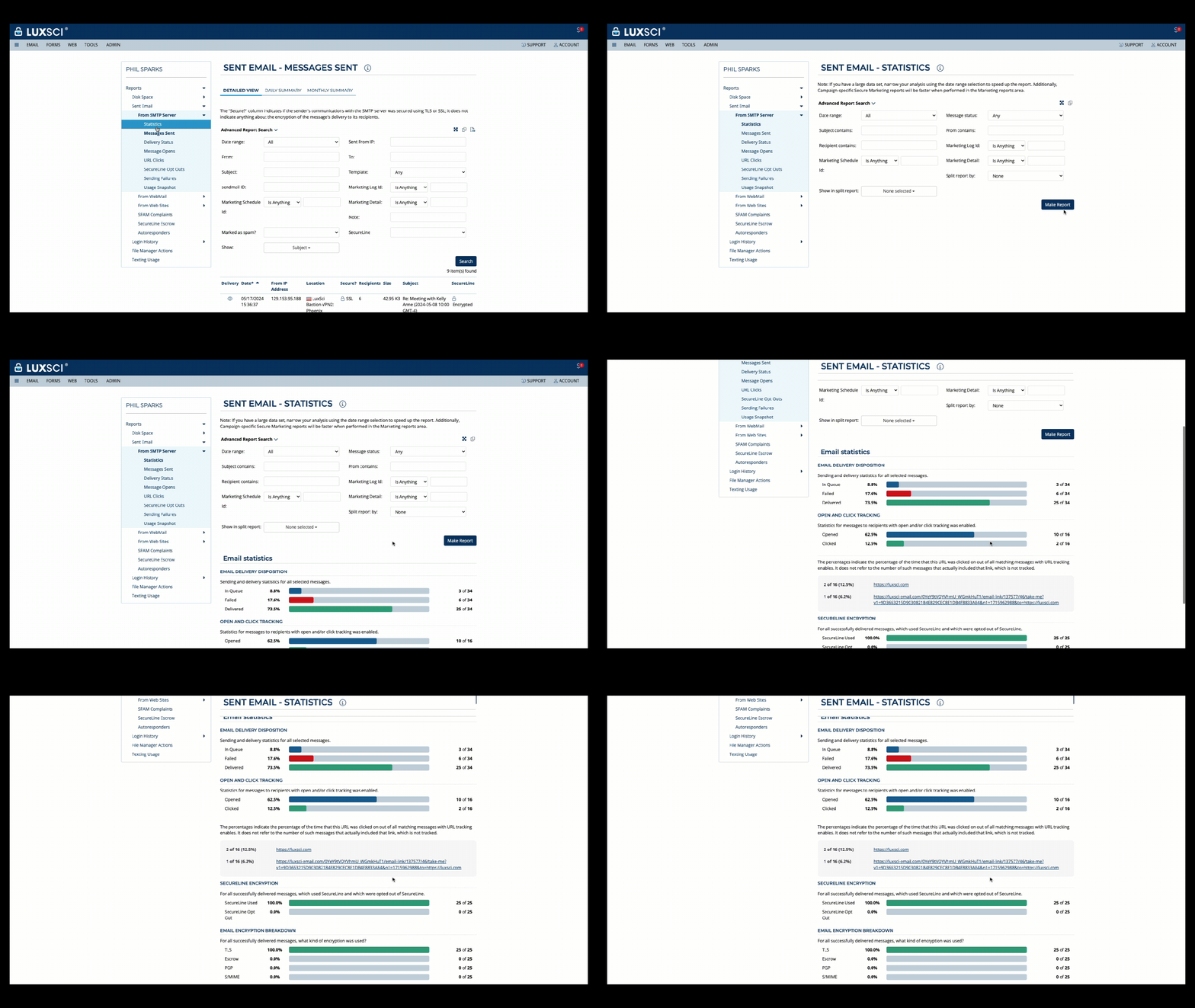
With our latest release, we made these powerful statistics easier to consume and analyze with an improved user interface for more efficiency and greater ease-of-use. Users can simply select the type of report they’d like and customize it using a range of filtering selections. This is great for diving deeper into your email performance to make adjustments on-the-fly, and to spot trends or opportunities for better engagement that you may have missed before.

New UI – Email Deliverability Statistics

LuxSci Secure Email Reporting Statistics

Get more granular, ID trends in real time with Split Reporting

As part of this release, we are pleased to introduce our Split Reporting feature, which empowers users to drill down on email deliverability statistics across a range of parameters, including:

  • subject
  • from address
  • recipient domains
  • marketing ID or campaign
  • custom field

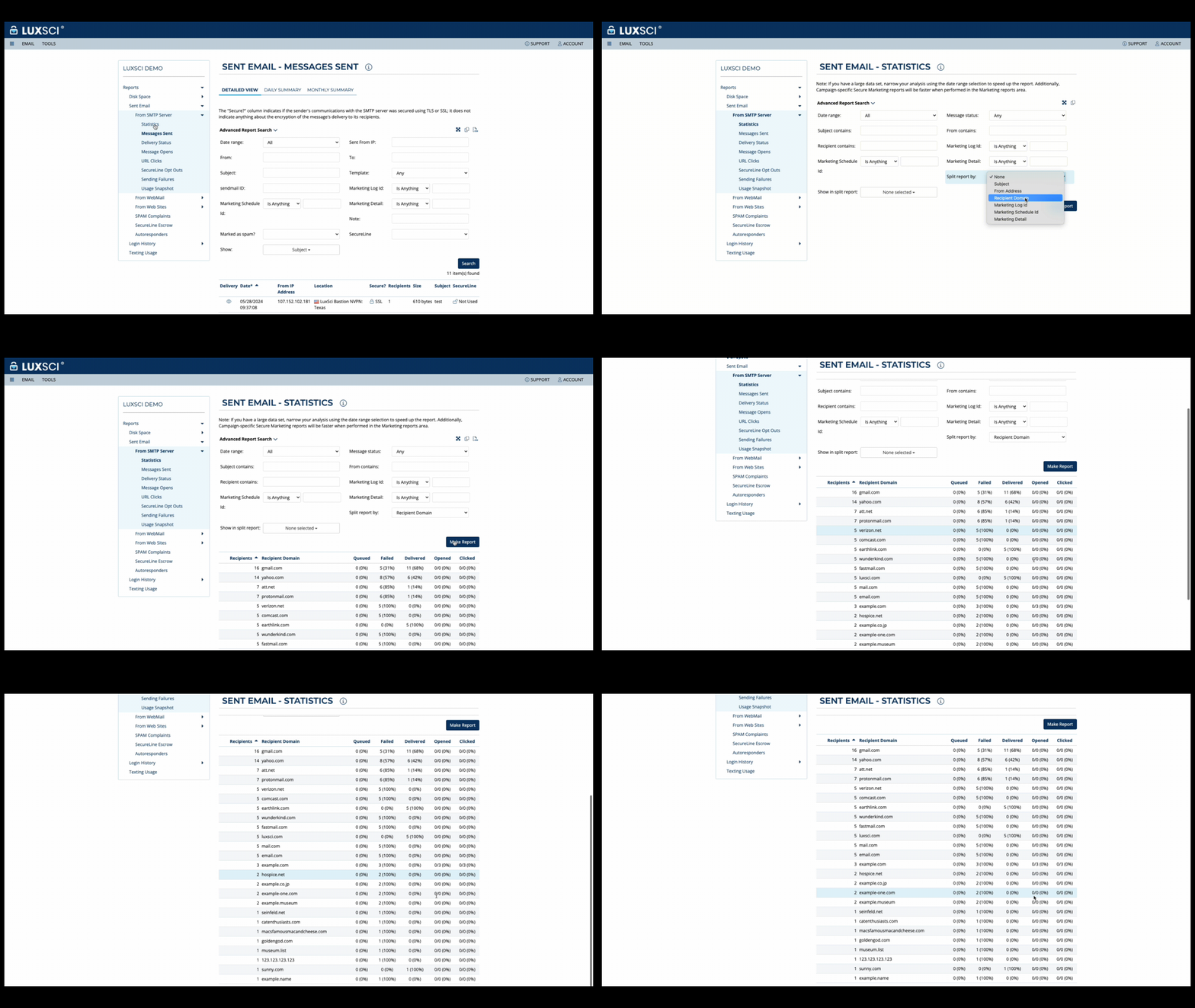
For example, users can analyze email deliverability statistics by subject to determine which ones are performing best, by use case to track results by campaign, or to track performance by recipient email domains. With split reporting, users also can analyze email volumes across queued, delivered, opened, failed and clicked parameters, and determine click-through rates (CTR) to measure effectiveness and ROI of campaigns.

New Feature Example – Split Reporting by Recipient Domain

LuxSci Secure Email Split Reporting

If you’d like to learn more, reach out and connect with us today!


Picture of LuxSci

LuxSci

Get in touch

Find The Best Solution For Your Organization

Talk To An Expert & Get A Quote


A member of our staff will reach out to you

Get Your Free E-Book!

LuxSci High Email Deliverability Best Practices Paper

What you’ll learn:

Related Posts

HIPAA Security Rule

HIPAA Security Rule Update: Email Encryption Rule Delayed to 2027

If you’ve been waiting for the final word on the new HIPAA Security Rule before you touch your email encryption strategy, you now have an official reason to keep waiting.

Our advice: Don’t do it.

What is the new HIPAA Security Rule for ePHI?

The Department of Health and Human Services’ Office for Civil Rights had targeted May 2026 for a final rule implementing the most significant update to the HIPAA Security Rule in over two decades. The proposal eliminates the “addressable” standard and makes encryption of ePHI in transit and at rest mandatory for every covered entity and business associate. That deadline came and went quietly. Now we know why: an updated federal regulatory agenda shows OCR’s timeline has moved to July 2027, with the rule-making downgraded from “final rule stage” to “long-term action.” OCR is still working through more than 4,700 public comments on the January 2025 proposal.

For an industry that had been expecting a tighter deadline, a year-plus delay is the kind of news that invites a collective exhale — and a shelved project plan. At LuxSci, we think that would be a mistake, for three reasons:

  • The current rule already requires you to address encryption. “Addressable” was never “optional.” It has always meant you must implement the safeguard, implement an equivalent alternative, or document in writing why neither is reasonable for your organization. Most healthcare organizations have never done that documentation rigorously, and OCR’s existing enforcement authority applies today, not in 2027.
  • Breach costs haven’t waited for the rule. IBM’s 2025 Cost of a Data Breach Report puts the average healthcare breach at $7.42 million, still the highest of any industry. At the same time, email remains the number one attack vector into healthcare organizations. None of that risk is paused by a regulatory delay.
  • Delay is not withdrawal. OCR has not signaled it’s abandoning the encryption mandate, only that it’s taking longer to finalize it. Organizations that build now toward the standard already proposed will be ahead (and more secure) regardless of exactly when, or in what final form, the rule lands. Organizations that wait risk a compressed scramble once it does.

What should healthcare IT and compliance leaders actually do with this news?

Reevaluate your ePHI security posture, recalibrate its urgency, and use the extra runway to do the job right, instead of racing against a deadline. This includes:

  • Getting a real inventory of where ePHI moves by email today, inbound and outbound, and where encryption is inconsistent or absent.
  • Closing the documentation gap on “addressable” now, while you have time to do it well rather than defensively.
  • Pushing your email vendor for concrete answers on encryption standards, MFA enforcement, audit logging, and breach notification — the same technical controls the proposed rule would make mandatory.
  • Building (or updating) a written, enforcement-ready posture: policies, vendor agreements, certifications and verifications, test results, and training records that would hold up under an OCR investigation today, not just in a future compliance deadline.

Get LuxSci’s new Definitive Guide on the new HIPAA Security Rule

From Addressable to Mandatory: Email Encryption Under the New HIPAA Security Rule provides the latest update on the rule, what it means for healthcare email encryption, and what you can do now to properly prepare for what’s coming in 2027. The guide also includes an interactive scorecard that lets you evaluate your current email set up and vendor across seven security and compliance dimensions in under two minutes, no email address required.

You can read the guide here: From Addressable to Mandatory: Email Encryption Under the New HIPAA Security Rule

If you want a second set of eyes on where your organization stands, our team offers a free 30-minute compliance assessment of your current email environment against the proposed rule’s requirements.

Reach out today and schedule a call.

HIPAA Security Rule Email Encryption Requirements

HIPAA Compliant Email

Your Email Platform Is Becoming Critical Healthcare Infrastructure

Most healthcare organizations view email as a utility, a necessary tool for sending messages between staff, communicating with patients, sending out newsletters, connecting workflows, and so on. Historically, IT teams focused on keeping it running, security teams worried about phishing, and compliance teams made sure sensitive emails were encrypted.

Today, however, that view is rapidly becoming outdated.

Email has evolved into one of healthcare’s most critical digital infrastructure components, and also one of it’s biggest security threats. It’s a core channel for patient engagement, care coordination, revenue cycle operations, digital marketing, remote monitoring, and increasingly, AI-powered communications. The organizations that recognize this shift are building communications platforms designed for security, performance, automation, and growth. With the new HIPAA Security Rule requiring email encryption on the horizon, those companies that don’t may find themselves constrained by systems that were never intended to support modern healthcare.

Email Is No Longer Just a Messaging Tool

Healthcare organizations now depend on email to support dozens of mission-critical workflows every day.

Patients receive appointment reminders, registration instructions, imaging results, billing notifications, Explanation of Benefits (EOBs), prescription updates, preventive care reminders, patient education, and post-discharge follow-up.  Marketing teams deliver personalized wellness campaigns and service line promotions. Clinical systems generate transactional notifications. Revenue cycle teams rely on secure digital communications to accelerate payments and reduce paper costs.

For many organizations, mission-critical patient communications flow through email every month.

When viewed collectively, email is more than a simple communications channel. It has become operational infrastructure with high levels of security needed and increasing compliance requirements.

The Stakes Continue to Rise

As healthcare becomes more digital, every communication carries greater business and clinical importance.

A delayed billing email may postpone payment. A failed appointment reminder can increase no-show rates. An undelivered care management message may impact patient outcomes. A misconfigured security policy can expose protected health information (PHI). Poor deliverability can undermine expensive patient engagement initiatives before they ever reach the inbox.

These are no longer isolated IT issues. Email can affect revenue, patient satisfaction, operational efficiency, compliance, and organizational reputation.

Today’s healthcare leaders require email infrastructure to provide the same reliability and visibility they demand from electronic health records, identity management systems, and other core infrastructure.

AI Is Raising the Bar Even Higher

There’s little doubt that artificial intelligence (AI) promises to transform patient communications.

Healthcare organizations everywhere are exploring AI-generated patient education, personalized outreach, intelligent scheduling, multilingual communications, and automated follow-up programs.

But AI also increases the importance of the underlying communications infrastructure.

Generating more personalized emails means little if organizations cannot:

  • Automatically protect PHI.
  • Apply consistent security policies.
  • Maintain complete audit trails.
  • Deliver messages reliably.
  • Integrate with EHRs, RCM and CRM platforms, and customer data platforms.
  • Demonstrate compliance during an audits.

In many ways, AI amplifies both the opportunities and the risks. Your email platform can help determine whether AI initiatives succeed or create new compliance and operational challenges.

Infrastructure Matters More Than Features

Healthcare buyers have traditionally evaluated email platforms based on individual features such as encryption, spam filtering, or secure portals.

Those capabilities remain important, but they no longer tell the whole story.

Today’s healthcare organizations should be evaluating communications platforms the same way they evaluate any mission-critical infrastructure.

Questions increasingly include:

  • Can it support both transactional and marketing communications?
  • Does it automatically enforce security policies without relying on user decisions?
  • Can it integrate with EHRs, CRM systems, CDPs, and business applications?
  • Will it scale during peak communication periods?
  • Does it provide detailed audit logging and reporting?
  • Can it adapt as regulatory expectations evolve?
  • Does it maintain high deliverability at enterprise scale?
  • Does it support single-tenant dedicated infrastructure for high performance and increased security?

These infrastructure characteristics often determine long-term success far more than any single feature comparison.

Email and the Future Of Secure Healthcare Communications

Healthcare is steadily moving toward a world where nearly every patient interaction is digital, personalized, and data-driven.

Healthcare leaders often ask whether they need a more secure email solution. That may be the wrong question.

The better question is whether their communications infrastructure is ready for where healthcare is headed over the next decade.

If you want talk about the future of your healthcare email infrastructure, reach out today and schedule a 30-minute assessment call with our experts.

Set Up a Call

HIPAA Security Rule Update

The HIPAA Security Rule Missed Its May Deadline — Here’s What We Know

The proposed HIPAA Security Rule update has become one of the most closely watched healthcare compliance developments in recent years. Designed to strengthen cybersecurity protections for electronic protected health information (ePHI), the proposal could significantly reshape how healthcare organizations approach risk management, ePHI encryption, and mandatory email encryption requirements.

A final rule was expected as early as May 2026. However, that deadline has now passed without publication from the U.S. Department of Health and Human Services (HHS) Office for Civil Rights (OCR).

So, what happens next—and what should healthcare IT directors, CISOs, and compliance officers do now?

Where Things Stand Today

The HIPAA Security Rule Notice of Proposed Rulemaking (NPRM) was published on January 6, 2025, with the goal of strengthening cybersecurity protections for ePHI in response to escalating ransomware attacks, healthcare breaches, and growing concerns about cyber resilience across the healthcare sector.

The proposal generated thousands of public comments from healthcare providers, payers, business associates, technology vendors, and industry groups. OCR has spent much of the past year reviewing this feedback and evaluating the operational and financial impact of the proposed changes.

Although the Spring Unified Regulatory Agenda identified May 2026 as a target date for a final rule, that milestone came and went without publication. As of June 2026, the proposed HIPAA Security Rule update remains under review.

While some organizations may be tempted to take a wait-and-see approach, the missed deadline should not be interpreted as a signal that the initiative has stalled. If anything, the proposal offers valuable insight into the future direction of healthcare cybersecurity regulation.

The Growing Focus on Mandatory Email Encryption

One of the most discussed aspects of the proposed HIPAA Security Rule update is encryption.

Under the current HIPAA Security Rule, encryption is generally classified as an “addressable” implementation specification. Organizations can choose alternative safeguards if they document and justify their decisions through a risk analysis process.

The proposed changes would significantly reduce that flexibility. Instead, many security safeguards, including encryption controls, would become more prescriptive and difficult to avoid.

While the final language has not yet been released, healthcare organizations should pay close attention to the proposal’s clear message: protecting ePHI through encryption is increasingly viewed as a baseline cybersecurity requirement.

This is particularly important for email communications.

Email remains one of the most widely used communication channels in healthcare, supporting everything from patient engagement and care coordination to billing, scheduling, and marketing communications. As regulators continue to focus on reducing data breach risks, mandatory email encryption is emerging as a likely area of increased scrutiny.

What Healthcare Organizations Should Do Now

The current delay creates an opportunity, not a reason to postpone action.

Healthcare organizations can begin preparing for likely requirements today by evaluating the security controls highlighted throughout the proposed rule.

Key areas to review include:

  • Encryption of ePHI across systems and communications channels
  • Comprehensive asset inventories and ePHI data mapping
  • Enhanced risk analysis and risk management processes
  • Multifactor authentication (MFA)
  • Vulnerability scanning and penetration testing
  • Incident response planning and testing
  • Backup and recovery procedures
  • Email security and secure email encryption practices

Organizations that proactively strengthen these areas now will be better prepared regardless of the final rule’s implementation timeline.

Why Secure Email Encryption Should Be a Priority

For many healthcare organizations, email remains one of the largest compliance and security risks.

Human error, misdirected messages, phishing attacks, and inconsistent encryption practices continue to contribute to breaches involving protected health information. As a result, secure email encryption is increasingly becoming a foundational component of healthcare cybersecurity strategies.

Organizations that rely on manual encryption processes or employee judgment alone may find it difficult to meet evolving regulatory expectations.

Instead, healthcare organizations should look for solutions that automate encryption decisions, reduce user error, and provide flexibility based on the sensitivity of the communication.

At LuxSci, we have long believed that security and usability must work together. We are 100% focused on secure healthcare communications, helping healthcare providers, payers, and suppliers protect sensitive data while improving patient and customer engagement. Our proven secure email solutions, used by leading companies including Athenahealth, 1-800 Contacts, and Hinge Health, help organizations protect ePHI with automated encryption capabilities that support both compliance and operational efficiency. Our unique SecureLine encryption technology enables organizations to apply the appropriate level of protection while maintaining a seamless experience for patients, customers, and staff.

For organizations already using Microsoft 365 or Google Workspace, LuxSci Secure Email Gateway can add HIPAA-compliant email security and encryption without requiring users to change their existing workflows. This approach helps reduce risk, while preserving productivity and user adoption.

The Bottom Line

The HIPAA Security Rule final rule may have missed its anticipated May deadline, but the cybersecurity challenges driving the proposal remain very real.

The OCR is still expected to make the rule change, which could require mandatory encryption of ePHI by early 2027.

The time to prepare is now!

Healthcare organizations should view the proposed HIPAA Security Rule update as an advance warning of where regulatory expectations are heading. Stronger cybersecurity controls, enhanced risk management, ePHI encryption, and mandatory email encryption requirements are all likely to remain central themes in future compliance efforts.

The organizations that begin preparing now will not only be better positioned for future regulatory changes, but will also strengthen their ability to protect patient data, reduce risk, and build trust in an increasingly challenging threat landscape.

At LuxSci, we’re proud to support the healthcare industry’s ongoing digital transformation through secure healthcare communications. Our HIPAA-compliant solutions for secure email, email marketing, and forms empower organizations to safely use and protect PHI, while delivering better patient experiences and outcomes.

Ready to strengthen your healthcare cybersecurity strategy?

Learn more about LuxSci and our complete suite of HIPAA compliant email and marketing solutions, or schedule a consultation with one of our healthcare communication experts today.

Contact us today!

You Might Also Like

HIPAA Email Retention Policy

What Should a HIPAA Email Retention Policy Include?

A HIPAA email retention policy should include classification procedures for different email types, retention schedules based on content and legal requirements, secure storage and disposal methods, access controls for archived communications, and compliance monitoring procedures. The policy must address both HIPAA documentation requirements and broader legal obligations while providing clear guidance for staff implementation and ongoing management. Healthcare organizations need comprehensive retention policies that address complex regulatory landscapes without creating unnecessary administrative burden. Well-designed policies help ensure compliance while managing storage costs and supporting operational efficiency across the organization.

Email Classification and Categorization Guidelines

Content-based categories help staff identify appropriate retention periods by distinguishing between patient care communications, administrative messages, and marketing materials. Each category should have clear examples and decision criteria to ensure consistent application. PHI identification procedures enable staff to recognize when email communications contain protected health information requiring special handling and extended retention periods. These procedures should address obvious PHI like patient names as well as indirect identifiers that could reveal patient information. Business purpose classification distinguishes between emails supporting patient treatment, healthcare operations, payment activities, and other organizational functions. Different business purposes may trigger different retention requirements under various regulatory programs.

Retention Schedule Specifications

Minimum retention periods should reflect the longest applicable requirement from HIPAA email retention policy, state medical record laws, federal programs, and organizational needs. The policy should clearly state these periods for each email category and explain the basis for each requirement. Maximum retention limits help organizations manage storage costs and reduce litigation exposure by establishing when emails should be destroyed unless legal holds or other special circumstances require continued preservation. These limits should balance compliance needs with practical considerations. Exception procedures provide guidance for situations requiring deviation from standard retention schedules such as litigation holds, ongoing investigations, or patient access requests. These procedures should specify approval processes and documentation requirements for exceptions.

Storage and Archive Management Requirements

Security standards for archived emails must maintain the same level of PHI protection as active communications throughout the retention period. The policy should specify encryption requirements, access controls, and monitoring procedures for archived communications. Storage location specifications define where different types of email communications should be preserved including on-premises systems, cloud services, or hybrid approaches. These specifications should address data sovereignty, vendor requirements, and disaster recovery needs. Migration procedures ensure that archived emails remain accessible as technology systems change over time. The policy should address format preservation, system upgrades, and vendor transitions that could affect archived email accessibility.

Access Control and Retrieval Procedures

Authorization requirements define who can access archived email communications and under what circumstances. The policy should establish role-based permissions that limit access to personnel with legitimate business needs while maintaining audit trails. Search and retrieval protocols provide step-by-step procedures for locating archived emails during audits, legal discovery, or patient access requests. These protocols should specify search parameters, documentation requirements, and quality control measures. Emergency access procedures enable retrieval of archived communications during urgent situations when normal approval processes might delay patient care. These procedures should include alternative authorization methods and enhanced audit requirements.

Disposal and Destruction Standards

Secure deletion methods ensure that email content and metadata are completely removed when retention periods expire. The policy should specify approved destruction techniques that prevent unauthorized recovery of PHI from disposed communications. Certification requirements mandate documentation of email destruction activities including dates, methods used, and personnel responsible. These certifications support compliance demonstrations and help track disposal activities across the organization. Media destruction procedures address proper disposal of storage devices containing archived emails when equipment reaches end of life. A HIPAA email retention policy should specify physical destruction or certified wiping procedures that prevent PHI recovery.

Compliance Monitoring and Audit Support

Review schedules establish regular assessment of email retention practices to ensure continued compliance with policy requirements and changing regulations. These reviews should evaluate policy effectiveness, system performance, and staff compliance. Audit preparation procedures provide guidance for responding to regulatory reviews or legal discovery requests involving archived email communications. These procedures should include search protocols, production formats, and timeline management. Performance tracking helps organizations measure their success in meeting retention obligations while identifying areas needing improvement. Key metrics might include retention compliance rates, retrieval response times, and storage cost management.

Staff Training and Implementation Guidance

Training requirements specify education that personnel must receive about email retention obligations and their role in policy implementation. Training should cover classification procedures, retention schedules, and proper handling of archived communications. Implementation timelines provide realistic schedules for deploying new retention policies while allowing adequate time for staff training, system configuration, and process development. These timelines should consider organizational capacity and change management needs. Resource allocation addresses personnel, technology, and financial requirements for effective email retention policy implementation. The policy should specify roles and responsibilities while identifying budget needs for ongoing operations.

Legal and Regulatory Compliance Integration

Regulatory coordination ensures that a HIPAA email retention policy is adhered to, aligning with requirements from state laws, federal programs, and professional licensing boards. The policy should identify all applicable requirements and explain how conflicts are resolved. Legal hold procedures provide immediate preservation capabilities when litigation is anticipated or pending. These procedures should include notification processes, scope determination, and coordination with legal counsel to ensure comprehensive preservation. Update mechanisms ensure that retention policies remain current as regulations change or organizational needs evolve. A HIPAA email retention policy should specify review frequencies, approval processes, and communication procedures for policy modifications.

Email HIPAA Compliance

What Is HIPAA Email Encryption?

HIPAA email encryption is a security measure that protects electronic Protected Health Information (ePHI) transmitted via email by converting readable data into coded format that only authorized recipients can decrypt. Healthcare organizations implement encryption or other appropriate protections when sending patient information electronically, particularly over open networks or to external parties. The HIPAA Security Rule classifies encryption as an addressable implementation specification under transmission security standards, requiring covered entities to conduct risk assessments and implement reasonable protections based on their operational environment. Email communication is the backbone of healthcare operations, from appointment scheduling to lab result sharing and provider consultations.

Why Do Healthcare Organizations Require HIPAA Email Encryption?

Healthcare organizations require email encryption to comply with federal regulations governing patient data protection and avoid substantial financial penalties. The HIPAA Security Rule establishes transmission security standards that apply whenever ePHI moves across electronic networks. Organizations that fail to implement adequate email security face enforcement actions from the Department of Health and Human Services Office for Civil Rights, with violation penalties ranging from $137 to $2,067,813 per incident depending on the level of negligence and harm caused. HIPAA email encryption protects organizations from data breaches that damage reputation and patient trust beyond compliance obligations. Healthcare data breaches affected over 51 million individuals in 2023, with email-related incidents accounting for a substantial portion of reported cases. Unencrypted email transmissions create vulnerabilities that cybercriminals exploit to access patient records, financial information, and other valuable data. Organizations that proactively implement email encryption show commitment to patient privacy while reducing liability exposure. Patient expectations also drive the need for secure email communications. Modern healthcare consumers expect their providers to protect personal information with the same diligence applied to financial institutions and other privacy-conscious industries. Email encryption enables healthcare organizations to meet expectations while maintaining the communication flexibility that patients and providers require for effective care coordination.

Standards of HIPAA Email Encryption

The HIPAA Security Rule establishes several standards that influence HIPAA email encryption implementation. The Access Control standard requires organizations to assign unique user identification and implement automatic logoff procedures for email systems handling ePHI. Controls ensure that only authorized personnel can access encrypted email communications and that unattended devices do not compromise patient data. Audit Controls is another applicable standard, requiring organizations to monitor email system activity and maintain logs of ePHI access attempts. Modern encrypted email solutions integrate logging capabilities that track message delivery, recipient authentication, and decryption events. Audit trails help organizations prove compliance during regulatory reviews and investigate potential security incidents.

The Integrity standard addresses how organizations protect ePHI from unauthorized alteration or destruction during transmission. Email encryption solutions include digital signatures and hash verification mechanisms that detect tampering attempts. Features ensure that patient information stays unchanged from sender to recipient, maintaining the reliability of medical communications.

Person or Entity Authentication standards require organizations to verify the identity of users accessing ePHI through email systems. Multi-factor authentication, digital certificates, and secure login procedures help healthcare organizations confirm that email recipients are authorized to receive patient information. Authentication mechanisms work alongside encryption to create layered security protection.

How Do Different HIPAA Email Encryption Methods Compare?

Transport Layer Security (TLS) encryption provides baseline protection for email communications by securing the connection between email servers. This method encrypts data during transmission but does not protect messages once they reach the recipient’s email server. TLS works well for communications between healthcare organizations with compatible email systems but may not provide adequate protection for emails sent to external recipients using consumer email services.

End-to-end encryption offers stronger protection by encoding messages so that only the intended recipient can decrypt them. This approach protects email content even if intermediate servers are compromised. Healthcare organizations often use portal-based systems that encrypt messages and require recipients to log into secure websites to view content. Solutions work with any email address while maintaining strict access controls.

S/MIME (Secure/Multipurpose Internet Mail Extensions) uses digital certificates to encrypt and digitally sign email messages. This method provides strong security but requires both sender and recipient to have compatible certificates and email clients. S/MIME works well for communications between healthcare organizations that have established certificate infrastructures but can be challenging to implement for patient communications.

PGP (Pretty Good Privacy) encryption uses public and private key pairs to secure email communications. While PGP provides excellent security, the complexity of key management makes it less practical for routine healthcare communications. Organizations reserve PGP for highly sensitive communications that require maximum security protection.

How BA Considerations Affect Encryption Decisions

Business Associate Agreements (BAAs) create contractual obligations that influence HIPAA email encryption choices for healthcare organizations. When covered entities work with email service providers, cloud storage companies, or other technology vendors that handle ePHI, they must establish BAAs that define security responsibilities. Agreements specify encryption requirements and outline how both parties will protect patient information.

Email service providers that sign BAAs become business associates subject to HIPAA Security Rule requirements. Organizations verify that their email vendors implement appropriate encryption, access controls, and audit mechanisms. The shared responsibility model means that while vendors provide platform security, healthcare organizations remain responsible for proper configuration and user training.

Third-party email encryption services operate as business associates, providing specialized security features that standard email platforms lack. Services offer portal-based encryption, policy-based automation, and integration with existing email systems. When evaluating encryption vendors, healthcare organizations review their compliance certifications, security audits, and breach response procedures.

Cloud-based email platforms like Microsoft 365 and Google Workspace offer encryption features but require careful configuration to meet HIPAA requirements. Organizations enable appropriate security settings, configure data loss prevention policies, and ensure that encryption applies to both email storage and transmission. Ongoing monitoring helps verify that platforms maintain HIPAA-compliant configurations.

The Implementation of HIPAA Email Encryption Policies

Effective HIPAA email encryption policies begin with risk assessments that identify how organizations handle ePHI in email communications. Assessments examine current email practices, evaluate security vulnerabilities, and determine appropriate encryption requirements for different types of communications. Organizations document their findings and use them to develop encryption policies that address their operational needs.

Policy development requires clear guidelines about when encryption is required, which methods are acceptable, and how users handle different types of patient information. Organizations create tiered approaches that require automatic encryption for all ePHI while allowing conditional encryption for communications that may contain patient information. User training programs help staff understand requirements and implement them consistently.

Implementation procedures address email client configuration, user authentication, and recipient verification processes. Organizations need to establish workflows for handling encrypted emails, managing encryption keys or passwords, and troubleshooting delivery issues. Regular testing ensures that encryption systems work properly and that staff can operate them effectively under normal and emergency conditions.

Monitoring and maintenance procedures help organizations verify ongoing compliance with their email encryption policies. Regular audits of email system logs, encryption usage statistics, and user compliance help identify potential issues before they become violations. Organizations establish incident response procedures for handling encryption failures, lost passwords, or suspected security breaches.

Challenges of HIPAA Email Encryption

User adoption is one of the most persistent challenges in HIPAA email encryption implementation. Healthcare staff often perceive encryption as complicated or time-consuming, leading to inconsistent usage or workaround attempts. Organizations address this challenge through training programs, user-friendly encryption solutions, and automated policies that apply encryption without requiring user intervention.

Interoperability issues arise when healthcare organizations try to communicate with external parties who use different email systems or encryption methods. Patients, referring physicians, and other partners may not have compatible encryption tools, creating barriers to secure communication. Portal-based encryption solutions help overcome barriers by providing web-based access that works with any internet connection.

Performance and usability concerns affect how readily staff embrace email encryption tools. Slow encryption processes, complicated key management, or frequent authentication requirements can disrupt clinical workflows. Modern encryption solutions address issues through intuitive interfaces, single sign-on integration, and background encryption processes that minimize impact on user productivity.

Cost considerations influence encryption decisions, particularly for smaller healthcare organizations with limited IT budgets. Organizations balance security requirements with financial constraints while considering both initial implementation costs and ongoing maintenance expenses. Cloud-based encryption services provide cost-effective alternatives to on-premises solutions while offering enterprise-grade security features.

Patient communication preferences create additional complexity for HIPAA email encryption implementation. Some patients prefer traditional phone or mail communications, while others expect immediate email responses. Organizations need flexible encryption policies that accommodate different communication channels while maintaining consistent security standards across all patient interactions.

Patient Engagement Technology

How Does Patient Engagement Technology Influence Healthcare Delivery?

Patient engagement technology involves digital platforms and tools that facilitate active patient participation in healthcare decision-making, treatment adherence, and health management through secure communication channels, educational resources, and remote monitoring capabilities. These comprehensive solutions enable healthcare organizations to extend their reach beyond clinical settings while maintaining continuous connections with patients between appointments. Modern patient engagement technology integrates with electronic health records, practice management systems, and clinical workflows to create seamless experiences that improve health outcomes, reduce costs, and enhance patient satisfaction across diverse healthcare settings.

Digital Communication Platforms and Secure Messaging

Secure messaging platforms enable real-time communication between patients and healthcare teams through encrypted channels that protect sensitive health information during transmission and storage. These communication tools allow patients to ask questions about their treatment plans, report symptom changes, and request prescription refills without requiring telephone calls during busy clinical hours. Healthcare providers can respond to patient inquiries efficiently while maintaining detailed documentation of all communications that integrate seamlessly with electronic health record systems.

Video consultation capabilities expand access to healthcare services by enabling remote consultations that eliminate geographic barriers and transportation challenges for patients. Telehealth integration within patient engagement technology provides scheduling, documentation, and billing support that streamlines virtual care delivery while maintaining the same security standards as in-person visits. Mobile applications extend communication opportunities by allowing patients to connect with their healthcare providers from smartphones and tablets, increasing engagement accessibility for diverse patient populations.

Patient portal functionality creates centralized hubs where individuals can access their complete health information, review test results, and communicate with multiple providers involved in their care coordination. These portals enable patients to download medical records, share information with family members or other healthcare providers, and maintain personal health records that support informed decision-making. Integration capabilities ensure that patient communications and data sharing activities are properly documented within clinical systems while maintaining appropriate privacy protections.

Automated communication systems deliver appointment reminders, medication alerts, and health education content through patients’ preferred communication channels including email, text messaging, and mobile push notifications. These automated touchpoints maintain patient engagement between visits while reducing no-show rates and improving medication adherence through timely reminders. Customization options allow healthcare organizations to tailor communication frequency and content based on individual patient preferences and clinical requirements.

Remote Monitoring and Health Data Collection

Wearable device integration enables continuous health monitoring that provides healthcare teams with real-time data about patient activity levels, vital signs, and symptom patterns between clinical encounters. Patient engagement technology platforms can collect data from fitness trackers, blood pressure monitors, glucose meters, and other connected devices to create comprehensive pictures of patient health status. This continuous monitoring capability allows healthcare providers to identify concerning trends early and intervene before conditions require emergency treatment or hospitalization.

Home monitoring systems enable patients with chronic conditions to track their health metrics daily and share this information automatically with their healthcare teams through secure data transmission protocols. Heart failure patients can monitor their weight and symptoms through connected scales and symptom tracking applications that alert providers when concerning changes occur. Diabetic patients can share glucose readings, medication compliance data, and lifestyle factors that help providers optimize treatment plans based on real-world behavior patterns rather than periodic clinic visit snapshots.

Patient-reported outcomes collection through digital surveys and questionnaires provides healthcare teams with structured data about symptom severity, treatment effectiveness, and quality of life impacts that support clinical decision-making. These digital assessment tools can be deployed before appointments to help patients prepare for visits and enable providers to focus consultation time on addressing specific concerns rather than gathering basic information. Longitudinal tracking of patient-reported outcomes helps healthcare teams measure treatment effectiveness over time and adjust care plans based on patient experiences.

Data visualization tools transform complex health information into understandable charts and graphs that help patients comprehend their health trends and treatment progress. Interactive dashboards enable patients to explore their health data, set personal goals, and track their progress toward achieving better health outcomes. These visualization capabilities empower patients to take active roles in their healthcare management by providing clear feedback about how their behaviors and treatment adherence affect their health status.

Educational Resources and Health Literacy Support

Personalized health education delivery through patient engagement technology ensures that individuals receive relevant information about their specific conditions, treatment options, and prevention strategies. Content management systems enable healthcare organizations to create libraries of educational materials that can be customized based on patient diagnoses, treatment plans, and health literacy levels. Multilingual content support accommodates diverse patient populations while interactive formats improve information retention compared to static printed materials.

Video education libraries provide patients with visual learning opportunities that demonstrate proper medication administration, exercise techniques, and self-care procedures that support treatment plan adherence. Professional-quality educational videos can be integrated into patient portals and mobile applications to provide convenient access to learning resources whenever patients need information or reminders. Progress tracking capabilities enable healthcare providers to monitor which educational materials patients have accessed and identify knowledge gaps that may require additional support.

Interactive decision support tools help patients understand treatment options, potential risks and benefits, and expected outcomes to support informed consent and shared decision-making processes. These digital tools can present complex medical information in accessible formats that help patients evaluate their preferences and values when choosing between different treatment approaches. Decision aids have been shown to improve patient satisfaction with treatment choices and reduce decision regret by ensuring patients understand their options thoroughly.

Health coaching platforms provide structured support programs that guide patients through behavior change processes using evidence-based techniques and motivational strategies. Digital coaching tools can deliver personalized goal-setting assistance, progress tracking, and encouragement messages that help patients develop healthy habits and maintain treatment adherence over time. Integration with clinical workflows enables healthcare providers to monitor patient coaching program participation and adjust clinical support based on patient engagement levels and progress toward health goals.

Care Coordination and Team Communication

Multi-provider communication tools enable seamless information sharing between primary care physicians, specialists, and other healthcare team members involved in patient care coordination. Patient engagement technology can facilitate secure messaging between providers, appointment scheduling coordination, and treatment plan sharing that ensures all team members have access to current patient information. Care team directories help patients understand their healthcare team composition and know whom to contact for different types of questions or concerns.

Care plan management systems create structured frameworks for coordinating complex treatment regimens that involve multiple providers, medications, and lifestyle modifications. Digital care plans can be shared with patients and all members of their healthcare team to ensure everyone understands treatment goals, responsibilities, and timelines for achieving desired outcomes. Progress tracking capabilities enable care teams to monitor patient adherence to treatment plans and identify areas where additional support may be needed.

Referral management tools streamline the process of connecting patients with specialist care by enabling electronic referral submission, appointment scheduling coordination, and information sharing between referring and receiving providers. Patient engagement technology can automate referral status updates, provide patients with clear instructions for specialist visits, and ensure that all relevant medical information is available to consulting physicians. These coordination tools reduce delays in specialty care access while improving communication between all parties involved in referral processes.

Family member access controls enable patients to grant appropriate family members or caregivers access to their health information and communication platforms while maintaining privacy boundaries they feel comfortable with. Caregiver portal functionality allows family members to help manage appointments, medication reminders, and communication with healthcare providers when patients need assistance with technology or health management tasks. These collaborative features support patients who may have cognitive impairments, mobility limitations, or other challenges that make independent health management difficult.

Clinical Workflow Integration and Provider Tools

Electronic health record integration ensures that all patient engagement activities are properly documented within clinical systems and available to providers during patient encounters. API connectivity enables patient communications, health monitoring data, and engagement metrics to populate appropriate sections of medical records automatically. Real-time data synchronization ensures that providers have access to the most current patient information when making clinical decisions or responding to patient inquiries.

Clinical decision support integration provides healthcare teams with alerts and recommendations based on patient engagement data and health monitoring information. These tools can identify patients who may be experiencing medication adherence problems, concerning symptom changes, or gaps in preventive care based on their engagement patterns and reported information. Automated alerts enable proactive intervention before problems escalate to require emergency care or hospitalization.

Provider dashboard tools aggregate patient engagement metrics, communication volumes, and health monitoring data to help healthcare teams manage their patient populations efficiently. These dashboards can identify patients who may need additional support, highlight concerning health trends across patient populations, and provide insights into engagement program effectiveness. Analytics capabilities enable healthcare organizations to measure the impact of patient engagement technology on clinical outcomes, patient satisfaction, and operational efficiency.

Workflow automation tools reduce administrative burden on healthcare staff by automating routine tasks like appointment confirmations, medication refill approvals, and routine health screening reminders. These automation capabilities free up staff time for higher-value activities like patient education, care coordination, and complex problem-solving. Customizable automation rules enable healthcare organizations to tailor workflow support to their specific operational requirements and patient population needs.

Implementation Strategies and Change Management

Phased deployment approaches enable healthcare organizations to implement patient engagement technology gradually while managing change effectively and minimizing workflow disruption. Organizations might begin with basic secure messaging functionality before expanding to include remote monitoring, educational resources, and advanced care coordination tools. This incremental approach allows staff and patients to adapt to new technologies progressively while enabling organizations to address challenges and optimize workflows before full-scale deployment.

Staff training programs prepare healthcare teams to use patient engagement technology effectively while maintaining productivity and patient care quality during implementation periods. Training should address both technology usage and workflow changes that result from implementing digital patient engagement tools. Change management strategies help overcome resistance to new technologies while ensuring consistent adoption across all departments and provider types within healthcare organizations.

Patient onboarding procedures ensure that individuals understand how to access and use engagement technology platforms while maintaining security standards and protecting their health information. Training materials should accommodate different technology comfort levels and provide multiple learning formats including written instructions, video tutorials, and in-person assistance. Support resources should be readily available to help patients troubleshoot problems and maximize their engagement with available tools and resources.

Success measurement frameworks enable healthcare organizations to evaluate the effectiveness of patient engagement technology investments through objective metrics and patient feedback. Key performance indicators might include engagement rates, patient satisfaction scores, clinical outcome improvements, and operational efficiency gains. Regular assessment procedures help organizations optimize their technology deployments and demonstrate return on investment to stakeholders and leadership teams.

How to Set Up HIPAA Compliant Email

How Does Email Marketing For Healthcare Organizations Work?

Email marketing for healthcare organizations involves targeted communication strategies that help medical facilities, health systems, and healthcare providers engage patients, promote wellness programs, and share educational content while maintaining strict privacy protections and regulatory compliance. Healthcare providers, payers, and suppliers use email marketing for healthcare organizations to improve patient engagement, increase appointment bookings, promote health screenings, and provide valuable medical information to their communities. Understanding how email marketing for healthcare organizations functions helps medical facilities develop compliant communication strategies that support patient care objectives while respecting privacy regulations and building stronger relationships with patients.

Regulatory Compliance and Privacy Requirements

Email marketing for healthcare organizations must comply with HIPAA privacy rules, CAN-SPAM Act requirements, and state privacy laws that govern how patient information can be used for communication purposes. HIPAA regulations prevent healthcare organizations from using protected health information for marketing without explicit patient authorization, except for face-to-face communications or promotional gifts of nominal value. This means campaigns targeting patients based on their medical conditions or treatment history require specific written consent.

The CAN-SPAM Act applies to all commercial healthcare communications, requiring clear sender identification, truthful subject lines, and functional unsubscribe mechanisms in every email. Healthcare organizations must include their physical addresses and honor opt-out requests within 10 business days. State privacy laws may impose additional restrictions regarding consent requirements and patient rights that organizations must evaluate and implement.

Patient authorization requirements vary depending on the type of information used and the purpose of the communication. General health education campaigns may not require authorization, while targeted campaigns based on specific medical conditions require explicit written consent that clearly explains how patient information will be used.

Content Strategy and Patient Education Focus

Email marketing for healthcare organizations should prioritize educational content and patient value over promotional messaging to build trust and establish credibility. Health education campaigns featuring seasonal wellness tips, preventive care reminders, and disease management information provide genuine value to recipients while supporting organizational objectives. Content should be evidence-based, medically accurate, and reviewed by qualified healthcare professionals.

Patient education campaigns can address chronic disease management, medication adherence, and lifestyle modifications when properly targeted and authorized. These campaigns help patients make informed healthcare decisions while positioning organizations as trusted healthcare partners. Community health initiatives allow organizations to address public health concerns and seasonal health risks through email communications.

Content personalization must balance engagement benefits with privacy requirements and regulatory constraints. Basic personalization such as names and preferred languages can improve response rates without requiring extensive patient information use. More detailed personalization based on health conditions requires specific patient authorization and careful data management.

Technology Platforms and Integration

Email marketing for healthcare organizations requires specialized platforms that support HIPAA compliance, patient privacy protections, and integration with existing healthcare systems. These platforms must provide business associate agreements, data encryption, audit logging, and secure data handling procedures that protect patient information during campaign creation and delivery.

Integration with electronic health record systems allows organizations to leverage patient preferences and communication history while maintaining privacy protections. Automated workflows can trigger campaigns based on appointment scheduling or routine care intervals without exposing sensitive medical information. List management capabilities should support consent tracking, preference management, and compliance reporting for regulatory reviews.

Security features including encryption, access controls, and audit trails protect patient information throughout the email marketing process. Platforms should provide detailed logging of campaign activities and patient data usage to support compliance demonstrations and incident investigations.

Patient Segmentation and Performance Measurement

Email marketing for healthcare organizations should focus on demographic factors, service interests, and communication preferences rather than protected health information whenever possible. Geographic and age-based segmentation can support appropriate messaging without accessing medical records. Service line segmentation enables targeted promotion based on self-reported interests rather than medical history.

Behavioral segmentation based on website interactions or event attendance can inform campaign targeting without using protected health information. Communication preference segmentation allows patients to select email frequency and content types that match their individual preferences, helping maintain engagement while reducing unsubscribe rates.

Performance measurement should use metrics that reflect patient engagement and health outcomes rather than purely commercial indicators. Appointment booking rates, screening completion rates, and patient satisfaction scores provide meaningful performance measurements. Patient feedback mechanisms help organizations understand recipient preferences and identify improvement opportunities.

Long-term performance tracking helps healthcare organizations understand the cumulative impact of email marketing efforts on patient relationships and care utilization. Regular analysis supports continuous improvement and demonstrates the value of patient communication investments to organizational leadership while maintaining focus on patient-centered care objectives.