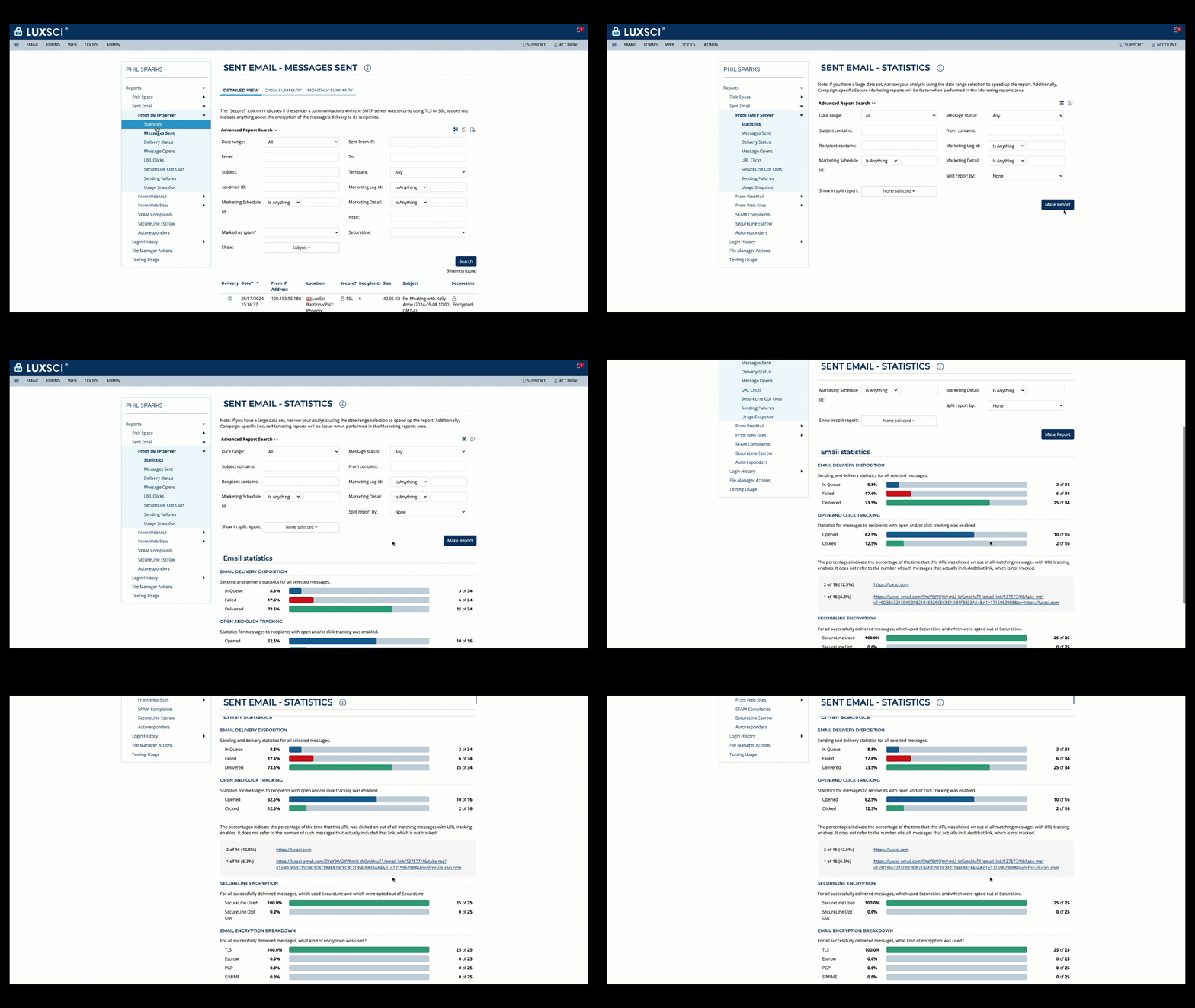
We recently rolled out new email reporting features, taking deliverability depth and analysis to new levels. If you’re a current LuxSci customer and haven’t checked them out, now’s the time. If you’re new to LuxSci, learn more below, and don’t hesitate to reach out for more info – or a demo.
LuxSci secure communications solutions have always featured rich reporting on email deliverability, including volumes and percentages for emails:
in queue
opened
clicked
failed
secured
With our latest release, we made these powerful statistics easier to consume and analyze with an improved user interface for more efficiency and greater ease-of-use. Users can simply select the type of report they’d like and customize it using a range of filtering selections. This is great for diving deeper into your email performance to make adjustments on-the-fly, and to spot trends or opportunities for better engagement that you may have missed before.
New UI – Email Deliverability Statistics
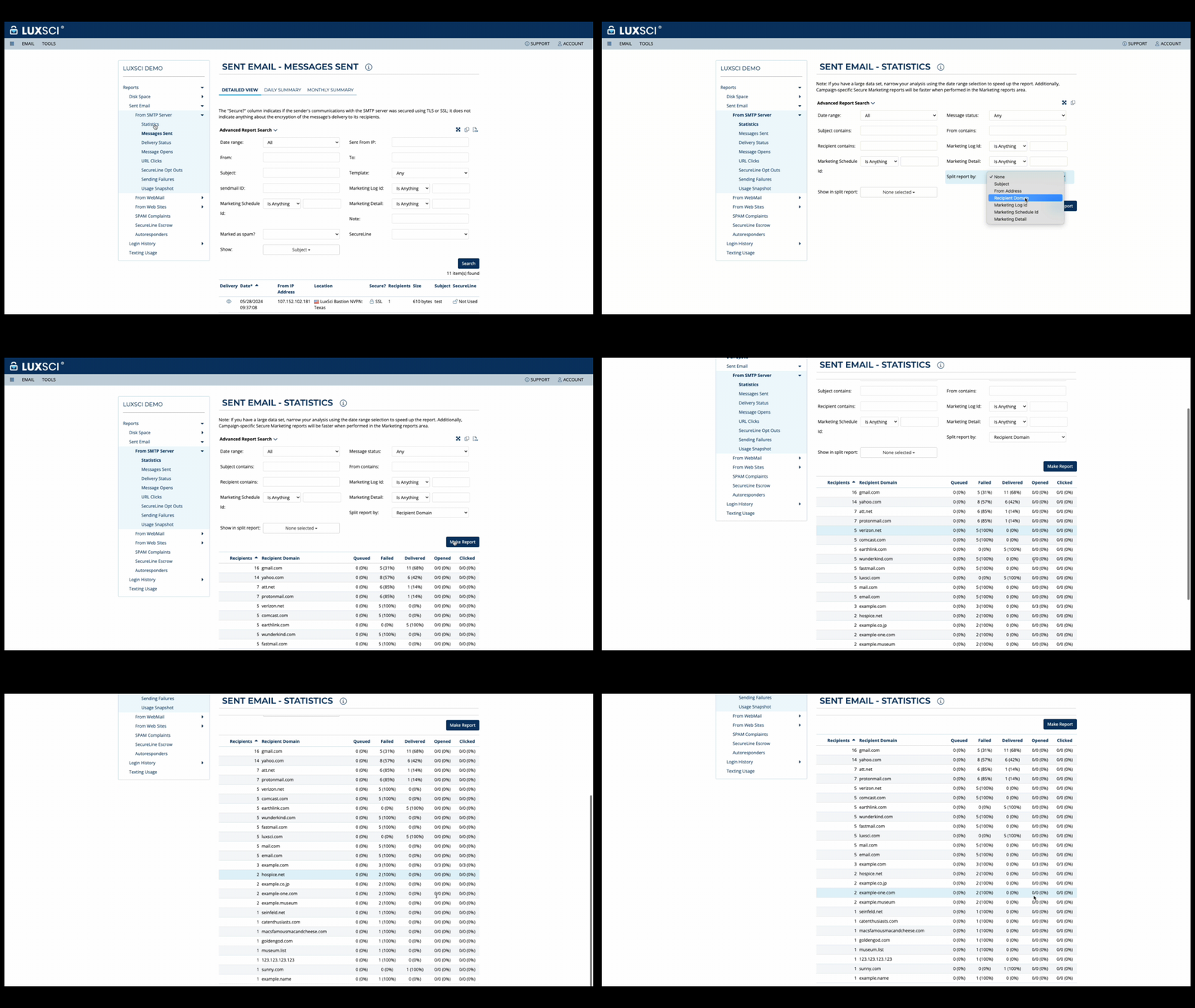
Get more granular, ID trends in real time with Split Reporting
As part of this release, we are pleased to introduce our Split Reporting feature, which empowers users to drill down on email deliverability statistics across a range of parameters, including:
subject
from address
recipient domains
marketing ID or campaign
custom field
For example, users can analyze email deliverability statistics by subject to determine which ones are performing best, by use case to track results by campaign, or to track performance by recipient email domains. With split reporting, users also can analyze email volumes across queued, delivered, opened, failed and clicked parameters, and determine click-through rates (CTR) to measure effectiveness and ROI of campaigns.
New Feature Example – Split Reporting by Recipient Domain
If you’d like to learn more, reach out and connect with us today!
Most healthcare organizations view email as a utility, a necessary tool for sending messages between staff, communicating with patients, sending out newsletters, connecting workflows, and so on. Historically, IT teams focused on keeping it running, security teams worried about phishing, and compliance teams made sure sensitive emails were encrypted.
Today, however, that view is rapidly becoming outdated.
Email has evolved into one of healthcare’s most critical digital infrastructure components, and also one of it’s biggest security threats. It’s a core channel for patient engagement, care coordination, revenue cycle operations, digital marketing, remote monitoring, and increasingly, AI-powered communications. The organizations that recognize this shift are building communications platforms designed for security, performance, automation, and growth. With the new HIPAA Security Rule requiring email encryption on the horizon, those companies that don’t may find themselves constrained by systems that were never intended to support modern healthcare.
Email Is No Longer Just a Messaging Tool
Healthcare organizations now depend on email to support dozens of mission-critical workflows every day.
Patients receive appointment reminders, registration instructions, imaging results, billing notifications, Explanation of Benefits (EOBs), prescription updates, preventive care reminders, patient education, and post-discharge follow-up. Marketing teams deliver personalized wellness campaigns and service line promotions. Clinical systems generate transactional notifications. Revenue cycle teams rely on secure digital communications to accelerate payments and reduce paper costs.
For many organizations, mission-critical patient communications flow through email every month.
When viewed collectively, email is more than a simple communications channel. It has become operational infrastructure with high levels of security needed and increasing compliance requirements.
The Stakes Continue to Rise
As healthcare becomes more digital, every communication carries greater business and clinical importance.
A delayed billing email may postpone payment. A failed appointment reminder can increase no-show rates. An undelivered care management message may impact patient outcomes. A misconfigured security policy can expose protected health information (PHI). Poor deliverability can undermine expensive patient engagement initiatives before they ever reach the inbox.
These are no longer isolated IT issues. Email can affect revenue, patient satisfaction, operational efficiency, compliance, and organizational reputation.
Today’s healthcare leaders require email infrastructure to provide the same reliability and visibility they demand from electronic health records, identity management systems, and other core infrastructure.
AI Is Raising the Bar Even Higher
There’s little doubt that artificial intelligence (AI) promises to transform patient communications.
Healthcare organizations everywhere are exploring AI-generated patient education, personalized outreach, intelligent scheduling, multilingual communications, and automated follow-up programs.
But AI also increases the importance of the underlying communications infrastructure.
Generating more personalized emails means little if organizations cannot:
Automatically protect PHI.
Apply consistent security policies.
Maintain complete audit trails.
Deliver messages reliably.
Integrate with EHRs, RCM and CRM platforms, and customer data platforms.
Demonstrate compliance during an audits.
In many ways, AI amplifies both the opportunities and the risks. Your email platform can help determine whether AI initiatives succeed or create new compliance and operational challenges.
Infrastructure Matters More Than Features
Healthcare buyers have traditionally evaluated email platforms based on individual features such as encryption, spam filtering, or secure portals.
Those capabilities remain important, but they no longer tell the whole story.
Today’s healthcare organizations should be evaluating communications platforms the same way they evaluate any mission-critical infrastructure.
Questions increasingly include:
Can it support both transactional and marketing communications?
Does it automatically enforce security policies without relying on user decisions?
Can it integrate with EHRs, CRM systems, CDPs, and business applications?
Will it scale during peak communication periods?
Does it provide detailed audit logging and reporting?
Can it adapt as regulatory expectations evolve?
Does it maintain high deliverability at enterprise scale?
Does it support single-tenant dedicated infrastructure for high performance and increased security?
These infrastructure characteristics often determine long-term success far more than any single feature comparison.
Email and the Future Of Secure Healthcare Communications
Healthcare is steadily moving toward a world where nearly every patient interaction is digital, personalized, and data-driven.
Healthcare leaders often ask whether they need a more secure email solution. That may be the wrong question.
The better question is whether their communications infrastructure is ready for where healthcare is headed over the next decade.
If you want talk about the future of your healthcare email infrastructure, reach out today and schedule a 30-minute assessment call with our experts.
The proposed HIPAA Security Rule update has become one of the most closely watched healthcare compliance developments in recent years. Designed to strengthen cybersecurity protections for electronic protected health information (ePHI), the proposal could significantly reshape how healthcare organizations approach risk management, ePHI encryption, and mandatory email encryption requirements.
A final rule was expected as early as May 2026. However, that deadline has now passed without publication from the U.S. Department of Health and Human Services (HHS) Office for Civil Rights (OCR).
So, what happens next—and what should healthcare IT directors, CISOs, and compliance officers do now?
Where Things Stand Today
The HIPAA Security Rule Notice of Proposed Rulemaking (NPRM) was published on January 6, 2025, with the goal of strengthening cybersecurity protections for ePHI in response to escalating ransomware attacks, healthcare breaches, and growing concerns about cyber resilience across the healthcare sector.
The proposal generated thousands of public comments from healthcare providers, payers, business associates, technology vendors, and industry groups. OCR has spent much of the past year reviewing this feedback and evaluating the operational and financial impact of the proposed changes.
Although the Spring Unified Regulatory Agenda identified May 2026 as a target date for a final rule, that milestone came and went without publication. As of June 2026, the proposed HIPAA Security Rule update remains under review.
While some organizations may be tempted to take a wait-and-see approach, the missed deadline should not be interpreted as a signal that the initiative has stalled. If anything, the proposal offers valuable insight into the future direction of healthcare cybersecurity regulation.
The Growing Focus on Mandatory Email Encryption
One of the most discussed aspects of the proposed HIPAA Security Rule update is encryption.
Under the current HIPAA Security Rule, encryption is generally classified as an “addressable” implementation specification. Organizations can choose alternative safeguards if they document and justify their decisions through a risk analysis process.
The proposed changes would significantly reduce that flexibility. Instead, many security safeguards, including encryption controls, would become more prescriptive and difficult to avoid.
While the final language has not yet been released, healthcare organizations should pay close attention to the proposal’s clear message: protecting ePHI through encryption is increasingly viewed as a baseline cybersecurity requirement.
This is particularly important for email communications.
Email remains one of the most widely used communication channels in healthcare, supporting everything from patient engagement and care coordination to billing, scheduling, and marketing communications. As regulators continue to focus on reducing data breach risks, mandatory email encryption is emerging as a likely area of increased scrutiny.
What Healthcare Organizations Should Do Now
The current delay creates an opportunity, not a reason to postpone action.
Healthcare organizations can begin preparing for likely requirements today by evaluating the security controls highlighted throughout the proposed rule.
Key areas to review include:
Encryption of ePHI across systems and communications channels
Comprehensive asset inventories and ePHI data mapping
Enhanced risk analysis and risk management processes
Multifactor authentication (MFA)
Vulnerability scanning and penetration testing
Incident response planning and testing
Backup and recovery procedures
Email security and secure email encryption practices
Organizations that proactively strengthen these areas now will be better prepared regardless of the final rule’s implementation timeline.
Why Secure Email Encryption Should Be a Priority
For many healthcare organizations, email remains one of the largest compliance and security risks.
Human error, misdirected messages, phishing attacks, and inconsistent encryption practices continue to contribute to breaches involving protected health information. As a result, secure email encryption is increasingly becoming a foundational component of healthcare cybersecurity strategies.
Organizations that rely on manual encryption processes or employee judgment alone may find it difficult to meet evolving regulatory expectations.
Instead, healthcare organizations should look for solutions that automate encryption decisions, reduce user error, and provide flexibility based on the sensitivity of the communication.
At LuxSci, we have long believed that security and usability must work together. We are 100% focused on secure healthcare communications, helping healthcare providers, payers, and suppliers protect sensitive data while improving patient and customer engagement. Our proven secure email solutions, used by leading companies including Athenahealth, 1-800 Contacts, and Hinge Health, help organizations protect ePHI with automated encryption capabilities that support both compliance and operational efficiency. Our unique SecureLine encryption technology enables organizations to apply the appropriate level of protection while maintaining a seamless experience for patients, customers, and staff.
For organizations already using Microsoft 365 or Google Workspace, LuxSci Secure Email Gateway can add HIPAA-compliant email security and encryption without requiring users to change their existing workflows. This approach helps reduce risk, while preserving productivity and user adoption.
The Bottom Line
The HIPAA Security Rule final rule may have missed its anticipated May deadline, but the cybersecurity challenges driving the proposal remain very real.
The OCR is still expected to make the rule change, which could require mandatory encryption of ePHI by early 2027.
The time to prepare is now!
Healthcare organizations should view the proposed HIPAA Security Rule update as an advance warning of where regulatory expectations are heading. Stronger cybersecurity controls, enhanced risk management, ePHI encryption, and mandatory email encryption requirements are all likely to remain central themes in future compliance efforts.
The organizations that begin preparing now will not only be better positioned for future regulatory changes, but will also strengthen their ability to protect patient data, reduce risk, and build trust in an increasingly challenging threat landscape.
At LuxSci, we’re proud to support the healthcare industry’s ongoing digital transformation through secure healthcare communications. Our HIPAA-compliant solutions for secure email, email marketing, and forms empower organizations to safely use and protect PHI, while delivering better patient experiences and outcomes.
Ready to strengthen your healthcare cybersecurity strategy?
Learn more about LuxSci and our complete suite of HIPAA compliant email and marketing solutions, or schedule a consultation with one of our healthcare communication experts today.
We’re excited to announce that LuxSci has again been recognized by G2 with 20 badges in its just-released Summer 2026 Reports, highlighting our continued leadership in secure healthcare communications and HIPAA compliant email solutions.
The new LuxSci G2 recognitions span several categories, including:
Best Estimated ROI
Best Support
High Performer
Leader
These latest LuxSci G2 awards reflect what matters most to our customers: delivering secure, HIPAA compliant healthcare communications backed by responsive support and measurable business results.
As one of the most trusted providers of HIPAA compliant email, marketing, and forms solutions, we’re proud to see our commitment recognized across multiple product categories and customer satisfaction metrics.
Recognition Built on Customer Experience
LuxSci’s G2 rankings are based on verified customer feedback and real-world user experiences, making these badges especially meaningful to our team.
This year’s Summer Reports recognized LuxSci for consistently delivering value to healthcare organizations looking to securely engage patients and customers while maintaining compliance with HIPAA requirements.
Among the highlights, the LuxSci G2 recognition includes:
Best Estimated ROI, reflecting the measurable value customers achieve through secure healthcare communications and personalization
Best Support, reinforcing LuxSci’s long-standing reputation for responsive, knowledgeable customer service
High Performer badges across multiple categories for customer satisfaction and product performance
Leader recognition for delivering secure, scalable communications solutions trusted by healthcare organizations
At LuxSci, we believe secure communications should also drive better engagement, stronger outcomes and operational efficiency. These recognitions reinforce our focus on helping healthcare providers, payers and suppliers personalize communications while protecting sensitive patient data.
Supporting the Future of Personalized Healthcare Engagement
LuxSci’s secure healthcare communication and patient engagement solutions empower organizations to safely communicate with patients and customers through:
HIPAA-compliant high volume email
Secure email marketing
Secure forms and data collection
Flexible encryption with SecureLine technology
Our solutions are designed to help healthcare organizations improve engagement, streamline workflows and personalize the healthcare journey while maintaining the highest standards of security and compliance.
These latest LuxSci G2 recognitions also build on LuxSci’s broader reputation for security, performance and customer success. Security and trust remain foundational to everything we do, alongside our commitment to delivering smart, responsive support for our customers.
Thank You to Our Customers
We’re grateful to our customers for their continued trust, collaboration and feedback. Their reviews and insights help shape our products and drive ongoing innovation across the LuxSci product set.
To learn more about LuxSci’s secure healthcare communications solutions, contact our team to schedule a secure email assessment or demo.
Ensuring HIPAA compliance for email is crucial for healthcare organizations and their business associates when handling Protected Health Information (PHI). HIPAA regulations require strict safeguards, including access controls, audit logs, integrity protections, and transmission security, to prevent unauthorized access and breaches. Encryption plays a key role in securing PHI during email exchanges, and organizations must establish comprehensive email policies aligned with the HIPAA Privacy Rule. Additionally, some state laws may impose stricter requirements, such as obtaining explicit patient consent before using email for PHI. Understanding these regulations is essential for maintaining compliance, protecting patient data, and avoiding costly penalties.
The Health Insurance Portability and Accountability Act (HIPAA) is a complicated law that sets the standards for collecting, transmitting, and storing protected health information (PHI). When information is stored or exchanged electronically, the HIPAA Security and Privacy Rules require covered entities to safeguard its integrity and confidentiality. One of the most common ways that PHI is shared electronically is via email. Understanding how HIPAA email rules apply is essential to meet HIPAA requirements and protect sensitive data.
The HIPAA Email Security Rule
It’s important to note that HIPAA does not require the use of any specific technology or vendor to meet its requirements. Generally speaking, the Security Rule requirements for email fall into four categories:
Organizational requirements state the specific functions a covered entity must perform, including implementing policies and procedures and obligations concerning business associate contracts.
Administrative requirements relate to employee training, professional development, and management of PHI.
Physical safeguards encompass the security of computer systems, servers, and networks, access to the facility and workstations, data backup and storage, and the destruction of obsolete data.
Technical safeguards ensure the security of email data transmitted over an open electronic network and the storage of that data.
Below, we discuss some of the main requirements that apply to email and the steps you need to take to secure email accounts that transmit and store PHI.
HIPAA Compliance Email Rules
While email encryption gets most of the spotlight during discussions on HIPAA compliant email security, HIPAA regulations for email cover a range of behaviors, controls, and services that work together to address eight key areas.
1. Access: Access controls help safeguard access to your email accounts and messages. Implementing access controls is essential to keep out unauthorized users and secure your data. Some key steps to take include:
Using strong passwords that cannot be easily guessed or memorized.
Creating different passwords for different sites and applications.
Using two-factor authentication.
Securing connections to your email service provider using TLS and a VPN.
Blocking unencrypted connections.
Being prepared with software that remotely wipes sensitive email off your mobile device when it is stolen or misplaced.
Logging off from your system when it is not in use and when employees are away from workstations.
Emphasizing opt-out email encryption to minimize breaches resulting from human error.
2. Encryption: Email is inherently insecure and at risk of being read, stolen, eavesdropped on, modified, and forged (repudiated). Covered entities should go beyond the technical safeguards of the HIPAA Security Rule and take steps beyond what is required to futureproof their communications. Some email encryption features to adopt include the following:
The ability to send secure messages to anyone with any email address.
The ability to receive secure messages from anyone.
Implementing measures to prevent the insecure transmission of sensitive data via email.
Exploring message retraction features to retrieve email messages sent to the wrong address.
Avoiding opt-in encryption to satisfy HIPAA Omnibus Rule.
3. Backups and Archival: HIPAA email retention rules require copies of messages containing PHI to be retained for at least six years. To address these requirements, organizations must consider the following:
How are email folders backed up?
Are there at least two different backups at two different geographical locations? The processes updating these backups should be independent of each other as a measure against backup system failures.
Have you maintained separate, permanent, and searchable archives? While the emails should be tamper-proof, with no way to delete or edit them, they should be easily retrievable to facilitate discovery, comply with audit requests, and support business-critical scenarios.
4. Defense: Cyber threats against healthcare organizations are continually increasing. Some may be surprised to learn that HIPAA secure email requirements mandate that organizations take steps to defend against possible attackers. To defend against malicious messages, consider implementing the following technologies:
Server-side inbound email malware and anti-virus scanning to detect phishing and malicious links
Showing the sender’s email address by default on received messages
Email filtering software to detect fraudulent messages and ensure it uses SPF, DKIM, and DMARC information to classify messages
Scanning outbound email
Scanning workstations for malware and virus
Using plain text previews of your messages
5. Authorization: A crucial aspect of HIPAA secure email requirements is ensuring that bad actors cannot impersonate your company or employees. Configuring your domains with SPF and DKIM is essential to verify your identity as an authorized sender of mail from your domains. Also, ensure that users cannot send messages through your email servers without authentication and encryption.
6. Reporting: Setting accountability standards for email security is essential to establishing and improving your HIPAA compliance posture. Some important steps to take include:
Creating login audit trails.
Receiving login failure and success alerts.
Auto-blocking known attackers.
Maintaining a log of all sent messages.
7. Reviews and Policies: Humans are the greatest vulnerability to any security and compliance plan. Create policies and procedures that focus on plugging vulnerabilities and preventing human errors. Some ways to reduce risk include:
Inviting independent third parties to review your email policies and user settings. Fresh, unbiased eyes can weed out issues quickly.
Disallowing the use of public Wi-Fi for devices that connect to your sensitive email.
Creating email policies prohibiting users from clicking on links or opening attachments that are not expected or requested.
8. Vendor Management: Most people do not manage their email in-house. Properly vetting and researching whoever will be responsible for your email services is essential. Perform a yearly review of your email security and stay on top of emerging cybersecurity threats to take proactive action when necessary for sustained HIPAA compliance.
LuxSci’s secure email solutions were designed to help organizations tackle complicated HIPAA email rules. Contact us today to learn more how we can help you secure sensitive data.
Documenting HIPAA Compliance For Email
HIPAA compliant email requires documented proof that privacy and security protocols are being followed. HIPAA email systems must include audit trails, policy records, and incident response documentation that demonstrate appropriate safeguards are in place. Healthcare organizations benefit from clear documentation practices that satisfy regulatory inspectors while supporting daily operations and staff training activities.
Email Policy Documentation and Implementation Records
Healthcare organizations must develop written policies that govern HIPAA email usage according to Privacy Rule and Security Rule standards. Email policies should specify encryption requirements, staff responsibilities for handling patient information, and procedures for responding to security incidents. Policy documents must include implementation dates, responsible staff members, and update procedures when regulations change or organizational needs evolve.
Training records provide evidence that employees understand their HIPAA email obligations and can properly implement security procedures. Documentation should capture completion dates, training topics, assessment scores, and remedial training when staff members fail initial evaluations. Organizations that cannot produce training records struggle to prove employees received instruction appropriate to their job functions and access to patient information.
Business Associate Agreement files cover relationships with email service providers and other vendors handling protected health information. Contract documentation should include security specifications, incident reporting procedures, and audit rights that allow healthcare organizations to verify vendor performance. Without proper agreements, healthcare organizations expose themselves to liability when vendors mishandle patient information.
Risk assessment documentation identifies vulnerabilities in HIPAA email systems and describes corrective measures implemented to address identified problems. Assessment records should include evaluation methods, discovered issues, remediation plans, and verification that fixes have been properly implemented. Many organizations conduct risk assessments but fail to document their findings, making it difficult to track improvements over time.
Audit Trail Management and Log Analysis
HIPAA compliance for email depends on audit logs that track user activities, system access, and message handling throughout email platforms. Audit systems should capture login events, message transmission records, administrative changes, and security alerts that might indicate potential violations. Log protection prevents tampering while ensuring data remains accessible for regulatory review periods.
Monitoring systems can identify unusual email usage patterns that suggest security incidents or policy violations. Alert capabilities should flag failed login attempts, large file transfers, abnormal message volumes, and access from unauthorized locations. Real-time monitoring helps healthcare organizations respond quickly to potential security events before they escalate into breaches.
Log review schedules ensure audit data receives regular examination for potential security incidents or policy violations. Review procedures should specify analysis frequency, responsible personnel, and escalation steps when suspicious activities are discovered. Some entities collect extensive audit data but never review it, missing opportunities to identify security problems early.
Log retention policies balance storage costs with regulatory requirements and potential legal discovery obligations. Retention schedules should consider HIPAA requirements alongside other applicable regulations that might demand longer storage periods.Log data must be destroyed properly when retention periods expire to prevent unauthorized access to historical communications.
Incident Response Documentation and Breach Investigation
HIPAA email incident response procedures must address security events and human errors that might compromise patient information. Response plans should include assessment procedures, containment steps, investigation protocols, and notification requirements for different incident types. Quick response often determines whether a minor security event becomes a reportable breach.
Breach investigation procedures help healthcare organizations determine whether email incidents constitute breaches of unsecured protected health information under HIPAA definitions. Investigation protocols should include evidence collection methods, impact assessments, timeline development, and documentation standards that support internal decisions and potential regulatory reporting. Complex incidents may require external legal and technical expertise.
Notification procedures vary based on incident severity and the type of information potentially compromised. Internal notification processes ensure appropriate personnel are informed about incidents and can participate in response activities. Patient notification requirements create legal obligations that organizations must fulfill within timeframes established by federal regulations.
Corrective action documentation describes measures implemented to prevent similar incidents and demonstrates organizational commitment to improving email security. Action plans should include root cause analysis, remediation steps, implementation timelines, and verification procedures that confirm corrective measures work as intended. Organizations that implement fixes without documenting them may repeat the same mistakes when staff turnover occurs.
Staff Training Documentation and Competency Records
HIPAA email training programs must address technical email operations and regulatory requirements for handling protected health information. Training materials should cover encryption procedures, access controls, incident reporting, and acceptable use policies for email communications. Role-based training ensures different staff groups receive instruction appropriate to their job functions and patient information access levels.
Competency verification procedures help healthcare organizations confirm staff members understand and can properly implement HIPAA email security measures. Verification methods may include written tests, practical demonstrations, and performance monitoring that evaluate staff compliance with email policies. Training programs without competency verification cannot prove that employees actually learned the required information.
Refresher training schedules ensure staff members stay current with evolving threats, policy updates, and new email system features. Training frequency should consider technology change rates, emerging security threats, and organizational policy modifications. Staff members who received training years ago may not remember procedures or may have developed bad habits that compromise security.
Training effectiveness measurement helps healthcare organizations evaluate whether HIPAA email training programs meet learning objectives. Measurement approaches may include before and after assessments, incident rate analysis, and feedback collection that provide insights into training quality. Organizations should adjust training content based on effectiveness data to ensure educational efforts support compliance goals.
System Configuration and Change Control Records
Email system configuration documentation provides detailed records of security settings, access controls, and integration setups that support HIPAA compliance for email. Configuration records should include baseline security settings, approved modifications, and verification procedures that confirm systems maintain appropriate security levels. System administrators need current configuration records to troubleshoot problems and maintain security standards.
Change management procedures ensure modifications to HIPAA email systems receive proper evaluation, testing, and documentation before implementation. Change processes should include security impact assessments, testing protocols, approval workflows, and rollback procedures that minimize risks to email security. Changes made without proper documentation and approval create security vulnerabilities that may not be discovered until a breach occurs.
Version control procedures help healthcare organizations track changes to email system configurations and maintain the ability to restore previous settings when problems occur. Version documentation should include change descriptions, implementation dates, responsible personnel, and verification that modifications function properly. Organizations need version control to understand how their systems evolved and to reverse changes that cause problems.
Patch management procedures ensure email systems receive security updates promptly while maintaining system stability and compliance. Patch processes should include vulnerability assessment, testing protocols, deployment schedules, and verification that updates install correctly. Delayed patching leaves systems vulnerable to known exploits that criminals actively target.
HIPAA Compliant Email Vendor Management and Contract Documentation
Email service provider relationships must include Business Associate Agreements that specify security requirements, compliance obligations, and incident reporting procedures. Contract documentation should cover data handling standards, audit rights, and termination procedures that protect healthcare organizations when vendor relationships end. Regular vendor performance reviews ensure service providers continue meeting contractual obligations.
Vendor compliance verification ensures email service providers maintain their obligations under Business Associate Agreements and healthcare security standards. Verification activities may include security certification reviews, audit report analysis, and compliance documentation that demonstrates ongoing adherence to healthcare privacy requirements. Healthcare organizations that trust vendors without verification may discover compliance failures only after incidents occur.
Service level agreement documentation defines performance expectations, availability targets, and response times for email services and security incidents. Agreement records should include uptime guarantees, incident response procedures, and remediation steps when service levels are not met. Performance tracking helps healthcare organizations evaluate vendor reliability and compliance with contractual commitments.
Vendor communication records document interactions about security updates, policy changes, and compliance requirements that affect email services. Communication logs should include update notifications, compliance discussions, and resolution of security concerns that arise during vendor relationships. Good communication records help resolve disputes and ensure both parties understand their obligations when changes occur.
Microsoft Forms is considered HIPAA compliant only when properly configured within a Microsoft 365 Enterprise or Business environment with an executed Business Associate Agreement (BAA). Unlike various competing products, Microsoft includes Forms among its covered services in its BAA, allowing healthcare organizations to collect protected health information when implemented with proper security controls and organizational policies.
Microsoft Business Associate Agreement Coverage
Microsoft offers a BAA that covers Microsoft Forms when used within a properly licensed Microsoft 365 environment. This agreement establishes Microsoft as a business associate under HIPAA regulations and defines responsibilities for protecting healthcare information. The BAA covers Microsoft Forms along with other Microsoft 365 services such as Exchange Online, SharePoint Online, and Teams. Healthcare organizations must execute this agreement before using Microsoft Forms to collect protected health information. The BAA establishes contractual protections beyond standard terms of service and the requirements of becoming HIPAA compliant.
Required Configuration for HIPAA Compliance
Making Microsoft Forms HIPAA compliant requires specific configuration beyond simply signing a BAA. Organizations must implement appropriate access controls using Microsoft 365 administrative settings to restrict form creation and data access to authorized personnel. Enabling audit logging through the Microsoft 365 Compliance Center helps track who creates, modifies, and accesses form data. Organizations need to configure retention policies that align with HIPAA record-keeping requirements. Multi-factor authentication adds an essential security layer for employees accessing protected health information. These technical controls work together to create a compliant environment for collecting patient information.
Security Features in Microsoft Forms
Microsoft Forms includes several security capabilities that support HIPAA compliance requirements. The platform encrypts data both during transmission and storage within Microsoft’s infrastructure. Access controls integrate with Microsoft 365 identity management to restrict form data visibility. Audit capabilities track form creation, modification, and response activities. Microsoft’s cloud infrastructure meets various compliance certifications beyond HIPAA, including FedRAMP, ISO 27001, and SOC standards. These underlying security measures provide the technical foundation for compliant form implementation when properly configured.
Limitations and Compliance Considerations
While Microsoft Forms can be HIPAA compliant, certain limitations require attention from healthcare organizations. The standard form templates do not include healthcare-specific authorization language required by the HIPAA Privacy Rule. Organizations must customize forms to include appropriate patient consent statements and privacy notices. Certain advanced features like form branching may create complexity in tracking what information appears to which respondents. Organizations need policies governing form creation and approval to ensure all necessary compliance elements appear consistently. These limitations require procedural controls beyond technical configuration.
Implementation Best Practices
Healthcare organizations implementing Microsoft Forms for collecting protected health information can benefit from following established best practices. Creating standardized form templates with pre-approved compliance language helps maintain consistency. Limiting form creation permissions to trained staff members reduces compliance risks. Regular privacy and security training for all employees who handle form data improves organizational awareness. Conducting periodic audits of form content and access patterns identifies potential compliance issues. Integrating forms with secure document storage in SharePoint improves information governance. These practices can enhance the security of patient information collected through electronic forms.
Alternative Form Solutions and Considerations
Microsoft Forms can be considered HIPAA compliant, but organizations should evaluate whether it provides the optimal solution for their needs. Specialized healthcare form platforms may offer additional features like electronic signature capture, direct EHR or CDP integration, or healthcare-specific templates. Microsoft Forms works best for organizations already invested in the Microsoft 365 ecosystem who need integrated form capabilities. The decision between Microsoft Forms and alternatives like LuxSci depends on factors including existing technology investments, integration requirements, complexity of form needs, and organizational resources for configuration and maintenance.
Email is an essential channel for most marketers. However, HIPAA regulations raise many questions for healthcare marketers who need to execute email marketing campaigns without violating patient privacy.
HIPAA is a complicated law that offers a lot of guidance but does not require the use of any specific technologies to protect patient privacy. The ambiguity causes a lot of confusion for marketers trying to integrate email into their marketing strategy. This article addresses some frequently asked questions about HIPAA-compliant email marketing and offers advice for securing patient data and futureproofing your marketing.
Do generic practice newsletters need to be protected?
Some marketers assume practice newsletters do not contain health information and, therefore, do not fall under HIPAA requirements. However, this assumption is often incorrect. Many are surprised to learn that protected health information can be implied from seemingly benign information.
In this way, many generic email newsletters often indirectly contain PHI because they are sent to lists of current patients. Email addresses are individually identifiable and combined with the email content; it may imply that they are patients of the practice. For example, say you send a “generic” newsletter to the patients of a dialysis clinic. An eavesdropper may be able to infer that the recipients receive dialysis. Therefore, the email reveals information about an individual’s health treatment, is PHI, and should be secured in compliance with HIPAA regulations.
In some cases, it can be complicated to determine what is PHI and what is not. Using a HIPAA-compliant marketing solution is best to avoid ambiguity and ensure security.
How Do I Find a HIPAA Compliant Email Marketing Vendor?
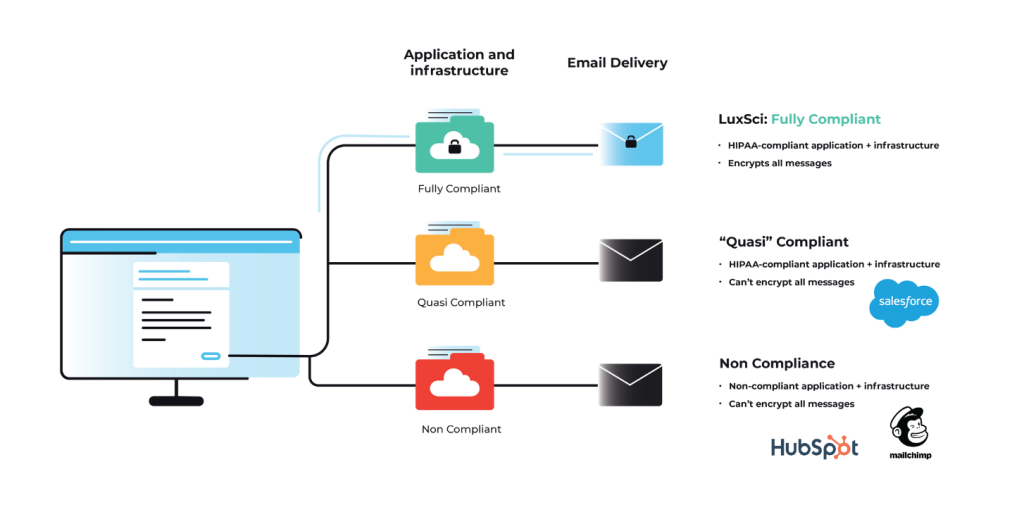
Unfortunately, using broadly popular email marketing platforms is not recommended. Many of these platforms were designed for e-commerce businesses and are not secure enough to meet HIPAA requirements. We do not recommend using a solution not specifically equipped to meet the healthcare industry’s unique security and compliance needs. To determine if your email marketing provider is compliant, they must meet three broad criteria at a minimum.
The vendor must sign a Business Associate Agreement outlining how they plan to secure your data and what they will do in the event of a breach.
Encrypt data at rest when it is stored in their systems.
Encrypt email messages and data in transit as it is sent to the recipients.
Not all vendors will be up to the task. Carefully vet your email marketing vendors to ensure they are taking steps to secure data and protect patient privacy.
What is an Email API?
API is an acronym that stands for “Application Programming Interface.” An email API gives applications (like CRMs, CDPs, or EHRs) the ability to send emails using data from the application. Email APIs also return campaign data to the platform or dashboards so you can assess the effectiveness of your marketing efforts. Trigger-based transactional or marketing emails are ideal for sending with an email API. In this situation, emails are sent when pre-determined conditions in the application are met. Healthcare organizations may use email APIs to send appointment reminders using electronic health records system data about a patient’s upcoming appointment.
Email APIs enable the automation of common email workflows. However, they are not interchangeable with email marketing platforms. Email APIs do not include the contact management systems standard in most email marketing platforms because all that data lives within the application they connect to. In addition, email API tools typically do not include drag-and-drop editor tools or other design features that help your emails stand out.
Does HIPAA permit providers to send unencrypted emails with PHI to patients?
Encryption is an addressable standard under the HIPAA Security Rule, but that does not mean it is optional. The HIPAA Privacy Rule does not explicitly forbid unencrypted email. Still, it does state that “other safeguards should be applied to protect privacy reasonably, such as limiting the amount or type of information disclosed through the unencrypted email.”
In addition, the Department of Health and Human Services also states that “covered entities are permitted to send individuals unencrypted emails if they have advised the individual of the risk, and the individual still prefers the unencrypted email.” Some organizations use waivers to inform patients of the risks and acquire permission to send unencrypted emails.
However, we do not recommend this approach for several reasons:
Keeping track of waivers over time and recording status changes and updates is challenging.
Signed waivers do not insulate you from the consequences of a HIPAA breach.
And finally, using waivers to send unencrypted emails doesn’t eliminate your other HIPAA obligations like data retention and disposal. Using a HIPAA-compliant solution is more manageable and eliminates ambiguity.
Can patients exercise their right of access by receiving PHI via unencrypted email?
Yes, but they must be fully informed of the risks and sign waivers acknowledging them. The caveats in the previous answer apply. It’s always better to utilize an encryption tool to protect patient data.
Is Microsoft 365 or Exchange 365 encryption sufficient for marketing emails?
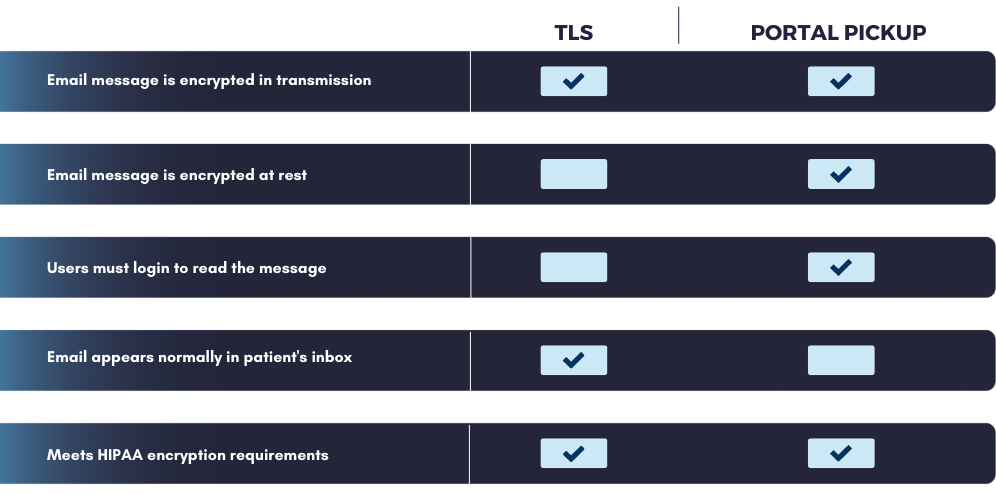
Microsoft 365 can be configured with Office Message Encryption (OME) to comply with HIPAA. However, the program is not well-suited to HIPAA email marketing. OME primarily relies on portal pickup encryption, in which the message is stored securely on a server and requires the recipient to log in to the portal to read the email. If you are a marketer trying to increase engagement, the portal adds a barrier to access that many will not cross. Light-PHI marketing messages are best sent using TLS encryption. TLS-encrypted messages arrive in the recipient’s inbox just like a regular email and do not require a user to log in to read the message.
In addition, Microsoft 365 is not configured to send high volumes of email. If you plan to send large marketing campaigns, you could unintentionally disrupt regular business communications by sending all the messages through the same infrastructure. You should separate your business and marketing email sending to protect your IP reputation and achieve your desired sending throughput.
What are common email marketing use cases for healthcare?
Email marketing in healthcare is not restricted to boring practice newsletters. When you utilize tools that enable the use of PHI in your targeting and personalization efforts, the sky is the limit. With consumer preferences shifting toward digital communications, marketers willing to utilize the email channel and tactics like segmentation and personalization can see better results.
Email is an excellent way to communicate with patients. A sampling of ways that healthcare marketers can use email include:
engaging patients in their healthcare journey
educating patients about their healthcare conditions and treatments
improving attendance and scheduling
retaining patients
increasing preventative procedures
collecting data on the patient experience
improving patient satisfaction
Conclusion
HIPAA can be difficult to understand, but choosing the right tools and adequately vetting your vendors makes it easy to execute HIPAA-compliant email marketing campaigns. If you are interested in learning more about LuxSci’s easy-to-use, Secure Marketing platform, please contact our sales team.
Healthcare marketing management coordinates promotional activities, patient acquisition strategies, and compliance oversight to help medical practices attract new patients while adhering to HIPAA privacy regulations and professional advertising standards. Medical facilities require healthcare marketing management to oversee digital campaigns, traditional advertising efforts, community outreach initiatives, and patient retention programs across multiple promotional channels while ensuring all activities meet regulatory requirements and produce measurable patient acquisition outcomes.
So, why do some medical practices thrive while others struggle with patient acquisition? The answer is effective healthcare marketing management. Without dedicated oversight, promotional efforts scatter in different directions, budgets vanish without measurable results, and compliance violations create expensive legal problems.
Patient Demographics in Healthcare Marketing Management
Understanding your target audience begins with data analysis. Age groups, geographic boundaries, insurance coverage patterns, and prevalent medical conditions within your service area shape every promotional decision. Healthcare marketing management teams dive deep into existing patient records, uncovering referral patterns that reveal which sources generate the highest value patients.
Competitive intelligence gathering takes multiple forms. Some practices hire mystery shoppers to evaluate competitor services. Others analyze online reviews, pricing structures, and promotional messaging. Smart management uses this intelligence to identify market gaps rather than copying unsuccessful strategies from neighboring practices.
Budget Allocation in Healthcare Marketing Management
The amount practices should spend on digital versus traditional advertising depends on patient demographics, local market conditions, and practice specialties. Younger patients respond better to social media campaigns, while older demographics prefer direct mail and radio advertising. Healthcare marketing management level these preferences against available budgets.
Compliance costs eat into promotional budgets more than most practices realize. Legal reviews for promotional materials, staff training on privacy regulations, and business associate agreements with vendors all require financial investment. Practices that skip these expenses face much larger costs when regulatory violations occur.
Digital Campaigns & Healthcare Marketing Management
Your practice website is the digital front door for new patients. But websites alone don’t generate appointments. Search engine optimization, pay-per-click advertising, social media engagement, and content marketing must work together seamlessly. Healthcare marketing management orchestrates these elements to create comprehensive digital presence.
Content creation poses challenges in healthcare. Educational articles about medical conditions can attract patients searching for information. However, any content featuring patient stories or treatment outcomes requires careful authorization management. One unauthorized patient photo or testimonial can trigger costly HIPAA violations.
HIPAA violations from promotional activities result in average penalties exceeding $100,000 per incident. Healthcare marketing management prevents these disasters through systematic compliance integration. Every promotional campaign, vendor relationship, and content piece undergoes privacy review before launch. Documentation proves compliance during regulatory audits. Smart practices maintain detailed records of patient authorizations, vendor agreements, and staff training completion. These records protect practices when investigators examine promotional activities for potential privacy violations.
Community Outreach to Build Healthcare Marketing Management
Local health fairs provide face-to-face patient interaction opportunities that digital campaigns cannot replicate. However, these events require careful planning to maximize return on investment while protecting patient privacy. Healthcare marketing management coordinates booth staffing, educational materials, and follow-up procedures to convert event contacts into scheduled appointments. Referral relationships with other healthcare providers generate consistent new patient flows. But referral agreements must comply with anti-kickback laws and fraud prevention regulations. Healthcare marketing management navigates these legal requirements while building mutually beneficial professional relationships.
Which promotional channels generate the most valuable patients? Website analytics, call tracking systems, and appointment scheduling data provide answers. Healthcare marketing management uses this information to optimize budget allocation and eliminate wasteful spending on ineffective promotional channels. Patient lifetime value calculations reveal which acquisition strategies produce the best long-term results. Some promotional channels attract patients who schedule one appointment and never return. Others generate loyal patients who refer family members and friends.
Implementation Coordination
Successful promotional campaigns require precise timing and resource coordination. Campaign launches, content publication schedules, and community event participation must align with practice capacity and seasonal patient demand patterns. Healthcare marketing management prevents promotional success from overwhelming practice operations. Seasonal planning creates promotional opportunities that many practices miss. Flu vaccination campaigns, summer sports injury prevention, and back-to-school wellness checks all present timely promotional angles. Healthcare marketing management preparation captures these opportunities while competitors scramble to react.