We recently rolled out new email reporting features, taking deliverability depth and analysis to new levels. If you’re a current LuxSci customer and haven’t checked them out, now’s the time. If you’re new to LuxSci, learn more below, and don’t hesitate to reach out for more info – or a demo.
LuxSci secure communications solutions have always featured rich reporting on email deliverability, including volumes and percentages for emails:
in queue
opened
clicked
failed
secured
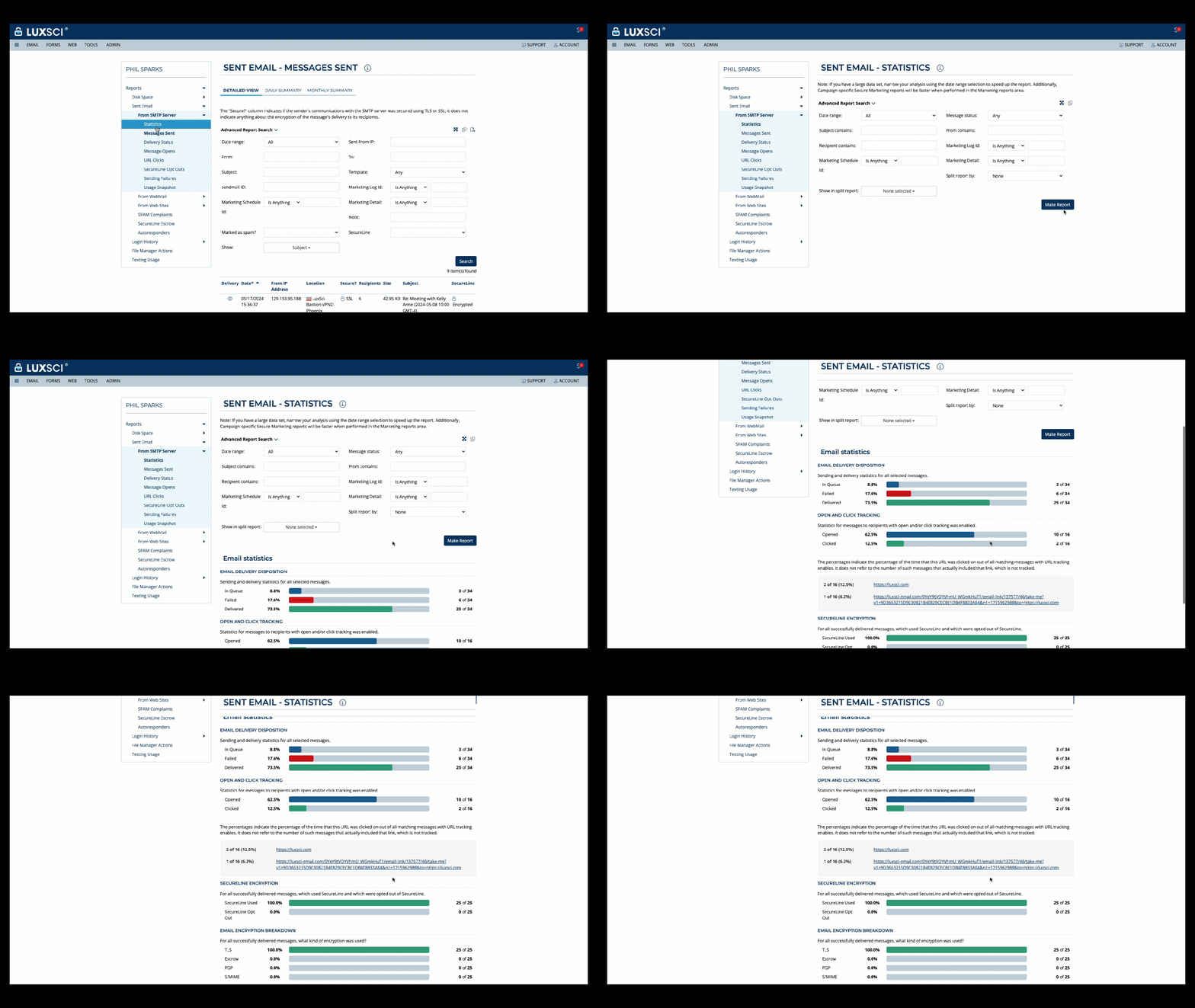
With our latest release, we made these powerful statistics easier to consume and analyze with an improved user interface for more efficiency and greater ease-of-use. Users can simply select the type of report they’d like and customize it using a range of filtering selections. This is great for diving deeper into your email performance to make adjustments on-the-fly, and to spot trends or opportunities for better engagement that you may have missed before.
New UI – Email Deliverability Statistics
Get more granular, ID trends in real time with Split Reporting
As part of this release, we are pleased to introduce our Split Reporting feature, which empowers users to drill down on email deliverability statistics across a range of parameters, including:
subject
from address
recipient domains
marketing ID or campaign
custom field
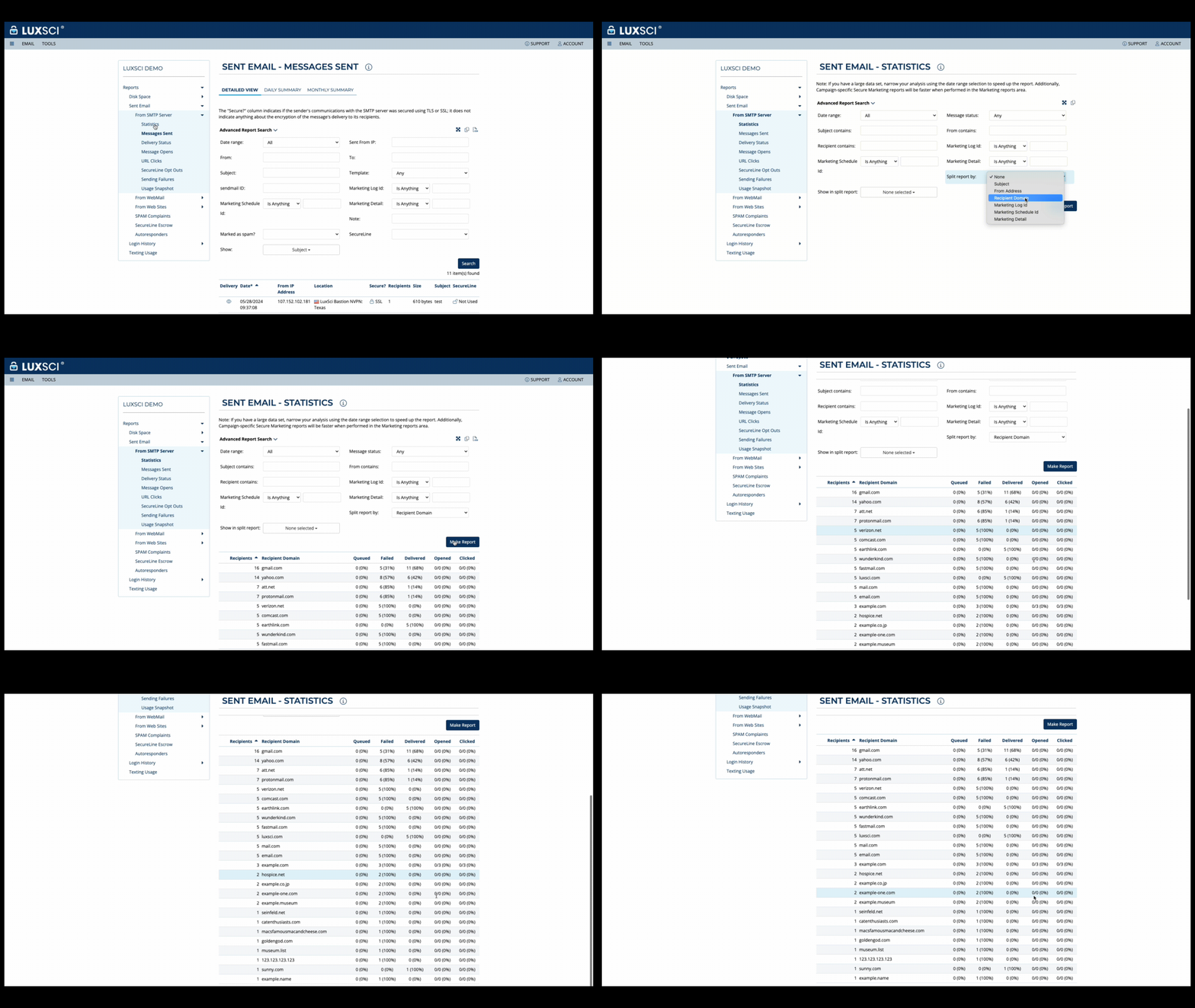
For example, users can analyze email deliverability statistics by subject to determine which ones are performing best, by use case to track results by campaign, or to track performance by recipient email domains. With split reporting, users also can analyze email volumes across queued, delivered, opened, failed and clicked parameters, and determine click-through rates (CTR) to measure effectiveness and ROI of campaigns.
New Feature Example – Split Reporting by Recipient Domain
If you’d like to learn more, reach out and connect with us today!
Secure email is not the same as “email with encryption turned on.” True secure email requires enforced automated encryption, a signed BAA, access controls, audit logs, and documented processes — not just a feature toggle.
Standard email platforms like Gmail and Microsoft 365 rely on opportunistic TLS by default, which can silently fall back to unencrypted delivery if the recipient’s server doesn’t support encryption.
HIPAA’s encryption safe harbor means a misdirected but properly encrypted email is a non-event. The same email sent unencrypted is a presumed breach unless a risk assessment shows otherwise.
A signed Business Associate Agreement (BAA) with your email provider is non-negotiable — without one, you cannot legally send or store PHI through that provider.
The proposed 2025 HIPAA Security Rule update, planned for finalization in 2027, would make encryption of ePHI in transit and at rest a mandatory requirement rather than “addressable,” raising the stakes for organizations still relying on opportunistic TLS.
Best for: Healthcare IT Directors, Compliance Officers, Privacy Officers, and Marketing Managers at provider, payer, and supplier organizations that handle protected health information (PHI).
In healthcare IT, the term “secure email” gets thrown around loosely. Vendors slap the label on anything with a padlock icon, and internal teams often assume that because their provider offers TLS, they’re covered. They’re not, and the gap between what’s assumed and what’s actually required is where data breaches occur and HIPAA violations happen.
This guide breaks down exactly what secure email means from a technical and regulatory standpoint, why the email platform your staff uses every day probably isn’t compliant out of the box, and what to look for when evaluating a provider that needs to protect PHI at scale. If you want the full picture of what compliance requires beyond email specifically, our HIPAA Compliance Checklist is a useful companion read.
What Is Secure Email?
Secure email refers to an email system that protects the confidentiality, integrity, and availability of message content — specifically PHI — through a combination of technical safeguards and contractual protections. It’s not a single feature. It’s a stack of controls working together.
At minimum, secure email in a healthcare context includes:
Enforced encryption in transit, so messages can’t fall back to plaintext delivery
Encryption at rest, so stored messages remain protected on the server
Authentication protocols (SPF, DKIM, DMARC) that prevent spoofing and impersonation
Access controls and audit logs that track who accessed what, and when
A signed Business Associate Agreement (BAA) with the email provider
The distinction that trips up most organizations is this: encryption is a component of secure email, not the whole picture. A provider can offer encryption and still fail to meet HIPAA requirements if that encryption isn’t enforced, if there’s no BAA in place, or if audit logging doesn’t exist. Secure email is the combination of all these pieces functioning as a system, which is why it needs to be evaluated holistically rather than checked off feature by feature.
For healthcare provider, payer, and supplier organizations, this matters because email remains one of the highest-volume channels for PHI exposure, from clinical referrals to patient billing statements to routine staff communication. Getting the definition right is the first step toward closing the compliance gap.
Why Standard Email Is Not HIPAA-Compliant
Many healthcare organizations run on Gmail (Google Workspace) or Microsoft 365, and most assume they’re protected because encryption exists somewhere in the stack. That assumption is the single most common — and most dangerous — misconception in healthcare email security.
Here’s the problem: standard email services use opportunistic TLS by default. TLS is attempted between mail servers, but if the receiving server doesn’t support it, the message is delivered anyway — unencrypted, in plaintext. Neither the sender nor the recipient typically sees a warning. The email just goes through.
This isn’t a hypothetical edge case. IT professionals managing healthcare email infrastructure have flagged this exact issue directly: opportunistic TLS is often enabled by default and creates a false sense of security, since it offers no guarantee that a given message, including one containing PHI, won’t be transmitted in plaintext if the recipient’s mail server doesn’t support encryption. Organizations assume they’re protected simply because TLS is technically “on,” without realizing it isn’t enforced.
That gap has real consequences under HIPAA. The Security Rule currently treats transmission encryption as an “addressable” safeguard, meaning covered entities can, in theory, implement an equivalent alternative measure instead. In practice, regulators and auditors from the Office for Civil Rights (OCR) expect enforced encryption as the standard of care. “Addressable” has never meant optional — it means an organization needs a documented, defensible reason if it isn’t doing enforced encryption, and few reasons hold up under scrutiny. Finally, under OCR’s proposed changes to the HIPAA Security Rule for ePHI, scheduled for final publication in July 2027, email encryption moves from addressable to mandatory.
Beyond the encryption gap, standard consumer and even most business email plans typically lack:
A BAA that’s actually offered and signed (available on some enterprise tiers, but not automatic)
Audit logging sufficient to meet HIPAA Security Rule requirements
Built-in encryption at rest guarantees for stored messages
None of this means Gmail or Microsoft 365 are inherently insecure products. It means their default configuration is built for general business use, not for an environment where every misrouted or intercepted message carries breach notification liability. Making either platform HIPAA-appropriate requires layering on additional tools, policies, and critically, a provider relationship that includes a signed BAA covering the exact services in use.
The Technical Components of Secure Email
Secure email is built upon five technical layers. Understanding each one, and where it fails in standard email, clarifies exactly what a compliant solution needs to deliver.
Encryption in Transit (TLS)
Transport Layer Security (TLS) encrypts the connection between mail servers as a message travels from sender to recipient. There are two flavors, and the difference between them is the crux of most healthcare email compliance failures:
Opportunistic TLS attempts an encrypted connection but falls back to unencrypted delivery if the receiving server doesn’t support it. This is the default across most consumer and business email platforms.
Enforced TLS requires an encrypted connection for delivery to succeed. If encryption can’t be established, the message fails to send rather than going out in plaintext, or a link to secure portal can be sent to securely access the information.
HIPAA’s Security Rule lists encryption as addressable, but enforced TLS has become the de facto standard that auditors and OCR expect from covered entities and business associates handling PHI over email. As one healthcare IT professional put it while debating this exact tradeoff internally: the goal is to require TLS for all outbound email and then document the remaining controls around it, treating enforced TLS as the technical baseline, with policy and process built on top.
Encryption at Rest
Transit encryption only protects a message while it’s moving. Once it lands on a mail server — sender’s outbox, recipient’s inbox, backups, archives — it needs to remain encrypted in storage. This is encryption at rest, and it’s where many organizations underestimate their exposure.
Encryption in transit alone offers zero control over a message after it’s been delivered. If the destination server isn’t itself encrypting stored data, or if a backup snapshot is taken without encryption, PHI sitting in an inbox is exposed regardless of how securely it arrived. HIPAA’s Security Rule requires safeguards for ePHI both in transit and at rest, a compliant secure email provider needs to guarantee both, not just one.
End-to-End Encryption (S/MIME, PGP)
End-to-end encryption (E2EE) encrypts message content itself, not just the connection it travels over — meaning even the email provider can’t read the content. Two standards dominate here:
S/MIME uses certificate-based encryption and is common in enterprise environments, such as healthcare, particularly where organizations already manage a public key infrastructure.
PGP (Pretty Good Privacy) uses a public/private key model and is more common in technical or security-conscious communities, though it’s less frequently deployed at scale in healthcare due to key management complexity.
E2EE isn’t a baseline requirement for every PHI-containing email, enforced TLS plus encryption at rest satisfies most use cases. But it becomes necessary for especially sensitive communications, cross-organization data sharing where you don’t control the recipient’s infrastructure, or when a business associate agreement specifically requires it.
Authentication (SPF, DKIM, DMARC)
These three protocols work together to prevent domain spoofing and email impersonation, a growing attack vector against healthcare organizations specifically, given how often phishing campaigns impersonate providers, payers, or patients.
SPF (Sender Policy Framework) specifies which mail servers are authorized to send email on behalf of a domain.
DKIM (DomainKeys Identified Mail) adds a cryptographic signature verifying a message wasn’t altered in transit.
DMARC (Domain-based Message Authentication, Reporting & Conformance) tells receiving servers what to do when SPF or DKIM checks fail, and provides reporting visibility.
Without these configured correctly, an organization’s domain can be spoofed to send convincing phishing emails to patients or staff, creating a security failure that compounds the compliance risk of email interception.
Digital Signatures
Digital signatures verify sender identity and confirm a message hasn’t been tampered with between sending and receipt. Paired with encryption, they close the loop on message integrity, confirming not just that content was protected, but that it came from who it claims to have come from and arrived unaltered.
Standard Email vs. Secure Email: Feature Comparison
Feature
Standard Email
Secure Email (HIPAA-Compliant)
Encryption in Transit
Opportunistic TLS — attempted but not enforced
Enforced TLS — connection fails if encryption unavailable, can include delivery via secure portal option
Encryption at Rest
Not guaranteed; provider-dependent
Required — server-side encryption of stored messages
End-to-End Encryption
Not available
Supported via S/MIME and/or PGP
Digital Signatures
Not available
Included — verifies sender identity and message integrity
Authentication (SPF / DKIM / DMARC)
Optional, rarely enforced
Required — spoofing and impersonation protection
Business Associate Agreement (BAA)
Not provided on standard plans
Required — must be signed before sending PHI
Audit Logs
Basic or none
Full audit trail — required under HIPAA Security Rule
Access Controls
Basic password only
Role-based access, MFA, admin controls
Misdirected Email
Reportable HIPAA breach
Non-reportable if properly encrypted (safe harbor)
HIPAA Compliant by Default
No
Yes
What Makes Email HIPAA-Compliant Specifically
Technical safeguards alone don’t make email HIPAA-compliant. Compliance is a combination of technology, contracts, and documented processes — all four need to be in place simultaneously. This includes:
A signed BAA with your email provider – Any vendor that transmits, processes, or stores PHI on your behalf is a business associate under HIPAA, and business associates are legally required to sign a BAA before handling that data. Email providers have persistent access to ePHI — even end-to-end encrypted messages pass through their infrastructure at some point — which makes this requirement absolute, not situational. If a provider won’t sign a BAA, using them to send or store PHI isn’t a compliance risk you can mitigate; it’s a violation from the start.
Encryption as an addressable safeguard – Under 45 CFR §164.312(e)(2)(ii), the HIPAA Security Rule lists encryption of ePHI in transit as “addressable” rather than strictly “required.” In practice, this doesn’t mean optional, it means an organization must implement it, or document and justify an equivalent alternative safeguard. Enforced encryption has become the expected standard, and with the newly proposed HIPAA Security Rule planned for July 2027 publication, NPRM would formalize that expectation by making encryption of ePHI in transit and at rest mandatory rather than addressable. Organizations still relying on opportunistic TLS as their “equivalent alternative” should treat this as a closing window.
Access controls and audit logs – HIPAA requires the ability to track who accessed PHI, when, and what they did with it. This means role-based access permissions, multi-factor authentication, and a complete, retained audit trail — not just for compliance reporting, but for identifying and responding to incidents quickly.
The encryption safe harbor – This is one of the most consequential, and most underused, provisions in HIPAA. If PHI is sent via properly encrypted email and ends up misdirected to the wrong recipient, it is not a reportable breach under the Breach Notification Rule, because the encrypted content is considered unreadable and therefore not “unsecured PHI.” The exact same misdirection with unencrypted email is a reportable breach, triggering notification obligations to the individual and to HHS/OCR. Encryption isn’t just a security best practice here, it’s the line between a non-event and a formal breach investigation.
HITRUST certification as a trust signal – When evaluating vendors, HITRUST CSF certification is a strong external indicator that a provider’s security controls have been independently assessed against a recognized healthcare-specific framework. It’s not a HIPAA requirement in itself, but it meaningfully reduces the diligence burden on your side when vetting a provider.
Types of Healthcare Email That Must Be Secure
Not all internal debate here is about “should we secure email” — it’s about scope. Which specific email flows actually carry PHI, and therefore need to run through a compliant channel? In practice, the answer is broader than most teams initially assume.
The common thread: if a message references anything that could identify a patient in connection with health information — a name next to a diagnosis, an account number tied to a service date, an annual test reminder — it needs to move through a secure channel, regardless of whether it’s clinical, financial, or administrative in nature.
How to Evaluate a Secure Email Provider for Healthcare
Vendor evaluation in this category tends to go one of two ways: teams either take a provider’s “HIPAA-compliant” label at face value, or they get buried in RFP questions without knowing which answers actually matter. Ask these key questiosn to focus the evaluation on what’s operationally and legally significant.
“Does the provider sign a BAA? This is the first filter, not the last. If a vendor won’t sign a BAA — or offers a heavily limited one — everything else is irrelevant. Some organizations go a step further and negotiate indemnity or make-whole clauses into the BAA itself, seeking financial protection beyond the baseline liability allocation.
What encryption methods are supported? Confirm specifically whether the provider offers TLS only, or also supports S/MIME and/or PGP for end-to-end encryption where needed. TLS-only coverage is sufficient for most standard PHI communication; organizations with cross-border data sharing or especially sensitive use cases may need E2EE options available.
Is encryption enforced or opportunistic? This is the single most important technical question to ask directly, in those terms. A vendor that describes its encryption vaguely, without distinguishing enforced from opportunistic delivery, hasn’t answered the question. Push for specifics.
How are large attachments handled? Lab results, imaging files, and clinical documents often exceed standard attachment size limits. Confirm the provider has a secure, compliant method for large file transfer that doesn’t force users onto an unencrypted workaround.
What audit logging and reporting capabilities exist? You need visibility into delivery, access, and any failed encryption attempts, not just a generic sent/received log. Ask whether logs are retained for a period consistent with your organization’s HIPAA documentation requirements.
Do they support high-volume transactional email? Appointment reminders, billing notices, and patient communications at scale require infrastructure built for volume without sacrificing per-message compliance. Confirm the provider’s platform is built for this your specific pattern, not just person-to-person messaging.
Is the platform US-based with US data residency? For many healthcare organizations, where data physically resides — and under which jurisdiction — is a material factor in vendor risk assessment, particularly for payers and larger provider organizations with strict data governance policies.”
One operational factor worth weighing alongside these questions: secure email portals — the kind that require recipients to click through to a separate web page to read a message — solve the encryption problem but often create a real adoption problem. IT teams have reported a direct conflict between phishing-awareness training and portal-based workflows: staff and patients trained not to click suspicious links in emails are, understandably, reluctant to click the “secure link” a portal email contains. This is a legitimate reason many organizations increasingly prefer platforms that enforce encryption transparently in the background — like LuxSci’s SecureLine encryption technology — rather than routing every message through a separate portal experience.
Secure Email Checklist for Healthcare Organizations
Every safeguard covered in this guide comes down to a handful of concrete, verifiable actions. Use the checklist below as a working reference for what needs to be in place across your legal agreements, technical controls, and internal processes. This is not a one-time setup task, but something worth revisiting as your email volume, vendors, and regulations evolve. Share it across your compliance and IT teams as a starting point for an internal audit.
Legal and Contractual – BAA signed with email provider and all third-party vendors handling PHI.
Encryption – Forced TLS, not opportunistic only for emails in transit and all stored data encrypted with AES-256 bit encryption.
Access and Audit – Unique user IDs, role-based access, and login monitoring with advanced MFA enabled for all email accounts; audit logs active and maintained.
People and Processes – Staff trained in PHI handling, established breach response plan, annual email security policy review.
What Should I Do Now?
Secure email isn’t a single setting you switch on — it’s a combination of enforced encryption, a signed BAA, access controls, and documented process working together. Get any one piece wrong, and the rest doesn’t hold up under an OCR audit or a breach investigation.
If your organization is still relying on opportunistic TLS, an unsigned or incomplete BAA, or a patchwork of workarounds to move PHI through email, now is the time to close that gap, especially with the proposed 2025 HIPAA Security Rule update poised to make encryption a mandatory requirement rather than an addressable one in 2027.
Below are three ways you can continue your journey to securing your healthcare email:
Email can be HIPAA compliant, but only when the right safeguards are in place — enforced encryption, a signed BAA with your email provider, access controls, audit logs, and staff training on PHI handling. Standard email without these safeguards is not compliant.
2. Do I need to sign a BAA with my email provider?
Yes. Email providers have persistent access to ePHI — even encrypted messages pass through their servers — making them Business Associates under HIPAA. A signed BAA is required. If your provider won’t sign one, you cannot legally use them to send or store PHI.
3. What is the difference between opportunistic TLS and enforced TLS — and which does HIPAA require?
Opportunistic TLS attempts encryption but falls back to plaintext if the recipient’s server doesn’t support it. Enforced TLS stops delivery rather than sending unencrypted. HIPAA’s Security Rule treats transmission encryption as an addressable specification, in practice, enforced TLS is the standard auditors and OCR expect. The proposed 2025 HIPAA Security Rule NPRM would make encryption of ePHI in transit a mandatory requirement in 2027.
4. What happens if I send PHI in an unencrypted email?
It is an impermissible disclosure under HIPAA’s Privacy Rule and triggers the Breach Notification Rule, requiring you to notify the individual and HHS/OCR within 60 days. Penalties range from $100 to $50,000 per violation. Had the email been properly encrypted, the same incident would qualify for HIPAA’s encryption safe harbor, meaning no notification required.
5. Is Gmail or Microsoft 365 HIPAA compliant for sending patient emails?
Neither is compliant in their default configuration. Both use opportunistic TLS, meaning PHI can be sent in plaintext if the recipient’s server doesn’t support encryption. A signed BAA is available on enterprise plans but doesn’t close the technical gap alone. A purpose-built HIPAA-compliant email platform is the reliable solution.
If you’ve been waiting for the final word on the new HIPAA Security Rule before you touch your email encryption strategy, you now have an official reason to keep waiting.
Our advice: Don’t do it.
What is the new HIPAA Security Rule for ePHI?
The Department of Health and Human Services’ Office for Civil Rights had targeted May 2026 for a final rule implementing the most significant update to the HIPAA Security Rule in over two decades. The proposal eliminates the “addressable” standard and makes encryption of ePHI in transit and at rest mandatory for every covered entity and business associate. That deadline came and went quietly. Now we know why: an updated federal regulatory agenda shows OCR’s timeline has moved to July 2027, with the rule-making downgraded from “final rule stage” to “long-term action.” OCR is still working through more than 4,700 public comments on the January 2025 proposal.
For an industry that had been expecting a tighter deadline, a year-plus delay is the kind of news that invites a collective exhale — and a shelved project plan. At LuxSci, we think that would be a mistake, for three reasons:
The current rule already requires you to address encryption. “Addressable” was never “optional.” It has always meant you must implement the safeguard, implement an equivalent alternative, or document in writing why neither is reasonable for your organization. Most healthcare organizations have never done that documentation rigorously, and OCR’s existing enforcement authority applies today, not in 2027.
Breach costs haven’t waited for the rule.IBM’s 2025 Cost of a Data Breach Report puts the average healthcare breach at $7.42 million, still the highest of any industry. At the same time, email remains the number one attack vector into healthcare organizations. None of that risk is paused by a regulatory delay.
Delay is not withdrawal.OCR has not signaled it’s abandoning the encryption mandate, only that it’s taking longer to finalize it. Organizations that build now toward the standard already proposed will be ahead (and more secure) regardless of exactly when, or in what final form, the rule lands. Organizations that wait risk a compressed scramble once it does.
What should healthcare IT and compliance leaders actually do with this news?
Reevaluate your ePHI security posture, recalibrate its urgency, and use the extra runway to do the job right, instead of racing against a deadline. This includes:
Getting a real inventory of where ePHI moves by email today, inbound and outbound, and where encryption is inconsistent or absent.
Closing the documentation gap on “addressable” now, while you have time to do it well rather than defensively.
Pushing your email vendor for concrete answers on encryption standards, MFA enforcement, audit logging, and breach notification — the same technical controls the proposed rule would make mandatory.
Building (or updating) a written, enforcement-ready posture: policies, vendor agreements, certifications and verifications, test results, and training records that would hold up under an OCR investigation today, not just in a future compliance deadline.
Get LuxSci’s new Definitive Guide on the new HIPAA Security Rule
From Addressable to Mandatory: Email Encryption Under the New HIPAA Security Rule provides the latest update on the rule, what it means for healthcare email encryption, and what you can do now to properly prepare for what’s coming in 2027. The guide also includes an interactive scorecard that lets you evaluate your current email set up and vendor across seven security and compliance dimensions in under two minutes, no email address required.
If you want a second set of eyes on where your organization stands, our team offers a free 30-minute compliance assessment of your current email environment against the proposed rule’s requirements.
Most healthcare organizations view email as a utility, a necessary tool for sending messages between staff, communicating with patients, sending out newsletters, connecting workflows, and so on. Historically, IT teams focused on keeping it running, security teams worried about phishing, and compliance teams made sure sensitive emails were encrypted.
Today, however, that view is rapidly becoming outdated.
Email has evolved into one of healthcare’s most critical digital infrastructure components, and also one of it’s biggest security threats. It’s a core channel for patient engagement, care coordination, revenue cycle operations, digital marketing, remote monitoring, and increasingly, AI-powered communications. The organizations that recognize this shift are building communications platforms designed for security, performance, automation, and growth. With the new HIPAA Security Rule requiring email encryption on the horizon, those companies that don’t may find themselves constrained by systems that were never intended to support modern healthcare.
Email Is No Longer Just a Messaging Tool
Healthcare organizations now depend on email to support dozens of mission-critical workflows every day.
Patients receive appointment reminders, registration instructions, imaging results, billing notifications, Explanation of Benefits (EOBs), prescription updates, preventive care reminders, patient education, and post-discharge follow-up. Marketing teams deliver personalized wellness campaigns and service line promotions. Clinical systems generate transactional notifications. Revenue cycle teams rely on secure digital communications to accelerate payments and reduce paper costs.
For many organizations, mission-critical patient communications flow through email every month.
When viewed collectively, email is more than a simple communications channel. It has become operational infrastructure with high levels of security needed and increasing compliance requirements.
The Stakes Continue to Rise
As healthcare becomes more digital, every communication carries greater business and clinical importance.
A delayed billing email may postpone payment. A failed appointment reminder can increase no-show rates. An undelivered care management message may impact patient outcomes. A misconfigured security policy can expose protected health information (PHI). Poor deliverability can undermine expensive patient engagement initiatives before they ever reach the inbox.
These are no longer isolated IT issues. Email can affect revenue, patient satisfaction, operational efficiency, compliance, and organizational reputation.
Today’s healthcare leaders require email infrastructure to provide the same reliability and visibility they demand from electronic health records, identity management systems, and other core infrastructure.
AI Is Raising the Bar Even Higher
There’s little doubt that artificial intelligence (AI) promises to transform patient communications.
Healthcare organizations everywhere are exploring AI-generated patient education, personalized outreach, intelligent scheduling, multilingual communications, and automated follow-up programs.
But AI also increases the importance of the underlying communications infrastructure.
Generating more personalized emails means little if organizations cannot:
Automatically protect PHI.
Apply consistent security policies.
Maintain complete audit trails.
Deliver messages reliably.
Integrate with EHRs, RCM and CRM platforms, and customer data platforms.
Demonstrate compliance during an audits.
In many ways, AI amplifies both the opportunities and the risks. Your email platform can help determine whether AI initiatives succeed or create new compliance and operational challenges.
Infrastructure Matters More Than Features
Healthcare buyers have traditionally evaluated email platforms based on individual features such as encryption, spam filtering, or secure portals.
Those capabilities remain important, but they no longer tell the whole story.
Today’s healthcare organizations should be evaluating communications platforms the same way they evaluate any mission-critical infrastructure.
Questions increasingly include:
Can it support both transactional and marketing communications?
Does it automatically enforce security policies without relying on user decisions?
Can it integrate with EHRs, CRM systems, CDPs, and business applications?
Will it scale during peak communication periods?
Does it provide detailed audit logging and reporting?
Can it adapt as regulatory expectations evolve?
Does it maintain high deliverability at enterprise scale?
Does it support single-tenant dedicated infrastructure for high performance and increased security?
These infrastructure characteristics often determine long-term success far more than any single feature comparison.
Email and the Future Of Secure Healthcare Communications
Healthcare is steadily moving toward a world where nearly every patient interaction is digital, personalized, and data-driven.
Healthcare leaders often ask whether they need a more secure email solution. That may be the wrong question.
The better question is whether their communications infrastructure is ready for where healthcare is headed over the next decade.
If you want talk about the future of your healthcare email infrastructure, reach out today and schedule a 30-minute assessment call with our experts.
An effective healthcare marketing plan outlines strategies to reach patients, customers, partners, and healthcare organization, while meeting business growth targets. This structured document includes market analysis, audience targeting, budget allocation, campaign channels, content and schedules, and performance metrics. Successful marketing teams use these plans to guide and measure activities throughout the year, while protecting patient privacy and maintaining healthcare compliance standards.
Market Analysis and Research Requirements
Planning development begins by researching the latest healthcare market conditions, current customer and patient demographics, competitive landscapes and regulatory environments. Analysis is conducted on local demographics, population healthcare needs, insurance coverage patterns, and existing service providers. Research includes patient surveys, historical results, referral source interviews, and healthcare utilization data. Teams should study market trends, technological changes, and regulatory requirements that might affect marketing strategies and future results. The analysis should cover service area demographics, competitor capabilities, and potential growth opportunities. This research provides the foundation for marketing strategy development and resource allocation decisions.
Setting Healthcare Marketing Plan Objectives
Healthcare organizations establish clear marketing goals based on business needs and market opportunities. Teams should develop targets for patient and customer acquisition, conversions and engagement, and revenue generation. Plans must include specific metrics for digital engagement, such as conversions, new product sales, appointment scheduling, plan enrollments, and patient retention, for example. Marketing objectives are aligned with organizational growth plans and patient care standards for maximum effectiveness. These goals guide campaign development and performance measurement throughout the plan period with marketing teams tracking progress against objectives via regular reporting and analysis sessions.
Budget Development and Resource Planning
The marketing plan includes detailed budget allocations for different promotional activities and campaigns. Estimated costs for advertising, email campaigns, content creation, technology tools, and staff resources must be factored in to overall marketing spend. Subsequently, spending schedules are developed based on campaign timing and expected results. Budget planning considers seasonal variations in healthcare needs, annual requirements, and emerging marketing opportunities. Organizations track marketing expenses against patient acquisition costs, conversions and revenue targets. Financial planning includes contingency funds for market changes or new opportunities. Teams should document expected returns on marketing investments for different activities and channels.
Campaign Strategy and Implementation Schedules
Marketing plans should outline specific campaign strategies for different product and/or services, and for patient and customer segments. Teams create content calendars, campaign schedules, and implementation timelines. They should plan promotional activities around healthcare events, seasonal needs, and organizational milestones. The plan includes coordination requirements between marketing, clinical, operational, and IT teams. Implementation schedules also ease approval processes and compliance reviews. Marketing teams should develop workflow systems to manage multiple campaigns efficiently, where they establish clear responsibilities and deadlines for marketing activities.
Technology Integration and Digital Marketing
Plans involving healthcare marketing incorporate digital communications, such as email and text, and technology requirements to meet patient privacy and compliance needs. Teams outline website improvements, email targeting, social media campaigns, and online advertising programs as part of the overall plan. Plans should include details on patient engagement and technology tools, marketing automation systems, and analytics platforms. Technology planning must also cover data security measures and HIPAA compliance requirements. Organizations budget for new marketing tools and staff training needs annually. Digital strategies should align with patient communication channel preferences and healthcare delivery methods. Marketing teams should also plan regular technology assessments and updates.
Performance Tracking and Plan Adjustments
Marketing plans should establish systems for continuously tracking campaign performance and measuring results. Teams should develop reporting schedules and review processes for marketing activities. The organizations can create dashboards to monitor KPIs and campaign metrics, sharing them relevant internal departments. The plan should also include procedures for analyzing marketing data and making strategy adjustments. Results are compared against industry benchmarks and past performance. Regular plan reviews help teams optimize their marketing approaches and resource allocation, and performance analysis should guide future marketing decisions and budget planning.
This concise guide answers the often-asked question of ‘what are HIPAA secure email requirements?’. We’ll explore the essential components of HIPAA secure email and the measures healthcare organizations must take to best protect the sensitive patient and customer data under their care.
In healthcare, email often includes protected health information (PHI), and any transmission of PHI via email must ensure that this sensitive data is protected from unauthorized access and subsequent exposure.
HIPAA compliant email refers to a HIPAA secure email service that meets the privacy and security standards set by the Health Insurance Portability and Accountability Act (HIPAA). In the pursuit of securing patient data and ensuring each individual’s right to privacy, HIPAA has issued a series of guidelines designed to protect sensitive patient data during email transmission.
HIPAA Secure Email Requirements In Detail
To be classified as HIPAA secure email, an email system must meet a range of privacy and security requirements designed to protect sensitive patient data.
Encryption is the cornerstone of HIPAA compliant email. Both in-transit encryption (when the email is sent) and at-rest encryption (when the email, and, by extension, the PHI it contains, is stored on the server) are mandatory HIPAA requirements.
End-to-end encryption safeguards PHI from being accessed by malicious actors, e.g. hackers and other cybercriminals, even if they get hold of it. Without proper encryption, in contrast, the sensitive health information contained in emails can easily be interpreted, and, consequently, has value if intercepted.
Better still, encryption for HIPAA secure email needs to be automated and flexible. Flexibility refers to the email provider’s ability to match the type of encryption with the recipient’s security posture. Automation, meanwhile, ensures that PHI is encrypted without the need for a manual process by the email user or human intervention. These capabilities not only reduce the potential for human error but also diminish the admin overhead of securing PHI.
Access Control
HIPAA email rules require strict access controls to ensure that only authorized personnel can access sensitive data. Not everyone at a healthcare organization, or a third party that happens to have access to their data in the course of their business relationship, should have access to patient data. With this in mind, access to PHI must be enforced through risk mitigation measures such as user authentication, multi-factor authentication (MFA), and role-based access controls (RBAC).
MFA, for instance, requires users to verify their identity beyond their login credentials. This could include something they know (a secret phase, a one-time password (OTP), something they have (a keycard or security token), or something they are (i.e., biometrics: retinal scans, fingerprints, etc.). The reason it’s called multi-factor authentication is that healthcare organizations can implement as many authentication measures as warranted by the sensitivity of the patient data.
Audit Trails
HIPAA mandates that all access to PHI be logged for auditing purposes. This includes tracking the sender, recipient, timestamps, and any modifications to the email or its contents. Audit logs ensure that any unauthorized access or potential breach can be investigated, addressed, and, above all, contained promptly. For HIPAA secure email compliance, audit logs must be kept for a minimum of six years and must be easily accessible for compliance audits.
Business Associate Agreement (BAA)
When using third-party email providers, such as LuxSci, healthcare organizations must enter into a Business Associate Agreement (BAA). This legally binding contract ensures that the email provider, i.e., the business associate, is also held to HIPAA’s security and privacy requirements. By the same token, the BAA covers the responsibilities of the healthcare provider – or ‘covered entity’ – in safeguarding PHI and outlines penalties for non-compliance for both parties.
HIPAA Secure Email Best Practices
To ensure your email system meets HIPAA’s compliance standards and remains secure, it’s critical to follow these best practices. If you’re unsure where to start when it comes to tightening up your compliance efforts, start with these essential principles:
End-to-End Encryption: A HIPAA compliant email provider must implement end-to-end encryption: meaning that PHI is encrypted when sent and decrypted only by the intended recipient. LuxSci’s encryption protocols ensure that PHI is never exposed during the transmission process or in storage.
Implement Multi-Factor Authentication (MFA): to further enhance the security of your email communications, expand your IT infrastructure to enable MFA. This ensures that unauthorized parties cannot access email accounts even if login credentials are compromised. MFA adds another layer of protection by requiring as many factors of identification as the PHI demands.
Regular Audits: conduct regular audits to ensure that all actions on email communications are properly logged, tracked, and record who accessed patient data and for what purpose. As well as malicious behavior, these audits can highlight overly generous access privileges and enable security teams to tighten up their policies and protocols.
Continuous Monitoring: as well as regularly auditing PHI access logs, you need to deploy a continuous monitoring solution to remain aware of suspicious behaviors and potential attempts at data breaches. Without continuous monitoring, malicious actors have the opportunity to infiltrate your network between periodic risk assessments.
Employee Education and Training: if your staff isn’t educated on how to handle sensitive patient data, all your other efforts to safeguard PHI are likely to be undermined. In light of this, training your workforce on HIPAA regulations, how to adhere to them, and the potentially dire consequences of failing to comply with their standards, must be a top priority.
Choose a Trusted, HIPAA Compliant Email Provider: the email provider you select must offer features specifically designed to meet HIPAA standards, removing a lot of the complications from achieving compliance in the process.
Why Choose LuxSci for Your Organization’s HIPAA Secure Email Communication Needs?
When it comes to safeguarding PHI, LuxSci offers the security of flexibility and automated end-to-end encryption, unparalleled scalability, and best-in-class deliverability to carry out effective, high-volume HIPAA-compliant email campaigns.
Whether you’re a growing practice or a large healthcare company, our solutions facilitate effective email engagement, while maintaining the highest standards of email security and compliance.
Here’s are the ways LuxSci’s leading solutions help ensure HIPAA-compliant email communication within your healthcare organization, no matter the size of your company, or the volume of emails you send:
HIPAA Secure Email Gateway for Google Workspace and Microsoft 365
LuxSci’s Secure Email Gateway is the perfect solution for smaller healthcare organizations or those already using Google Workspace or Microsoft 365. Our service enables you to make your existing email system HIPAA compliant without disrupting your current workflow and user experience. LuxSci’s Secure Email Gateway automatically applies end-to-end encryption, ensuring that all emails containing PHI are securely transmitted. The best part? The process is automated and transparent to users, requiring no extra steps and causing no interruptions.
Secure High Volume Email Solution for Large Healthcare Organizations
For larger healthcare providers and organizations that send thousands or millions of emails per month, LuxSci’s Secure High Volume Email solution provides a scalable, highly secure solution that ensures compliance without sacrificing performance. Whether you’re sending newsletters, appointment reminders, preventative care emails, or other communications to a large patient or customer base, our solution delivers best-in-class HIPAA-compliant email deliverability rates of 95% or higher.
Flexible, Automated Encryption with SecureLine Technology
At the heart of LuxSci’s HIPAA-compliant email solutions is our SecureLine technology, our proprietary flexible and automated encryption service. SecureLine enables highly flexible, automated encryption that adapts to the security posture of your recipients’ servers, ensuring that messages reach the intended recipient. Whether you are sending individual messages or conducting a bulk email outreach campaign, SecureLine automatically handles the encryption, keeping your email communications protected, secure and private from end-to-end.
Scalability for Large Enterprises
LuxSci’s infrastructure supports some of the largest healthcare organizations in the world, providing the scalability needed to handle high volumes of sensitive communications, including sending hundreds of millions of emails per year. As your organization grows, LuxSci can scale its solutions to meet your needs, ensuring that you maintain HIPAA compliance and a seamless, secure email experience.
Contact LuxSci Today
If you have any questions or concerns about HIPAA secure email requirements or would like to learn more about how LuxSci can help secure your healthcare communications, don’t hesitate to contact us.
We’ll be happy to discuss your unique needs and help you find the right solutions to help your organization become more secure, compliant, and better at engaging with your patients and customers.
Sending HIPAA-compliant emails is easy when you use an encryption solution like LuxSci. But what happens when someone replies to an encrypted message? Are the replies also secure? This is primarily a concern when using SMTP TLS as a secure means of email delivery.
This article will explain how messages are sent securely, how replies behave, and whether they are secure and compliant. At the end, we provide some recommendations for how to balance security and usability.
Let’s be honest—when most healthcare organizations think about HIPAA compliant email, it’s usually in the context of avoiding fines or satisfying checklists. And while yes, compliance is critical, viewing it only through the lens of risk management is a missed opportunity.
In reality, HIPAA compliant email, when implemented properly, is one of the most powerful tools for patient and customer engagement. Why? Because it unlocks the ability to leverage protected health information (PHI) safely, enabling personalized, timely, and high-impact email communication that drives better engagement, satisfaction, and outcomes.
Regular email services just don’t cut it. In fact, most consumer or marketing email platforms like Sendgrid or Constant Contact, while great at sending email, are not HIPAA compliant or have limitations when it comes to using PHI in your messages. Even when bolted-on encryption solutions are used, they often lack the flexibility, scalability, and automation needed for safe and effective healthcare email engagement.
LuxSci goes beyond the basics with policy-based encryption, secure TLS, PKI encryption and escrow/secure portal options. LuxSci’s SecureLine™ encryption technology dynamically selects the appropriate encryption method based on recipient capabilities and messaging context and can be configured to enforce secure delivery automatically according to organizational policies. LuxSci also provides the ability to enforce advanced multi-factor authentication. Every message is tracked with full audit trails—no guesswork, no loose ends.
The Real Opportunity – Secure, Personalized Email with PHI
Using PHI to Drive Personalized Messaging Imagine sending a personalized reminder to a diabetic patient about an upcoming check-up. Or reaching out to new mothers with postnatal care resources tailored to their needs. Or sending automated email workflows to all your members to accelerate and increase new plan enrollments. Or email customer and prospects about a new product upgrade or new service offering. The list goes on. That’s the power of PHI-personalized email—when done securely.
Targeted Segmentation with Sensitive Data With HIPAA compliant email solutions like LuxSci, you can segment your audience based on real health data with high levels of precision, such as chronic conditions, appointment history, insurance status, health risks, and more, without compromising patient trust or security.
Breaking the One-Size-Fits-All Approach in Healthcare Email Generic email blasts are over. Modern patients expect personalization. With LuxSci, you can deliver highly targeted, highly secure emails with encrypted content, while staying HIPAA compliant.
Real Business Results from Secure Email
Here’s how secure, personalized email can drive improved results across a range of healthcare communications, including:
Increased Patient Appointments and Follow-ups – Sending encrypted, personalized appointment reminders and follow-up notices can reduce no-shows and boost overall appointment volume.
Boosting Preventative Care with Outreach Campaigns – Preventative campaigns (think flu shots or cancer screenings) sent securely to the right segments can lead to higher response rates, better health outcomes, and a lower cost of care.
Improving Health Plan Enrollments – Targeted email outreach during open enrollment, tailored by eligibility or plan type, and powered by automated workflows leads to higher enrollments and lower call center costs.
Driving Awareness and Sales of New Services or Products – Have a product upgrade offer, new wellness program or telehealth service? Send secure, PHI-informed HIPAA compliant email to the right audience for increased sales and faster adoption.
Optimize Explanation of Benefits Notices – Replace snail mail with email that’s fast, reliable and trackable, ensuring customers are informed and compliance is met.
The Healthcare Marketer’s Secret Weapon: Using PHI Responsibly
In a world moving away from third-party cookies, first-party data is more valuable than ever, and PHI is the most powerful form of it in healthcare. With secure HIPAA compliant email, PHI doesn’t have to be locked away. Marketers can safely use it to understand patient needs and send relevant, timely messages. PHI-driven segmentation lets you build hyper-targeted campaigns that speak to relevant conditions, unique needs and timely topics, increasing open rates, clicks throughs, and campaign conversions.
Meeting the Personalization Demands of Today’s Patients and Customers
HIPAA-compliant email is no longer just about checking a box. It’s about unlocking the full potential of your patient and customer data to drive better engagement, healthier outcomes, and measurable business results.
In closing, below are some final thoughts on how secure, HIPAA compliant email delivers long-term value for your organization and better connections with your patients and customers, including:
Future-Proofing Healthcare Engagement – Patients expect Amazon-level personalization. HIPAA-compliant tools let you meet those expectations securely.
Adapting to Data Privacy Regulations Beyond HIPAA – From GDPR to state-level privacy laws, secure communication is no longer optional, it’s foundational.
Building Trust Through Secure Communication – Each secure, personalized message sent is a trust-building moment with your patients and customers.
Why LuxSci? The Infrastructure Behind the Performance
With LuxSci’s secure email infrastructure and email marketing solutions, healthcare organizations can confidently personalize communication, reach patients more effectively, and fuel growth with PHI-safe segmentation, messaging, and email automation.
LuxSci takes data security and email performance to the next level by offering dedicated cloud infrastructure for each customer, which means your email campaigns aren’t slowed down by other vendors on shared cloud services and your attack footprint is much smaller. In short, you get higher delivery rates and throughput with proven HIPAA compliance and data security.
The future of healthcare engagement is personal, secure, and performance-driven—and it starts with HIPAA compliant email done right.
Reach out today with any questions or to learn more about LuxSci.
FAQs
1. Is HIPAA-compliant email necessary for marketing communications? Yes—if your emails include or are based on PHI (like appointment reminders, condition-based messaging, or insurance info), you need HIPAA-compliant email and recipient consent to avoid legal risk and preserve patient trust.
2. Can PHI be used in marketing emails under HIPAA? Yes, with proper consent and secure, HIPAA compliant infrastructure like LuxSci’s, PHI can be safely used in emails for personalized, segmented campaigns.
3. How does LuxSci ensure high email deliverability for healthcare messages? LuxSci uses dedicated cloud servers for each customer, active email reputation monitoring, and best-practice configurations to ensure high deliverability rates for sensitive emails.
4. Is LuxSci only for marketing teams? No—LuxSci supports marketing, clinical, operations, and IT teams by enabling secure, compliant email communication across the entire organization.
5. What types of PHI can I use to segment campaigns using LuxSci? You can segment based on chronic conditions, visit history, insurance status, provider details, age, gender, location, and more—all while staying fully compliant.